Chemists
Who made these molecules, and what "made" actually means. Credit here is split four ways — first synthesis, discovering what a compound does, isolating a natural product, and popularising something someone else made — because collapsing those into one verb gets the history wrong. MDMA was synthesized in 1912 by a chemist who never knew what it was.
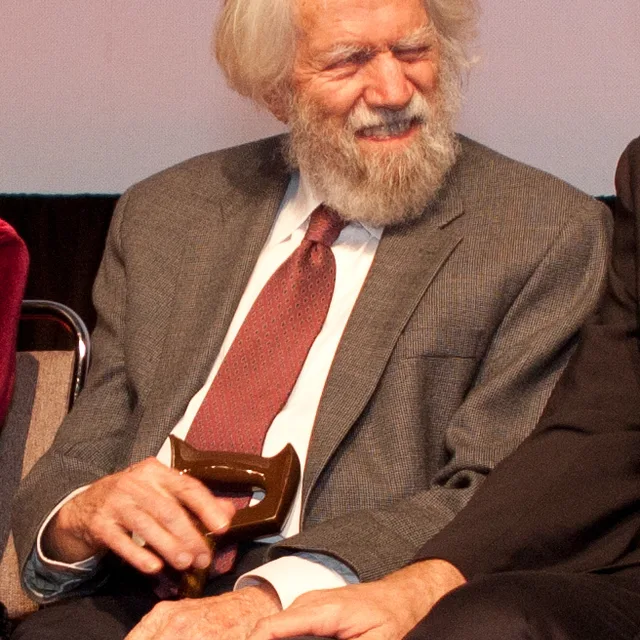 Alexander "Sasha" Shulgin 1925–2014
Alexander 'Sasha' Shulgin (1925-2014) was an American medicinal chemist who synthesized and self-tested hundreds of psychoactive phenethylamines and tryptamines, publishing the results with his wife Ann in PiHKAL (1991) and TiHKAL (1997). At Dow Chemical he created DOM and DOET; independently he originated most of the 2C series, including 2C-B. He did not invent MDMA — Merck's Anton Köllisch first synthesized it in 1912 — but Shulgin re-synthesized it, and in 1976 introduced it to the psychologist Leo Zeff, through whom it spread into psychotherapeutic use. His books and structure-activity work remain standard references for this chemical space.
39 molecules on this site · 2 more credited · over 200 novel psychoactive phenethylamines and tryptamines; PiHKAL documents 179 compounds and TiHKAL 55, most of them his own
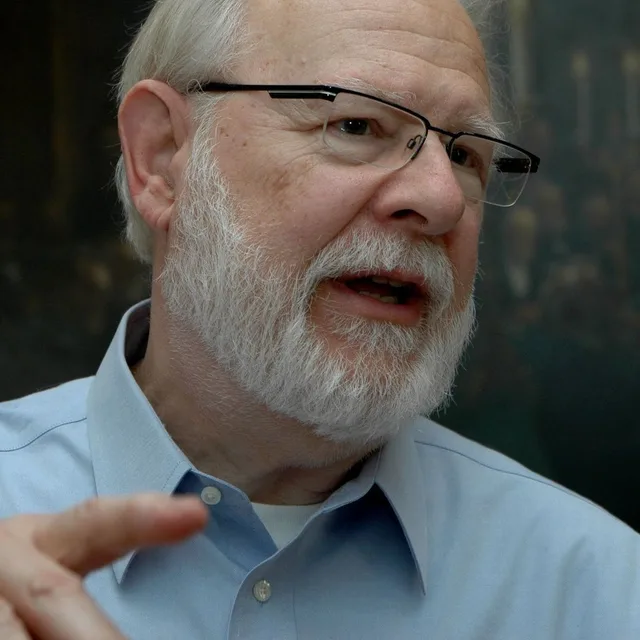 David E. Nichols 1944–
David E. Nichols is an American medicinal chemist and pharmacologist who spent most of his career at Purdue University studying the structure-activity relationships of hallucinogens, entactogens and dopamine receptor agonists. His laboratory produced a large number of receptor probes, including the N6-alkyl LSD analogues, the non-neurotoxic aminoindane serotonin releasers, the benzodifuran 'FLY' series, and the first full dopamine D1 agonists. In 1986 he proposed the term 'entactogen' for MDMA-like compounds, and in 1993 he founded the Heffter Research Institute to fund clinical psychedelic research. Several compounds first reported in his papers were later manufactured for the grey market, which he has written about publicly as an unintended and unwelcome consequence of open publication.
17 molecules on this site · 6 more credited · ~300 published papers; a few dozen genuinely novel compounds, most of them research probes for the serotonin 5-HT2A and dopamine D1 receptors rather than drugs intended for human use
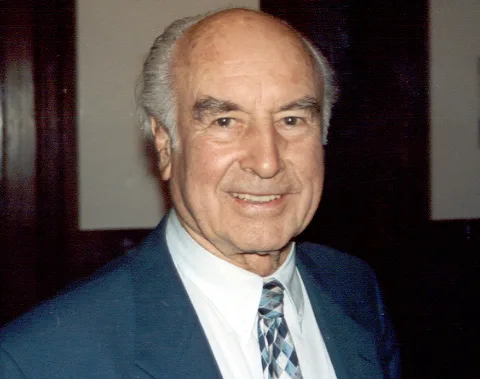 Albert Hofmann 1906–2008
Albert Hofmann joined Sandoz in Basel in 1929 and spent his career on the chemistry of ergot alkaloids, retiring in 1971 as director of the natural products department. From 1935 he worked out practical routes from lysergic acid to ergot-alkaloid derivatives, which produced the obstetric drug methylergometrine and the migraine drug dihydroergotamine, and in 1938 the untested 25th compound in that series, LSD-25; he found its psychoactivity by accident in April 1943. In 1958 his group isolated, named and synthesised psilocybin and psilocin from cultivated Psilocybe mexicana, and in 1960 he and Hans Tscherter showed that the active principle of the Mexican morning-glory ololiuqui was ergine (LSA), a lysergic acid derivative in a flowering plant. He wrote or co-wrote several books on this work, including LSD: My Problem Child and, with the ethnobotanist Richard Evans Schultes, Plants of the Gods; he died in 2008, aged 102.
10 molecules on this site · 4 more credited · dozens of ergot derivatives across a 42-year Sandoz career; the LSD, psilocybin and ololiuqui work is the lasting part
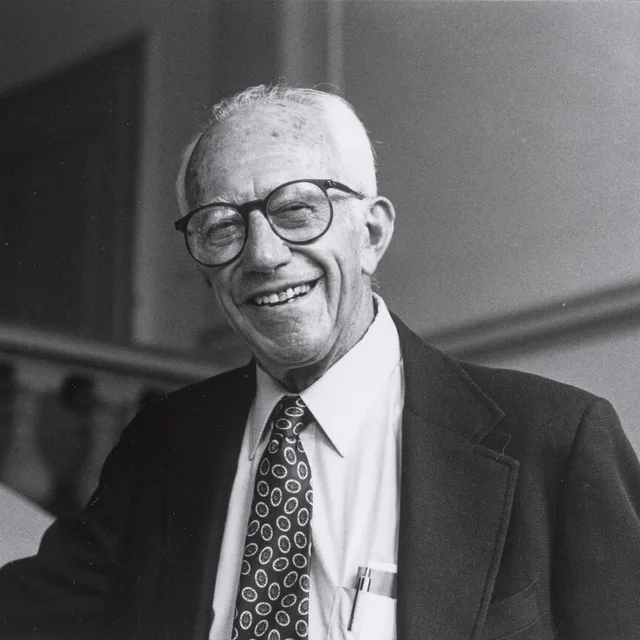 Leo Sternbach 1908–2005
Leo Sternbach (1908-2005) was a Polish-American chemist who earned his doctorate in organic chemistry at the Jagiellonian University in Krakow in 1931, joined Hoffmann-La Roche in Basel in 1940, and moved to its Nutley, New Jersey site in 1941. With Moses Wolf Goldberg he developed the first commercially applicable synthesis of the vitamin biotin, and he discovered the ganglionic blocker trimethaphan (Arfonad). Returning in 1955 to the quinazoline N-oxides of his student days, he synthesized chlordiazepoxide (Librium, marketed 1960) and then diazepam (Valium, 1963), founding the benzodiazepine class; his Roche group went on to produce nitrazepam, flunitrazepam, clonazepam, flurazepam and bromazepam. Later benzodiazepines from other firms - oxazepam, temazepam and lorazepam (Wyeth), alprazolam and triazolam (Upjohn) - and Roche's own midazolam (Walser and Fryer, 1975) were not his work.
7 molecules on this site · 1 more credited · 241 patents and 122 publications at Roche; the 1,4-benzodiazepines (Librium, Valium and their Roche successors) are the lasting part, alongside the commercial biotin synthesis and trimethaphan
- Paul Janssen 1926–2003
Paul Janssen was a Belgian physician and pharmacologist who founded Janssen Pharmaceutica in 1953 and ran its research for four decades. He worked by systematic structure-activity variation of known scaffolds — pethidine for the opioids, the butyrophenones for the antipsychotics, imidazoles for the antifungals — and the company that grew around that method registered more than eighty medicines, four of them on the WHO Essential Medicines list. Haloperidol and fentanyl, both from his own hand in 1958-1960, are the two that reshaped their fields; fentanyl in particular went on to become the template for the illicit synthetic-opioid market decades after his death. He died in Rome in 2003 while attending a Pontifical Academy of Sciences meeting.
23 molecules on this site · 2 more credited · More than 80 marketed medicines came out of Janssen Pharmaceutica in his lifetime; he is named on over 100 patents and co-authored roughly 850 papers. Only the earliest of those compounds are his own bench work — from the early 1960s onward he directed a medicinal-chemistry group and is typically the senior author rather than the synthetic chemist.
- John W. Huffman 1932–2022
John William Huffman was an organic chemist at Clemson University who trained under Robert Burns Woodward at Harvard and spent the second half of his career making cannabinoid receptor ligands under National Institute on Drug Abuse funding. Between 1984 and his retirement in 2010 his group synthesised more than 400 compounds — indoles, pyrroles, indenes and classical dibenzopyrans — which were numbered sequentially with his initials and sent to Billy Martin and Jenny Wiley's pharmacology group at Virginia Commonwealth University for testing. They were designed as research tools for mapping the CB1 and CB2 receptors, not as drugs for people. From late 2008 onward several of them, beginning with JWH-018, were found sprayed onto herbal 'incense' products sold as legal cannabis substitutes; Huffman spent his last years fielding calls from police, journalists and parents about compounds he had published openly a decade earlier.
24 molecules on this site · over 400 synthetic cannabinoids made between 1984 and his 2010 retirement (some reviews put the total above 450); roughly two dozen later turned up in herbal smoking blends
- Daniel Trachsel
Daniel Trachsel is a Swiss medicinal chemist who studied at the Burgdorf University of Applied Sciences and is head of chemistry at ReseaChem GmbH in Burgdorf. From 2002 onward he published a series of papers in Helvetica Chimica Acta and Chemistry & Biodiversity describing new 4-substituted mescaline analogues (the "scalines"), 4-thio-substituted 2C-T compounds, and fluorinated phenethylamines; fluorine chemistry is the thread running through most of his work. He is the author of Psychedelische Chemie (2000) and, with David Lehmann and Christoph Enzensperger, of Phenethylamine: von der Struktur zur Funktion (2013), a reference work that also records dose and effect data supplied to him by others. Unlike Alexander Shulgin, to whom he is often compared, he has publicly distanced himself from self-experimentation, and much of his later output is collaborative pharmacology with Matthias Liechti's group in Basel rather than solo synthesis.
34 molecules on this site · 3 more credited · roughly 70 compounds are documented as first synthesised, first tested in humans, or first reported by him and colleagues; the widely repeated "300+" figure is not supported by any source, and a substantial part of the list in his 2013 book is other chemists' work that he was the first to publish
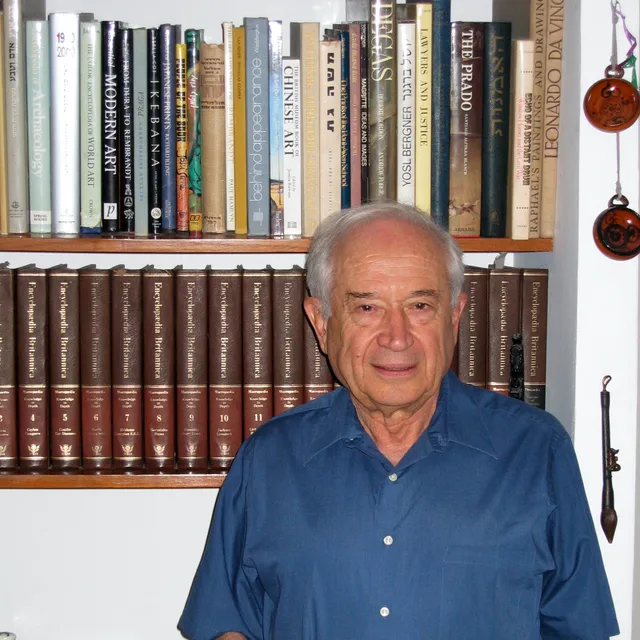 Raphael Mechoulam 1930–2023
Raphael Mechoulam was an Israeli organic chemist who spent his career on the chemistry of cannabis. With Yechiel Gaoni he isolated Δ9-tetrahydrocannabinol and determined its structure in 1964, and the two completed a total synthesis in 1965; the structure of cannabidiol had been settled a year earlier in work with Yuval Shvo. From the late 1980s his laboratory produced the HU series of synthetic cannabinoids, named for the Hebrew University, and it was in his laboratory that the first endogenous cannabinoid receptor ligands were isolated - anandamide in 1992 and 2-arachidonoylglycerol in 1995. He held the Lionel Jacobson Chair in Medicinal Chemistry, served as rector of the Hebrew University, and received the Israel Prize in 2000.
11 molecules on this site · 9 more credited · more than 425 papers; the lasting work is the phytocannabinoid structures of 1963-1966, the HU series of synthetic cannabinoids, and the endocannabinoids found in his laboratory from 1992 onward
- Gordon Alles 1901–1963
Gordon A. Alles (1901-1963) was an American biochemist and pharmacologist who took all three of his degrees at Caltech and spent most of his career running his own laboratory in Pasadena while holding academic appointments at UC San Francisco, Caltech and UCLA. Looking for a synthetic substitute for ephedrine, he re-prepared amphetamine, which Lazar Edeleanu had already made in 1887 and nobody had tested, and self-administered it on 3 June 1929; he patented the salts in 1932 and licensed them to Smith, Kline & French, which sold them as Benzedrine. He took 126 mg of MDA and wrote the first account of that drug's psychoactive effects, though he did not publish it until 1959. In the 1950s he synthesised and screened further mescaline-like amphetamines, some of it under contract to the US Army's Edgewood Arsenal programme. Royalties from the amphetamine patent made him wealthy; he gave $350,000 to Caltech in 1958.
4 molecules on this site · a pharmacologist rather than a synthetic chemist: four psychoactive compounds are reasonably traceable to him, and only two of those are attributions of first synthesis
- Bryan Molloy 1939–2004
Bryan Barnet Molloy (1939-2004) was a medicinal chemist born in Broughty Ferry, Dundee, who took his BSc and PhD at the University of St Andrews, did postdoctoral work at Imperial College London and Columbia University, and joined Eli Lilly in 1966. In 1970 he began a collaboration with the pharmacologist Robert Rathbun aimed at an antidepressant that kept the efficacy of the tricyclics without their cardiac and anticholinergic effects. With Klaus Schmiegel and Kenneth Hauser he made a large series of phenoxyphenylpropylamines derived from the antihistamine diphenhydramine; David Wong's synaptosome screen identified one of them, LY110140, as a highly selective inhibitor of serotonin reuptake. It was published in 1974, approved by the FDA on 29 December 1987 and launched as Prozac in January 1988. Molloy and Schmiegel hold the composition-of-matter patent. He became a Lilly Research Fellow in 1983 and was inducted into the National Inventors Hall of Fame in 1999.
1 molecule on this site · 2 more credited · over 30 patents and more than 100 papers at Lilly; three compounds from one 1970s series are securely traceable to him, of which fluoxetine is the lasting one
- Anton Köllisch 1888–1916
Anton Georg Köllisch was a German chemist who joined E. Merck in Darmstadt in October 1911, after a Berlin doctorate on indole synthesis from hydrazones. His assignment was to find a route to methylhydrastinine that would work around a Bayer patent on the haemostatic hydrastinine; along the way he prepared 3,4-methylenedioxy-N-methylamphetamine, which appears unnamed as Example 4 of Merck's process patent DE 274350 C, filed on 24 December 1912. Merck did not test the compound pharmacologically until 1927, and then only in animals, so Köllisch had no knowledge of what it did. He was killed in the First World War in September 1916; the compound was not named MDMA or given human use until decades later.
1 molecule on this site · one compound of lasting interest — MDMA, made as an unnamed intermediate and never pursued
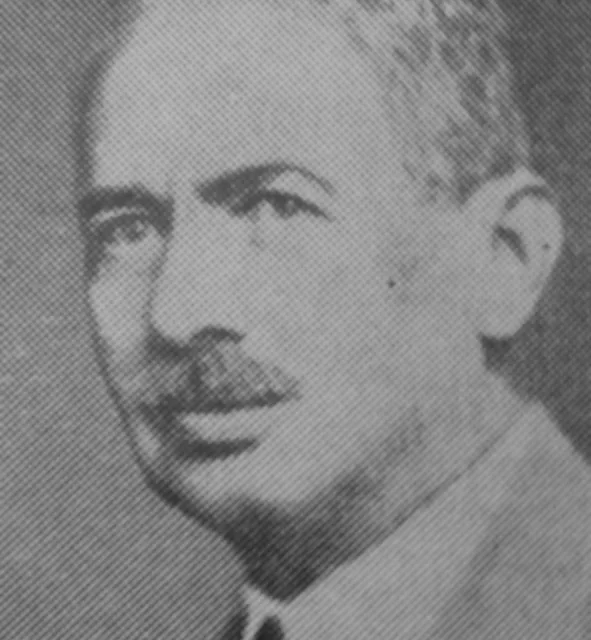 Lazăr Edeleanu 1861–1941
Lazăr Edeleanu was a Romanian chemist who took his doctorate at the University of Berlin in 1887 under August Wilhelm von Hofmann, with a thesis on derivatives of phenylmethacrylic and phenylisobutyric acid. That work included the first synthesis of the compound now called amphetamine, which he named phenylisopropylamine; he described it purely as a chemical product and no stimulant activity was reported for it for another forty years. His career was otherwise in petroleum refining: in 1908 he developed the Edeleanu process, which uses liquid sulphur dioxide to extract aromatics from crude oil fractions, and it is the work he was known for in his lifetime. He also worked on oxazine dyes with Raphael Meldola and held 212 patents across several countries.
1 molecule on this site · one compound relevant to this site — amphetamine; his working life was petroleum chemistry, with 212 patents
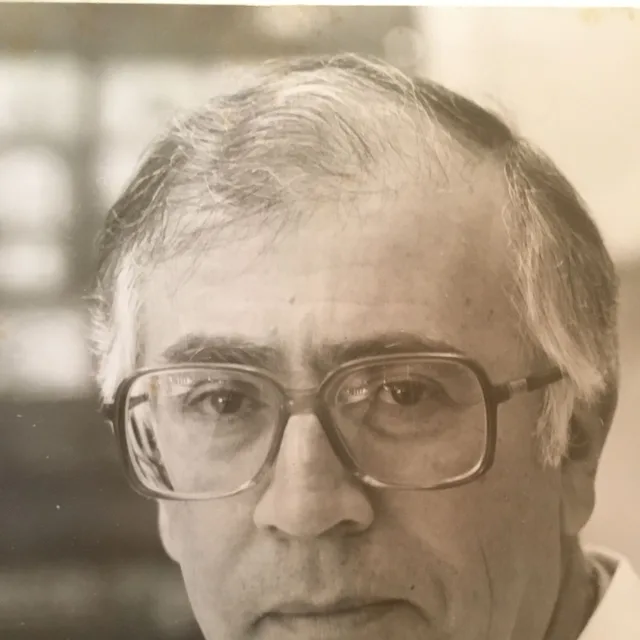 Yehiel Gaoni 1928–2017
Yehiel Gaoni was an Israeli organic chemist who spent close to forty years in the Department of Molecular Chemistry and Materials Science at the Weizmann Institute, after a doctorate at the Sorbonne in 1958 and a postdoc at the University of Chicago. From 1962 he worked with Raphael Mechoulam on the chemistry of hashish; their 1964 paper reported the isolation and structure of Δ9-THC, and the 1965 paper its total synthesis. He was co-author on the identification of several other plant cannabinoids, including cannabigerol and cannabichromene and the cannabinoid acids. His later work was unrelated to cannabis, largely on bicyclobutanes, sulfolenes and 1-aminocyclobutanecarboxylic acid derivatives; he became a full professor in 1988 and retired in the 1990s.
5 molecules on this site · a handful of phytocannabinoids — THC, CBG, CBC and the cannabinoid acids — plus later work on cyclobutane amino acids
- Yuval Shvo 1930–2007
Yuval Shvo (also published as Youval Shvo) was an Israeli chemist who began in natural-product chemistry and spent most of his career at Tel Aviv University, where he was one of the founders of its organic chemistry teaching programme and where a teaching laboratory is named in his memory. In 1963 he and Raphael Mechoulam published "Hashish—I: The structure of cannabidiol", the paper that established the structure and stereochemistry of CBD, largely by then-new NMR methods; that structure was the basis on which the structure of Δ⁹-THC was worked out the following year. He did not continue in cannabinoid chemistry, and is not an author on the THC papers. In mainstream chemistry he is better known for the Shvo catalyst, a diruthenium complex reported in 1986 that hydrogenates and transfer-hydrogenates aldehydes, ketones and imines through cooperation between the metal and its ligand.
1 molecule on this site · One cannabinoid paper — CBD, 1963. Around 120 publications overall, most of them natural-product then organometallic chemistry rather than drug chemistry.
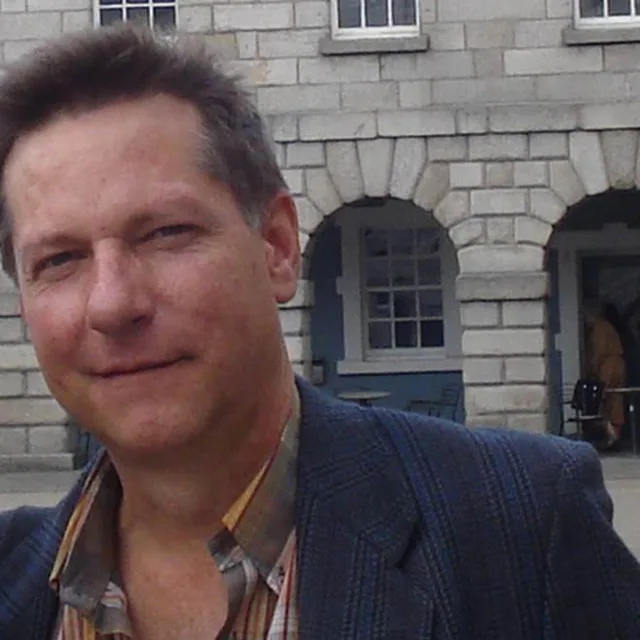 William A. Devane d. 2018
William Anthony 'Bill' Devane was an American pharmacologist who grew up in Chicago and did his graduate work with Allyn Howlett at Saint Louis University School of Medicine, where the 1988 radioligand binding study that established the existence of a cannabinoid receptor in rat brain came out of his dissertation. He then went to Raphael Mechoulam's laboratory at the Hebrew University of Jerusalem, and with the visiting Czech chemist Lumír Hanuš isolated the first endogenous cannabinoid from pig brain in 1992; Devane proposed the name anandamide, from the Sanskrit ananda. He later worked with Julius Axelrod's group at NIH on the compound's biosynthesis, then held positions at the University of Wisconsin, Virginia Commonwealth University and, from 2006, NUI Galway. Ill health ended his research career in 2014 and he died on 11 October 2018; the International Cannabinoid Research Society named a young-investigator award after him.
1 molecule on this site · one compound — anandamide; his other landmark result was a receptor, not a molecule
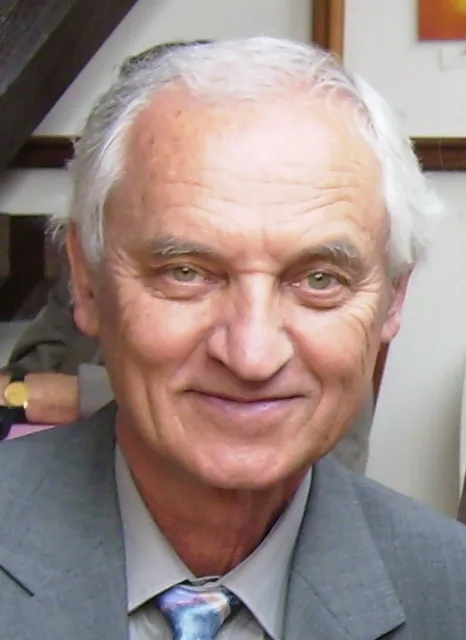 Lumír Ondřej Hanuš 1947–
Lumír Ondřej Hanuš is a Czech analytical chemist who worked on cannabis constituents at Palacký University in Olomouc from the late 1960s, including a year at the University of Mississippi in 1978–79. After 1990 he moved to Raphael Mechoulam's laboratory at the Hebrew University of Jerusalem, where in 1992 he and William Devane isolated the first endogenous cannabinoid, anandamide, from pig brain. He remained in Jerusalem and co-authored the identification of two further endogenous ligands, 2-arachidonoylglycerol in 1995 and 2-arachidonyl glyceryl ether (noladin ether) in 2001, and was first author on the 1999 report of HU-308, a CB2-selective agonist. He has continued to publish reviews of cannabinoid chemistry and holds several honorary doctorates.
3 molecules on this site · 1 more credited · a small, specific catalogue — anandamide and two later endocannabinoids, plus the CB2-selective agonist HU-308
- David T. Wong 1935–
David T. Wong is a Hong Kong-born American biochemist who joined Eli Lilly in 1968 and worked there until 2000. He joined the company's antidepressant programme in 1971 and proposed re-screening a series of 3-phenoxy-3-phenylpropylamines — synthesised by Bryan Molloy and Klaus Schmiegel from a diphenhydramine starting point — for selective serotonin uptake inhibition using a synaptosome method developed by Solomon Snyder; the May 1972 assay identified LY-110140, later named fluoxetine, as the most selective of the series. He was co-author on the 1974 paper that first described it and a named inventor on later Lilly compounds. Fluoxetine reached the US market in 1988; it was the first commercially successful SSRI, not the first SSRI, since zimelidine had been marketed in 1982.
2 molecules on this site · 3 more credited · four or five reuptake inhibitors he is credited with identifying, of which fluoxetine and duloxetine are the ones that reached the market
- Calvin L. Stevens 1923–2014
Calvin Lee Stevens was an American organic chemist who joined Wayne State University in 1948 after a Wisconsin doctorate and an MIT postdoc, became a full professor in 1954, and later served as chemistry chair, vice president for research and interim provost. Working as a consultant to Parke-Davis, he synthesised 2-(o-chlorophenyl)-2-(methylamino)cyclohexanone in 1962 as part of a search for a shorter-acting alternative to phencyclidine; the compound entered Parke-Davis testing as CI-581 and became ketamine. He is the sole named inventor on the resulting patent, US 3,254,124, filed on 29 June 1962. He also co-founded the contract pharmaceutical chemistry company Ash Stevens with Arthur B. Ash, and his own research programme was largely in carbohydrate and aminosugar chemistry rather than in psychoactive compounds.
1 molecule on this site · one compound of note here — ketamine; his academic output was mainly carbohydrate and amino-sugar chemistry