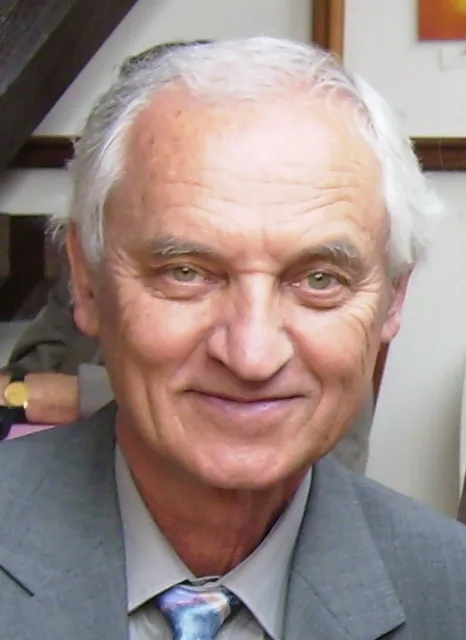

Lumír Ondřej Hanuš
Lumír Ondřej Hanuš is a Czech analytical chemist who worked on cannabis constituents at Palacký University in Olomouc from the late 1960s, including a year at the University of Mississippi in 1978–79. After 1990 he moved to Raphael Mechoulam's laboratory at the Hebrew University of Jerusalem, where in 1992 he and William Devane isolated the first endogenous cannabinoid, anandamide, from pig brain. He remained in Jerusalem and co-authored the identification of two further endogenous ligands, 2-arachidonoylglycerol in 1995 and 2-arachidonyl glyceryl ether (noladin ether) in 2001, and was first author on the 1999 report of HU-308, a CB2-selective agonist. He has continued to publish reviews of cannabinoid chemistry and holds several honorary doctorates.
Compounds
4 credited across 2 classes · 3 with a page here
- Endocannabinoids
- Anandamide C22H37NO2 isolated it, 1992 source
Second author on Devane WA, Hanus L, et al., Science 258:1946 (1992). Hanuš did the isolation and structural work alongside Devane over roughly eighteen months in Mechoulam's laboratory; Devane supplied the name.
- 2-Arachidonoylglycerol C23H38O4 isolated it, 1995 source
Co-author on Mechoulam R, Ben-Shabat S, Hanus L, et al., Biochem Pharmacol 50:83 (1995), identifying 2-AG in canine gut. Shimon Ben-Shabat is normally named as the doctoral student who led this one; Sugiura's group reported 2-AG independently the same year. Hanuš is a contributor here, not the discoverer.
- Noladin ether C23H40O3 isolated it, 2001 source
First author on Hanus L, Abu-Lafi S, Fride E, et al., PNAS 98:3662 (2001), isolating the compound from porcine brain and showing CB1 agonism.
- Synthetic Cannabinoids
- HU-308 first synthesis, 1999 source
First author on Hanus L, Breuer A, Tchilibon S, et al., PNAS 96:14228 (1999), the paper introducing HU-308 as a CB2-selective agonist. The compound was new in that paper, but individual synthetic credit within the Mechoulam group (Breuer, Tchilibon) cannot be separated from the author list, so the role assignment is uncertain even though the involvement is not.
Reading
- Isolation and structure of a brain constituent that binds to the cannabinoid receptor (Science, 1992) · paper
- Discovery and isolation of anandamide and other endocannabinoids (Chem Biodivers, 2007) — his own account · paper
- A historical overview of chemical research on cannabinoids (Mechoulam & Hanuš, Chem Phys Lipids, 2000) · paper