.jpg)
David E. Nichols
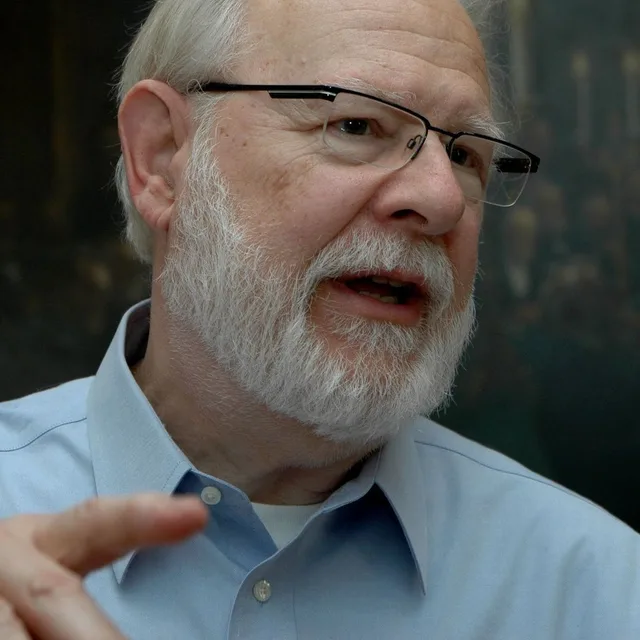
David E. Nichols is an American medicinal chemist and pharmacologist who spent most of his career at Purdue University studying the structure-activity relationships of hallucinogens, entactogens and dopamine receptor agonists. His laboratory produced a large number of receptor probes, including the N6-alkyl LSD analogues, the non-neurotoxic aminoindane serotonin releasers, the benzodifuran 'FLY' series, and the first full dopamine D1 agonists. In 1986 he proposed the term 'entactogen' for MDMA-like compounds, and in 1993 he founded the Heffter Research Institute to fund clinical psychedelic research. Several compounds first reported in his papers were later manufactured for the grey market, which he has written about publicly as an unintended and unwelcome consequence of open publication.
Compounds
23 credited across 9 classes · 17 with a page here
- Aminoindanes
- MDAI C10H11NO2 first synthesis, 1990 source
5,6-methylenedioxy-2-aminoindan, designed as a rigid MDA analogue that would release serotonin without MDA's serotonergic neurotoxicity. First described in a 1989 NIDA monograph; full report in J Med Chem 1990.
- MDAT first synthesis, 1990 source
6,7-methylenedioxy-2-aminotetralin, the ring-expanded partner to MDAI from the same 1990 paper; it also substituted for MDMA without producing serotonin neurotoxicity. Strictly an aminotetralin, filed here under the closest matching site family.
- 5-IAI C9H10IN first synthesis, 1991 source
5-iodo-2-aminoindan, reported as a non-neurotoxic analogue of p-iodoamphetamine.
- MMAI C11H15NO first synthesis, 1991 source
5-methoxy-6-methyl-2-aminoindan. Became one of his lab's standard selective serotonin-releasing tool compounds and a drug-discrimination training drug.
- Amphetamines
- 4-MTA C10H15NS first synthesis, 1992 source
Introduced by Huang, Marona-Lewicka and Nichols as 'a potent new non-neurotoxic serotonin-releasing agent' — a laboratory probe for the serotonin transporter, never intended for human use. It appeared on the European street market around 1997–98 as 'flatliners' and was implicated in several deaths; Nichols has written about this publicly. Marked medium because the 1992 paper does not explicitly claim first synthesis and earlier literature on p-methylthioamphetamine could not be ruled out.
- Benzodifurans
- 2C-B-FLY C12H14BrNO2 first synthesis, 1996 source
Tetrahydrobenzodifuran ('FLY') analogue of 2C-B, in which the two methoxy groups are locked into rings. Made by Aaron P. Monte in the Nichols lab; first in Monte's 1995 Purdue thesis, then in J Med Chem 1996.
- Bromo-DragonFLY C13H12BrNO2 first synthesis, 1998 source
Fully aromatic benzodifuran, reported by Matthew Parker in the Nichols lab as 'extremely potent' at 5-HT2A. Later sold on the grey market, where its very long duration and vasoconstrictor activity caused serious injuries and deaths.
- Benzofurans
- 5-APDB C11H15NO first synthesis, 1993 source
Dihydrobenzofuran analogue of MDA, from Aaron Monte's work in the Nichols lab, probing the role of MDA's dioxole oxygens at the monoamine transporters.
- 6-APDB C11H15NO first synthesis, 1993 source
The isomeric dihydrobenzofuran from the same 1993 paper. Note that the fully aromatic 5-APB and 6-APB are NOT his — those were first described by Karin Briner and colleagues at Eli Lilly in a 2000 patent.
- Dopamine Agonists
- Dihydrexidine first synthesis, 1990 source
The first high-potency full agonist at the dopamine D1 receptor, with Richard Mailman's group. Later trialled clinically as DAR-0100 in schizophrenia and Parkinson's disease. No existing site family fits a D1 agonist.
- Dinapsoline first synthesis, 1996 source
Second-generation full D1 agonist built by bridging dihydrexidine's two aryl rings; investigated as a Parkinson's disease treatment.
- Dinoxyline first synthesis, 2004 source
High-affinity agonist at all dopamine receptor isoforms, from the same Purdue D1 programme.
- Doxanthrine first synthesis, 2006 source
Chromenoisoquinoline full D1 agonist; later compared directly with dihydrexidine in the 6-OHDA rat model of Parkinson's disease.
- Lysergamides
- AL-LAD C22H27N3O first synthesis, 1985 source
The N(6)-allyl analogue of LSD. Reported by Andrew J. Hoffman and Nichols at Purdue; substituted for LSD in rats at roughly 2–3x LSD's potency.
- ETH-LAD C21H27N3O first synthesis, 1985 source
The N(6)-ethyl analogue, from the same Hoffman & Nichols paper; also 2–3x more potent than LSD in the drug-discrimination assay.
- PRO-LAD C22H29N3O first synthesis, 1985 source
The N(6)-propyl analogue from the same 1985 series; reported as roughly equipotent with LSD rather than more potent.
- LSZ C21H25N3O first synthesis, 2002 source
Lysergic acid 2,4-dimethylazetidide, made to test how LSD's diethylamide group sits in the 5-HT2A binding site. The (S,S) diastereomer was slightly more potent than LSD.
- Methylenedioxyphenethylamines
- BDB C11H15NO2 first synthesis, 1986 source
1-(1,3-benzodioxol-5-yl)-2-butanamine, the primary amine reported alongside MBDB in the same 1986 J Med Chem paper; enantiomers made by asymmetric synthesis.
- MBDB C12H17NO2 first synthesis, 1986 source
The alpha-ethyl homologue of MDMA. This is the paper (co-authored with Peyton Jacob III and Alexander Shulgin) in which Nichols proposed the class name 'entactogen'.
- 5-Methyl-MDA first synthesis, 1998 source
One of three ring-methylated MDA isomers made with Alexander Shulgin; among the most potent serotonin-releasing agents reported, pursued as an antidepressant lead.
- Psychedelic Phenethylamines
- Escaline C12H19NO3 discovered its activity, 1977 source
NOT a Nichols first synthesis — escaline was described by George S. Grace in 1934 and again by Benington and colleagues in 1954. Nichols and Dyer prepared the 4-alkoxy mescaline homologue series (escaline, proscaline, isoproscaline) and showed serotonin-agonist potency tracks lipophilicity. The Wikipedia biography's phrasing on this point is misleading.
- DOI C11H16INO2 discovered its activity, 1987 source
DOI itself was first described by Ronald Coutts and Jerry Malicky in 1973, not by Nichols. Nichols's group, with Chester Mathis, characterised the radioiodinated enantiomers and introduced [125I]DOI as a 5-HT2 agonist radioligand — the reason DOI is a standard laboratory tool today. Included for that contribution only.
- Tryptamines
- Psilocybin C12H17N2O4P popularised it, 1999 source
Not his discovery — Albert Hofmann isolated and synthesised psilocybin in 1958. Nichols and Stewart Frescas published an improved, higher-yielding phosphorylation route (Synthesis 1999, 935–938) that made GMP-grade psilocybin practical to produce, and his material supplied several of the early modern clinical trials. Role tag is the closest available fit for 'supply and scale-up', not a claim of discovery.
Reading
- David E. Nichols, PhD — Heffter Research Institute · archive
- Legal highs: the dark side of medicinal chemistry (Nature, 2011) · article
- Psychedelics — Pharmacological Reviews 68(2):264–355 (2016), full text · paper
- The Heffter Research Institute: past and hopeful future (J Psychoactive Drugs, 2014) · paper
- Psilocybin: from ancient magic to modern medicine (J Antibiot, 2020) · paper
- Dark Classics in Chemical Neuroscience: Lysergic Acid Diethylamide (ACS Chem Neurosci, 2018) · paper
- Dr. David Nichols — A Rich and Historical Overview of Psychedelic Chemistry (Psychedelics Today, 2019) · interview