
The hemp cliff: what changes on November 12 and December 11, 2026, and what nobody has published yet
Two dates are on the calendar for anyone who sells or buys hemp THC in the United States. On November 12, 2026, a new federal definition of hemp takes effect, one year after it was signed into a spending law. On December 11, 2026, most of that definition actually starts to bite, because a second spending law signed on September 2 held back all but one part of it until then.[1][2]
The second date is the more important one for most products on the shelf, and it is the less certain one. December 11 is the day the current stopgap funding runs out, and the hemp delay is tied to it.[2] Congress has moved hemp dates inside funding bills once already this year.
This page sets out what the two laws say, word for word where it matters. It does not say what any product's legal status will be in a particular state, and it is not legal advice. Where the answer depends on something the government has not published, it says so.
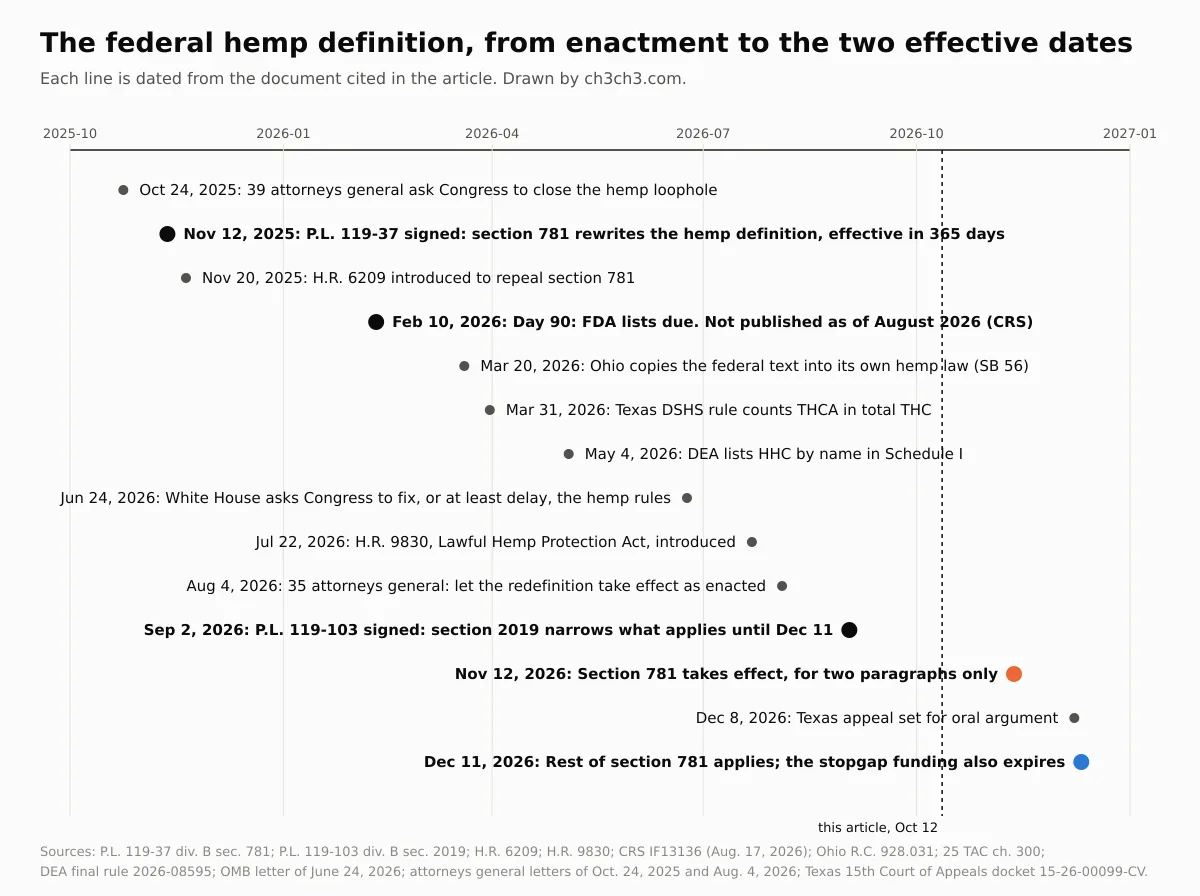
Figure 1. Fourteen dates, each from a document cited below. The two coloured points are the two effective dates; the dashed line is the day this article was published. [1]
What the old definition counted, and what it missed
From 2018 until now, hemp has been the cannabis plant and its derivatives "with a delta-9 tetrahydrocannabinol concentration of not more than 0.3 percent on a dry weight basis".[3] Hemp is carved out of the Controlled Substances Act's definition of marijuana, which "does not include" "hemp, as defined in section 1639o of title 7".[4] Everything else in the plant that met the hemp definition was outside the drug laws.
That test measured one molecule. THCA, the acid form the plant makes, becomes THC when heated, and flower with a quarter of its weight in THCA could be sold as hemp because its delta-9 reading was low. Delta-8 THC, made from hemp CBD, was sold the same way. The Congressional Research Service puts the 2025 change in one sentence: "This change reflects the fact that delta-9 THC is not the only potentially intoxicating THC in the cannabis plant".[5]
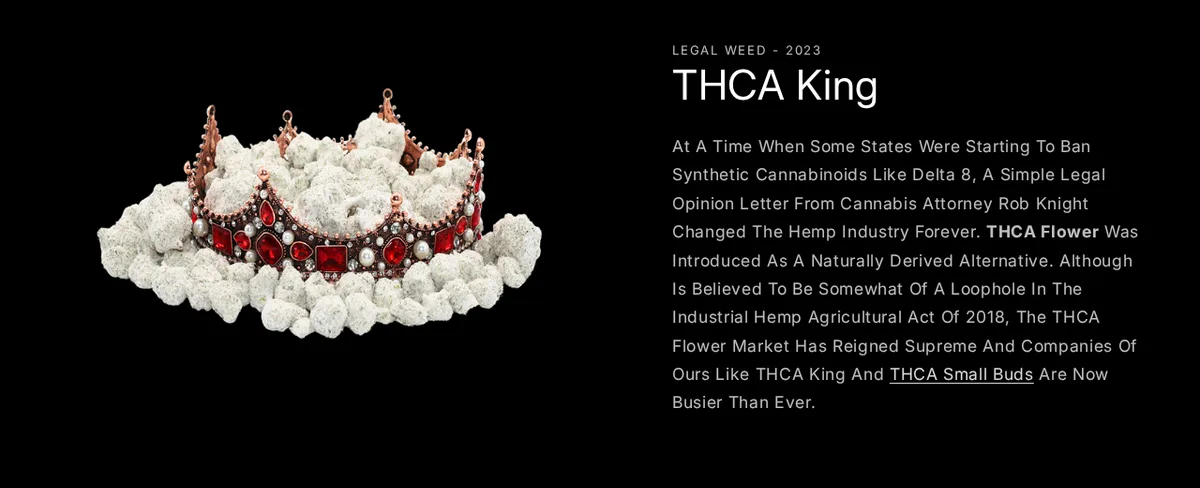
Figure 2. THCA Small Buds, May 2026, on where THCA flower came from: a legal opinion letter, and a gap in the 2018 definition. [6]
Sellers built on the old wording and said so. THCA Small Buds' footer reads "all THCA smalls products are compliant with the 2018 farm bill containing less than 0.3% delta 9 THC".[7] Mellow Fellow's FAQ, archived in May 2026, still told buyers that "the 2018 Farm Bill (§297A) specifically made all derivatives, isomers, and cannabinoids in hemp legal provided the final product has less than 0.3% delta 9 THC".[8]
What section 781 says
The new text is section 781 of division B of Public Law 119-37, signed on November 12, 2025. It sets its own start: "365 days after the enactment of this Act, Section 297A of the Agricultural Marketing Act of 1946" is amended.[1]
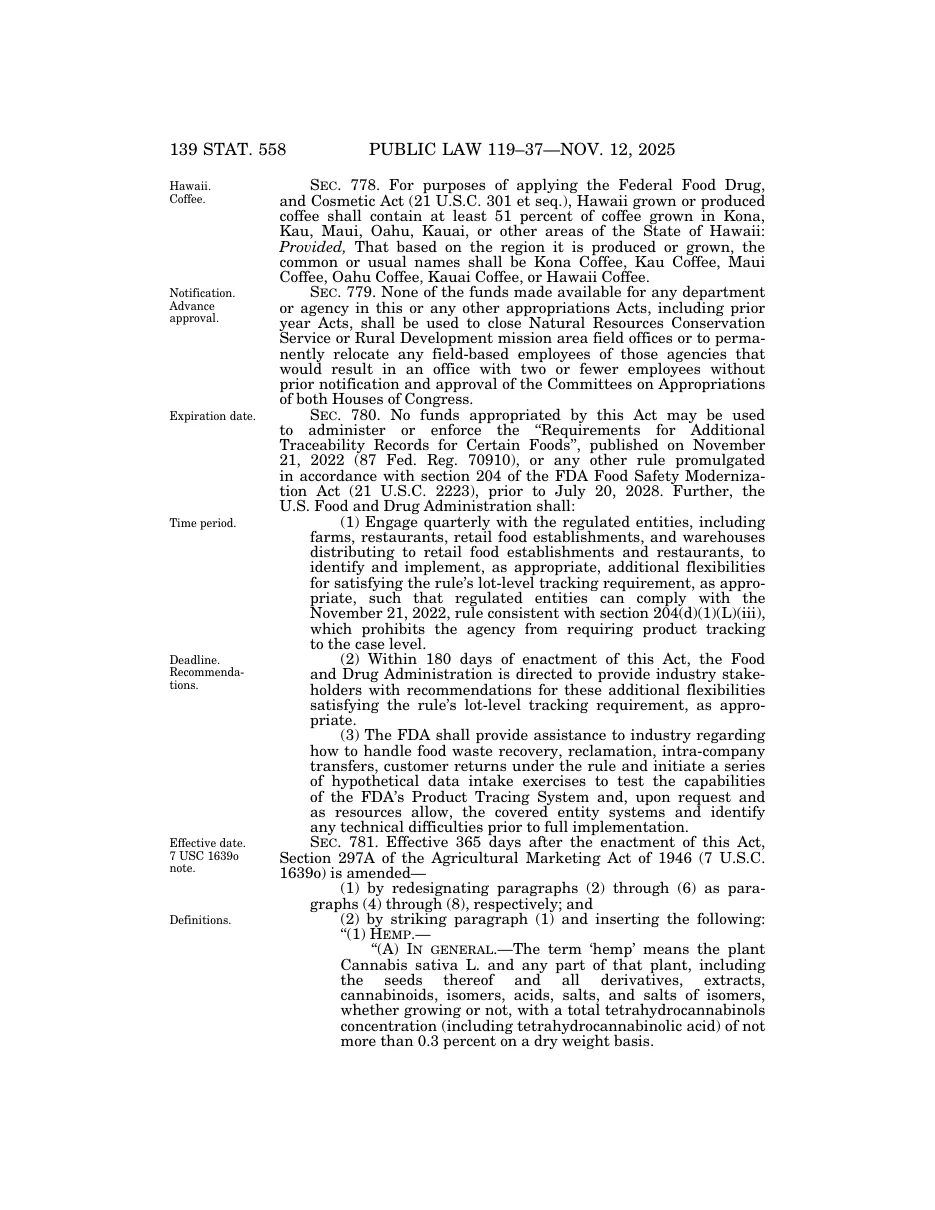
Figure 3. Section 781 as printed in the Statutes at Large, between a section on Hawaii coffee and one on food traceability. It sits in the agriculture appropriations division of a stopgap funding law. [1]
The new paragraph (1)(A) keeps the plant, its derivatives, cannabinoids, isomers and acids, but now only "with a total tetrahydrocannabinols concentration (including tetrahydrocannabinolic acid) of not more than 0.3 percent on a dry weight basis".[1] THCA counts.
Then come four exclusions. Products are split into intermediate products, such as bulk distillate or a powder meant to be mixed into something, and final products sold to consumers. Each kind is excluded from hemp if it contains:[1]
- (I) "cannabinoids that are not capable of being naturally produced by a Cannabis sativa L. plant";
- (II) cannabinoids the plant can make that "were synthesized or manufactured outside the plant";
- (III) for intermediate products, more than 0.3 percent combined total THC; for final products, "greater than 0.4 milligrams combined total per container of" total THC, THCA included, plus any other cannabinoid with THC-like effects "as determined by the Secretary of Health and Human Services".
A third exclusion, (iii), covers intermediate products sold as final products or straight to consumers, and the first, (i), covers viable seeds from plants over the THC limit.[1]
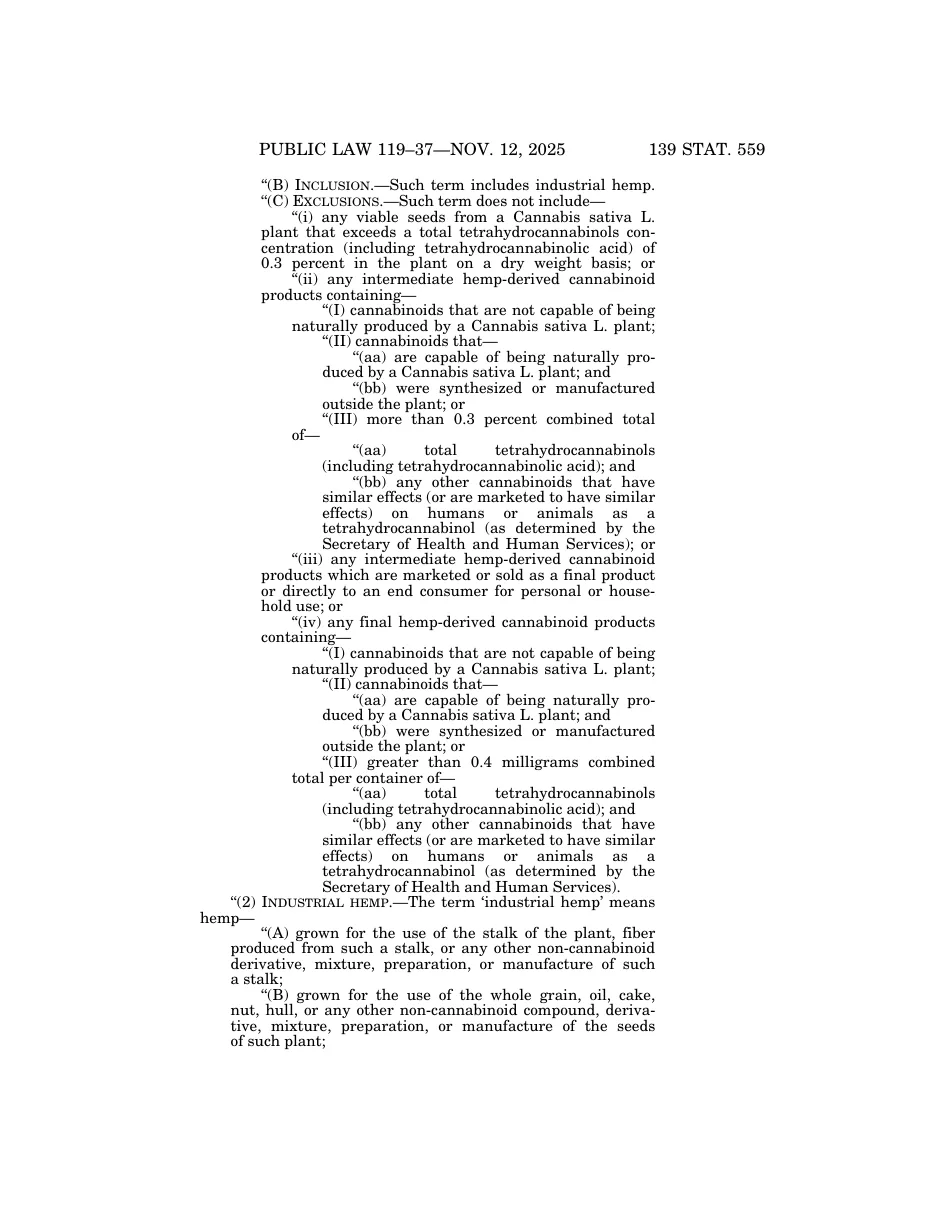
Figure 4. The exclusions. Paragraphs (ii)(I) and (iv)(I), the first entry under each product type, are the only ones that apply from November 12, 2026. [1]
The container is defined. It is "the innermost wrapping, packaging, or vessel in direct contact with a final hemp-derived cannabinoid product", "such as a jar, bottle, bag, box, packet, can, carton, or cartridge".[1] A hemp-derived cannabinoid product is one that contains cannabinoids and "is intended for human or animal use through any means of application or administration, such as inhalation, ingestion, or topical application".[1]
The September law: one part on November 12, the rest on December 11
Public Law 119-103, the stopgap funding act signed on September 2, 2026, has a section headed Section 781 Extension. Its whole text is one sentence: "Until December 11, 2026, the amendments made by section 781 of division B of Public Law 119-37 (7 U.S.C. 1639o note) shall only apply with respect to products described in paragraphs (1)(C)(ii)(I) and (1)(C)(iv)(I)" of the hemp definition.[2]
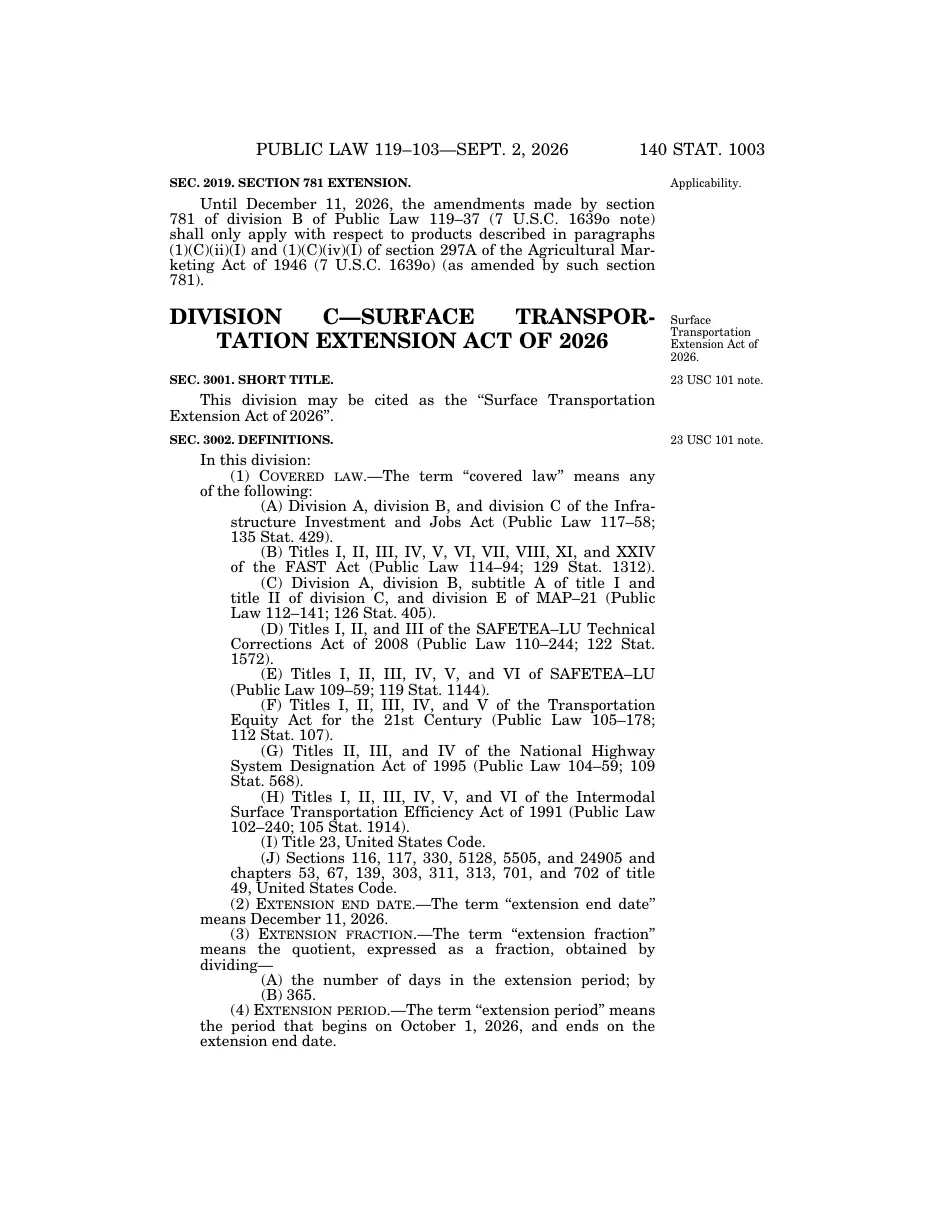
Figure 5. Section 2019 of the September 2026 stopgap law, the whole of it, wedged between other extensions. The highway program that follows it also runs to December 11, 2026. [2]
Those two paragraphs are the (I) exclusions, for intermediate and final products: cannabinoids "not capable of being naturally produced" by the plant.[1] So from November 12 the new definition applies to products containing such cannabinoids. Until December 11 the amendments do not apply to anything else. The total-THC test, the exclusion for synthesized plant-type cannabinoids and the 0.4 mg container cap all wait.[2][1]
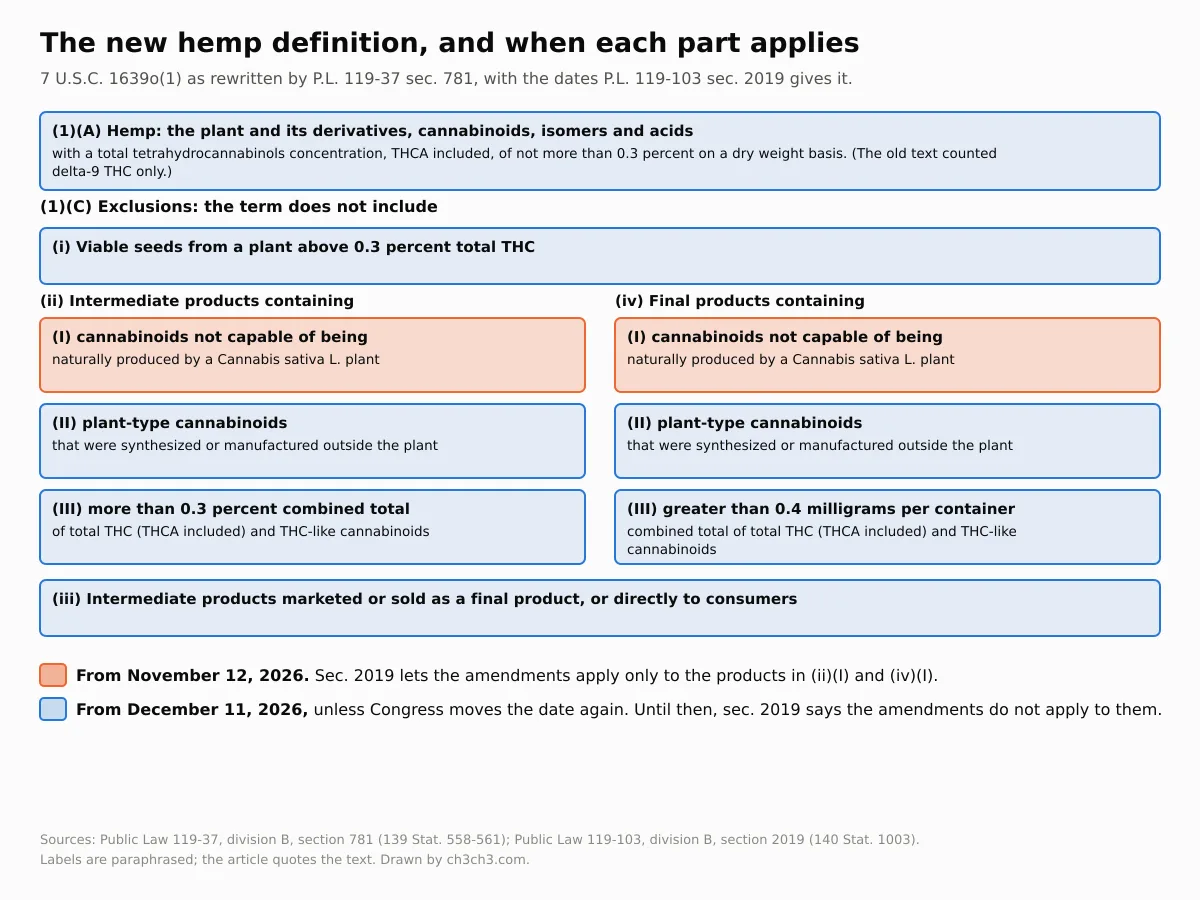
Figure 6. The new definition as a map. Orange: the two paragraphs that apply from November 12. Blue: everything that waits for December 11, including the total-THC test in (1)(A) and the 0.4 mg cap. [2]
The same law funds the government only until a fixed end. Its section 106 says funding and "authority granted pursuant to this Act shall be available until whichever of the following first occurs", and the last item on that list is December 11, 2026.[2] The hemp date and the funding date are the same date. A new stopgap could carry a new hemp date; a full-year bill could carry none.
A Reddit user explained the narrowing to r/THCaFlower the day the Senate text appeared, and got it right: the change was not "pushing back the deadline itself", the post said, adding that until December 11 only cannabinoids that cannot occur in the plant are reached.[9] The phrase as the statute writes it is narrower than "synthetic", and the difference matters below.
Who is affected on each date
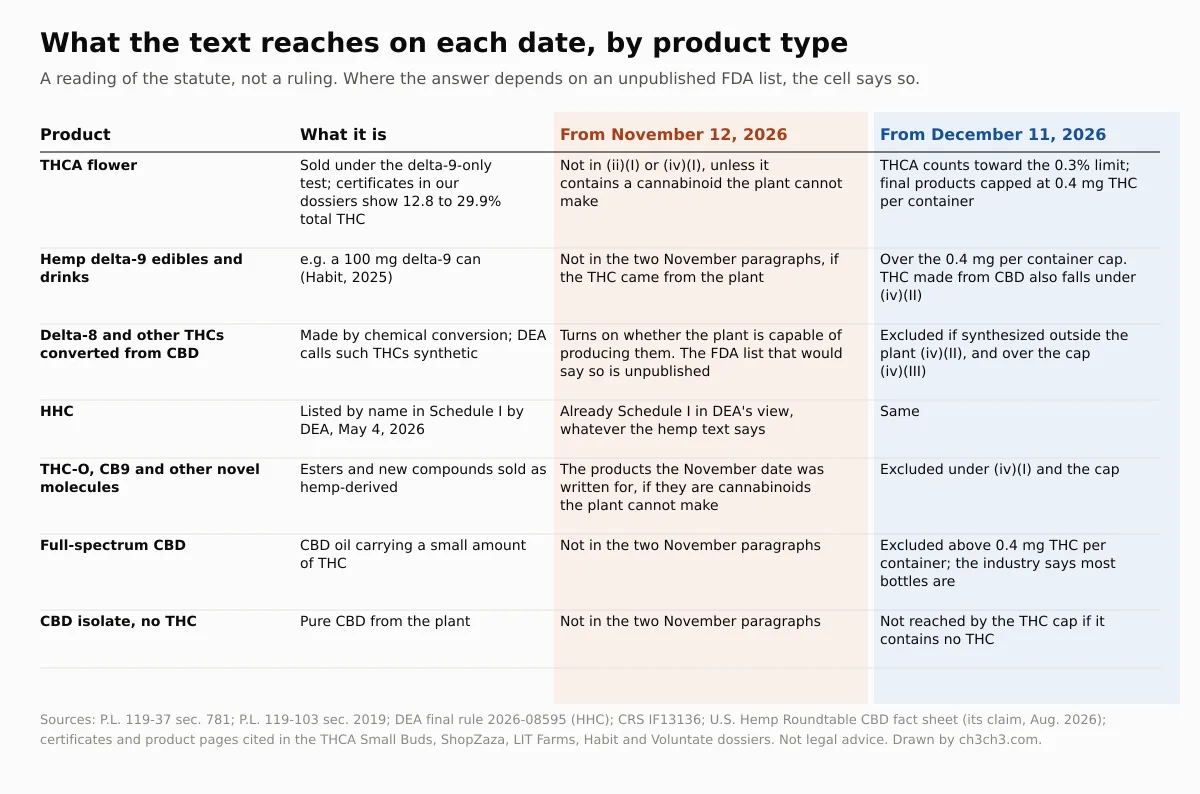
Figure 7. Seven product types against the two dates. This is a reading of the statute. Two of the November cells depend on a list FDA has not published. [1]
THCA flower. On November 12, nothing in the two operative paragraphs reaches ordinary flower unless it contains a cannabinoid the plant cannot make.[2] On December 11, THCA counts toward the 0.3 percent test.[1] Texas already measures it that way, with the formula "Total THC = (0.877 x THCA) + THC".[10] The certificates in our flower dossiers run far over: THCA Small Buds' THCA Queen at 29.90% total THC,[11] LIT Farms' Wedding Cake at 20.94%,[12] a ShopZaza strain at 15.9%.[13]
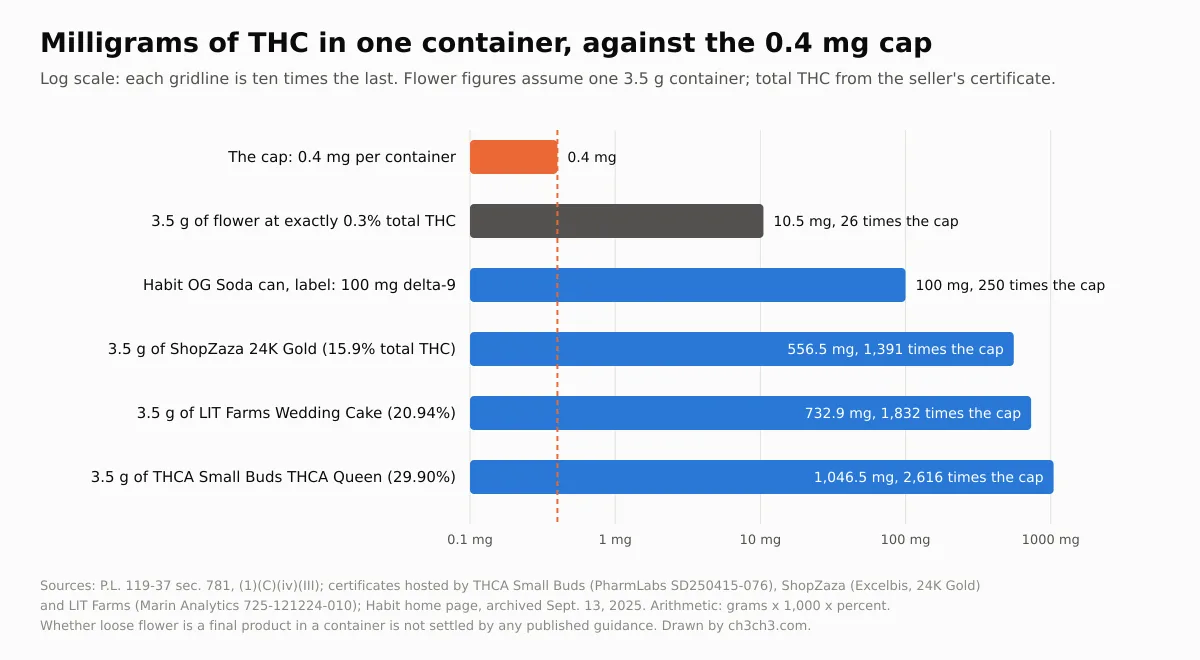
Figure 8. The cap against containers our dossiers documented. Even flower at exactly the 0.3% line would carry 26 times the cap in a 3.5 g jar, if loose flower counts as a final product in a container. No guidance says whether it does. [1]
There is a second question for flower, and no published guidance answers it. If loose flower in a jar is a final hemp-derived cannabinoid product, the 0.4 mg container cap applies on top of the 0.3 percent test, and a 3.5 g jar of flower at exactly 0.3 percent total THC holds 10.5 mg.[1] The statute asked FDA for "additional information and specificity about the term" container.[1] That has not appeared.[5]
Delta-9 edibles and drinks. Hemp delta-9 gummies and drinks were legal under the old test because a heavy gummy or a full can kept delta-9 under 0.3 percent of its weight. The new cap is per container, so from December 11 a final product above 0.4 mg of total THC per container is not hemp.[1] Habit's OG Soda can, launched in 2025, reads 100 mg.[14] Delta-9 made from CBD, rather than extracted, also falls under the (II) exclusion for cannabinoids "synthesized or manufactured outside the plant" from that date.[1]
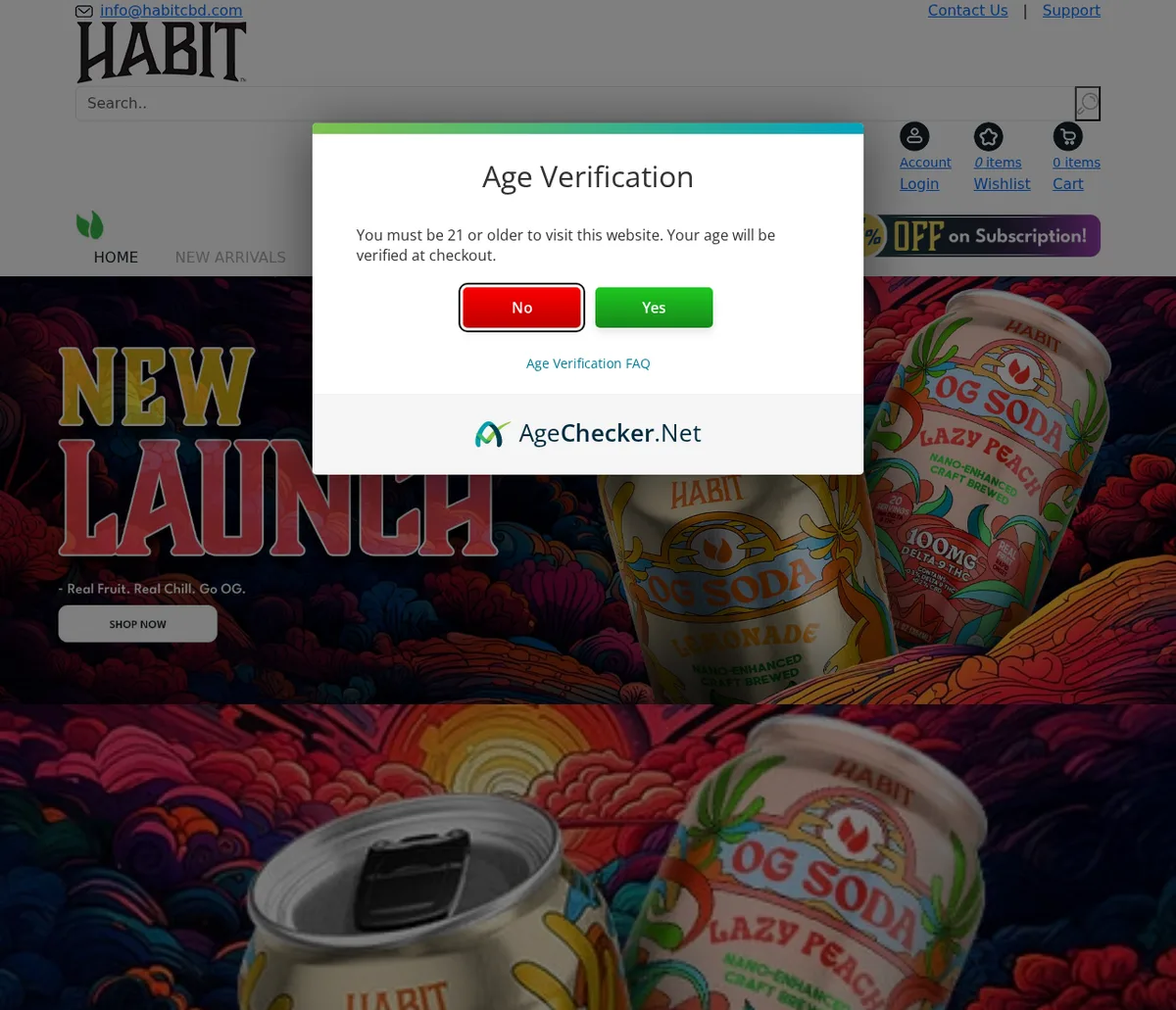
Figure 9. Habit, September 2025: a hemp soda whose can reads 100MG delta-9 THC. From December 11 the per-container limit for a final product is 0.4 mg. [14]
Delta-8, delta-10 and other THCs made from CBD. These are where November 12 is genuinely unclear. If a converted cannabinoid is one the plant is "not capable" of producing, the November exclusion reaches it. If it is one the plant can make in trace amounts, it falls under (II) and waits for December.[1] The statute told FDA to publish "a list of all cannabinoids known to FDA to be capable of being naturally produced by a Cannabis sativa L. plant, as reflected in peer reviewed literature".[1] That list is the thing that would sort delta-8 into one paragraph or the other, and it has not been published.[5][15]
DEA has its own view of converted THCs, stated in a May 2026 rule: "tetrahydrocannabinols produced through chemical conversion, even when hemp derived are considered synthetically produced for purposes of the CSA".[16] That is the agency's reading of the 2018 law, and it was written before either hemp date.
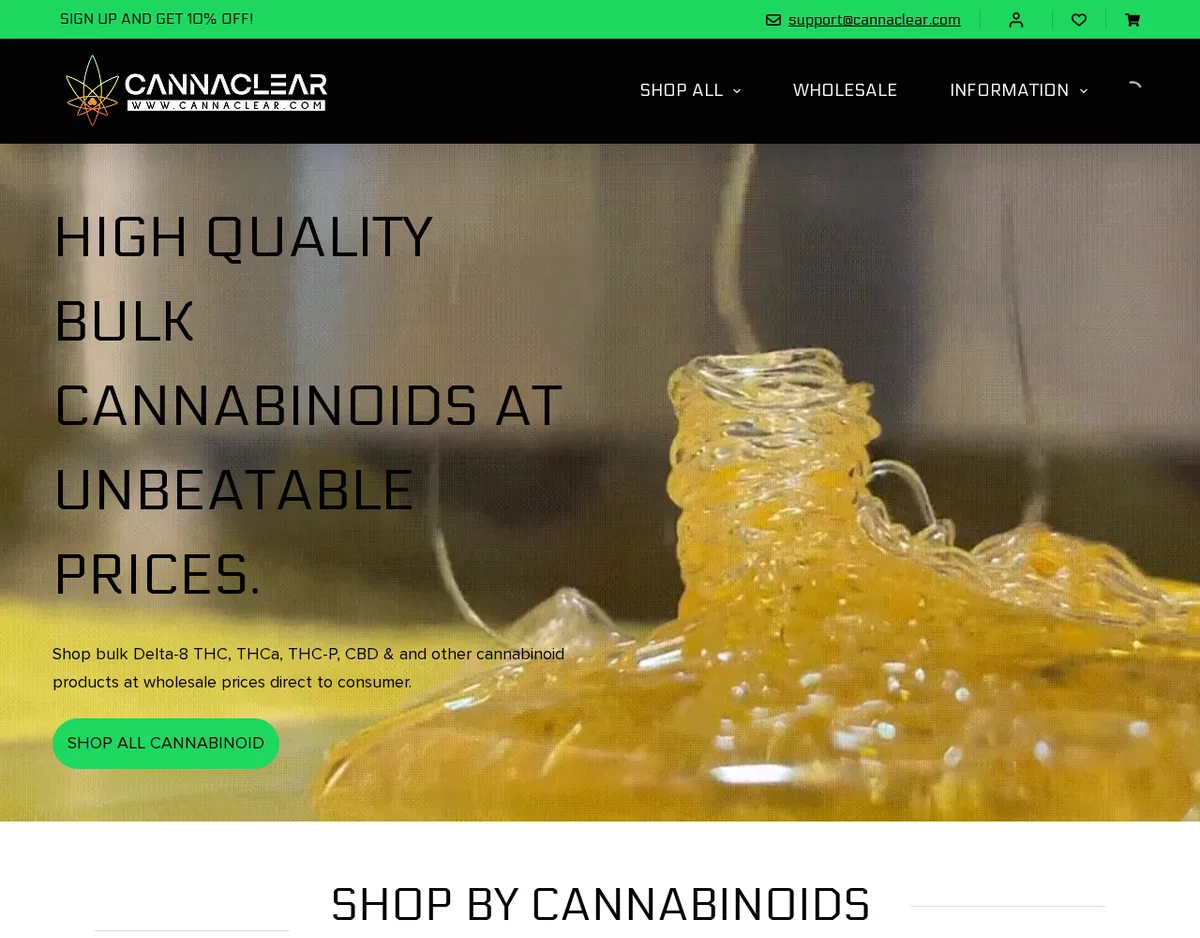
Figure 10. CannaClear in June 2026, the latest capture: delta-8, THCA and THC-P by the jar, sold direct to consumers at wholesale prices. [17]
CannaClear, whose bulk delta-8 taught r/delta8 to fill its own carts (/p/235), still offered delta-8, THCA and THC-P by the jar in June 2026 and told buyers "all of our products are federally legal".[17]
HHC. DEA gave HHC its own listing in Schedule I on May 4, 2026, and said it "has been controlled in schedule I of the CSA" all along, as a synthetic tetrahydrocannabinol.[16] For HHC the hemp dates matter less than DEA's position.
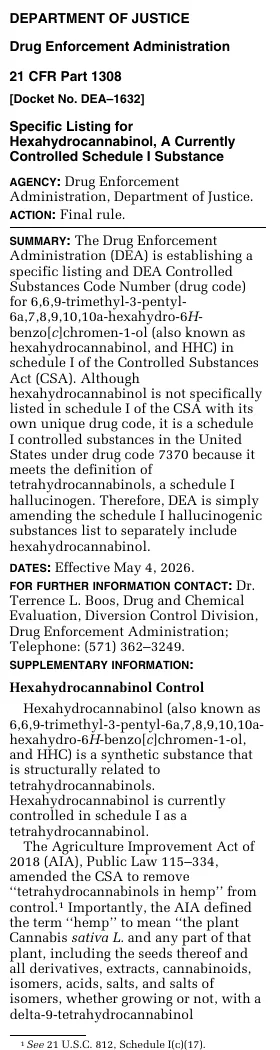
Figure 11. DEA, May 4, 2026: HHC gets its own line in Schedule I. The rule says it was already controlled, as a synthetic tetrahydrocannabinol. [16]
THC-O, CB9 and the other novel molecules. The products the November date was most plainly written for are the ones built to sit outside any list. The 2025 attorneys general letter named "delta-8, delta-10, THC-O, THCP, and HHC" as products the industry "artificially produces".[18] Voluntate (/p/210) sold CB9 on the argument that after European bans "the only solution would be a new cannabinoid that doesnt cross that line".[19] Whether a given molecule is one the plant cannot make is a chemistry question the statute hands to FDA's unpublished lists.[1]
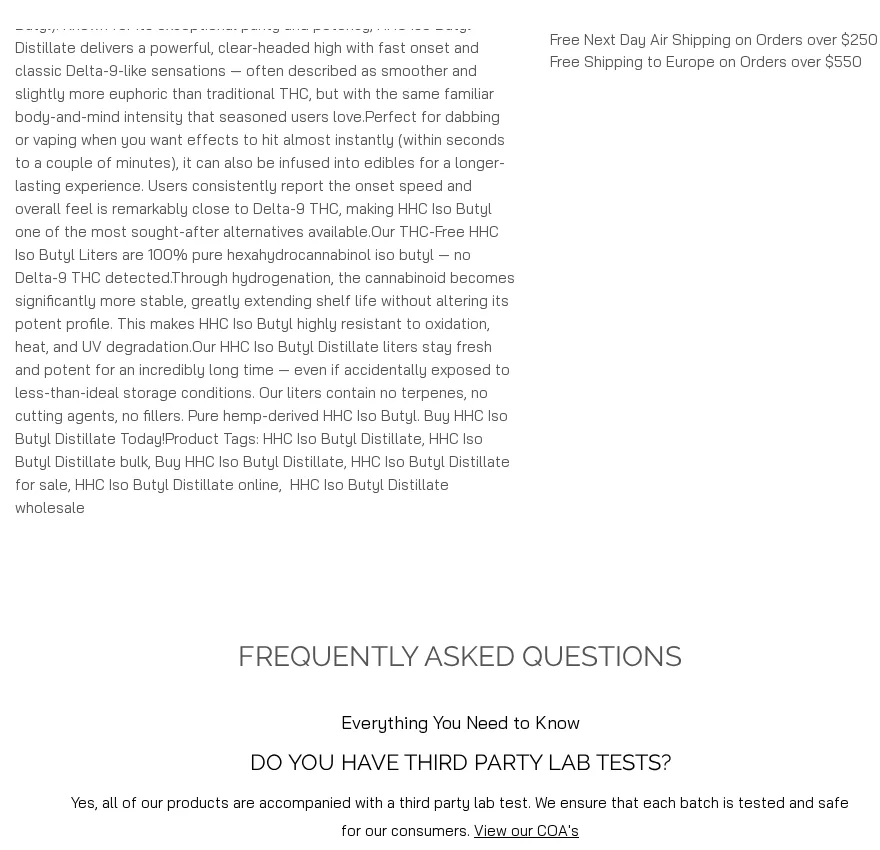
Figure 12. Voluntate, December 2025: HHC Iso Butyl, sold as hemp-derived, with a description that says the cannabinoid is made through hydrogenation. Whether such a molecule is one the plant can make is exactly what FDA was to list. [20]
CBD. CBD isolate with no THC is not reached by the THC cap on either date.[1] Full-spectrum CBD oil, which carries a little THC, is: from December 11 a bottle above 0.4 mg of total THC is not hemp.[1] The U.S. Hemp Roundtable says this covers most of the market. Its August fact sheet says "Most CBD products have 30 servings per container", and that "Whitney Economics estimates that under the ban, only 5% of hemp products would remain legal".[21] Those are the trade group's figures and its sources'; we have not checked them.
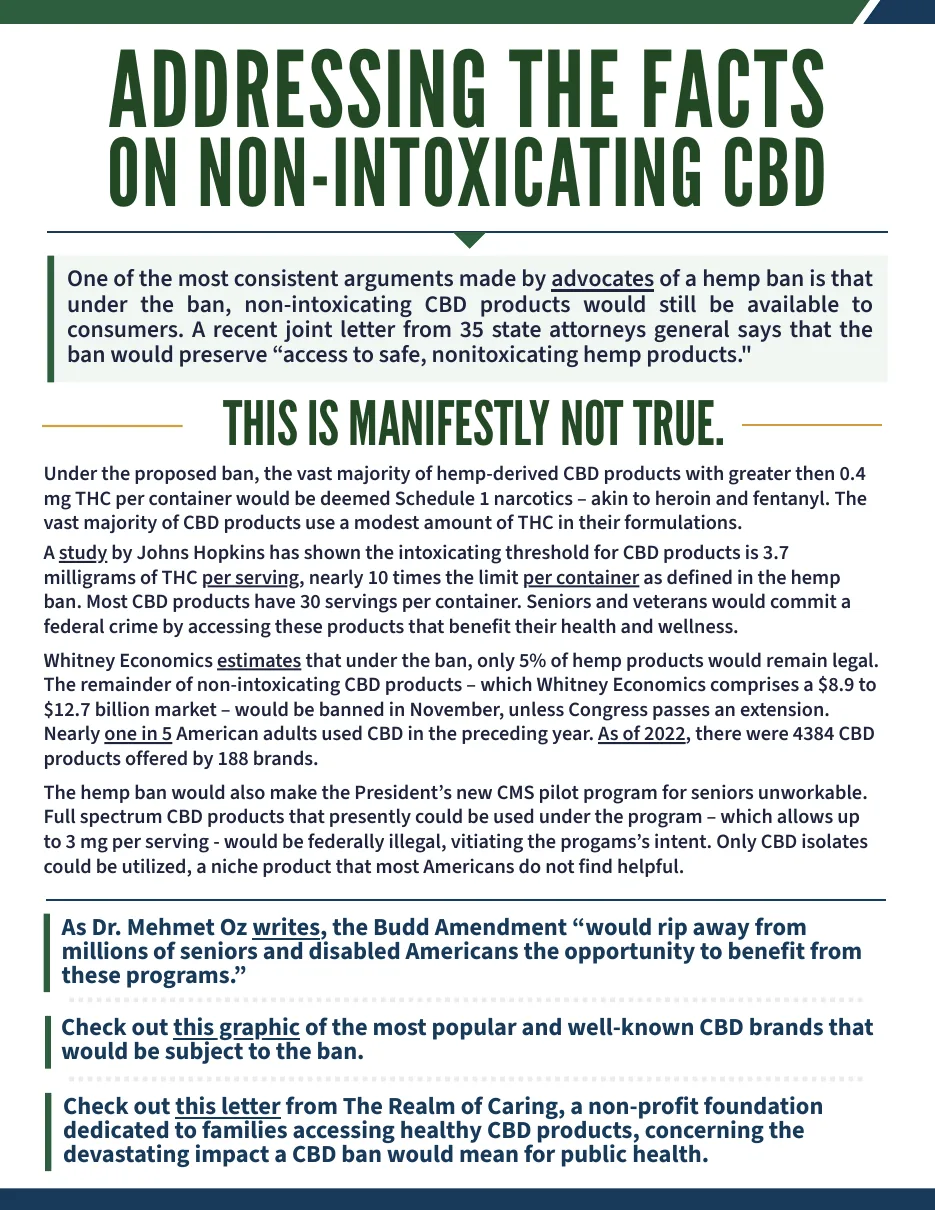
Figure 13. The Roundtable fact sheet of August 2026 on CBD. Its numbers are the trade group's and the sources it names; we have not checked them. [21]
What a product becomes when it stops being hemp
The hemp definition does not create a crime. The Controlled Substances Act does, by treating cannabis that is not hemp as marijuana.[4] The Congressional Research Service reads the change the same way: "products excluded by these provisions are not to be deemed hemp products and would instead be subject to regulation under the CSA as marijuana".[5]
What enforcement looks like is a separate question. CRS wrote in its enforcement note that "it remains unclear if and how federal law enforcement will enforce the new prohibitions when the new definition goes into effect", and that "Both FDA and DEA may lack the resources to broadly enforce the laws prohibiting intoxicating hemp products on the market".[22]
What FDA was told to publish, and has not
Section 781 gave FDA 90 days, which ran out around February 10, 2026. Within that time FDA "shall publish" four things: the list of cannabinoids the plant can naturally produce, a list of THC-class cannabinoids naturally occurring in the plant, "a list of all other know cannabinoids with similar effects to, or marketed to have similar effects to, tetrahyrocannabinol class cannabinoids", and "additional information and specificity about the term" container.[1] The spelling is the statute's.
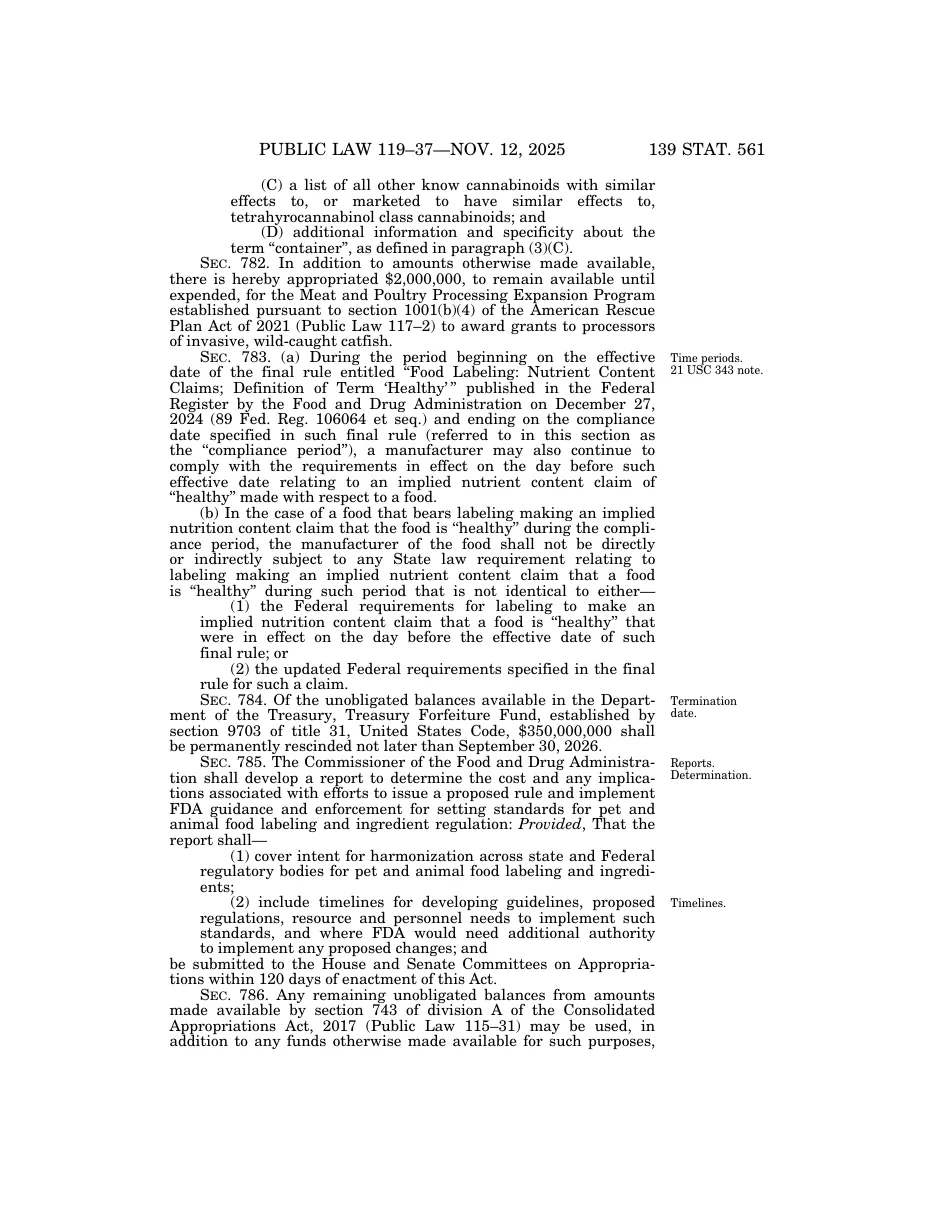
Figure 14. The end of section 781: the last of the four things FDA was to publish within 90 days. The text as enacted misspells two words in item (C). [1]
The Congressional Research Service, in a version updated on August 17, 2026, said the lists were due within 90 days, "which, as of August 2026, has not been published".[5] A Federal Register search on October 12, 2026 for documents from FDA mentioning hemp since November 12, 2025 returned none.[15] FDA's main cannabis question-and-answer page carries the line "Content current as of: 07/16/2024".[23]
So on November 12 the operative exclusion turns on a list that does not exist. That leaves three things open: which molecules are in it, how a seller or a court decides without it, and whether FDA publishes before either date. None of them is answered by any document we found.
The states got there first
Several states did not wait for the federal text. The state lines on our legal tool (/legal/thca) are the ones we have read against their instruments.
Ohio copied the federal wording into its own hemp law. Since March 20, 2026, a final product with "Greater than four-tenths of a milligram combined total per container of total tetrahydrocannabinols, including tetrahydrocannabinolic acid" is not hemp under Ohio law (/legal/thca/ohio).[24] Ohio also gave itself the job FDA has not done: "The superintendent of cannabis control, in consultation with the director of agriculture, shall establish the following lists", starting with "Cannabinoids known to be capable of being naturally produced by a Cannabis sativa L. plant".[25]
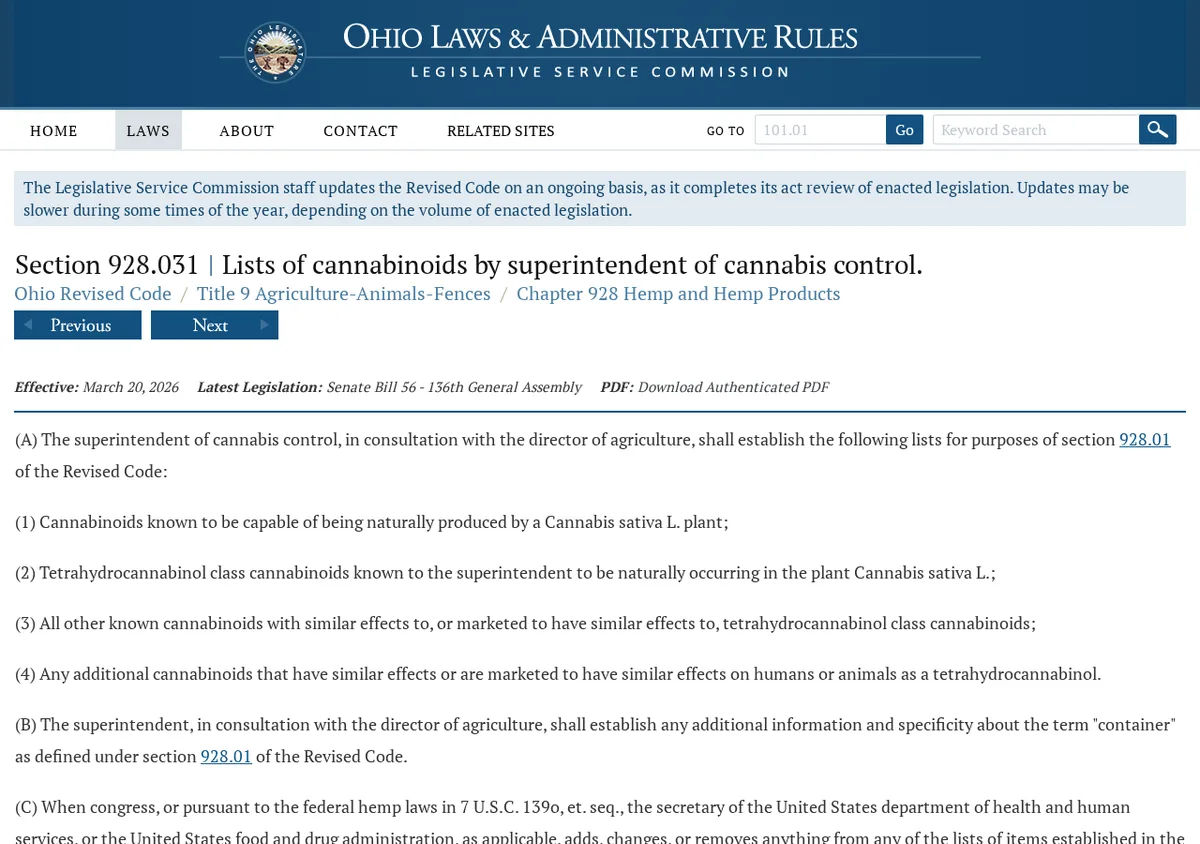
Figure 15. Ohio did not wait for FDA. Section 928.031, in force since March 20, 2026, gives the state's cannabis regulator the same four list-making jobs. [25]
Texas counts THCA in total THC under a Department of State Health Services rule with an "Effective date: March 31, 2026" (/legal/thca/texas).[10] Hemp businesses challenged it. The appeals court docket shows a "Judgment signed by trial court judge" on May 1, 2026, a notice of appeal by the state agencies four days later, a hemp-side "Motion for emergency relief disposed DENIED" on June 5, and, entered on October 5, "Set for submission on oral argument" for December 8, 2026.[26] That is three days before the federal December date.
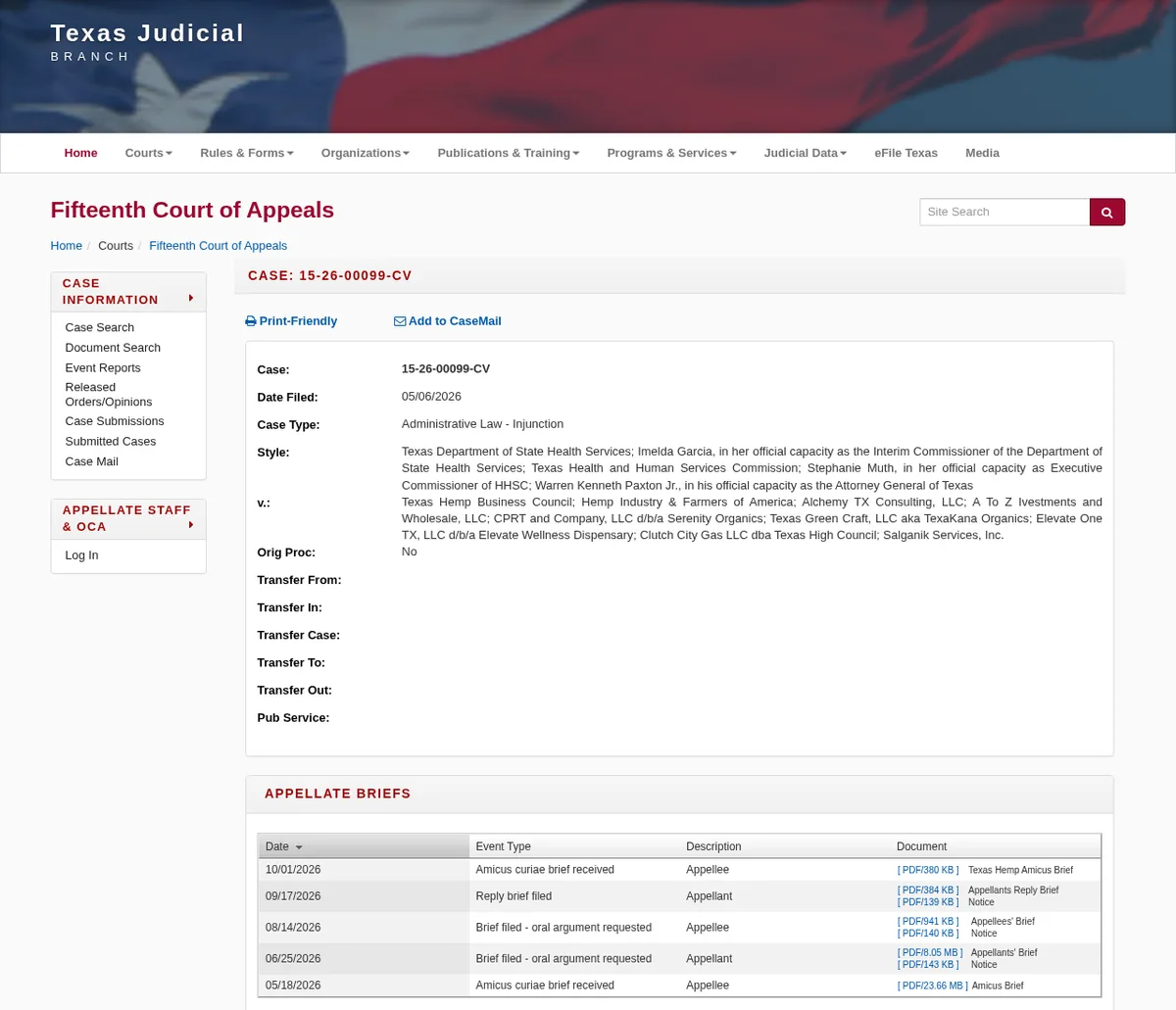
Figure 16. The Texas appeal over the state rule that counts THCA. The state agencies are the appellants; hemp businesses are the appellees. [26]
Florida regulates hemp extract through its state hemp program, which requires "a certificate of analysis prepared by an independent testing laboratory" (/legal/thca/florida).[27] Our entry there does not settle how Florida treats THCA flower.
Sellers draw their own maps. Mellow Fellow's THCA notice excludes "Arkansas, Hawaii, Idaho, Kansas, Louisiana, Oklahoma, Oregon, Rhode Island, Utah".[28] Habit's says "THC-A products are not available for shipment to the following states: Alaska, Hawaii, Idaho, Minnesota, Oregon, Rhode Island, Utah, Vermont".[29] Neither list includes Texas or Ohio.
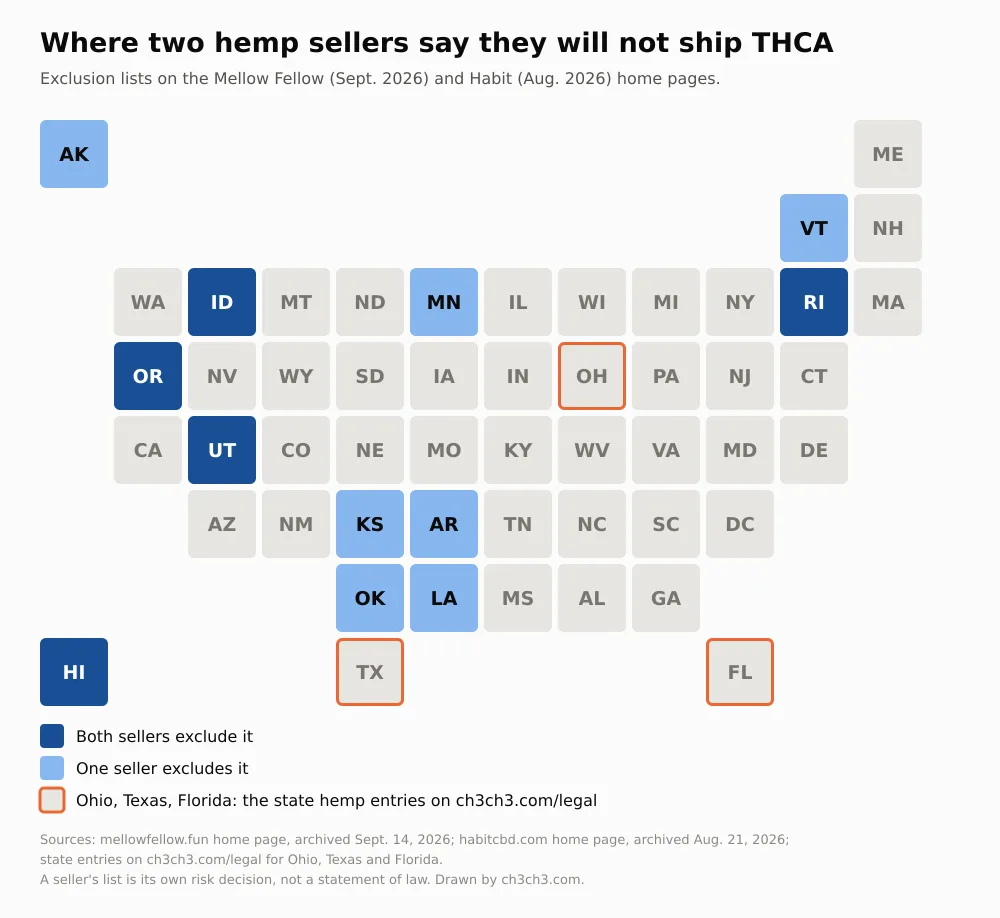
Figure 17. Two sellers' own lists of states they will not ship THCA to. Five states are on both. Ohio and Texas, which restrict THCA in the entries on our legal page, are on neither list. [28]
Who asked for it, and who pushed back
The change was requested in writing. On October 24, 2025, 39 attorneys general wrote to the appropriations and agriculture chairs: "We ask that Congress clarify the federal definition of hemp during the Fiscal Year 2026 appropriations process" or the Farm Bill.[18] Congress used the appropriations bill nineteen days later.[1]
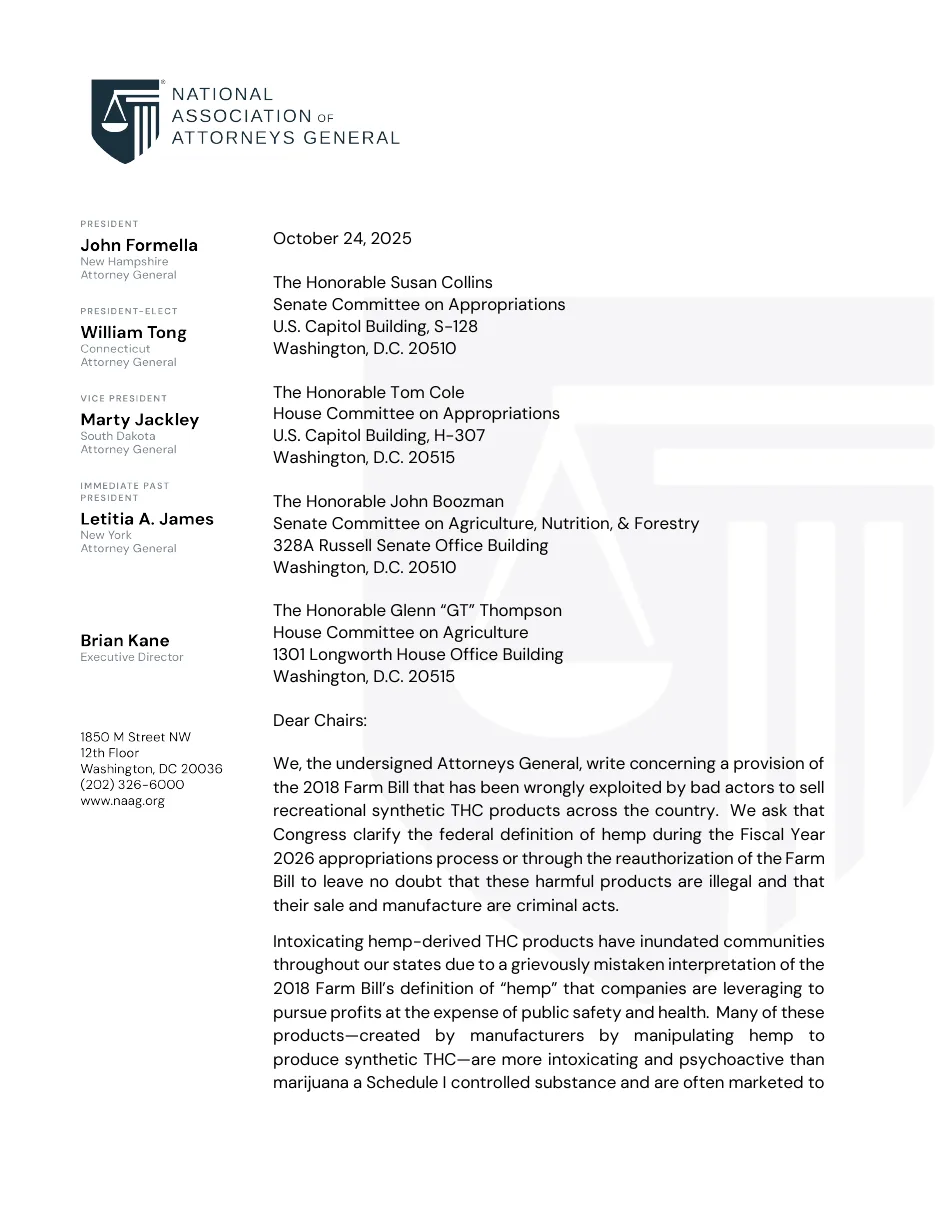
Figure 18. October 24, 2025: the attorneys general ask for the change, in the appropriations bill or the Farm Bill. Congress used the appropriations bill nineteen days later. [18]
The first bill to undo it came eight days after signing. H.R. 6209, introduced on November 20, 2025 by Rep. Nancy Mace with three cosponsors, would repeal section 781 retroactively: "Effective November 12, 2025, section 781 of the Continuing Appropriations, Agriculture, Legislative Branch" act "is repealed".[30]
In June 2026 the White House joined in. The Office of Management and Budget, in a supplemental funding request dated June 24, asked Congress for authority "revising the Federal regulation of hemp to ensure the fair treatment of hemp products", in line with a House amendment, "or, at minimum, an extension of implementation of the regulatory framework" of section 781.[31] An enclosure says the change would let Americans reach "appropriate full-spectrum CBD products".[31]
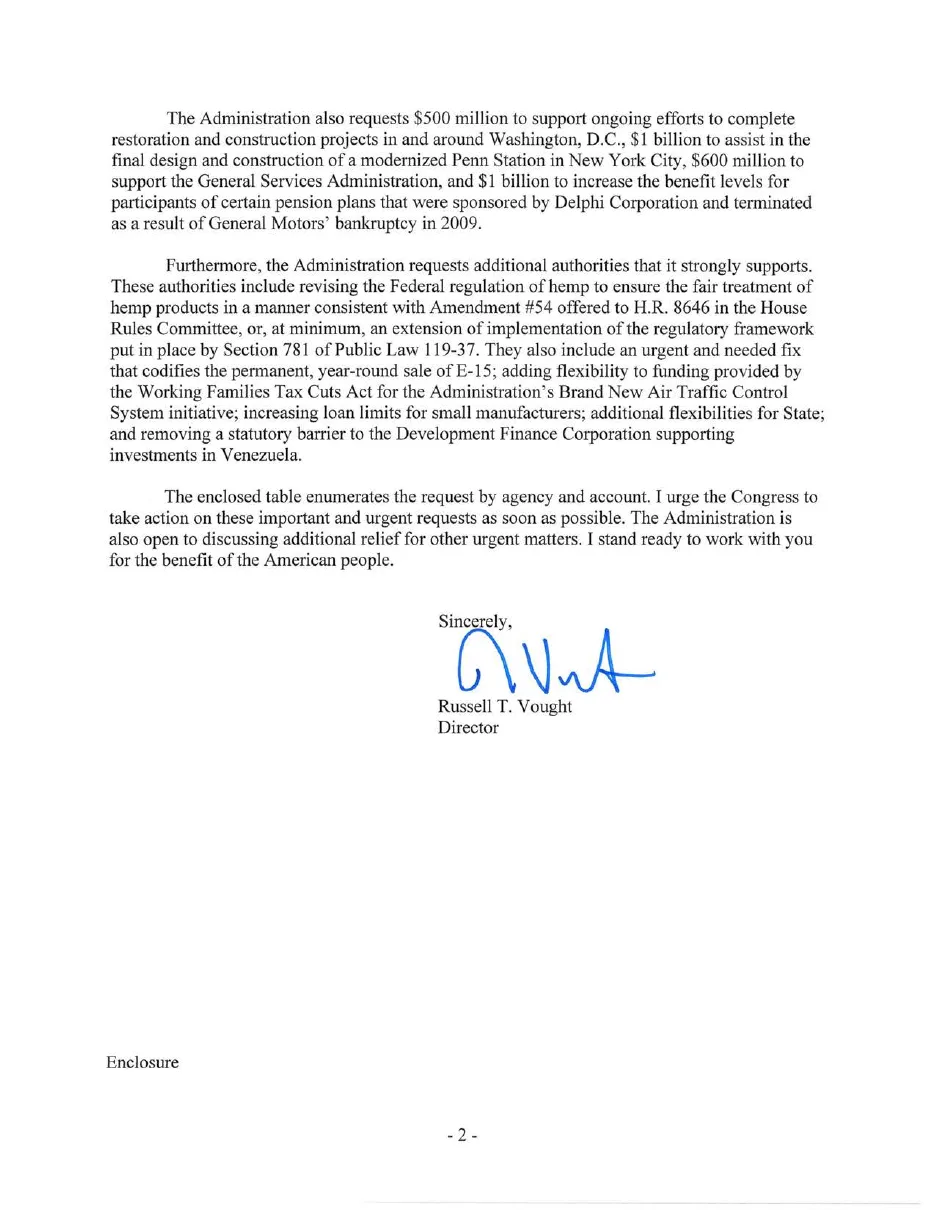
Figure 19. The White House budget office, June 24, 2026, in a supplemental funding request mostly about defence and farm aid. Its second paragraph asks for a hemp fix, or at minimum a delay. [31]
On July 22, Reps. Andy Barr and Angie Craig introduced H.R. 9830, the Lawful Hemp Protection Act. It would define hemp by "a total tetrahydrocannabinol concentration (including tetrahydrocannabinol acid) of not more than 1 percent on a dry weight basis", more than three times the 2025 limit, and provides that section 781 "(division B of Public Law 119-37) is repealed".[32]
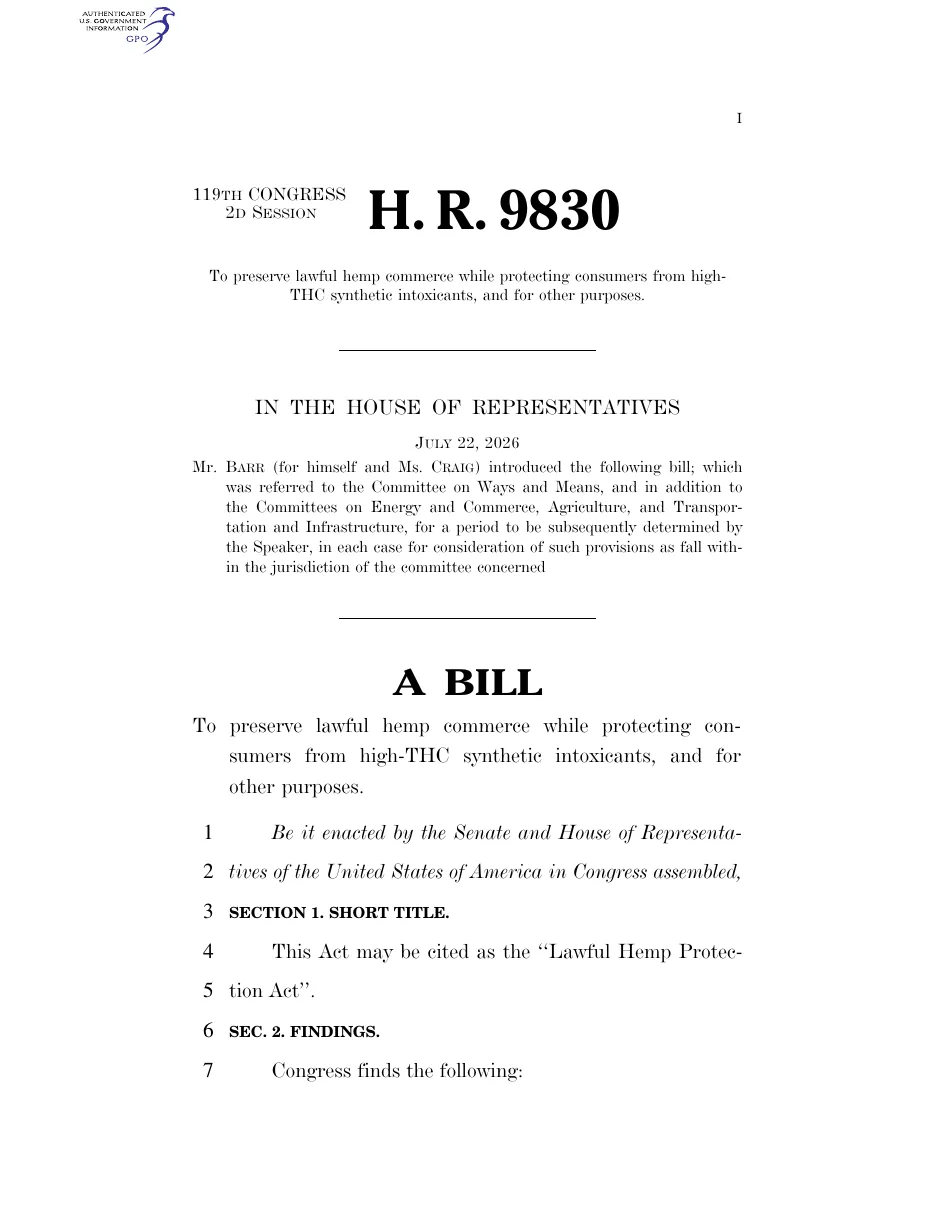
Figure 20. H.R. 9830, the Lawful Hemp Protection Act, as introduced. It would repeal section 781 and set a different definition. [32]
The delay arrived in the Senate's stopgap text on August 2. The U.S. Hemp Roundtable told its supporters that "Only a ban on pure synthetic products will go into effect in November", and that "this is not a permanent solution".[33] Five days later it reported that "Senator Ted Budd has offered an amendment that would remove the hemp extension from the Continuing Resolution".[34]
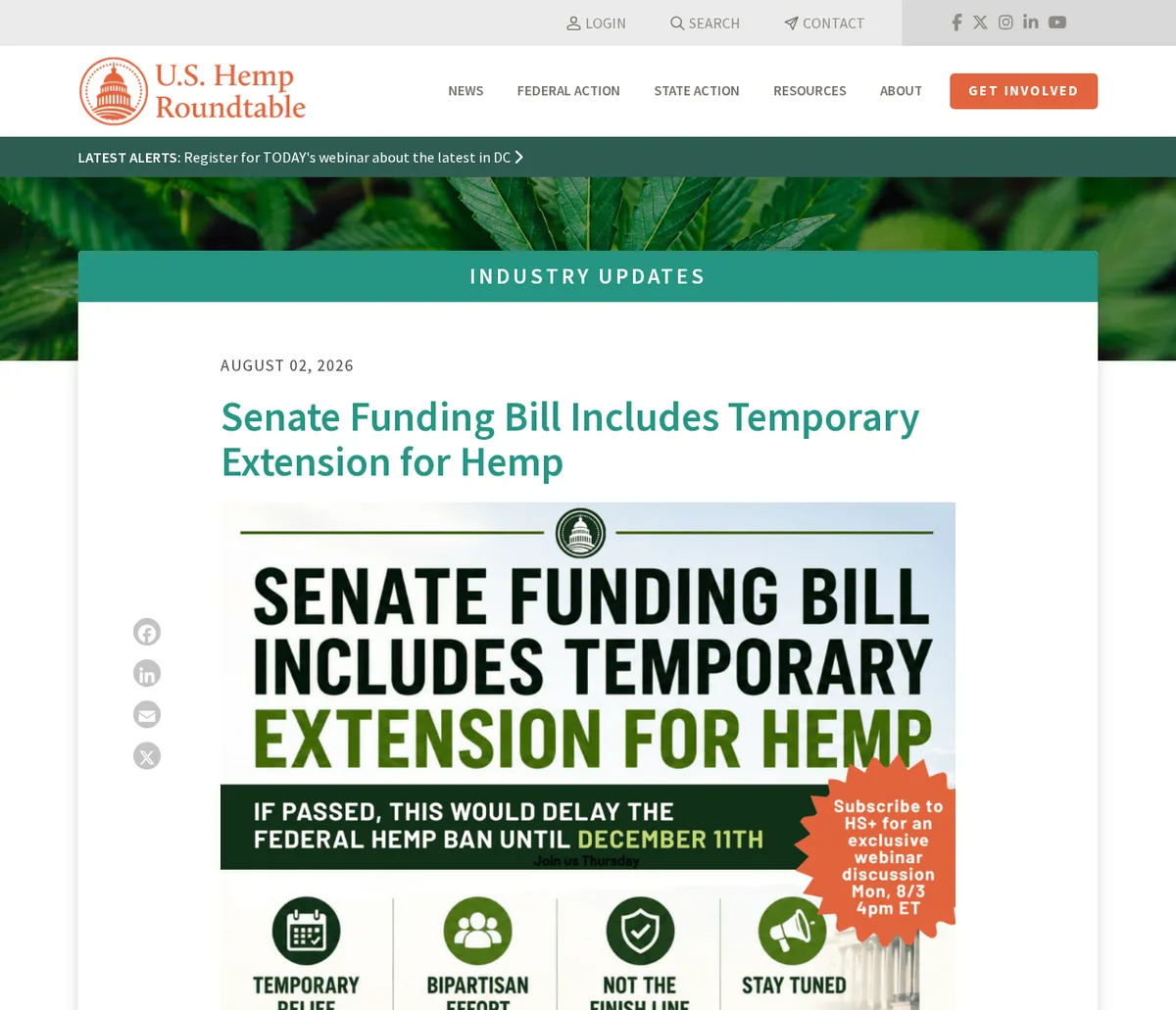
Figure 21. The U.S. Hemp Roundtable, August 2, 2026, the day the Senate text appeared. Its graphic calls the extension a delay of the ban to December 11. [33]
The attorneys general wrote again on August 4, asking Congress to keep the 2025 text by "rejecting any effort to delay, repeal, suspend, or weaken the November 2025 redefinition of" hemp.[35] Their letter says "Many States have aligned, or are in the process of aligning, their laws, regulations, and enforcement efforts with the new federal definition".[35] Its signature pages carry 34 states and the U.S. Virgin Islands, led by Arkansas, Connecticut, Indiana and New Mexico.[35]
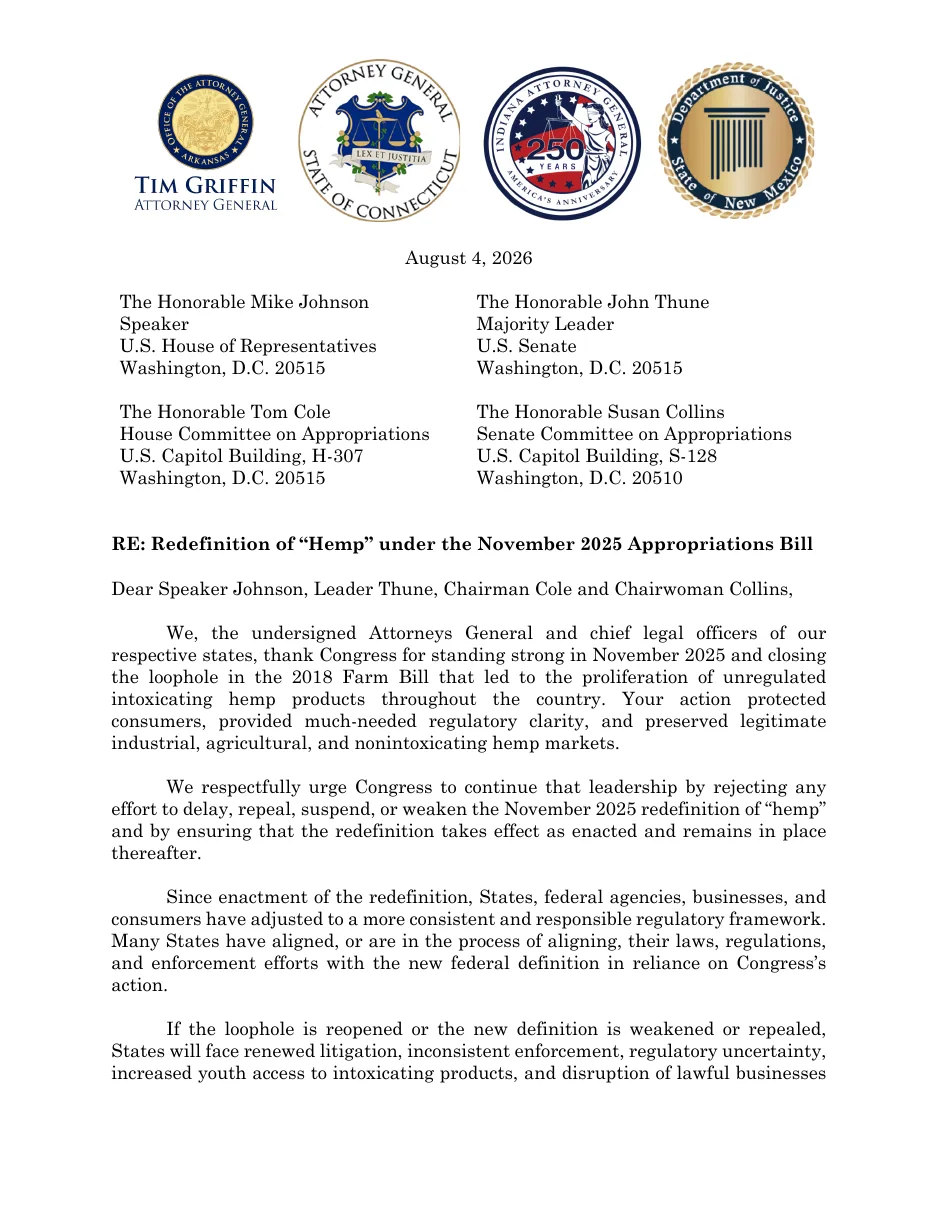
Figure 22. August 4, 2026: the second letter, sent while the Senate weighed the delay. It asks Congress to let the 2025 text take effect as enacted. [35]
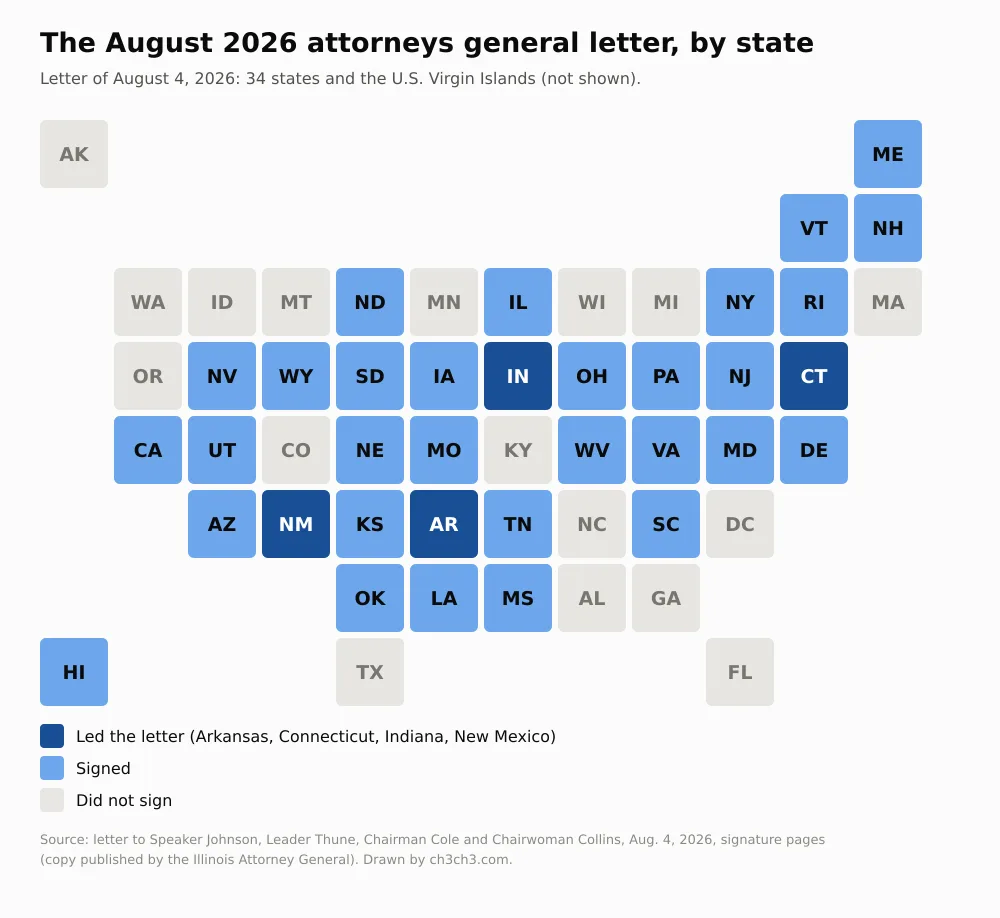
Figure 23. Who signed the August 2026 letter, from its signature pages. Thirty-four states signed; Texas and Florida did not. [35]
On August 8 the Roundtable reported that "the Senate passed the Continuing Resolution with the hemp extension intact", and said the extension "will prevent the federal hemp ban from taking effect on November 12".[36] On September 1 it reported the House vote and wrote "This extension gives us one additional month, and we intend to make every day count".[37] The President signed the next day.[2] By September 25 the group was telling members that "a federal ban on the vast majority of consumable hemp products is now scheduled to take effect in December unless lawmakers act".[38]
The Roundtable's two summaries and the statute do not say the same thing. Section 2019 does not stop section 781 from taking effect on November 12; it limits what it applies to.[2] The paragraphs that apply are about cannabinoids the plant is "not capable" of producing,[1] which is not the same set as "pure synthetic products".[33] Converted delta-8 is made from a plant extract and may or may not be on FDA's eventual list. That gap is where most of the November uncertainty sits.
What our dossiers' sellers say
Most of the sellers we have documented still rest their legal claim on the 2018 definition. The dossiers carry the details; this is the short version.
- Mellow Fellow (/p/199) and its sister company Arvida Labs said in December 2025 that the new law "will effectively ban most intoxicating hemp-derived THC products nationwide" and that they would "review and adjust product portfolios as needed".[39] Its FAQ still cited the 2018 Farm Bill in May 2026.[8]
- Habit (/p/225) tells its wholesale buyers "we are not responsible for any products that ultimately are determined to be not in compliance with the 2018 federal farm bill".[40]
- THCA Small Buds (/p/195) and ShopZaza (/p/194) sell flower as compliant with the 2018 bill, ShopZaza as "100% federally legal".[7][41]
- LIT Farms (/p/197) prints the delta-9 test on its pages: "this product contains a total delta 9 THC concentration that does not exceed 0.3% on a dry weight basis".[42] Its Wedding Cake certificate computes total THC the way the new law will.[12]
- CannaClear (/p/235) calls its stock federally legal.[17]
- MC Nutraceuticals and Vivimu (/p/209) are in the fight. The Denver Gazette reported in August that MC's chief executive "is at the forefront of efforts to delay a federal ban on hemp".[43] Vivimu's menu in July ended with a link reading Stop Hemp Ban.[44]
- Hau Processing (/p/229), a Denver hemp refinery, sells on the intermediate side of the definition, where the (ii) exclusions and the 0.3 percent combined-total limit apply.[1]
- Voluntate (/p/210) sells the novel molecules that the November paragraph may reach first, depending on the list.[19][1]
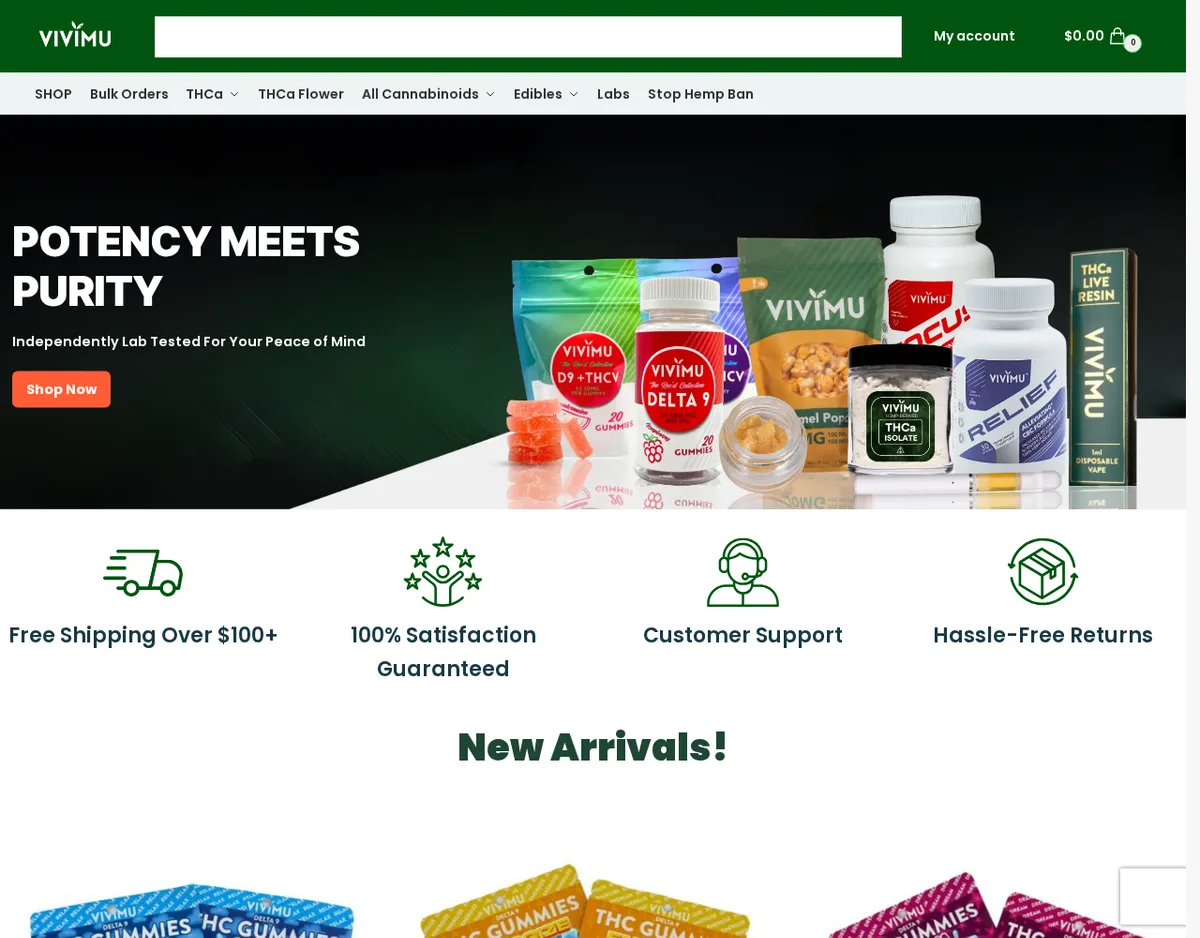
Figure 24. Vivimu, the retail arm of MC Nutraceuticals, July 2026. The last menu item is a link reading Stop Hemp Ban. [44]
Buyers have noticed the silence. A post in r/altcannabinoids on October 2 said it was strange that vendors seemed to be pretending nothing was coming, and that "Only Vivi has sales that seem to match what is expected to be banned".[45] The poster's own reading was broader than the statute's: "everything except CBD, CBG, and possibly CBN will be federally banned after December 11th".[45] Nothing in the text bans CBD isolate, and THCA from the plant is not excluded by being THCA; it is excluded by quantity.[1]
Still open
- The lists. FDA's four publications under section 781 were due around February 10, 2026, and none had appeared by the time of the latest CRS update or our Federal Register search on October 12.[5][15]
- December 11. The date is the stopgap's end date.[2] Any funding law passed before then can move it, keep it or drop it.
- Loose flower and the container cap. Whether a jar of flower is a final product in a container under the 0.4 mg cap is not addressed by any guidance we found.[1]
- Texas. The appeal is set for argument on December 8, 2026.[26]
- H.R. 9830. Introduced and referred to four committees; we found no further action in the bill text record.[32]
- Enforcement. CRS says it is unclear whether and how the new definition will be enforced.[22]
Changes
- 2026-10-12: first published.
References
- Public Law 119-37, approved November 12, 2025, division B, section 781 (hemp definition, 7 U.S.C. 1639o) — US Government Publishing Office
- Public Law 119-103 (H.R. 6500), Continuing Appropriations and Extensions Act, 2027, approved September 2, 2026: division A section 106 and division B section 2019 — US Government Publishing Office
- 7 U.S.C. 1639o, definitions (Agricultural Marketing Act of 1946 section 297A), United States Code 2023 edition — US Government Publishing Office
- 21 U.S.C. 802, definitions (Controlled Substances Act), United States Code 2023 edition — US Government Publishing Office
- Congressional Research Service, IF13136, Changes to the Statutory Definition of Hemp and Implications for Agricultural Policy, version 4 (updated August 17, 2026), archived 2026-08-18 — Wayback Machine
- thcasmallbuds.com About page, archived 2026-05-02 — Wayback Machine
- thcasmallbuds.com home page, archived 2026-05-01 — Wayback Machine
- mellowfellow.fun FAQ, archived 2026-05-12 — Wayback Machine
- r/THCaFlower, Hemp Ban Gets a 30-Day Reprieve, by u/Mediiicaliii, 2026-08-03 — Reddit — anecdotal report, not evidence
- 25 TAC Chapter 300, Manufacture, Distribution, and Sale of Consumable Hemp Products (adopted rules, Texas Register, March 20, 2026) — Texas Secretary of State, Texas Register
- Certificate of analysis SD250415-076, THCA Queen, PharmLabs San Diego, reported 2025-08-22, image on thcasmallbuds.com, archived 2026-01-15 — Wayback Machine
- Marin Analytics certificate, Wedding Cake - Hybrid, client Fresh Bros, sample 725-121224-010, as linked from litfarms.com — Marin Analytics, via the litfarms.com Shopify file store
- Certificate of analysis, 24K Gold flower, Excelbis Labs, completed 2026-05-05, from ShopZaza's Shopify file store, archived 2026-10-06 — Wayback Machine
- Habit CBD home page, archived 2025-09-13 — Wayback Machine
- Federal Register API search: documents matching hemp, from the Food and Drug Administration, published on or after November 12, 2025 (run 2026-10-12; count 0) — Federal Register
- DEA final rule, Specific Listing for Hexahydrocannabinol, A Currently Controlled Schedule I Substance, FR Doc. 2026-08595, May 4, 2026 — Federal Register
- cannaclear.com home page, archived 2026-06-10 (the latest capture) — Wayback Machine
- Letter of 39 attorneys general to the chairs of the House and Senate appropriations and agriculture committees, October 24, 2025 (National Association of Attorneys General), archived 2026-06-05 — Wayback Machine
- bonavoluntate.com CB9 New Release, archived 2023-12-11 — Wayback Machine
- voluntate.shop HHC Iso Butyl, archived 2025-12-15 — Wayback Machine
- U.S. Hemp Roundtable, Addressing the Facts on Non-Intoxicating CBD (fact sheet, August 2026) — HempSupporter.com (U.S. Hemp Roundtable)
- Congressional Research Service, IN12620, Change to Federal Definition of Hemp and Implications for Federal Enforcement, archived 2026-07-06 — Wayback Machine
- FDA, FDA Regulation of Cannabis and Cannabis-Derived Products, Including Cannabidiol (CBD), read 2026-10-12 — US Food and Drug Administration
- Ohio Revised Code 928.01, definitions (as amended by S.B. 56, 136th General Assembly) — Ohio Legislative Service Commission, Ohio Laws
- Ohio Revised Code 928.031, Lists of cannabinoids by superintendent of cannabis control (effective March 20, 2026) — Ohio Legislative Service Commission, Ohio Laws
- Texas Fifteenth Court of Appeals, case 15-26-00099-CV, Texas Department of State Health Services et al. v. Texas Hemp Business Council et al., docket read 2026-10-12 — Texas Judicial Branch
- Florida Statutes 581.217, State hemp program — Florida Legislature, Online Sunshine
- mellowfellow.fun home page, archived 2026-09-14 — Wayback Machine
- Habit CBD home page, archived 2026-08-21 — Wayback Machine
- H.R. 6209, American Hemp Protection Act of 2025, introduced November 20, 2025 — US Government Publishing Office
- Office of Management and Budget, letter to the Speaker transmitting supplemental appropriations requests (Estimate No. 2), June 24, 2026 — The White House
- H.R. 9830, Lawful Hemp Protection Act, introduced July 22, 2026 — US Government Publishing Office
- U.S. Hemp Roundtable, Senate Funding Bill Includes Temporary Extension for Hemp, August 2, 2026 — HempSupporter.com (U.S. Hemp Roundtable)
- U.S. Hemp Roundtable, Nearly 100 Organizations Urge Senate to Preserve Hemp Ban Delay, August 7, 2026 — HempSupporter.com (U.S. Hemp Roundtable)
- Letter of attorneys general to Speaker Johnson, Leader Thune, Chairman Cole and Chairwoman Collins, August 4, 2026 (copy published by the Illinois Attorney General) — Office of the Illinois Attorney General
- U.S. Hemp Roundtable, Congress Preserves Hemp Extension in Continuing Resolution, August 8, 2026 — HempSupporter.com (U.S. Hemp Roundtable)
- U.S. Hemp Roundtable, BREAKING: Congress Sends Hemp Extension to the President, September 1, 2026 — HempSupporter.com (U.S. Hemp Roundtable)
- U.S. Hemp Roundtable Hits Capitol Hill with Strong Message: Regulate, Don't Ban Hemp, September 25, 2026 — HempSupporter.com (U.S. Hemp Roundtable)
- Mellow Fellow and Arvida Labs respond to federal hemp THC ban and ongoing marijuana rescheduling review (EIN Presswire release, 2025-12-10), archived 2025-12-30 — Wayback Machine
- Habit wholesale account policies, archived 2026-05-20 — Wayback Machine
- shopzaza.com home page, archived 2026-10-04 — Wayback Machine
- litfarms.com home page, archived 2025-01-01 — Wayback Machine
- Colorado man at center of push to delay federal hemp ban, 2026-08-06 — Denver Gazette
- vivimu.com home page, archived 2026-07-20 — Wayback Machine
- r/altcannabinoids, What Will Be Available After the Nov/Dec 11th Bans?, by u/forevver, 2026-10-02 — Reddit — anecdotal report, not evidence
Comments
Sign in to join the conversation.
No comments yet.