The THC in cannabis is one specific isomer, (−)-trans-Δ9-THC. Its mirror image is far less active and does not occur naturally. This is a different question from the Δ8 / Δ9 distinction, which is about where a double bond sits rather than about handedness.
Joint with Yechiel Gaoni: isolation from hashish, structure elucidation and partial synthesis, J. Am. Chem. Soc. 86:1646-1647. The paper carries Gaoni as first author.
Gaoni Y, Mechoulam R, 'Isolation, structure and partial synthesis of an active constituent of hashish', J. Am. Chem. Soc. 86:1646 (1964) — the first isolation of pure Δ9-THC from the plant with its structure. The hashish was supplied by the Israeli police. Roger Adams had made Δ9- and Δ8-THC from cannabidiol in 1942, but not isolated the natural product.
Total synthesis of dl-Δ1-THC, joint with Yechiel Gaoni, J. Am. Chem. Soc. 87:3273-3275. Separate act from the 1964 isolation/structure paper, hence the second entry.
Total synthesis of dl-Δ1-THC, Mechoulam R & Gaoni Y, J. Am. Chem. Soc. 87:3273 (1965). A stereospecific synthesis of the (−)-enantiomers followed in 1967.
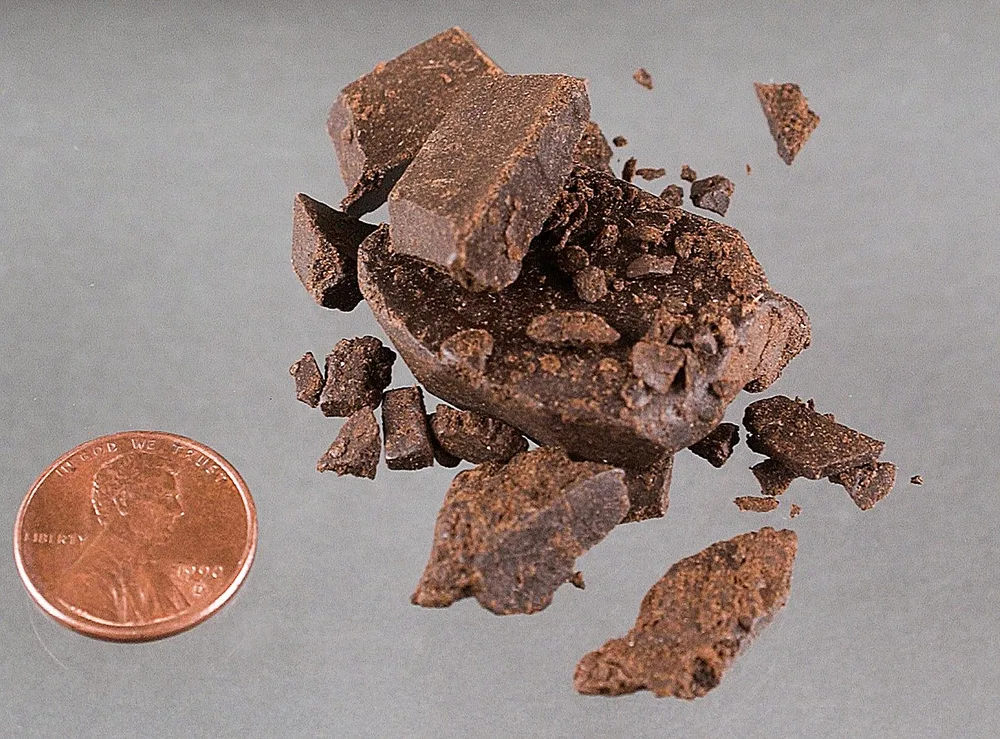
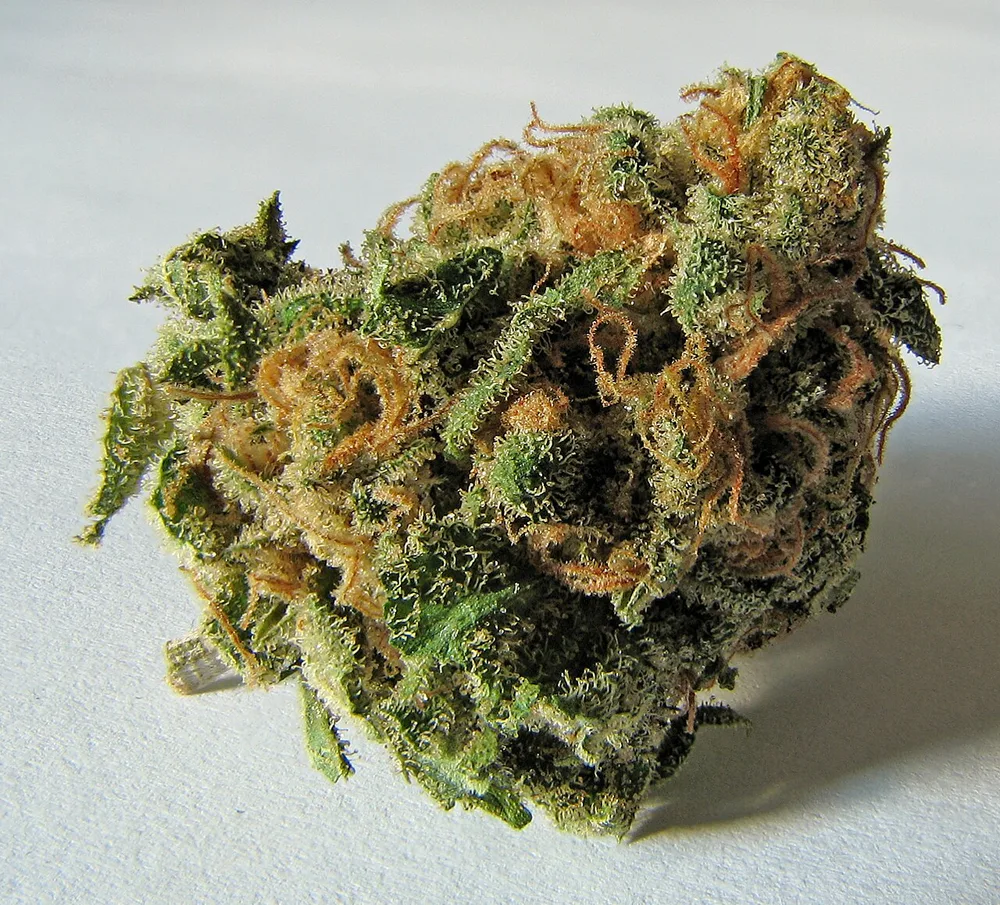
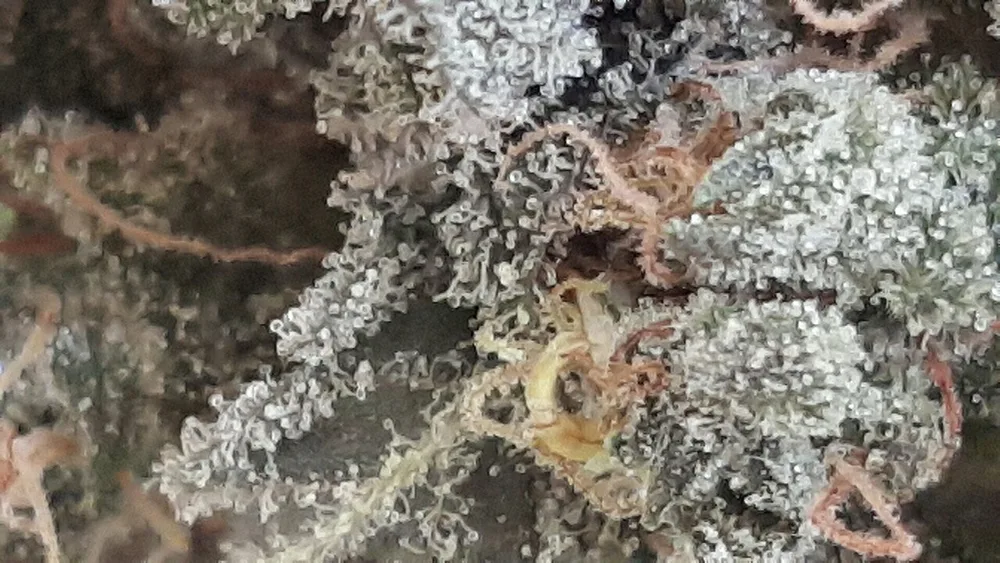
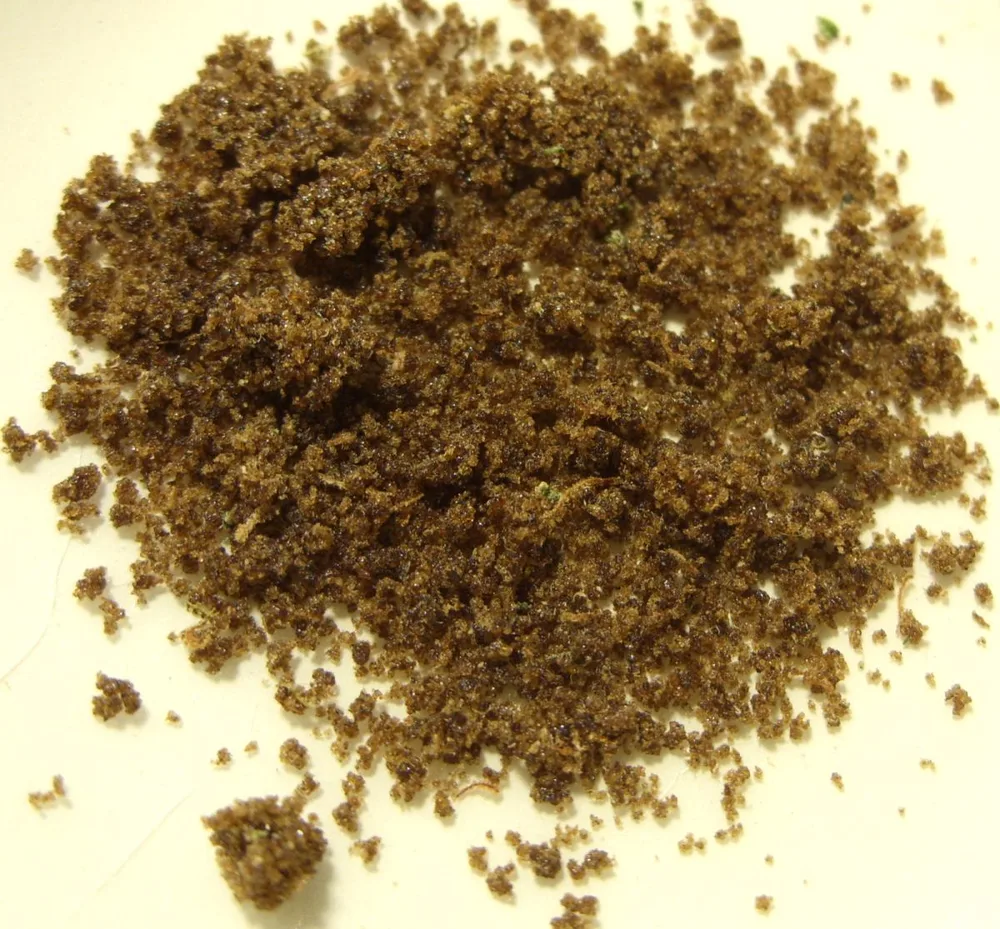
sampleBroken pieces of hashish (pressed cannabis resin) beside a US penny for scale; hash ranges from tan to dark brown and crumbles into smaller chunks.Public domainsampleDried cannabis flower ("bud"), the form in which THC-rich cannabis is most often sold; orange pistils and a frosty trichome coating are visible. HighInBC - Attribute to yogi Bushby ·CC BYsampleClose-up of cannabis flower trichomes, the crystal-like resin glands where THC is concentrated; this "frosty" coating is what resinous flower looks like up close. Cannabis Pictures ·CC BYsampleUnpressed "bubble hash": loose, sand-colored granules of cannabis resin separated from the flower by ice-water extraction. Mjpresson ·CC BY-SA