CH₃CH₃

TMA (3,4,5-Trimethoxyamphetamine)

Chemistry

35 atoms · Conformer computed and published by PubChem.
Formula
C12H19NO3
Molar mass
225.28 g/mol
IUPAC name
1-(3,4,5-trimethoxyphenyl)propan-2-amine
InChIKey
WGTASENVNYJZBK-UHFFFAOYSA-N

Chemistry from PubChem CID 31016.

Also known as

  • 3,4,5-TRIMETHOXYAMPHETAMINE
  • alpha-Methylmescaline
  • Trimethoxyamphetamine
  • 1082-88-8
  • .alpha.-Methylmescaline
  • dl-3,4,5-Trimethoxyamphetamine
  • Trimethoxyphenyl-beta-aminopropane
  • 1-(3,4,5-trimethoxyphenyl)propan-2-amine

Stereoisomers

2 distinct stereoisomers are registered for this structure. This area's record is the racemate — the mixture, which is normally the form encountered.

Attribution

  • Gordon Alles — first synthesis, 1937

    Passie and Benzenhofer (2018) state that Alles synthesised TMA around 1937 as a mescaline analogue and compared it with amphetamine in animals and in self-experiments, finding paranoid thought distortion, restlessness and anxiety. He did not publish until 1959, so the compound's first appearance in the literature is Hey's 1947 paper and the first published account of its psychedelic effects is Peretz, Smythies and Gibson (1955). Marked medium because the priority claim rests on a single 2018 historical paper working from Alles's own late account; TMA was also run at Edgewood Arsenal as EA-1319 in 1953-54.

    source

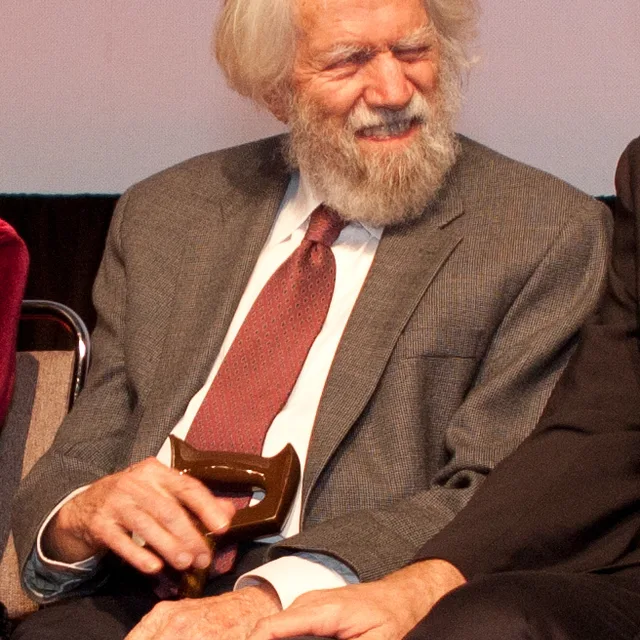
  • Portrait of Alexander "Sasha" Shulgin
    Alexander "Sasha" Shulgin — popularised it, 1961

    NOT his synthesis or discovery: Gordon Alles synthesized TMA around 1937 and its psychedelic effects were first described in 1955 (Peretz, Smythies, Gibson). Shulgin published early psychotomimetic research on it in 1961 and covered it in PiHKAL (#157); it launched his mescaline-analog programme.
    source

No posts here yet.

Tell us something