

















CH₃CH₃
AI image · google/nano-banana-2-lite

Psychedelics

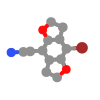
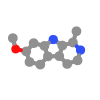
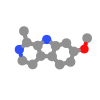
Membership here is decided by mechanism, not by structure: everything in this subject agonises the 5-HT2A receptor, and blocking that receptor stops the experience. The scaffolds underneath are unrelated to each other — lysergamides, tryptamines, phenethylamines, the N-benzyl series, benzodifurans and β-carbolines — and little transfers between them. Potency, onset, duration and whatever else a compound touches vary enormously from one family to the next, so a dose or a timeline learned from one says nothing about another.

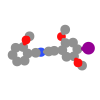
Salvia is NOT here: salvinorin A is a selective κ-opioid agonist with no 5-HT2A activity, and it is filed under Atypical, as are muscimol and Amanita muscaria. What hurts people in this class is rarely simple toxicity. The NBOMe family's margin is far narrower than the blotter it is sold as, several members are strong vasoconstrictors, and the β-carbolines filed here are MAO inhibitors — so the serotonergic interactions live inside the subject as well as outside it.

No posts here yet.

Urban legends

  • False LSD

    Acid is cut with strychnine, and that is what gives you the body load.

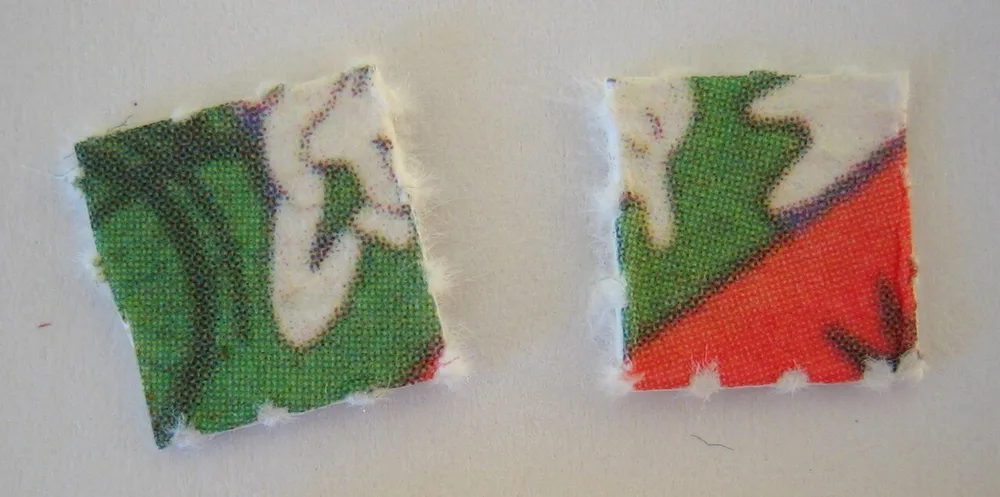
    A blotter square weighs about 2 mg, too little to hold an active dose of strychnine, and the street-drug labs that tested LSD did not report finding it. The one documented case is a powder sold as LSD in the late 1960s.

    First documented: , Acid Dreams by Martin Lee and Bruce Shlain, page 188, as cited by a reader to Ask Erowid

    Origin, evidence and 4 references

    Origin

    There is one documented case behind the story. In his book LSD: My Problem Child, Albert Hofmann described "a case in the late sixties of strychnine being found in an LSD sample that was a white powder".[1]

    By 1985 the claim was in print as history. Acid Dreams, by Martin Lee and Bruce Shlain, blamed part of the decline of Haight-Ashbury on "samples of LSD showing up laced with amphetamines and strychnine". Erowid later noted the authors gave no source, and filed the claim as a myth "without a reference or additional data to back it up".[2]

    On Usenet it was already a running argument. A 1992 post to alt.drugs said "the most likely place to find strychnine is in myths posted to alt.drugs".[1]

    The evidence

    The chemist Alexander Shulgin wrote that he had looked at a large number of illicit street samples and "never detected the presence of strychnine" in them. He added that "strychnine is not needed to bond LSD to blotter paper", and that it is not a breakdown product of LSD either.[1]

    Street-drug testing programs agree. Published analyses by PharmChem and the Los Angeles County street drug analysis program are described as ones "which likewise never found any strychnine".[1] George Root, who ran Florida's anonymous street drug testing program from 1972 to 1977, wrote: "I recall no instances of samples of actual LSD being combined with strychnine".[1]

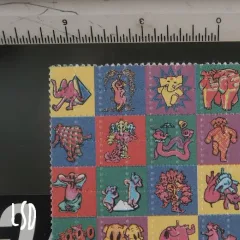
    The arithmetic rules it out for blotter. A standard 5 mm square weighs about 2 mg. Even "if the paper itself was made completely out of pure strychnine", the dose would sit at the very bottom of its range of activity.[1] Erowid puts it plainly: "It is virtually impossible to fit enough strychnine to have any effect" in most LSD preparations.[3] The 1960s were different only in form, since then "LSD was sold primarily in tablet form" and a tablet is easier to fake.[2]

    Strychnine does turn up as an adulterant, in other drugs. A 2011 review of adulterant studies lists it in heroin and notes that the amounts found, "such as strychnine in heroin, are not life-threatening".[4]

    The body load has other explanations. Cramps and nausea are reported with LSD itself, and "poorly synthesized LSD might have other ergot derivatives in it".[1]

    References

    1. Strychnine in LSD (collected by Lamont Granquist, 1994). Erowid, from the Hyperreal drug archives, Wayback capture
    2. Was LSD laced with strychnine in the 1960s? (Ask Erowid, question 2988). Erowid (2002), Wayback capture
    3. How do I test for strychnine in LSD? (Ask Erowid, question 191). Erowid (2000), Wayback capture
    4. Adulterants in illicit drugs: a review of empirical evidence. Drug Testing and Analysis 3:89 (2011), via PubMed
  • False LSD

    College students on LSD stared at the sun until they went blind.

    The famous version, six Pennsylvania students blinded in 1968, was invented by a state official who admitted it within days. Sun-gazing on LSD has burned retinas in a few documented cases, but not blinded a group of students.

    First documented: , The New York Times and Los Angeles Times, reporting four Santa Barbara students, as quoted in a 1994 Snopes post

    Origin, evidence and 5 references

    Origin

    The first version came from Santa Barbara. On 19 May 1967 the New York Times ran an Associated Press item saying "the vision of four users of LSD has been impaired for life" after they stared at the sun. Its only source was an unnamed spokesman for a local ophthalmological society.[1] Reviewing the coverage in 1994, Snopes noted that "nowhere in this entire article is a single name mentioned".[1]

    The famous version came from Pennsylvania in January 1968. Norman Yoder, the state commissioner for the blind, said six college students had taken LSD, lain in a clearing and stared at the sun, and that "the retinas of their eyes were destroyed". He would not say where: "Yoder had refused to identify the college or name the students".[2] Newsweek described them as "all nice kids, not hippies", found "all totally, permanently and helplessly blind".[1]

    The evidence

    Governor Raymond Shafer ordered an inquiry, and "within a week the hoax was revealed".[3] The state attorney general said inconsistencies in the "case records apparently doctored to fit the story" led investigators to question Yoder "until he admitted the incident was false". Yoder was suspended, and a state official said he had been sent to a psychiatric hospital in Philadelphia.[2] Newsweek later printed a correction saying it had "ran the story in good faith".[1]

    Sun-gazing on LSD can still hurt. The pharmacologist David Nichols points to "two documented cases of eye damage" in the medical literature.[1] One is a 1973 report titled "Solar retinopathy from sun-gazing under the influence of LSD".[4] The other describes a 23-year-old man who "sustained severe macular damage by sun gazing" while on a hallucinogen.[5] Each is one patient with a burned macula, not a group of students struck blind.[4][5]

    The propaganda

    The story travelled because officials and the national press carried it. It reached readers through the Associated Press and Newsweek before anyone checked it.[2][1]

    References

    1. Urban folklore: LSD users stare at the sun until blind (Snopes, alt.folklore.urban, October 1994). Erowid, from the Hyperreal drug archives, Wayback capture
    2. Fear over use of LSD starts hoax (Associated Press, Harrisburg). The Michigan Daily, 20 January 1968, page 8, Wayback capture
    3. A 1960s state official claimed Pa. college students took LSD and went blind, and newspapers believed him. Billy Penn (WHYY), 23 January 2022, Wayback capture
    4. Solar retinopathy from sun-gazing under influence of LSD. British Journal of Ophthalmology 57:270 (1973), via PubMed
    5. Severe solar maculopathy associated with the use of lysergic acid diethylamide (LSD). American Journal of Ophthalmology 81:413 (1976), via PubMed
  • Misleading LSD

    In the US you can get life in prison for a single hit of acid.

    No law gives life for one dose. Federal sentences weigh the paper or sugar the LSD is on, so a few doses can carry a five- or ten-year minimum. Life came only with two earlier drug convictions, and since 2018 that tier is 25 years.

    First documented: , United States v. Marshall (7th Cir.), where the court itself raised one hit dissolved in orange juice drawing a ten-year minimum

    Origin, evidence and 6 references

    Origin

    The idea grew out of a real feature of federal law: LSD sentences are set by weight, and the weight includes whatever the drug is on. An appeals court put it at its starkest in 1990. "An average dose of LSD weighs .05 milligrams, which is less than two millionths of an ounce", it noted, yet "Someone who sold a single hit of LSD dissolved in a tumbler of orange juice could be exposed to a ten-year mandatory minimum."[1]

    The press carried the cases. In 1993 Reason wrote of a defendant whose crime was this: "he sold 199 hits of LSD to a friend at 65 cents each". On blotter paper, "that means a mandatory minimum sentence of five years".[2]

    The evidence

    The weight rule is real. The Supreme Court held in 1991 that "the statute requires the weight of the carrier medium to be included when determining the appropriate sentence for trafficking in LSD".[3] The thresholds are low. Five years starts at "1 gram or more of a mixture or substance containing a detectable amount of lysergic acid diethylamide (LSD)", where the sentence "may not be less than 5 years and not more than 40 years".[4] A single dose on sugar crosses that line, since "The sugar cube on which the dose may be dropped for purposes of ingestion and transportation, however, weighs approximately 2 grams".[3]

    The top of the scale is "10 grams or more of a mixture or substance containing a detectable amount of lysergic acid diethylamide (LSD)", and there the sentence "may not be less than 10 years or more than life".[4] Life is the ceiling there, not the rule. The mandatory life term came from a person's record: before December 2018 the law said that "after two or more prior convictions for a felony drug offense have become final, such person shall be sentenced to a mandatory term of life imprisonment without release".[4]

    That is what happened to Tim Tyler. He was "sentenced to a mandatory double-life term in prison without the possibility of parole for conspiracy to possess LSD with intent to distribute".[5] He was a Grateful Dead follower "who at 25 was sentenced to life in federal prison for possession with intent to deliver LSD", and President Obama commuted the sentence in 2016: "He is now set to be released on August 30, 2018, conditioned upon enrollment in residential drug treatment".[6]

    The First Step Act of 2018 replaced that mandatory life term with one where "such person shall be sentenced to a term of imprisonment of not less than 25 years".[4] So a few hits on heavy paper or sugar can still mean years in federal prison, but no law gives life for one dose.

    References

    1. United States v. Marshall, 908 F.2d 1312 (7th Cir. 1990) (en banc). US Court of Appeals for the Seventh Circuit, 17 July 1990, via OpenJurist
    2. Drugs: Weighty Matters. Reason (Jacob Sullum), October 1993, Wayback capture
    3. Chapman v. United States, 500 U.S. 453 (1991). US Supreme Court, via Legal Information Institute, Cornell Law School
    4. 21 U.S.C. 841, Prohibited acts A. Legal Information Institute, Cornell Law School
    5. Life in prison for selling LSD. CNN, 26 April 2014, Wayback capture
    6. 111 will be freed in Obama's latest commutation of nonviolent drug offenders. PBS NewsHour (Associated Press), 30 August 2016, Wayback capture
  • False LSD

    LSD stays in your spinal fluid forever and can trigger a trip years later.

    LSD has a plasma half-life of a few hours and spinal fluid is renewed about four times a day. No study has found LSD stored in a user's spinal fluid. Flashbacks happen, rarely, but they are not stored drug.

    First documented: , Straight Dope Message Board, thread on acid flashbacks

    Origin, evidence and 6 references

    Origin

    The story was being passed around and argued about by 1999. On a Straight Dope Message Board thread about acid flashbacks, one poster blamed stories of trips set off by exercise for "the myth that LSD can be stored in your system" and "later released by heavy activities".[1]

    Erowid's page on the myth describes the spinal version directly: people claim that "LSD has been found in spinal fluid years after the last time LSD was taken".[2]

    The evidence

    LSD does not stay. In a 2017 study, healthy volunteers took 100 or 200 micrograms by mouth. "The plasma half-life was 2.6 h", and the drug showed "first-order elimination up to 12 h".[3]

    Spinal fluid is not a store. A review of its physiology states that "CSF is renewed about four times every 24 hours".[4] A drug dissolved in it would be washed out, not kept.[4]

    Nobody has shown LSD there years later. Erowid says of the claim: "There is no support for this claim." It asks to hear of any study that has "looked at spinal fluid of LSD users for LSD".[2]

    Flashbacks are a separate and real thing. A 2003 review of 20 studies from 1955 to 2001 found that the word flashback "is defined in so many ways that it is essentially valueless". The persistent visual form, hallucinogen persisting perception disorder, "appears to be a genuine but uncommon disorder".[5] A 2014 review says its mechanisms "are largely unknown" and that "low-level visual processing may play an important role".[6] None of the proposed causes is a dose of LSD waiting in the spine.[2][6]

    References

    1. Acid flash backs (thread, Factual Questions). Straight Dope Message Board, August 1999, Wayback capture
    2. Myth debunking: LSD does not stay in your body forever. Erowid (v2.2, May 2006), Wayback capture
    3. Pharmacokinetics and Pharmacodynamics of Lysergic Acid Diethylamide in Healthy Subjects. Clinical Pharmacokinetics 56:1219 (2017), via PubMed
    4. Anatomy and physiology of cerebrospinal fluid. European Annals of Otorhinolaryngology, Head and Neck Diseases 128:309 (2011), via PubMed
    5. Hallucinogen persisting perception disorder: what do we know after 50 years?. Drug and Alcohol Dependence 69:109 (2003), via PubMed
    6. Hallucinogen persisting perception disorder and the serotonergic system: a comprehensive review including new MDMA-related clinical cases. European Neuropsychopharmacology 24:1309 (2014), via PubMed
  • False LSD

    Take LSD seven times and you are legally insane.

    No law anywhere sets a number of LSD trips that makes a person insane. "Legally insane" has no legal definition, and insanity pleas turn on a person's state of mind at the time, not on past drug use.

    First documented: , Usenet posts, the earliest documentation Erowid found (people recall hearing it around 1970)

    Origin, evidence and 2 references

    Origin

    The usual form is the one Snopes checked: "A person who has taken LSD more than seven times is automatically deemed legally insane."[1] The count changes with the teller. "The proposed number of times varies but is usually under ten", Erowid found, and Snopes agrees that "Seven appears to be the most common".[2][1]

    The written record starts late. The earliest "documentation we have found for this myth is a series of Usenet posts from 1990", Erowid wrote, but people remember it from much earlier: "Rick Doblin of MAPS reports that he remembers hearing a variant of this myth around 1970".[2] Erowid's estimate is that "it seems this myth has its roots somewhere between 1967 and 1975", the years of the first LSD scare.[2]

    The evidence

    There is no such law. Snopes found that "no state in the U.S. has such a law on its books".[1] The phrase itself means nothing in court: "There is no legal definition of the phrase", and past drug use on its own "does not qualify as a mental disorder for the purposes of an insanity plea".[2]

    The nearest thing to a test in a courtroom went the other way. At the Manson trial the defence attacked Linda Kasabian's evidence over her LSD use, and Erowid notes: "Despite this attempt to discredit a witness for her admitted fifty LSD trips", "Manson and his cohorts were convicted and sentenced to death (later converted to life in prison) for the murders, based substantially on Kasabian's testimony".[2] Snopes's conclusion: "No specific number of LSD trips renders a user insane, in either a legal or psychiatric sense."[1]

    References

    1. Are You Deemed Legally Insane If You've Taken LSD Seven Times?. Snopes (David Mikkelson), 9 July 2005, updated 1 July 2021, Wayback capture
    2. Take LSD 7 Times & You're Legally Insane? (Erowid Extracts 4, May 2003). Erowid (Fire and Earth Erowid)
  • Unproven LSD

    Too much LSD left a young man in a mental hospital, convinced he was a glass of orange juice.

    The story has been told since 1966, first in a newspaper and then as a psychiatric case, but no version names a patient, a doctor or a hospital. The only orange juice in the federal court record is a judge's hypothetical.

    First documented: , Los Angeles Times, "LSD Ties with Happiness Declared Hokum", as quoted by Snopes

    Origin, evidence and 2 references

    Origin

    The story as Snopes gives it: "Excessive LSD use left a young man in a psychiatric hospital, believing himself to be a glass of orange juice."[1] Snopes counts it among the "pieces of LSD scarelore" of the 1960s.[1]

    The earliest version Snopes found is in a Los Angeles Times article headed "LSD Ties with Happiness Declared Hokum", dated "12 July 1966". It lists cases of harm, and "One involves a heavy user who is convinced he is an orange."[1] Two years later the story was being told as a case history, about "a teenage boy who locked himself in his room because he thought he was an orange and that if someone touched him, he would turn into orange juice".[1]

    The evidence

    The details move from one telling to the next. In early versions heavy use causes the delusion; in later ones a single accidental large dose does.[1] No version we found names the patient, the doctor or the hospital, so there is nothing to check the story against.

    Orange juice did reach the federal courts, as a thought experiment about sentencing. LSD sentences are set by the weight of the mixture, so in 1990 the Seventh Circuit noted that "Someone who sold a single hit of LSD dissolved in a tumbler of orange juice could be exposed to a ten-year mandatory minimum."[2] Judge Posner's dissent worked it through: a man who "dropped a square of blotter paper containing a single dose of LSD into a glass of orange juice and sold it to a friend at cost (perhaps 35 cents), he would be subject to the ten-year minimum". He added: "There are no reported orange juice cases".[2]

    References

    1. Citric Acid Trip. Snopes (David Mikkelson), updated 5 February 2015, Wayback capture
    2. United States v. Marshall, 908 F.2d 1312 (7th Cir. 1990) (en banc). US Court of Appeals for the Seventh Circuit, 17 July 1990, via OpenJurist

Every legend →

Tell us something