
Sold as safe, sold as the cure: the 7-OH, MGM-15 and SR-17018 scams, and the addiction-treatment trade that feeds on the same buyers
The person who buys a 7-OH tablet at a gas station and the person who types "rehab near me" into a phone at two in the morning are often the same person a year apart. Between 2024 and October 2026 both of them were sold to. This page collects what regulators, courts and laboratories documented about how.
It counts something as a scam only where a record shows a seller saying a thing that was not so: a label that understated what was in the bottle, or an ad that wore another clinic's name. It says which kind of record each is. A lawsuit is an allegation until a court rules, and most of the cases here ended in settlements that admit nothing.
Much of the background has its own page. How 7-OH came to be scheduled, and who paid for which side, is in the 7-OH politics deep dive. What replaced it on the shelf is in the successors deep dive. The Utah cat's claw deaths and the lobbyists behind the state laws are in the kratom lobby deep dive. Why "not for human consumption" never protected anyone is in its own long read. This one follows the money from the buyer's side.
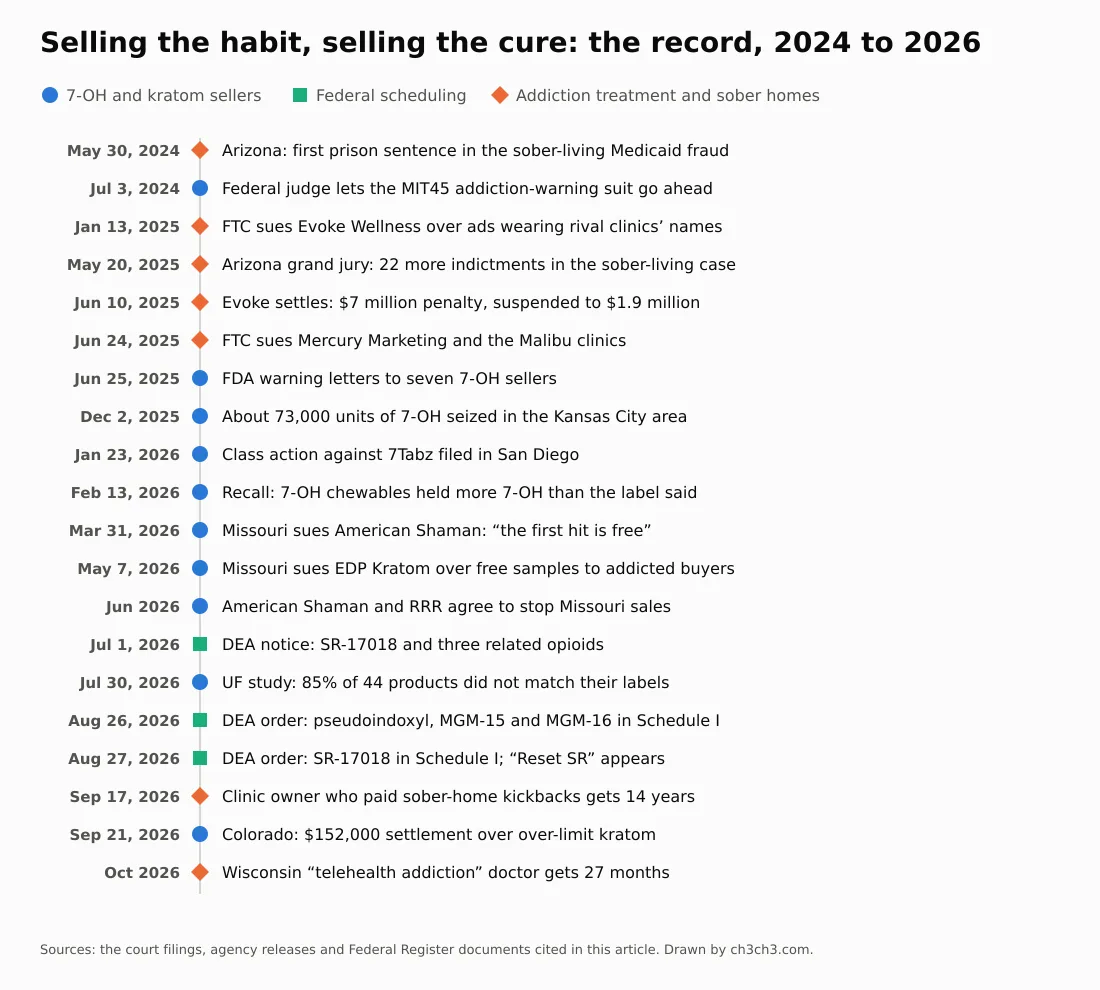
Figure 1. Two markets in one timeline. The sellers of the habit and the sellers of the way out met the same regulators in the same two years. Drawn for this page from the documents cited below. [1]
The label
In February 2026 the Texas attorney general sued a Midlothian retailer. According to FOX 4's report of the office's release, "laboratory testing confirmed that multiple products sold to Texas consumers contained 7-OH levels ranging from 86 to 96% of total alkaloid content".[2] Texas law caps 7-OH at 2% of the alkaloids in a kratom product.[2] That was one shop. In July a University of Florida team published what it found in 44 kratom and kratom-derived products bought online and in stores across several states: "In 85% of the products analyzed, the measured concentrations did not align with their labeled content."[3] Some listed one alkaloid and held several. "Other products contained compounds that were not disclosed on the labels."[3]
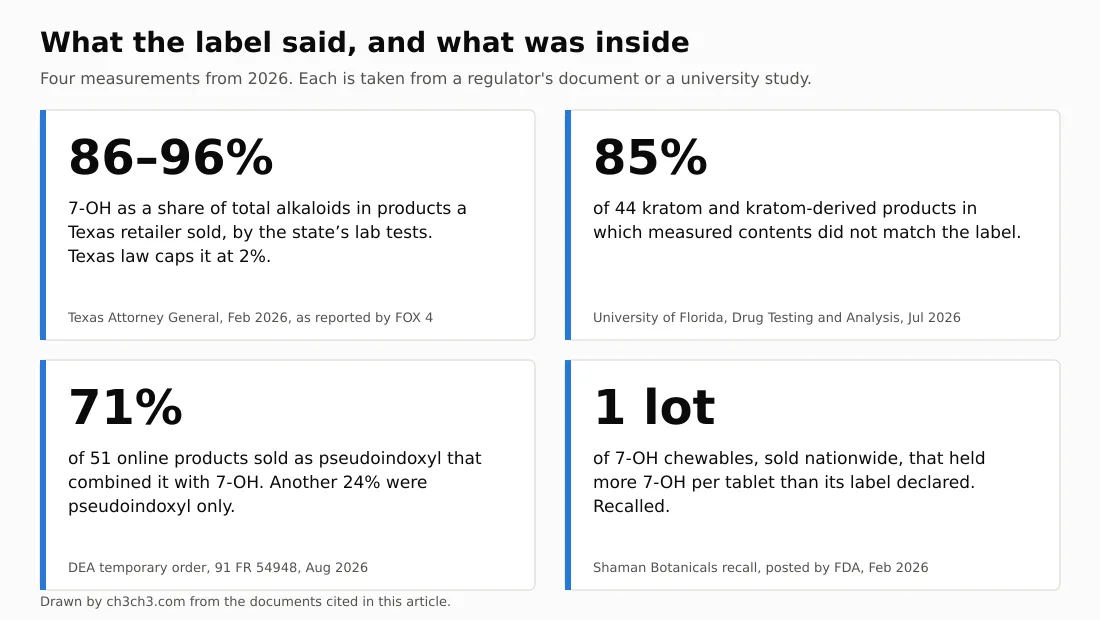
Figure 2. Four measurements from 2026, from a state attorney general, a university laboratory, the DEA and a recall notice. None of them was a forum rumour. [3]
Christopher McCurdy, a pharmacy professor on the team, put it more bluntly in the university's release: "right now consumers are part of a large experiment in which they are taking products that they believe are properly labeled as to the composition of ingredients".[3]
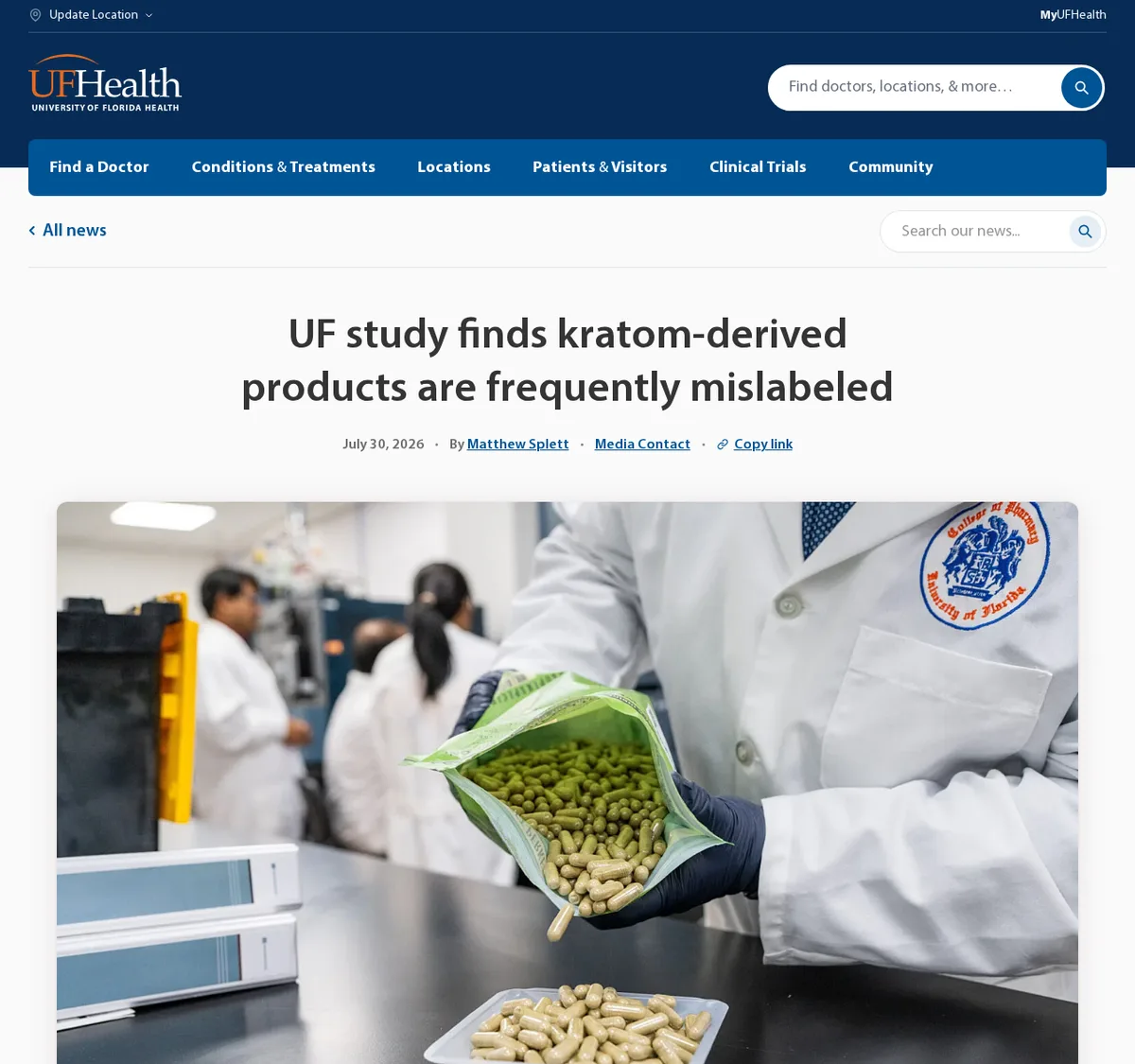
Figure 3. The University of Florida's July 2026 announcement. Its pharmacists tested 44 products bought online and in stores in several states. [3]
The DEA's August 26 order scheduling mitragynine pseudoindoxyl, MGM-15 and MGM-16 contains the federal government's own description of the market it was closing. It cites a study in which "the 51 unique products sold online as mitragynine pseudoindoxyl were marketed in child-appealing forms and contained other opioid alkaloids, with limited consumer safety information".[1] Of those, "71 percent featured a combination of mitragynine pseudoindoxyl and 7-hydroxymitragynine, while 24 percent contained mitragynine pseudoindoxyl only".[1] A product sold under one name was, most of the time, two opioids.
The order then names the marketing. "Analysis of marketed mitragynine pseudoindoxyl products revealed misleading marketing strategies with claims that the products are" kratom.[1] Under a heading on natural branding it says: "This branding is used to minimize the perceived risk of what are highly potent semi-synthetic opioid agonists."[1] On claims of stress relief and calm: "This marketing encourages individuals with legitimate medical needs to utilize potent, unlawful opioids as self-treatment."[1] Its footnotes point at two listings, one on cbdamericanshaman.com and one for Dozo Perks tablets on pureleafkratom.com.[1] The same order counts the harm: "between February 2025-May 2026, mitragynine pseudoindoxyl has been identified in at least 56 overdose cases, of which 48 were fatal events".[1]
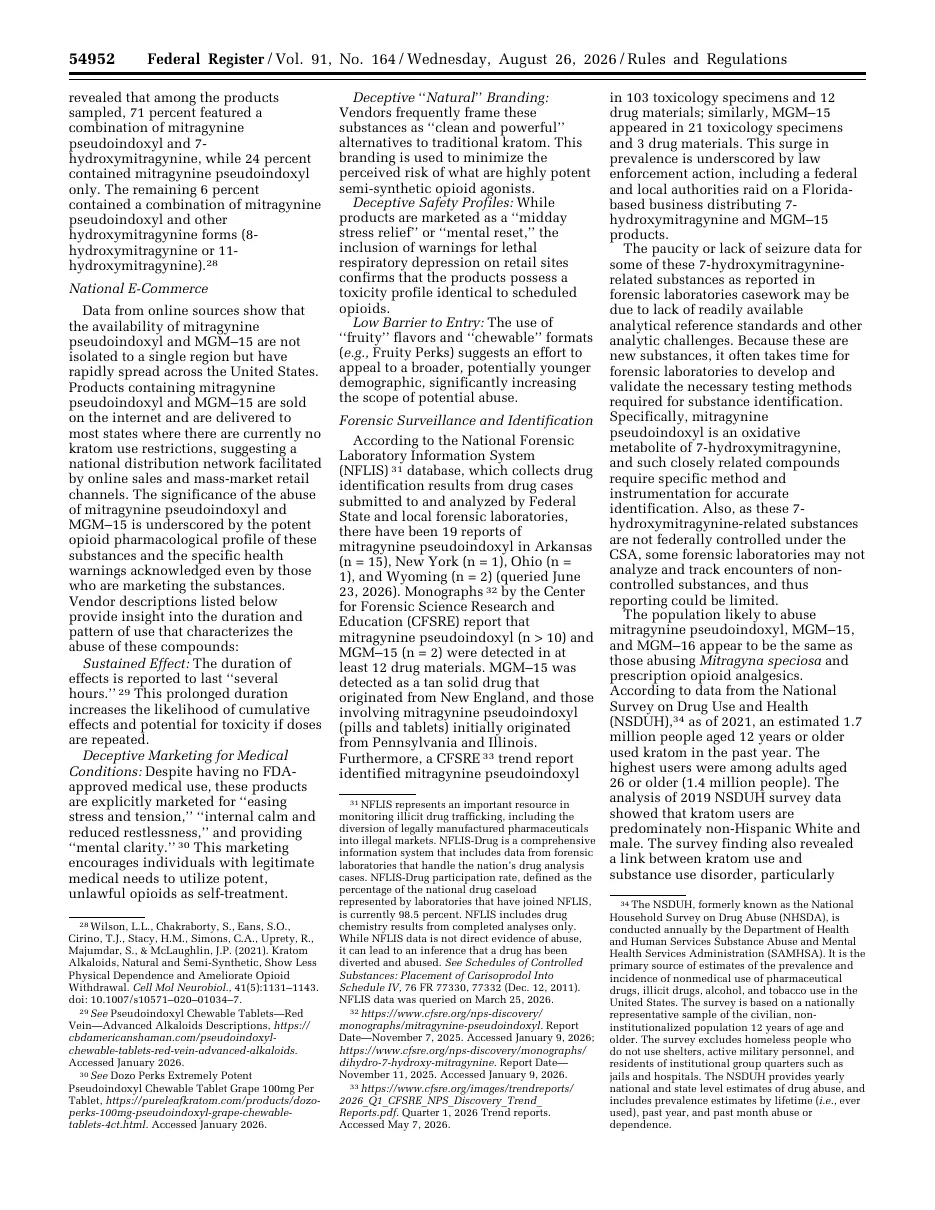
Figure 4. The page of the DEA's scheduling order where the agency describes the marketing it found. Its footnotes cite a pseudoindoxyl listing at cbdamericanshaman.com and a Dozo Perks listing at pureleafkratom.com. [1]
The company behind the first of those footnotes is the largest single name in this story. Its owner told the Missouri Independent in August that his company "produces the majority of mitragynine pseudoindoxyl products nationwide", and that it destroyed about $10 million of stock, valued at cost, once the order was coming.[4] He called pseudoindoxyl "probably the very best pain medicine ever to hit earth".[4] McCurdy told the same reporter that scheduling would "create a more gray market where these products are being sold without the ingredients being disclosed".[4] Those two views of the same compound were printed in one article.
A label can also be wrong in the seller's favour by accident, and the record shows one company saying so itself. In February 2026 Shaman Botanicals of North Kansas City recalled a lot of its Alkaloids Chewable Tablets, White Vein, because testing showed more 7-OH per tablet than the label declared. The notice says the product "could result in consumers ingesting a higher dose than intended".[5] It was sold nationwide, including online.[5]
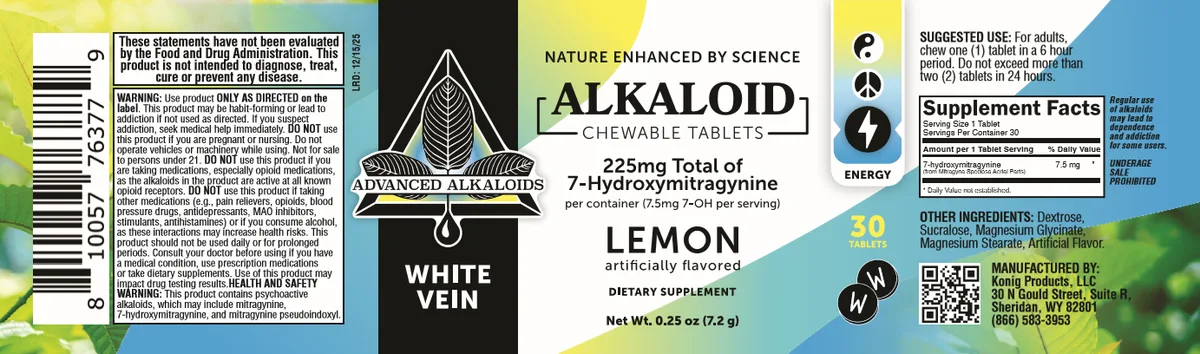
Figure 5. The label of the recalled product, as the FDA posted it. The recall says one lot held more 7-OH per tablet than this label declares. [5]
Cat's claw tablets that were sold as "kratom-free" and turned out to hold pseudoindoxyl and MGM-15 are the starkest label case of 2026. They are covered, with Utah's four deaths, in the kratom lobby deep dive, and the brand behind one line of them in the Script Botanicals dossier.
The first hit is free
Missouri sued CBD American Shaman, Shaman Botanicals and related companies on March 31, 2026. The petition opens with a line its own press coverage took as a headline: "The first hit is free."[6] It goes on: "But unlike a street dealer, American Shaman and its offshoots operate on an industrial scale, in the open, on the fiction that the products they sell are legal dietary supplements."[6][7]
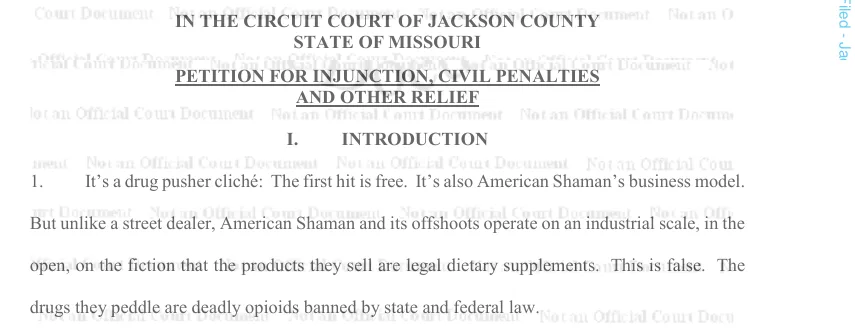
Figure 6. The first paragraph of Missouri's March 2026 petition. The defendants' names in the caption above it are cropped out by us. The case settled in June without a finding. [6]
The state's case on deception rests on four things. It says the companies offered free samples of 7-OH "for the purpose of addicting potential customers".[6] "These marketing practices have included billboards and advertising at events."[6] It says the companies were "selling 7-OH products with psychoactive alkaloid content significantly higher than indicated on the product packaging".[6][6] And it quotes the marketing back: 7-OH described as "like happy hour, but without the hangover".[6] The petition also says the companies sold under their own Advanced Alkaloids brand and as a "white label" product for other distributors.[6]
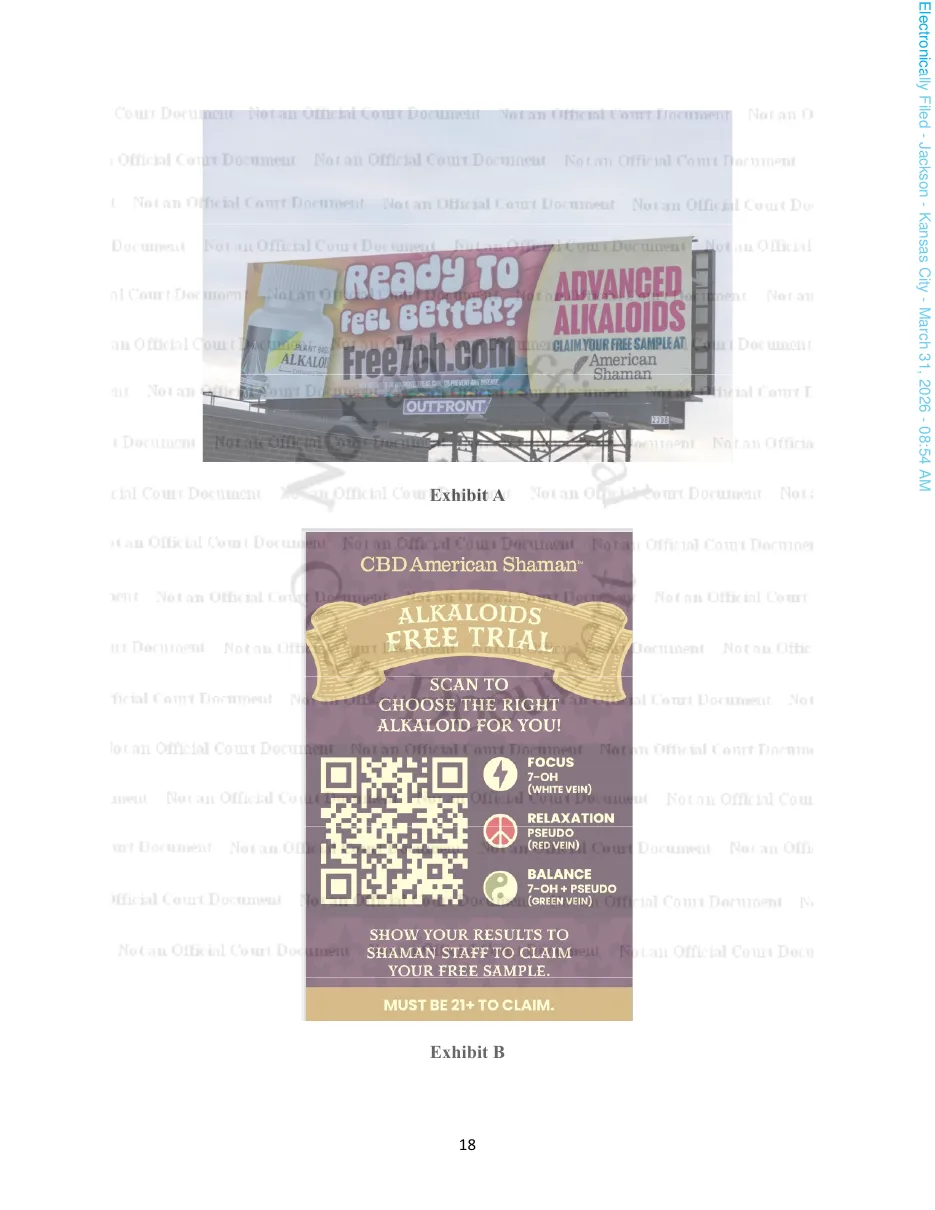
Figure 7. The state's exhibits A and B: a billboard pointing to Free7oh.com, and an in-store card offering a free sample of 7-OH or pseudoindoxyl. Neither mentions addiction. [6]
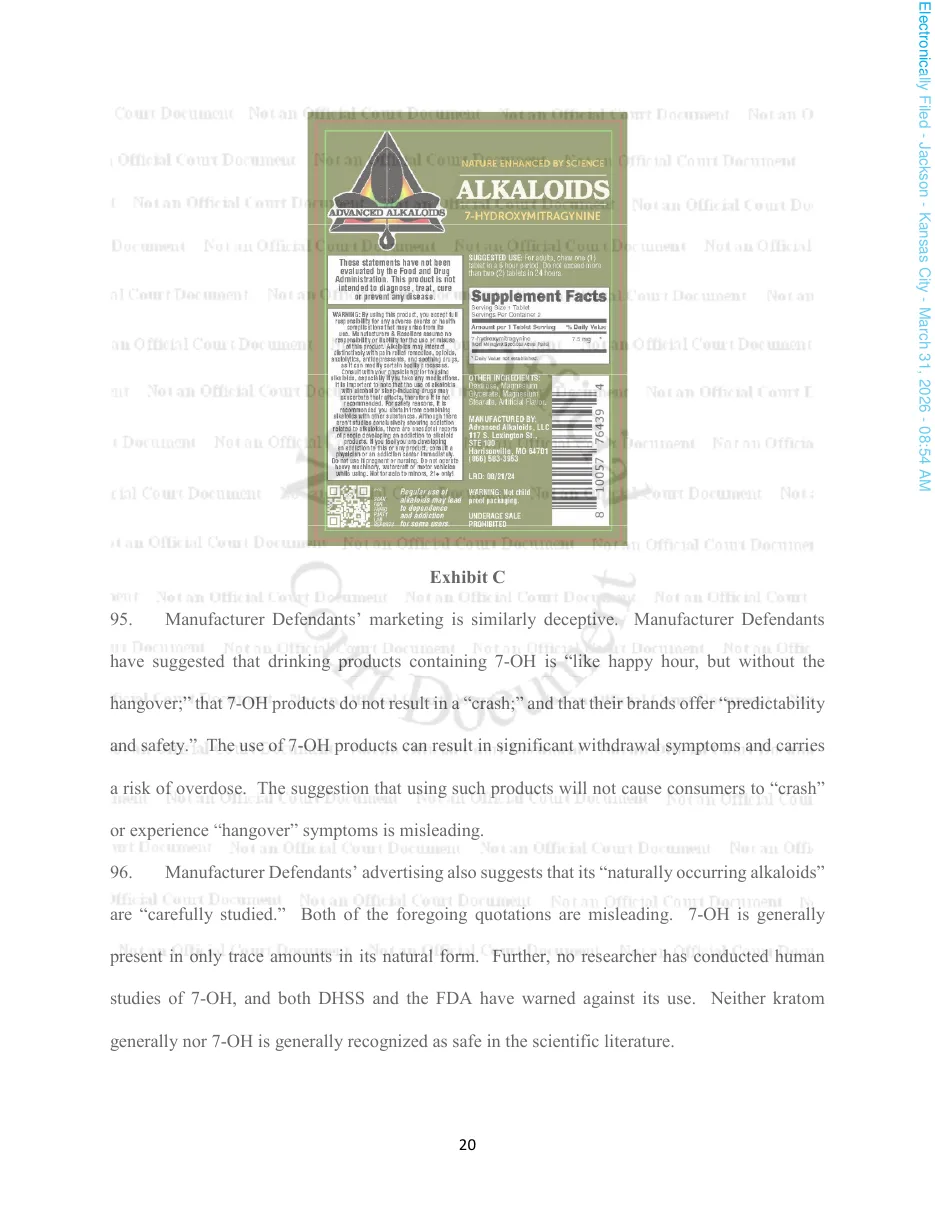
Figure 8. Exhibit C, the label the state says calls addiction reports anecdotal, and the petition's paragraphs on the marketing lines it calls misleading. [6]
The company's president answered on the day. He told KCTV5: "we have consistently maintained that our products are safe and we have been transparent in sharing the scientific support and quality information behind them".[8]
Five weeks later the state sued Relax Relief Rejuvenate Trading, which sold as EDP Kratom. The attorney general's release said the petition alleges the company "downplays the risk of addiction and withdrawal; and completely fails to mention the risk of overdose".[9] Its sharpest sentence is about the free product: "The company has also maintained an unethical and unscrupulous practice of shipping free 7-OH products to consumers known to have serious addictions to those products, maintaining a cycle of addiction."[9] It was the second suit to come out of the office's 22 investigations into kratom sellers.[9] The Missouri Independent reported that Shaman Botanicals made EDP's 7-OH shot.[10]
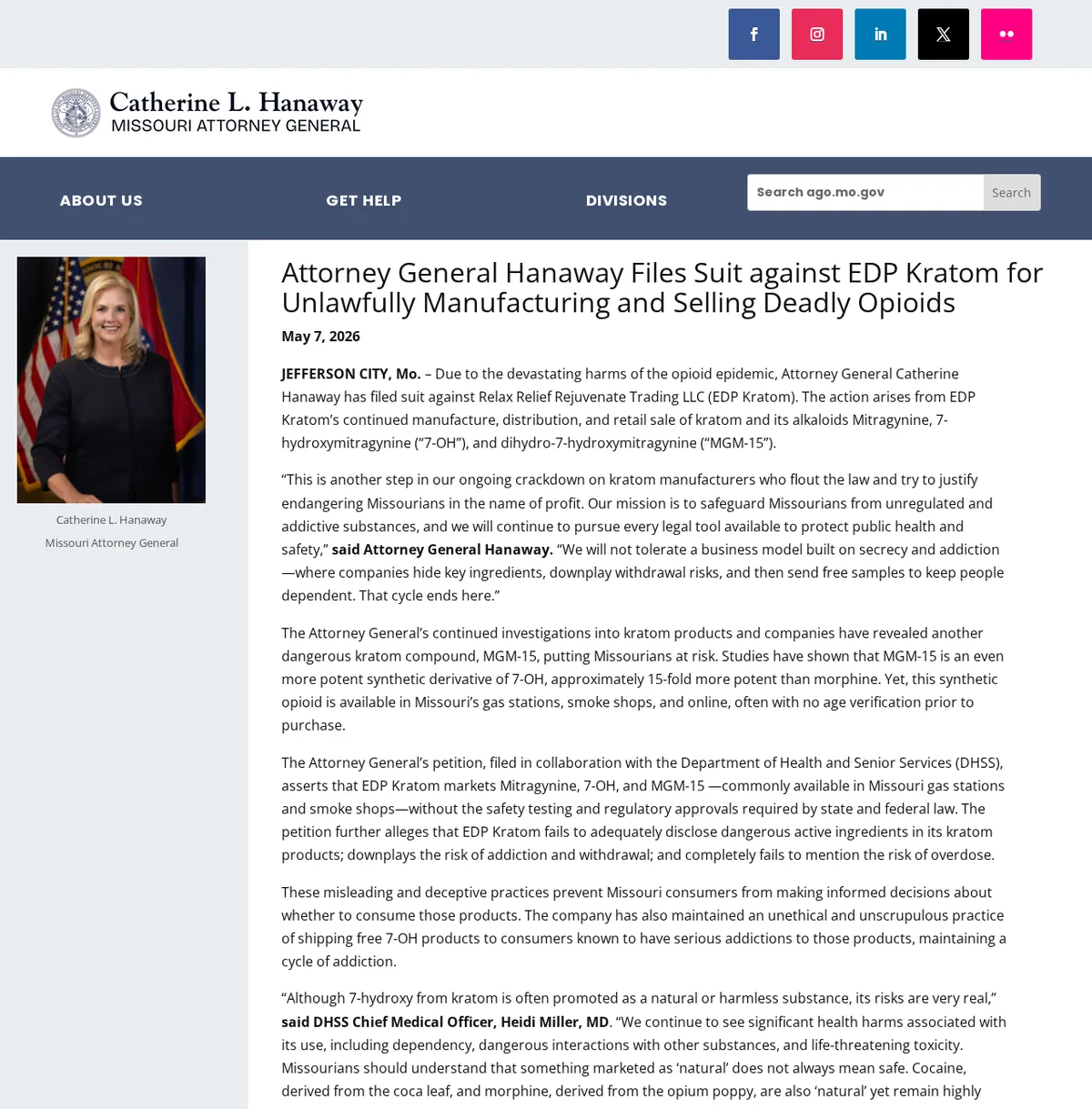
Figure 9. Missouri's second suit, against the company behind EDP Kratom, with Attorney General Catherine Hanaway's official portrait as her office publishes it. The release says the company shipped free 7-OH to customers it knew were addicted. [9]
Neither case reached a judge's ruling on the facts. American Shaman agreed in early June to suspend all sales of kratom and 7-OH in Missouri.[11] Relax Relief Rejuvenate followed within the week; if it breaches, "the attorney general may invoke an agreed $5 million penalty".[10] Its majority owner told the paper why he settled: "if they win this case then every other attorney general in the United States is going to jump on it".[10] In August a St. Louis seller, Green Dragon, signed an assurance that also bars its owners from holding a stake in any Missouri business selling kratom, and "green dragon agreed not to sell any dietary supplement without first obtaining a scientific analysis of its active ingredients".[12] As with the others: "It does not include an admission of liability, and no court found Green Dragon or its owners liable."[12]
The federal side had moved first. FDA warning letters went to seven 7-OH sellers in June 2025, among them Shaman Botanicals and EDP Kratom's company.[13] In December, U.S. Marshals seized about 73,000 units from three Kansas City-area warehouses, because, the Justice Department said, "recent FDA inspections showed that the firms continued to distribute unlawful 7-OH products after receiving the warnings".[14] Both events are told in order in the 7-OH politics deep dive.
Colorado reached the smallest settlement in this set and the most concrete one. In September, "Colorado has reached a $152,000 settlement with the owners of a chain of local smoke shops for selling kratom products over the potency limits established by law".[15] The owners must now test what they sell and document what they buy.[15]
Pure extract, natural relief
The FDA's June 2025 letters were about claims as much as chemistry. The letter to 7Tabz Retail of Tampa quotes its product pages back to it, including "find your peace of mind and experience natural pain relief".[16] A claim to relieve pain makes a product a drug under federal law, and the FDA called the tablets unapproved new drugs.[16] Its list of products already included a blend of 7-OH and pseudoindoxyl, a year before either was scheduled.[16]
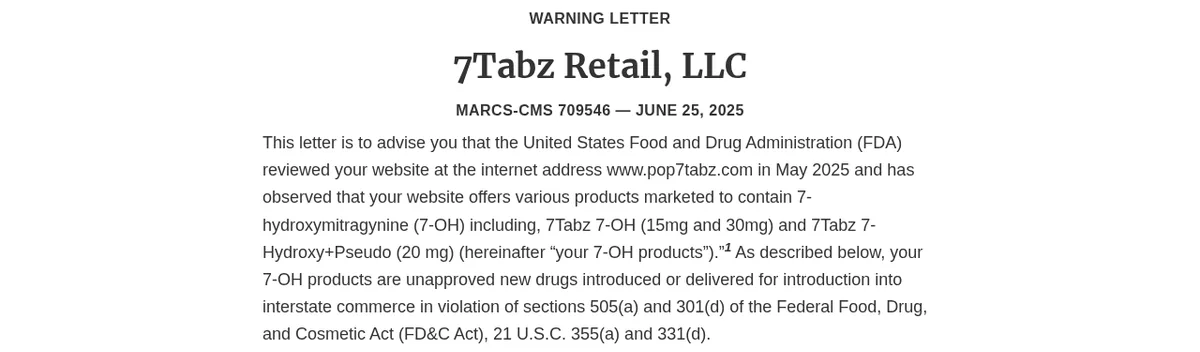
Figure 10. The FDA's June 2025 letter to 7Tabz, one of seven sent that month. The recipients' names and address are cropped out by us. Its product list already includes a 7-OH and pseudoindoxyl blend. [16]
In January 2026 three buyers filed a putative class action against 7Tabz in San Diego. "Defendants marketed the Products using representations such as" "pure extract" and "leaf extract", the complaint says, while "prominently displaying plant imagery and natural flavor" names.[17] It argues the company left out that the tablets are addictive. The company has not been found liable for anything.
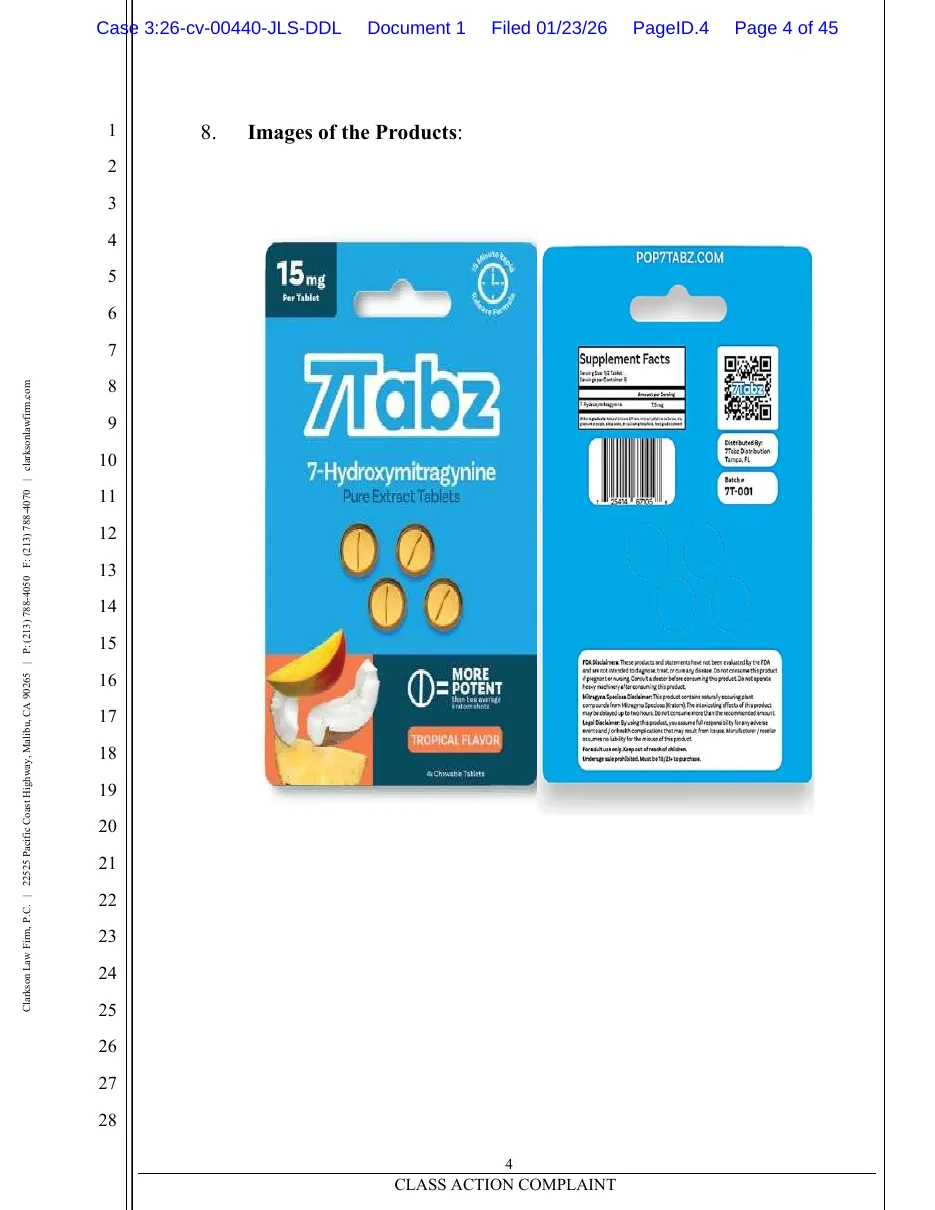
Figure 11. The product as the class action pictures it: Pure Extract Tablets, with fruit on the front. The complaint argues that a buyer reads that as natural and safe. [17]
An earlier case shows how far that argument can get. In July 2024 a federal judge in the same district refused to throw out most of a suit against MIT45, a kratom extract maker, holding that the buyers "adequately alleged that users reasonably believe that" "the Products are not addictive and that MIT45 is in exclusive control of information" saying otherwise.[18] That is a ruling on what the buyers alleged, not on what happened. It is the reason these suits keep being filed.
Until it is published in the Federal Register
Below the companies that regulators name are the online shops that buyers name. This site has dossiers on several, and the detail lives there: 7 Kings, the Akron shop that ran an MGM-15 clearance sale up to the day of the federal order; Kures, the Las Vegas web shop whose Reddit presence buyers called astroturf; StoutAlkz, MGM-15 sold by Discord from Florida; Pain Relief Kratom, the Thai wholesaler behind blank strips that turned up under other brands; and Wonderland Gardens, whose certificates did not always say what its products did.
The pattern across them is the one in the DEA order, seen from the customer's side. A week before the federal order, one shop's email told buyers it would keep selling each compound until its scheduling was formally published in the Federal Register, and offered a discount code.[19] One reader of that post wrote: "These are the type of companies I think will end up backdooring this stuff or not really complying after the ban."[19]
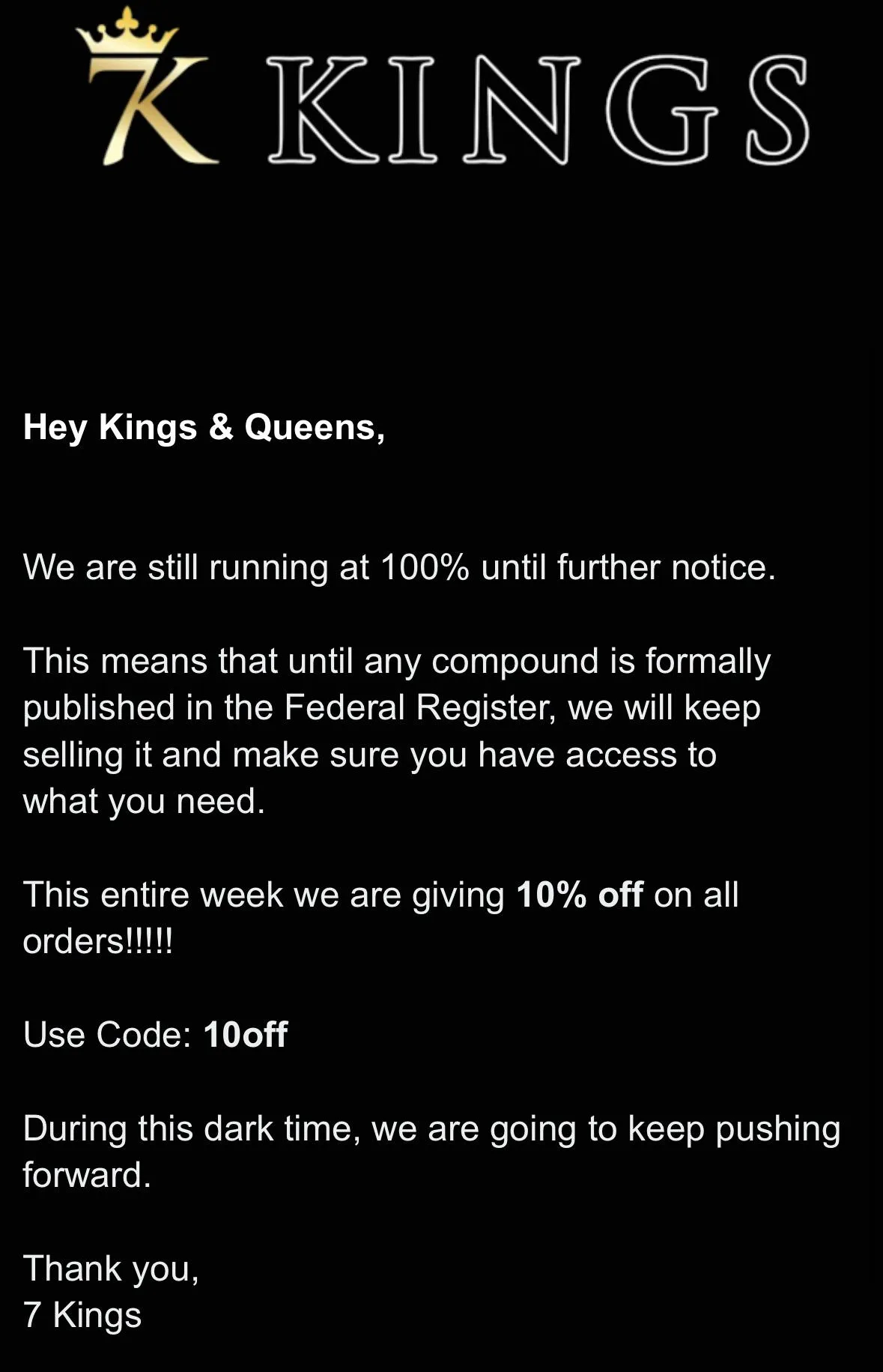
Figure 12. A vendor's email to customers, posted by a buyer on August 3, 2026: sales would continue until each compound's scheduling was published, with a discount for the week. The full story is in the 7 Kings dossier. [19]
SR-17018: the way off, and the people waiting for it
SR-17018 is an experimental opioid. The DEA notes that, unlike morphine and fentanyl, it and the three opioids scheduled with it "have no currently approved medical use" in the United States.[20] People quitting 7-OH and MGM-15 bought it as a research chemical to taper with. One buyer in r/SR17018 described quitting in July 2026: "used SR and got off free".[21] The DEA's July 2026 notice names it in full, "commonly known as 5,6-dichloro desmethylchlorphine or SR-17018", one of four related opioids to be scheduled.[20] Its forensic record was thin. The notice counts "2 total encounters of 5,6-dichloro desmethylchlorphine in 2 states since 2025" in the national laboratory system, and says of the four compounds that "users may not be aware of polysubstance presence",
"have no currently approved medical use".[20] The temporary order followed on August 27.[22]
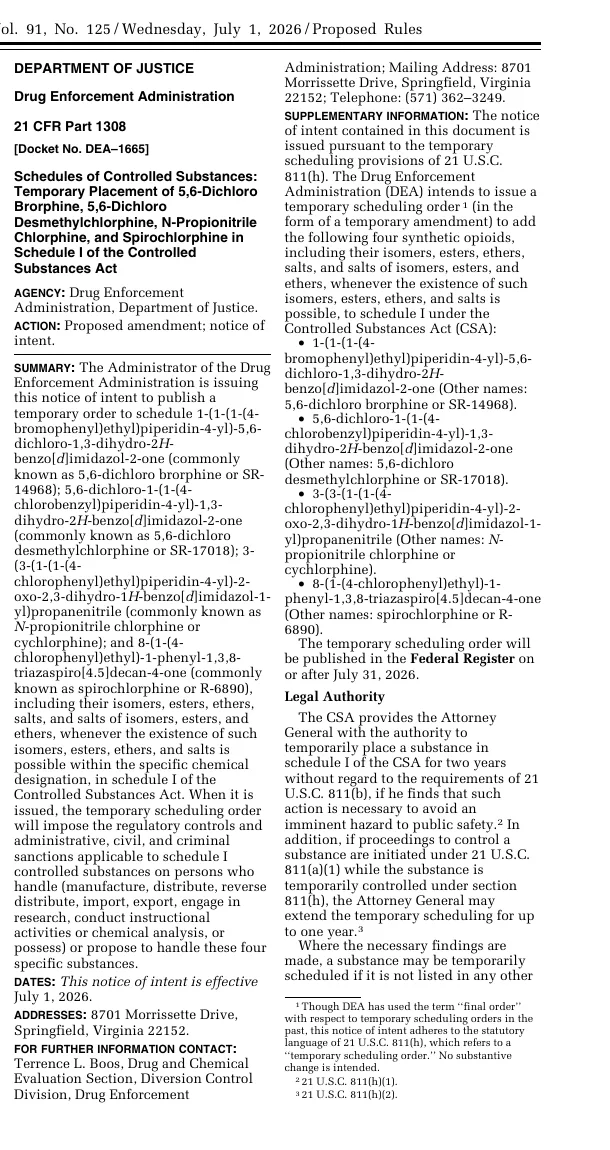
Figure 13. The July 2026 notice that put SR-17018 on a thirty-day clock. The order followed on August 27. [20]
The supply story before the ban is in the Long Flourish Pharm dossier, on the Chinese shop that was the market's main source until it went dark in December 2025, and in which buyers already warned of clone sites. What came after the ban is new.
On the day the order took effect a buyer posted a screenshot of a shop announcing "Reset SR". It says the product "contains absolutely no SR-17018" and does not say what it does contain.[23] A moderator of r/SR17018 answered: "I'm really suspect of anything claiming to be a new version especially without any data or research about it."[23] A week later another buyer asked about a second seller's replacement, sold as a legal molecule of its own, and wrote: "It is very odd that when a sample that was purchased was sent in it came up as SR-17018".[24] No laboratory report was posted, and this page has not seen one. The moderator said of that seller: "I know they are putting a lot of effort into doing this a way they can keep it legal and are pursuing a patent."[24] Buyers in a later thread disagreed with each other about whether the two products are the same thing at all: "They are literally different substances with different purposes and effects."[25]
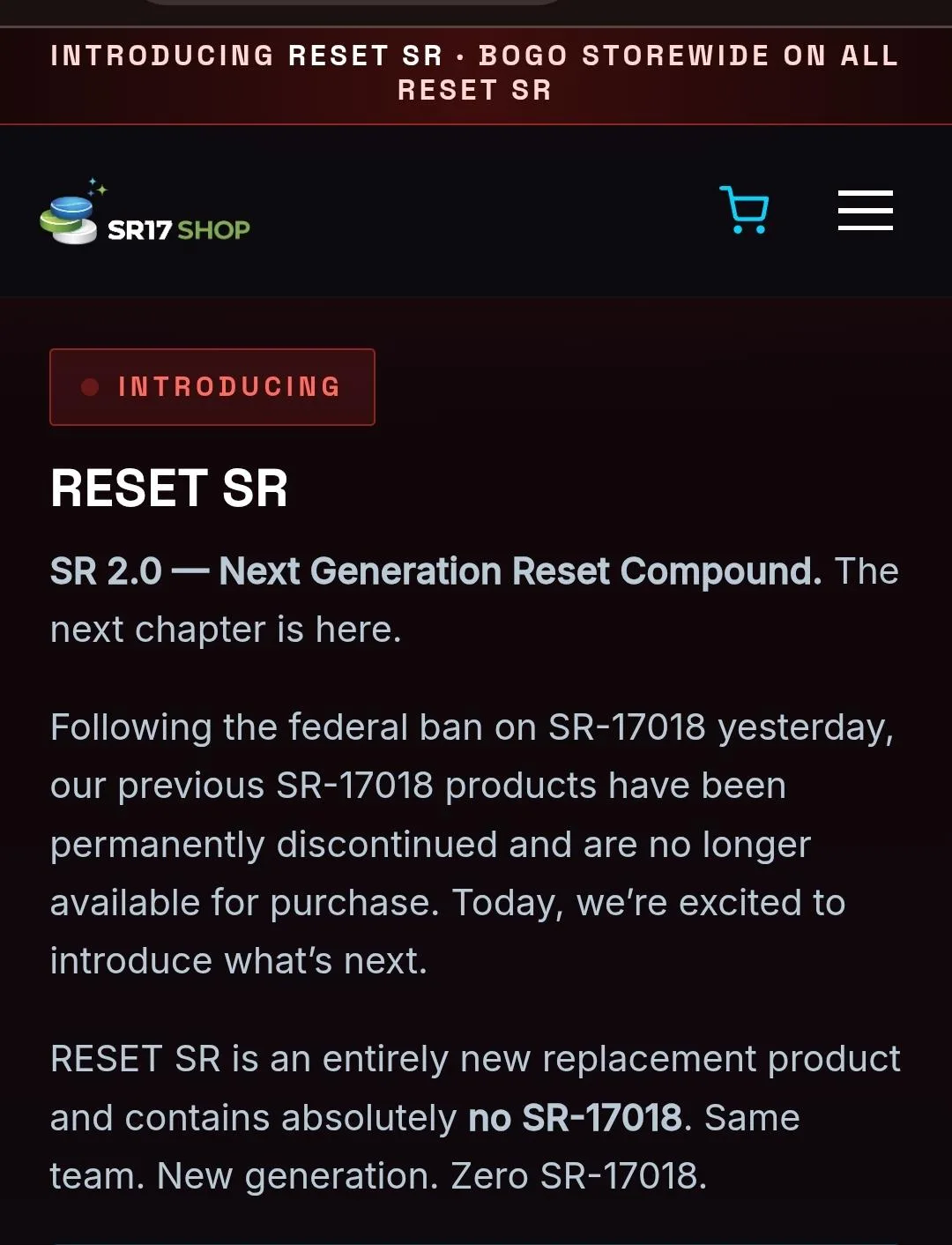
Figure 14. A buyer's screenshot posted on August 27, 2026, the day the order took effect. The page says the product contains no SR-17018 and does not say what it does contain. [23]
The plainer scam is older and simpler. The subreddit's moderators attach a bot comment to posts that lists "the names of all known SR-17 scammers": 36 entries by October 2026, Reddit accounts alongside websites, email addresses and a WhatsApp number.[23] In September a buyer in Europe described being approached by a Reddit account with a long history, pointed to a seller on Signal, and paid. Both accounts vanished. "if your gonna scam do it with something other then SR which some people desperately need", the buyer wrote.[25] A reply summed up the subreddit's rule: "Anyone sliding into your DMs is a scammer."[25] These are buyers' accounts, unverified, and this page names none of the accounts they accuse.
No federal or state prosecution of an SR-17018 seller turned up in the searches for this page.
Selling the way out
The other half of this market sells recovery. Congress passed two laws aimed at it in one bill, the SUPPORT Act of October 2018.[26][27] The first is short. "It is unlawful to engage in an unfair or deceptive act or practice with respect to any substance use disorder treatment service or substance use disorder treatment product."[26] The Federal Trade Commission enforces it. The second makes it a federal crime to pay a kickback "to induce a referral of an individual to a recovery home, clinical treatment facility, or laboratory", and the penalty is that a person "shall be fined not more than $200,000, imprisoned not more than 10 years, or both, for each occurrence".[27]
The ad that wore another clinic's name
In January 2025 the FTC sued Evoke Wellness, a Florida treatment provider, and two of its officers, under the 2018 law. The complaint says Evoke bought Google ads on the names of rival clinics and showed those names in the ad. According to the agency, "between 2021 and 2023, Evoke disseminated at least 68,510 misleading Google search ads, resulting in at least 3,500 calls to Evoke" from people looking for somewhere else.[28] "When consumers called Evoke, telemarketers typically posed as a centralized admissions office or addiction treatment hotline rather than a call center associated with Evoke."[29] Evoke settled in June 2025 without admitting the allegations, and "the order imposes a $7 million civil penalty against the defendants, which is partially suspended to $1.9 million because of their inability to pay the full amount".[29]
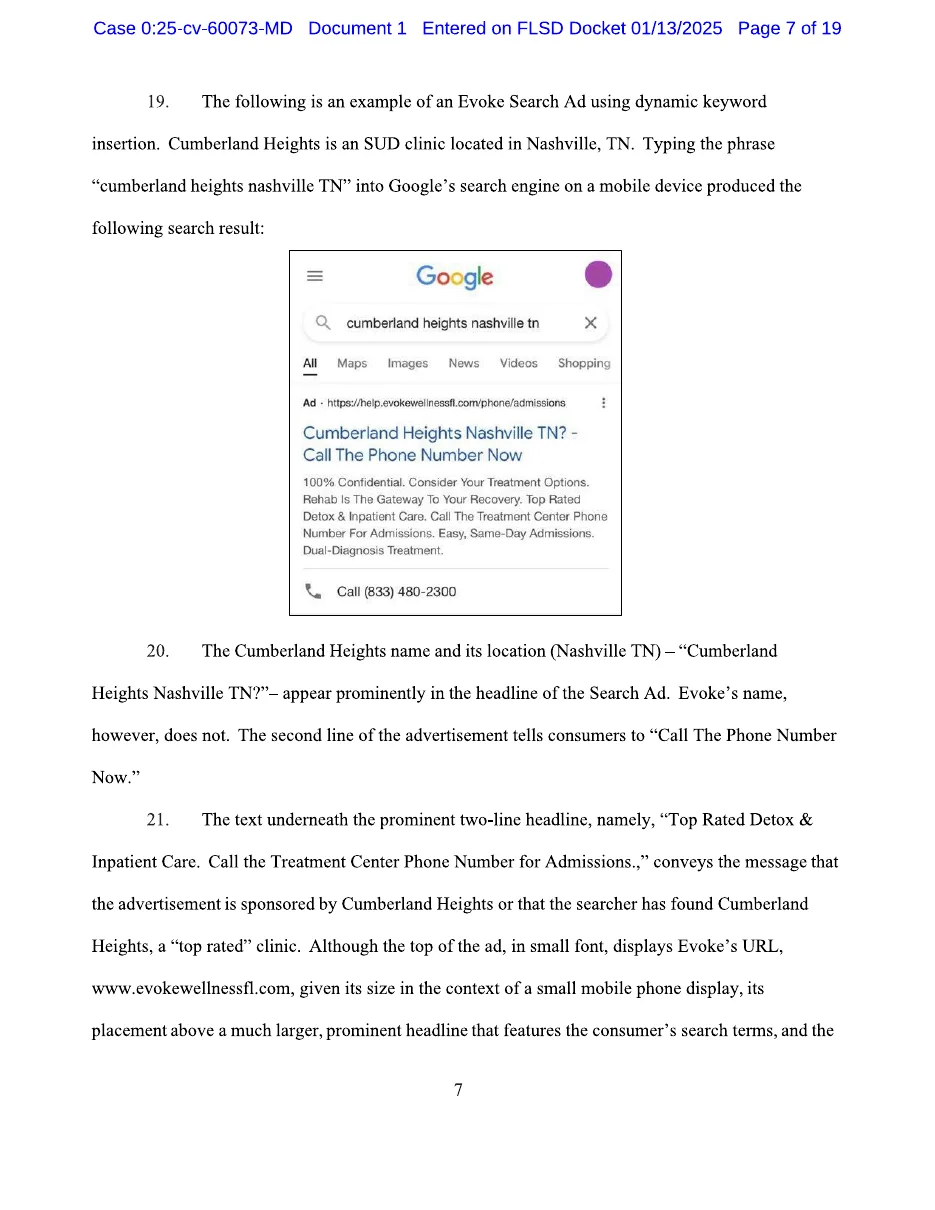
Figure 15. From the FTC's complaint against Evoke: a search for one Nashville clinic answered by an ad wearing its name, with a Florida company's phone number underneath. [30]
Two weeks later the FTC sued again, this time Mercury Marketing and the Malibu Detox and Malibu Recovery clinics among others, under the same law and the FTC's impersonation rule. The agency alleges that "these telemarketers falsely represented that clinical professionals were recommending Malibu Detox or Malibu Recovery based on an objective assessment".[31] Its complaint reproduces three of the ads, for three different clinics, and says: "The URL and phone number in these three Search Ads belonged to the Mercury Defendants, not to any of the SUD treatment facilities whose names appeared in the ads."[32] The case is pending.
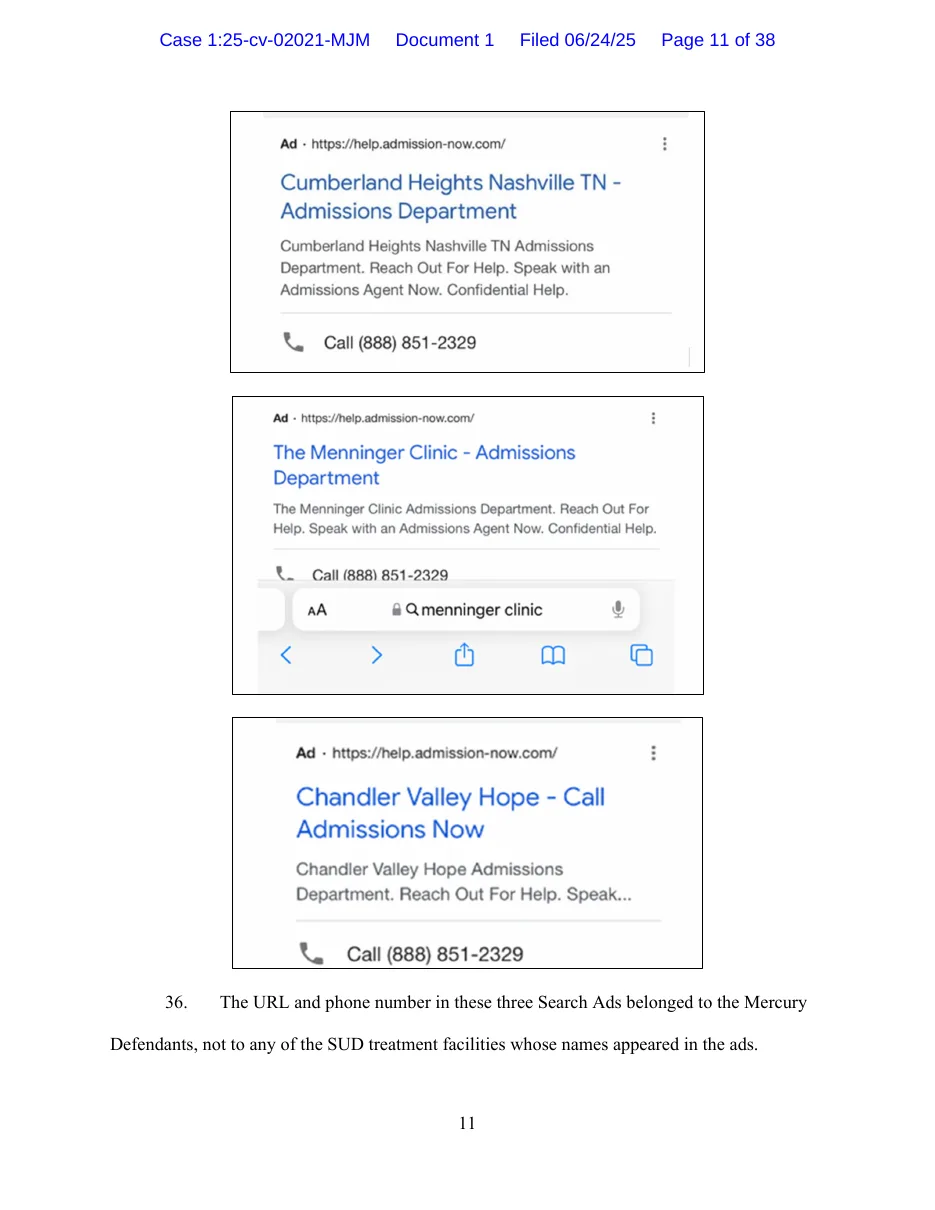
Figure 16. From the FTC's second complaint, five months later and against a different company: the same Nashville clinic's name, a different URL, one phone number for three clinics. [32]
The two complaints were brought against different companies, five months apart. Each one leads with an ad for the same clinic, Cumberland Heights in Nashville.
The Florida shuffle
Florida outlawed paying for patient referrals long before Congress did. Its statute makes it a crime to pay a kickback "to induce the referral of a patient or patronage to or from a health care provider or health care facility".[33] The scheme it was used against has a name. In an October 2025 interview with WGCU, former Palm Beach County State Attorney Dave Aronberg described sober-home operators who "effectively broker patients in order to keep them in a cycle of addiction and recovery".[34] His county's task force "eventually arrested more than 100 sober home operators".[34] The station noted that the problem persists elsewhere.[34]
Arizona
Arizona is where it moved at the largest scale on record. The state Medicaid program, AHCCCS, has a plan for Native American members, the American Indian Health Program. Clinics billed it because, as Arizona's Family reported from the federal case against one clinic owner, "They focused on Native American patients because the AIHP gave higher reimbursement rates than other AHCCCS health care plans."[35] People were recruited into unlicensed sober homes and billed for. According to the federal case, "she and others involved in the scheme illegally paid sober home owners in exchange for patient referrals to her clinic".[35] The owner, a nurse practitioner, pleaded guilty and was sentenced in September 2026 to 14 years in federal prison.[35]
The state's own case against her lists what was billed: services never given, care for children who received none, "billing for incarcerated and deceased members", and "coercing AHCCCS members to change health plans under threat of removal from unlicensed sober living homes".[36] The attorney general's office says it has "convicted 41 individuals and/or entities" in these schemes.[36] It also reported what billing did after the prosecutions began.[36]
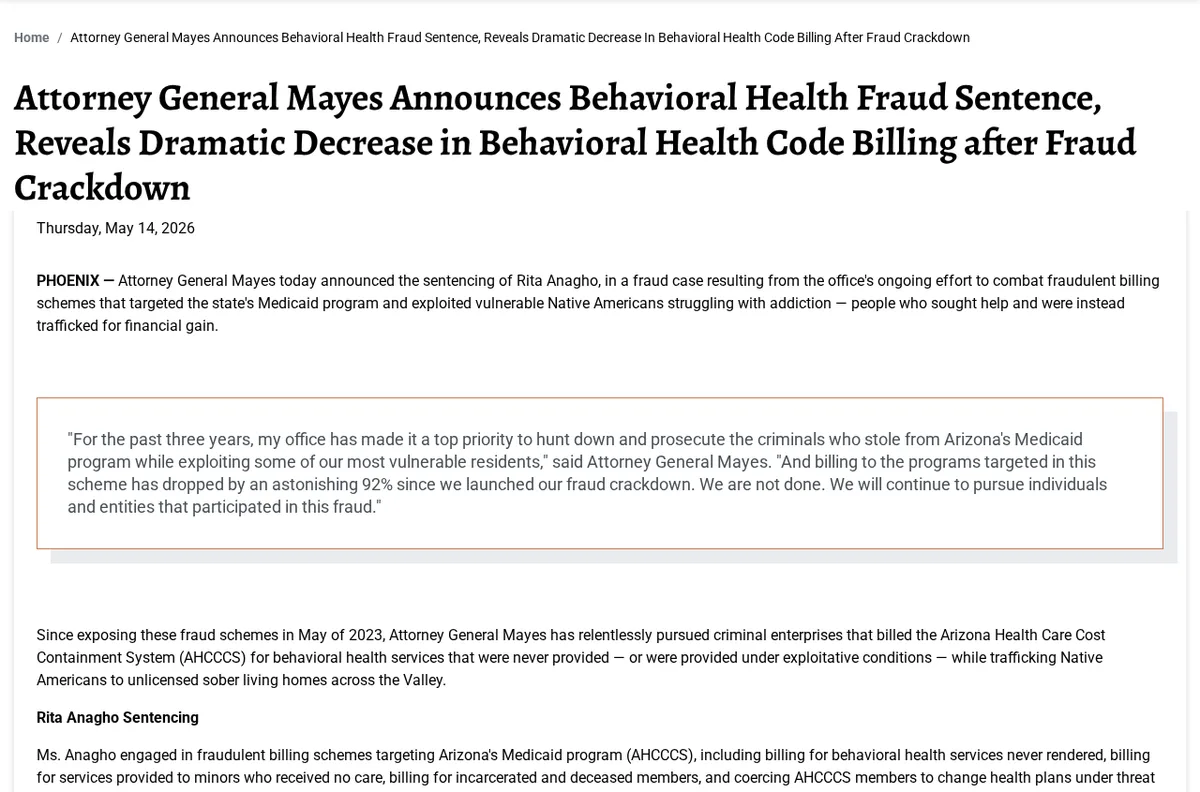
Figure 17. Arizona's May 2026 release. It is the source of the billing figures in the next chart, and of the 92% the office claims for its crackdown. [36]
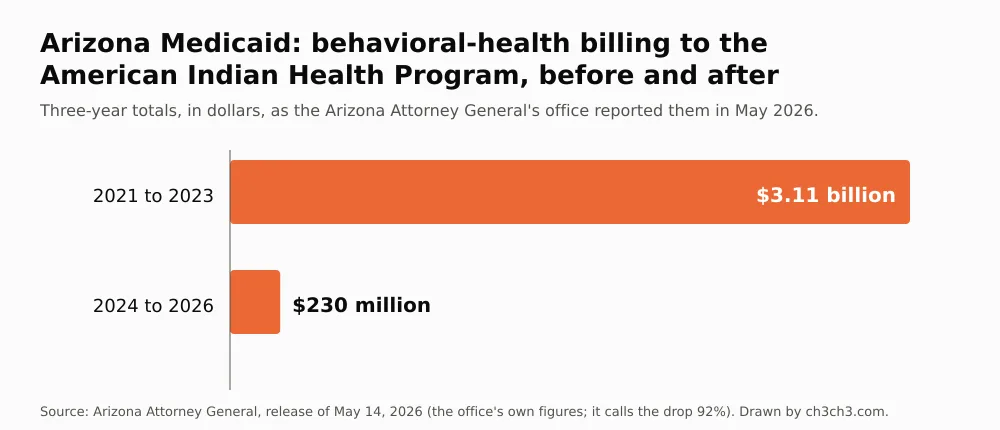
Figure 18. The before and after, in the Arizona Attorney General's own figures. They are the office's numbers, not an audit. [36]
Many more cases are open. In May 2025 a state grand jury returned 22 more indictments in one sober-living case; as the office's own release says, "All defendants are presumed innocent until proven guilty in a court of law."[37] In July 2025 federal prosecutors charged the operator of a billing company with helping dozens of clinics bill for care that did not happen, and KJZZ reported that "many of the supposed patients were reportedly recruited from tribal lands and homeless encampments".[38] He has not been tried.
The prescription for cash
The last shape is the oldest. In October 2026 a Wisconsin doctor who ran what prosecutors called a home-based addiction practice was sentenced to 27 months for selling prescriptions, including buprenorphine, for cash paid by app, "rather than providing legitimate addiction treatment to patients", in the words of the federal prosecutor.[39]
Still open
The Florida raid that the DEA's August order cites, on a business distributing 7-OH and MGM-15, is described there only as "a federal and local authorities raid on a Florida-based business distributing 7-hydroxymitragynine and MGM-15 products".[1] Searches of court records and news for 2026 did not identify the business.
What the post-ban SR-17018 replacements contain is unknown to this page. The one claim that a sample tested as SR-17018 is a buyer's, with no report attached.[24]
The 7Tabz class action and the FTC's case against Mercury Marketing are pending.[17][32] Arizona's federal and state sober-living cases are mostly unresolved.[37]
References
- Schedules of Controlled Substances: Temporary Placement of Mitragynine Pseudoindoxyl, MGM-15, and MGM-16 in Schedule I (temporary order, Docket DEA-1644, 91 FR 54948) — Drug Enforcement Administration, Federal Register, 2026-08-26
- Texas sues Smokey's Paradise over illegal kratom potency limits — FOX 4 / FOX 7 Austin, Joseph Rowe, 2026-02-09
- UF study finds kratom-derived products are frequently mislabeled — UF Health, Matthew Splett, 2026-07-30
- Missouri kratom company destroys $10M in products after DEA crackdown — Missouri Independent, Rebecca Rivas, 2026-08-28
- Shaman Botanicals, LLC Issues Voluntary Nationwide Recall of Alkaloids Chewable Tablets, White Vein, Due to Undeclared Concentration of 7-Hydroxymitragynine (7-OH) — Company announcement posted by the U.S. Food and Drug Administration, 2026-02-13 (posted 2026-02-17)
- State of Missouri ex rel. Hanaway v. Shaman Botanicals, LLC, et al., Petition for Injunction, Civil Penalties and Other Relief, Jackson County Circuit Court, No. 2616-CV11773 — Missouri Attorney General, filed 2026-03-31
- Attorney General Hanaway Files Suit against American Shaman for Unlawfully Manufacturing and Selling Deadly Opioid 7-OH — Missouri Attorney General, 2026-03-31
- 'The first hit is free': Missouri AG sues American Shaman over kratom sales, deceptive practices — KCTV5, Sarah Motter, 2026-03-31
- Attorney General Hanaway Files Suit against EDP Kratom for Unlawfully Manufacturing and Selling Deadly Opioids — Missouri Attorney General, 2026-05-07
- Missouri settlements halt sales of concentrated kratom product 7-OH — Missouri Independent, Rebecca Rivas, 2026-06-16
- Kansas City-based American Shaman agrees to stop selling kratom and 7-OH — Missouri Independent, 2026-06-04
- Missouri AG bars St. Louis company from kratom sales as federal 7-OH ban looms — Missouri Independent, Rebecca Rivas, 2026-08-07
- FDA Issues Warning Letters to Firms Marketing Products Containing 7-Hydroxymitragynine — U.S. Food and Drug Administration, 2025-07-15
- Justice Department Seizes Unlawful 7-OH Opioid Products at Three Warehouses — U.S. Department of Justice, Office of Public Affairs, 2025-12-02
- Kratom sellers, Colorado reach settlement — Colorado Politics, Marissa Ventrelli, 2026-09-21
- Warning letter to 7Tabz Retail, LLC, MARCS-CMS 709546 — U.S. Food and Drug Administration, 2025-06-25 (posted 2025-07-15)
- Z.B., T.M. and R.A. v. 7Tabz Retail LLC and 7Tabz Distribution LLC, No. 3:26-cv-00440 (S.D. Cal.), class action complaint — U.S. District Court for the Southern District of California, filed 2026-01-23 (copy hosted by ClassAction.org)
- B.D. and L.M. v. MIT45, Inc., No. 3:24-cv-0499 (S.D. Cal.), order granting in part and denying in part the motion to dismiss — U.S. District Court for the Southern District of California, 2024-07-03 (copy hosted by Courthouse News)
- Update from 7Kings (a buyer posts the store's email, 2026-08-03) — r/7_hydroxymitragynine — anecdotal report, not evidence
- Schedules of Controlled Substances: Temporary Placement of 5,6-Dichloro Brorphine, 5,6-Dichloro Desmethylchlorphine, N-Propionitrile Chlorphine, and Spirochlorphine in Schedule I (notice of intent, Docket DEA-1665, 91 FR 39940) — Drug Enforcement Administration, Federal Register, 2026-07-01
- Im back and theirs no SR?? (2026-08-10) — r/SR17018 — anecdotal report, not evidence
- Schedules of Controlled Substances: Temporary Placement of 5,6-Dichloro Brorphine, 5,6-Dichloro Desmethylchlorphine, N-Propionitrile Chlorphine, and Spirochlorphine in Schedule I (temporary order, 91 FR 55252) — Drug Enforcement Administration, Federal Register, 2026-08-27
- New "SR" thats not SR? (buyer's screenshot of a store announcing Reset SR, 2026-08-27) — r/SR17018 — anecdotal report, not evidence
- TMK Reset: Legally Safe b/c its not SR-17018, it is its own Molecule (2026-09-05) — r/SR17018 — anecdotal report, not evidence
- just got scammed by: (2026-09-21) — r/SR17018 — anecdotal report, not evidence
- 15 U.S.C. § 45d, Unfair or deceptive acts or practices with respect to substance use disorder treatment service and products (Opioid Addiction Recovery Fraud Prevention Act of 2018, Pub. L. 115-271 § 8023) — Legal Information Institute, Cornell Law School (text of the U.S. Code)
- 18 U.S.C. § 220, Illegal remunerations for referrals to recovery homes, clinical treatment facilities, and laboratories (Eliminating Kickbacks in Recovery Act of 2018) — Legal Information Institute, Cornell Law School (text of the U.S. Code)
- FTC Sues Evoke Wellness and Top Executives for Misleading Consumers Seeking Substance Use Disorder Treatment — Federal Trade Commission, 2025-01-13
- Evoke Wellness to Pay $1.9 Million to Settle FTC Claims That They Misled Consumers Seeking Substance Use Disorder Treatment — Federal Trade Commission, 2025-06-10
- FTC v. Evoke Wellness, LLC, et al., No. 0:25-cv-60073 (S.D. Fla.), complaint — Federal Trade Commission, filed 2025-01-13
- FTC Sues to Stop Mercury Marketing and Others from Deceptively Advertising Substance Use Disorder Treatment Clinics — Federal Trade Commission, 2025-06-24
- FTC v. Mercury Marketing LLC, et al., No. 1:25-cv-02021 (D. Md.), complaint — Federal Trade Commission, filed 2025-06-24
- Florida Statutes § 817.505, Patient brokering prohibited; exceptions; penalties — Florida Legislature, Online Sunshine
- Fighting the Florida Shuffle (Gulf Coast Life interview with Dave Aronberg) — WGCU, Mike Kiniry and Emma Rodriguez, 2025-10-13
- Arizona addiction treatment clinic owner sentenced in $69M fraud scheme — Arizona's Family (KTVK/KPHO), Alexis Cortez, 2026-09-17
- Attorney General Mayes Announces Behavioral Health Fraud Sentence, Reveals Dramatic Decrease in Behavioral Health Code Billing after Fraud Crackdown — Arizona Attorney General, 2026-05-14
- Attorney General Mayes Announces 22 New Indictments in Sober Living Home Fraud Case — Arizona Attorney General, 2025-05-20
- Federal prosecutors charge overseas operator in Arizona's ongoing Medicaid fraud scheme — KJZZ, Nick Karmia, 2025-07-01
- Mequon doctor sentenced to 2 years and 3 months in prison for unlawful prescribing — Spectrum News 1 Wisconsin, Rachel Ryan, 2026-10-02
Comments
Sign in to join the conversation.
No comments yet.