
Utah, Florida and the kratom lobby: who wrote the 7-OH rules, who was paid, and the Utah death that was not 7-OH
The earlier deep dive on 7-OH politics followed the money in Washington: the two kratom trade groups that asked for 7-hydroxymitragynine to be scheduled, the 7-OH makers' group that fought it, and the Cabinet stake that turned the fight into a corruption allegation. This one goes to the states, because most of the people in that story learned the trade in one of them.
Utah is where the American Kratom Association wrote its first law, where its lobbyist began his career, and where its founding legislator was paid by it. It is where the Global Kratom Coalition went to court against a law that protected the leaf it says it exists to protect. It hosts a kratom extract maker that lobbied for a 7-OH ban and then lost its own products to a broader one. And it produced the death the owner of this site asked about, the one remembered as the first 7-OH death. The record says that death was not 7-OH.
Florida is the second state. Its attorney general drew a 7-OH line in August 2026 that the federal government proposed, number for number, seven weeks later. Its lobbying registry is where the claim that the bans serve the addiction-drug industry can be checked against filings, and it is checked below.
The death that was not 7-OH
On July 22, 2026 the Utah Poison Control Center warned about tablets sold in smoke shops as cat's claw or kava under the Buzzers and Homiez names. It did not yet know what was in them. "We suspect these products are adulterated with synthetic derivatives of kratom such as 7-hydroxymitragynine (7-OH), mitragynine pseudoindoxyl, MGM-15, or MGM-16."[1] The same page now carries a correction: "A previous version of this alert mistakenly included a natural leaf kratom product that is legal in Utah and is not implicated in the current investigation."[1] The product it first named is not identified anywhere on the page.
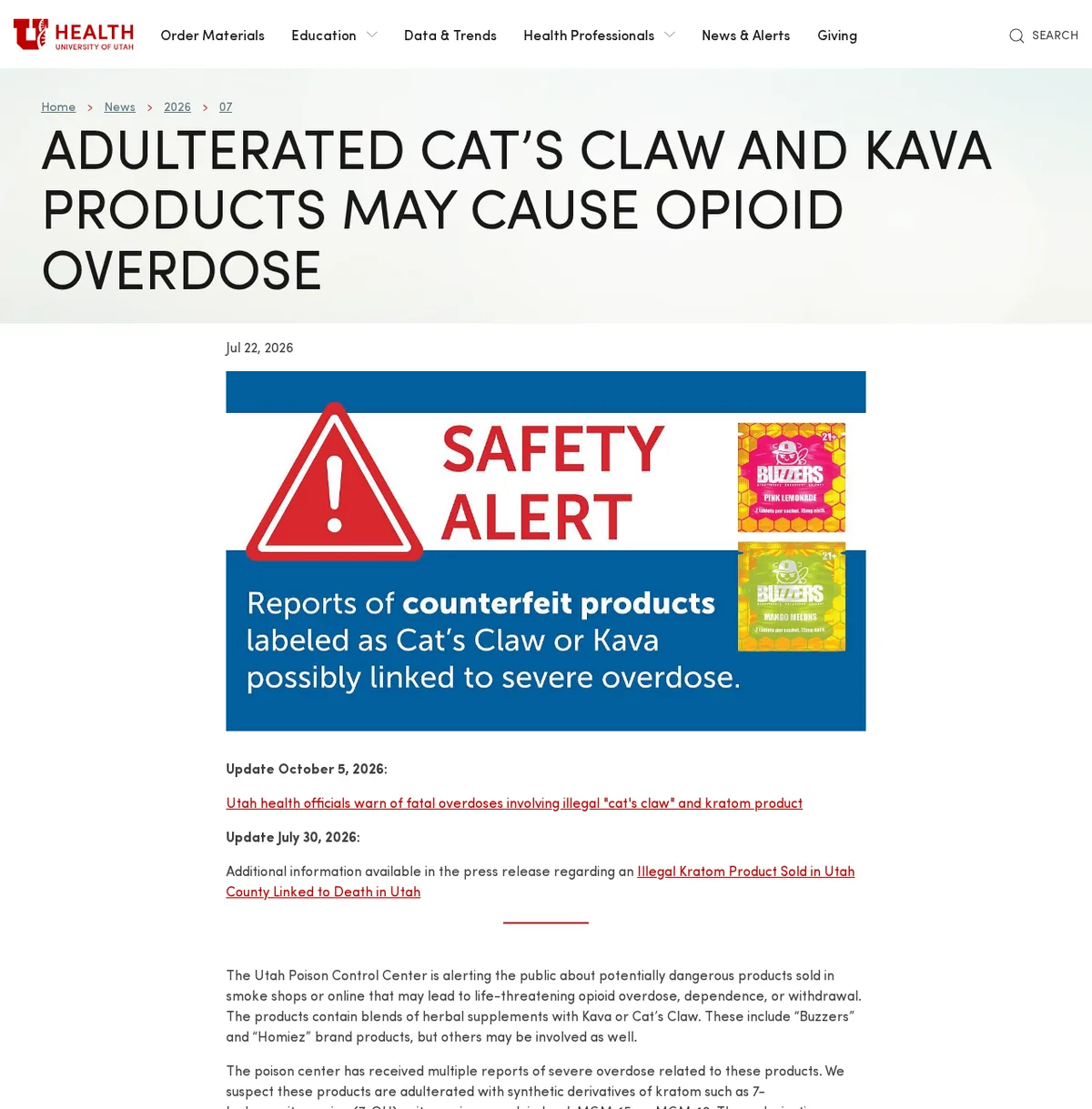
Figure 1. The poison centre's alert, eight days before the death was announced. Its list of suspected adulterants includes 7-OH; the laboratory result that followed did not. [1]
Eight days later the Department of Agriculture and Food announced a death. The release says "investigations are ongoing regarding a recent death and several severe health incidents associated with Buzzers-brand" cat's claw tablets that contained illegal kratom alkaloids.[2] Then it says what the laboratory found: "The tested products contained both mitragynine pseudoindoxyl and MGM-15".[2] Neither compound is 7-OH. The release calls both Schedule I drugs in Utah, and the federal government scheduled them on August 26.[2][3]
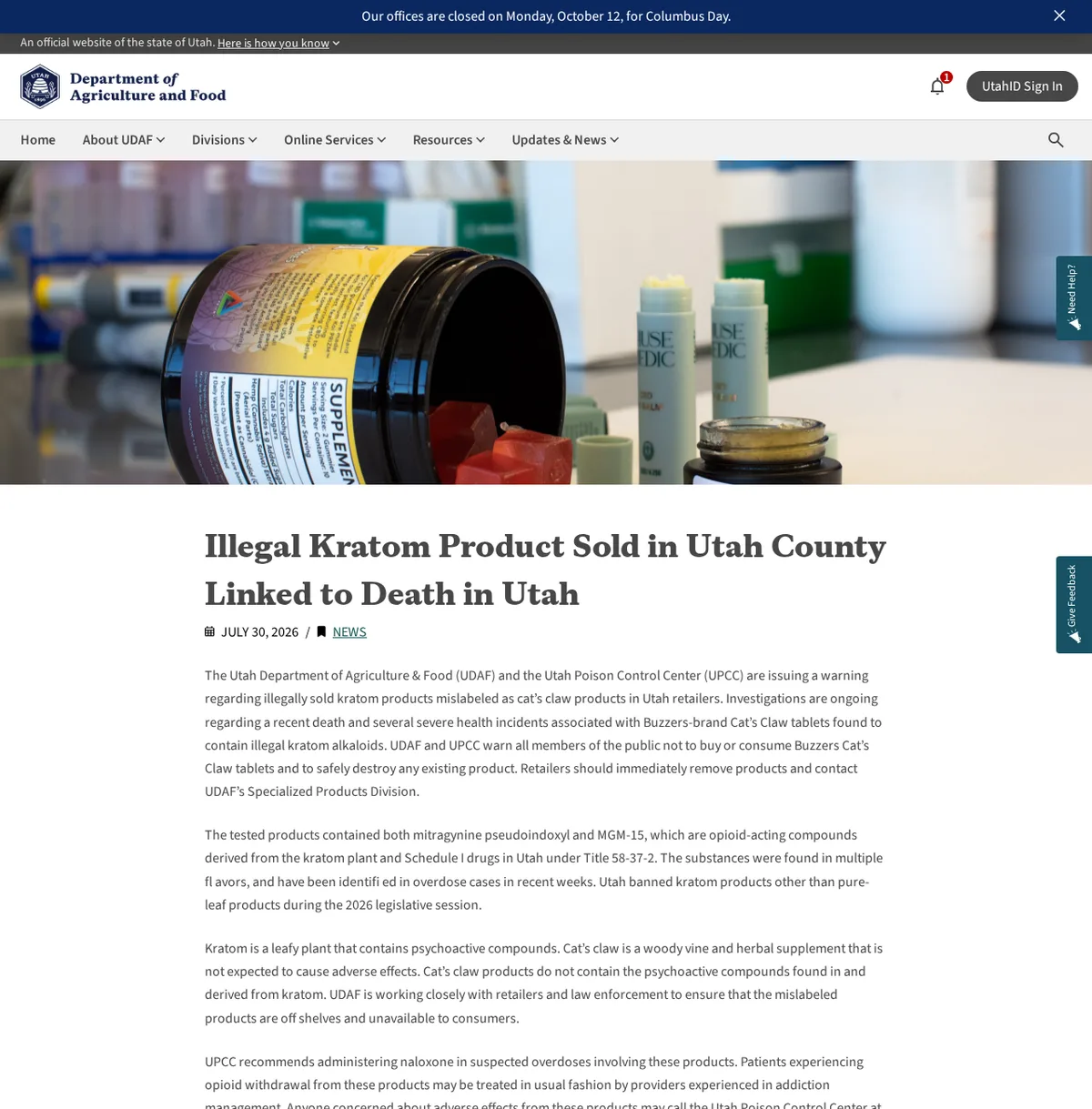
Figure 2. The state's July 30 release. Its second paragraph names the two compounds the tested tablets contained, mitragynine pseudoindoxyl and MGM-15. Neither is 7-OH. [2]
What was tested was product, not a person. Neither release gives the dead person's age, the date of death, the county medical examiner's finding or a blood result. On October 5 the health department raised the count, "following four deaths across the state linked to high-potency, illegal chemical compounds found in certain herbal supplements", and again named mitragynine pseudoindoxyl and MGM-15.[4] It released no toxicology for any of the four.[4]
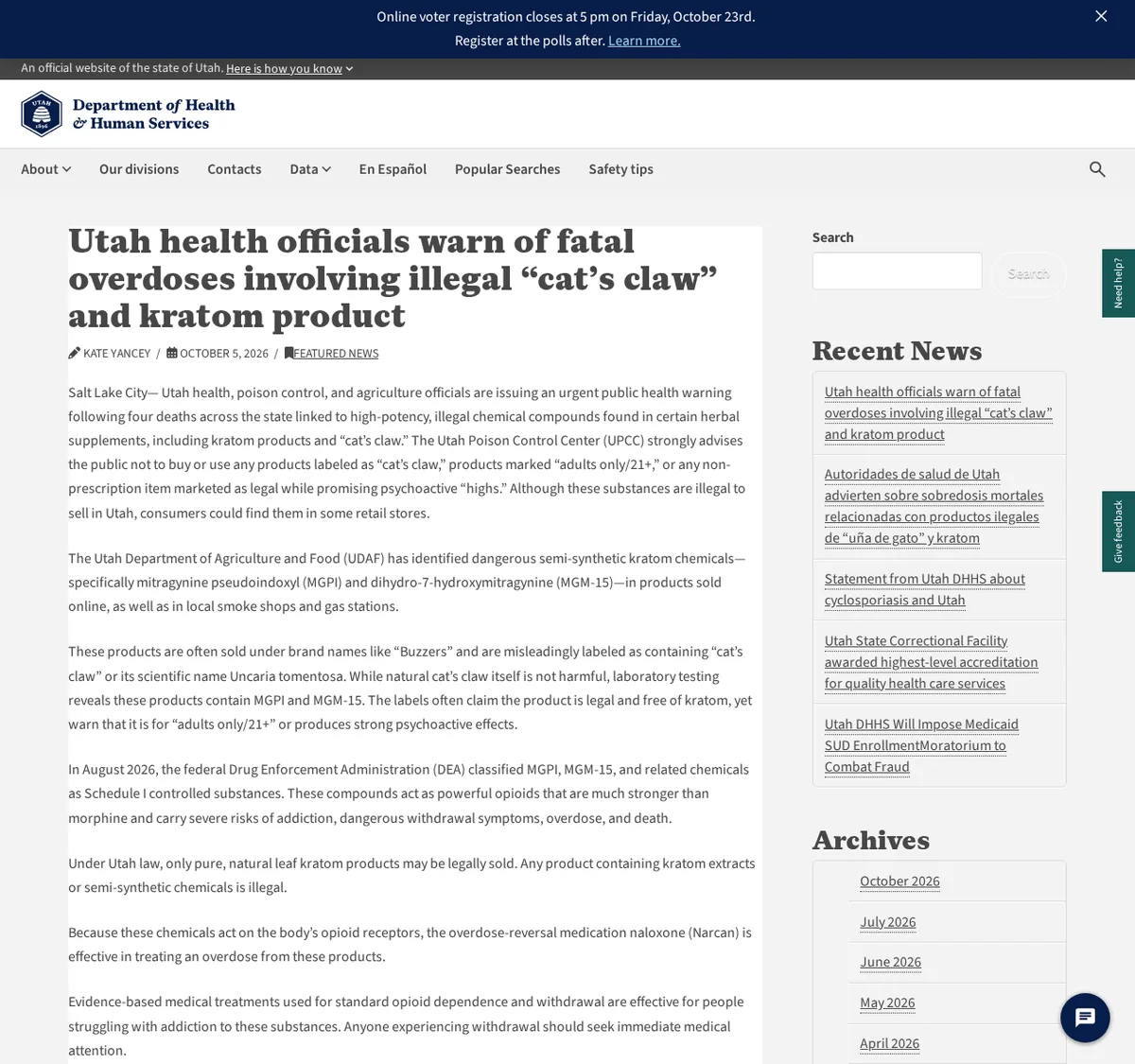
Figure 3. The health department's October 5 warning. It counts four deaths and names the same two compounds. It gives no dates, ages or toxicology for any of them. [4]
So the first death Utah officially tied to the post-7-OH market was tied to two different compounds, through a product test, with the toxicology withheld. It was also not the first 7-OH death anywhere. The FDA's own July 2025 assessment had already counted adverse event reports "13 cases, including 2 deaths" suspected to involve 7-OH, a year before Utah's announcement.[5]
Two earlier Utah deaths are part of how the story is told, and neither is an official 7-OH finding. Aaron Smiley died in Moab in February 2025. His sister told KSL that "his cause of death was ruled undetermined by the medical examiner" and that the family attributes it to enhanced kratom products.[6] Connor Neeleman, 26, was a Utahn who died in Texas. His mother told KUTV in December 2025 that "Neeleman said Connor had received the tablets for free at a vape shop in Texas" and that 7-OH was in his toxicology report.[7] A month later the station reported her account that "Neeleman explained that compound, 7-hydroxymitragynine, was the only substance found in her son".[8] The report itself has not been published. Those are a family's accounts, and this page records them as accounts.
The state's own numbers are about kratom, not 7-OH. Megan Broekemeier, the opioid fatality examiner at the Office of the Medical Examiner, told a Senate committee in January 2026: "There have been 219 kratom-involved overdoses in our state over 10 years". She said 94% involved more than one substance.[9] The Salt Lake Tribune, reading the same office's data, reported that "between 2018 and 2025, more than 200 Utahns died from kratom-related drug overdoses" and that "overwhelmingly those deaths are accidental and involve at least one other substance".[10] Utah's chief medical examiner told KUTV that her toxicology catches the leaf and the isolate alike: "we are capturing mitragynine and/or the 7-hydroxymitragynine if present".[8] She did not say the office separates one from the other in its counts.
How the death was used
Both sides used it within a day.
The American Kratom Association answered on July 31 with a release whose subhead blamed one legislator by name. Its lobbyist Mac Haddow said of Sen. Mike McKell: "He rejected an excise tax to fund increased enforcement and administrative penalties of up to $20,000 per illegal product."[11] And: "Utah consumers are now seeing the consequences of that failed policy."[11] The release also faulted both agencies for calling the tablets kratom products.[11]
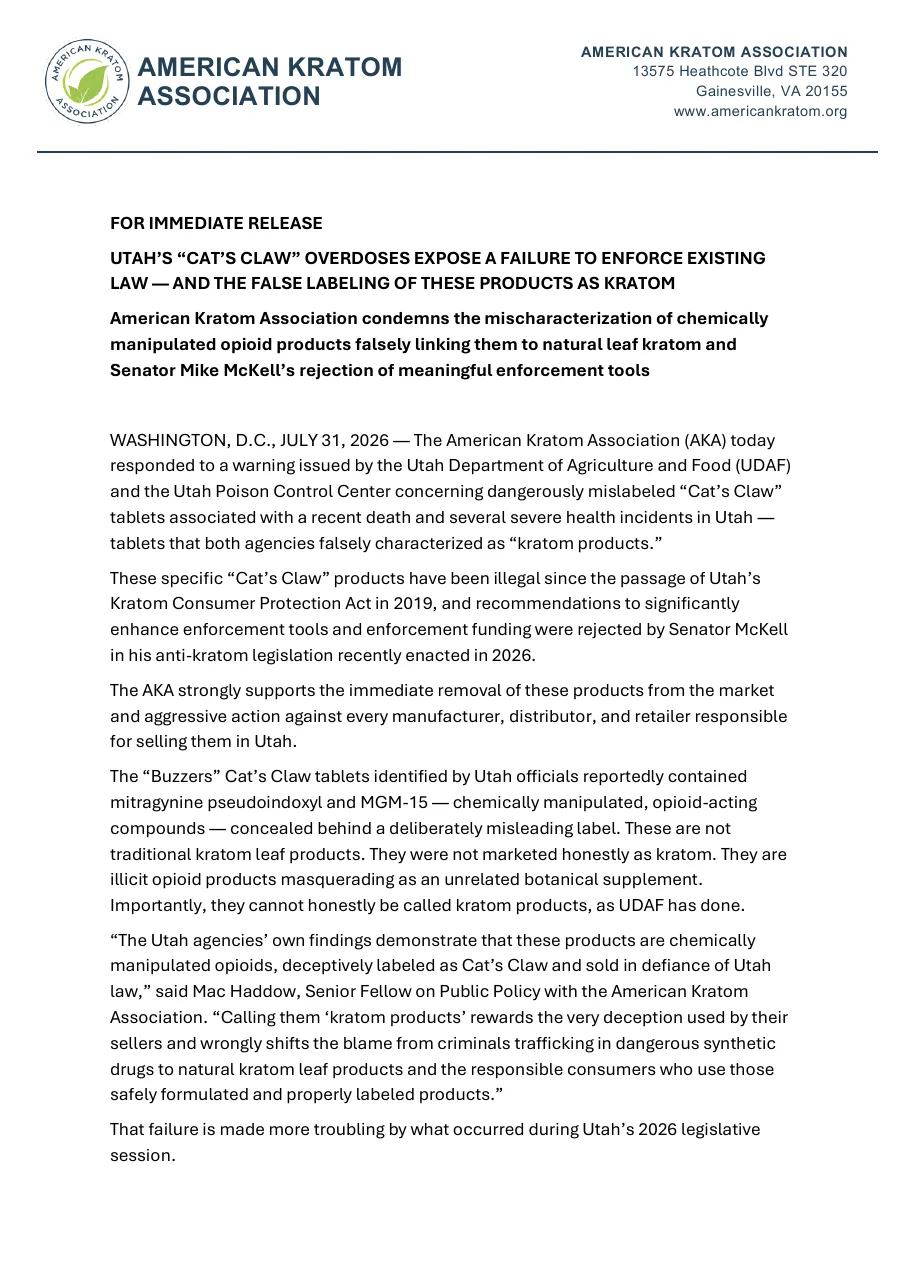
Figure 4. The association's answer, issued the next day. Its subhead blames the sponsor of Utah's 2026 law by name. [11]
McKell used it to go further. He told FOX 13: "I do have a bill file open again that would ban pure leaf kratom entirely".[12] And: "If this is an industry that can't follow the rules, they shouldn't be in our state."[12] The products in the death were sold as cat's claw and contained no leaf compound that the testing named.[2] McKell's proposed answer is a ban on leaf.[12]
How Utah wrote the first kratom law
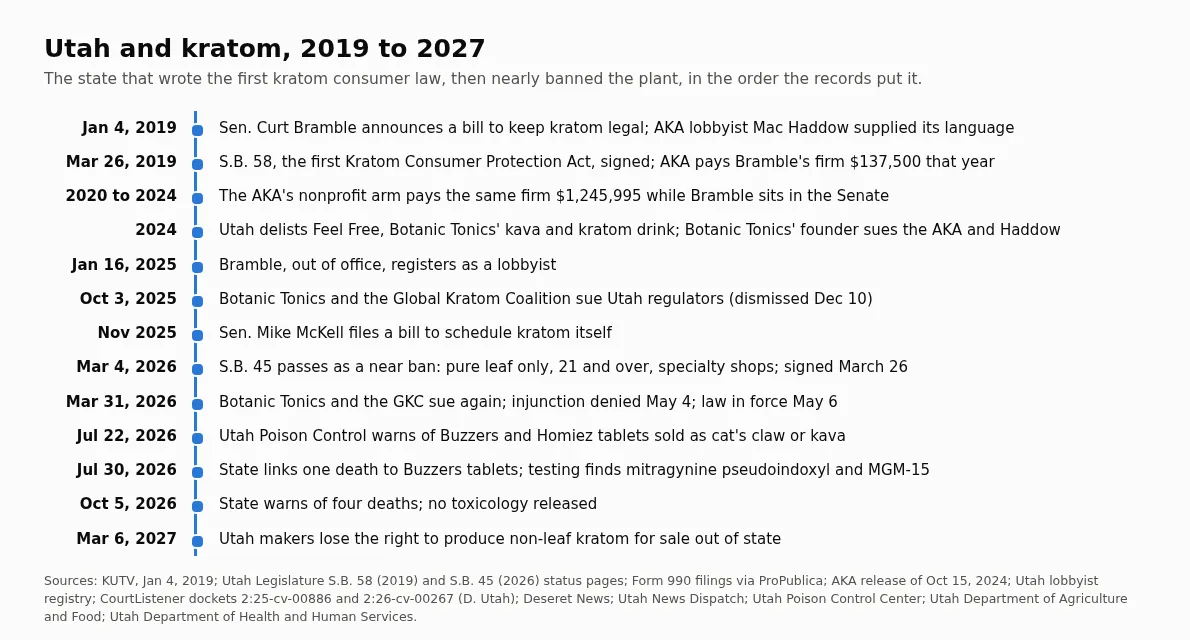
Figure 5. Utah and kratom from 2019 to 2027, drawn for this page from the records cited below it. [13]
The American Kratom Association's model bill, the Kratom Consumer Protection Act, became law first in Utah. Sen. Curtis Bramble of Provo was the chief sponsor of S.B. 58 and Rep. Brad Daw the House sponsor; the governor signed it on March 26, 2019.[14] It treated a kratom product as adulterated if its 7-OH was "greater than 2% of the alkaloid composition of the kratom product", or if it held synthetic 7-OH.[15] On January 4, 2019, before the text was public, KUTV reported where the language came from. Of Mac Haddow, the association's Washington lobbyist, it wrote: "He gave language in the proposed bill to Bramble."[16]
Haddow is a Utahn by career. Courthouse News reported in 2022 that he ran Orrin Hatch's first Senate campaign and that "Haddow served in the Utah Legislature" before taking a senior post at the Department of Health and Human Services in the Reagan administration.[17] Utah's lobbyist registry has carried his registration for the association since January 30, 2017.[13]
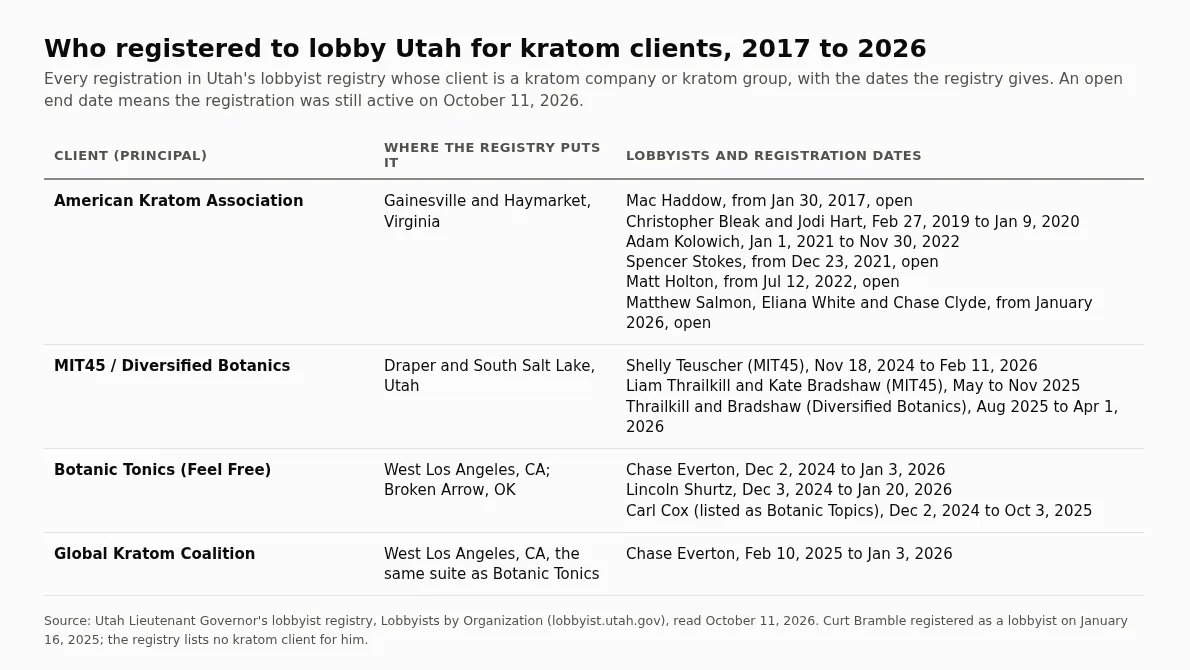
Figure 6. Every kratom client in Utah's lobbyist registry, with the dates the registry gives. The Global Kratom Coalition and Botanic Tonics share one address. [13]
What the association paid the sponsor
The association's 2019 Form 990, for the year the bill passed, lists two contractors paid more than $100,000. One is a Washington lobbying firm. The other is B&C Strategies of Provo, Utah, paid $137,500 for consulting services.[18] Its address is the address Utah's lobbyist registry gives for Bramble & Company, the firm through which Curt Bramble registered as a lobbyist in 2025.[13]
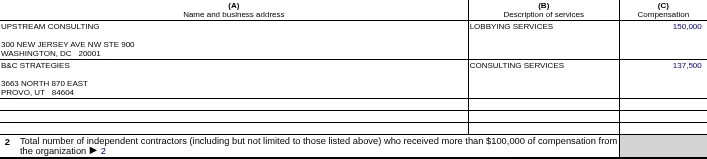
Figure 7. The association's 2019 return, the year Bramble's bill became law. B&C Strategies of Provo was paid $137,500 for consulting. [18]
From the next year the payments came from the association's 501(c)(3) arm, the Center for Plant Science and Health. Its returns list B&C Strategies at $237,500 for 2020 and $240,000 for 2021, then Bramble & Company Strategy at $240,000 for 2022, $251,345 for 2023 and $277,150 for 2024, each at the same Provo address and each for strategic consulting.[19][20][21][22][23] With the 2019 payment that is $1,383,495 in six years, all of it while Bramble sat in the Utah Senate.
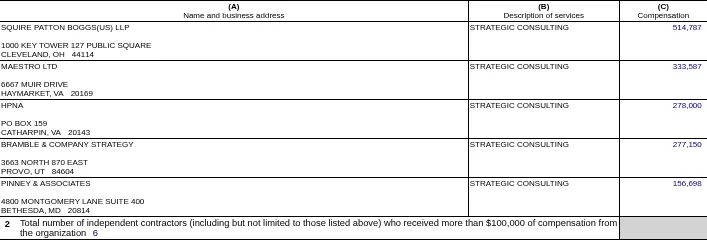
Figure 8. The nonprofit arm's 2024 return. Bramble & Company Strategy, at the same Provo address, was paid $277,150, Bramble's last year in the Senate. [23]
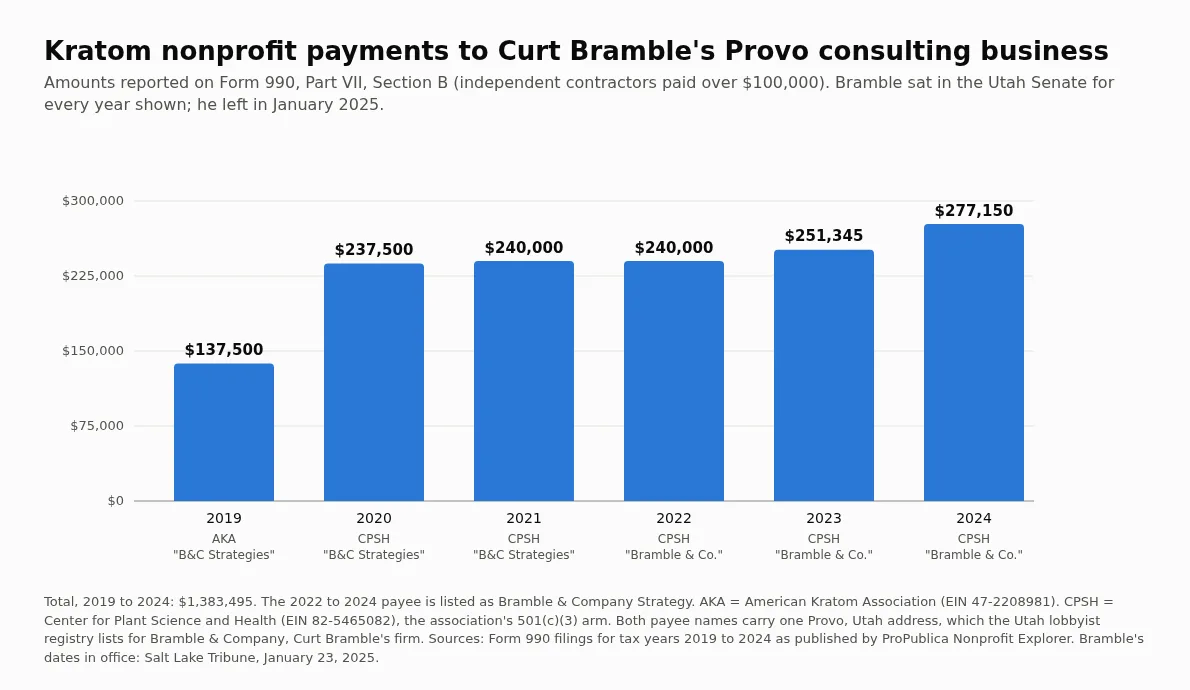
Figure 9. Six years of payments from the American Kratom Association and its nonprofit to Bramble's firm, $1,383,495 in all, drawn for this page from the returns. [22]
The Salt Lake Tribune, which reported the 2020 to 2023 total in January 2025, put the legal point plainly: "He was not identified in any of the legislative records as a representative of the industry and, under Utah law, did not have to disclose the consulting payments to his business."[24] Bramble told Courthouse News the work was routine: "I have been doing international business consulting for better than 30 years".[17] He left the Senate in January 2025 and registered as a lobbyist that month.[24] KUER reported in August 2025 that "Since retiring from the Senate, Bramble has become a lobbyist for kratom regulation and a consultant with the American Kratom Association."[25] Utah's registry lists no kratom client against his name.[13]
The association's chairman is now a registered Utah lobbyist too. Matt Salmon, a former Arizona congressman, registered for the association in Utah on January 12, 2026.[26][13] The association says of its money only that "Funding to keep kratom legal comes from individual donors and organizations interested in supporting the mission of AKA."[26] Its 2024 return reports $4,700,427 in revenue, all of it as contributions, with no donor named on the public copy.[27][28]
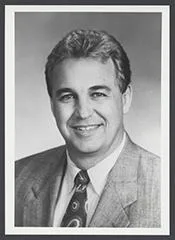
Figure 10. Matt Salmon in his official House portrait. He now chairs the American Kratom Association and registered to lobby Utah in January 2026. [29]
The 2026 session: three bills and a near ban
Utah's senators arrived in January 2026 with three kratom bills. KUER summarised them: S.B. 48 from Sen. Evan Vickers would make 7-OH Schedule I but leave the leaf, S.B. 101 would tax kratom, and S.B. 45 from Sen. Mike McKell would schedule the plant itself.[9] Vickers' Senate page lists his profession as pharmacist and business owner; McKell's lists attorney and title officer.[30][31]
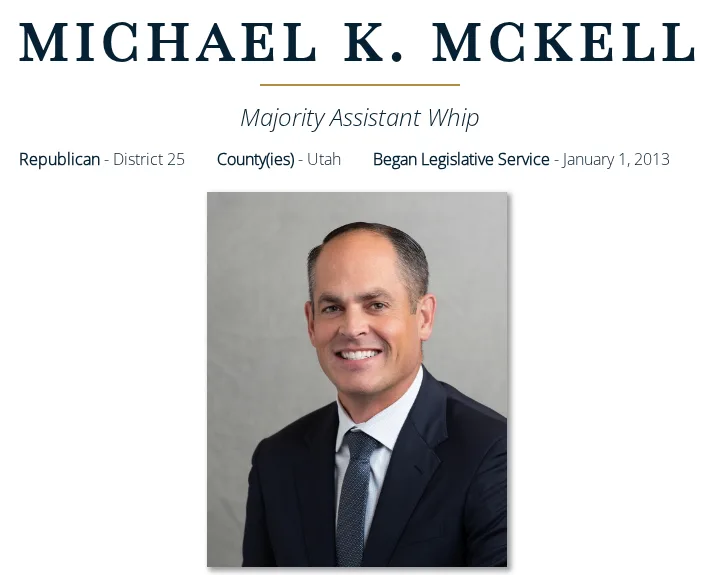
Figure 11. Sen. Mike McKell of Spanish Fork, sponsor of the 2026 law, in his official Senate portrait. [31]
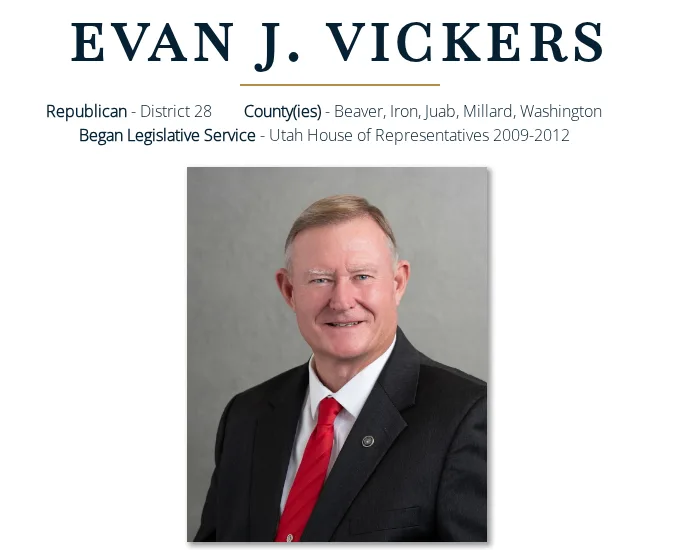
Figure 12. Sen. Evan Vickers of Cedar City, whose 7-OH bill was folded into the 2026 law, in his official Senate portrait. [30]
The biggest Utah kratom company spoke for the 7-OH ban. Ryan Niddel, chief executive of Draper-based Diversified Botanics, told the committee he backed Vickers' bills, saying: "It's not really to regulate or not, it's whether we're able to regulate intelligently based off of science".[9] His company describes its portfolio as "including our flagship brand, MIT45".[32] MIT45 is one of the American Kratom Association's listed GMP-qualified vendors, which says of itself that "MIT45 has been committed to bringing kratom to the world in a responsible, sustainable way for more than 10 years."[33] It hired Utah lobbyists from November 2024 and its parent from August 2025.[13] In Washington it pays Ragnar Group $40,000 a quarter for, in the filing's words, "Advocacy for the Kratom Consumer Protection Act".[34]
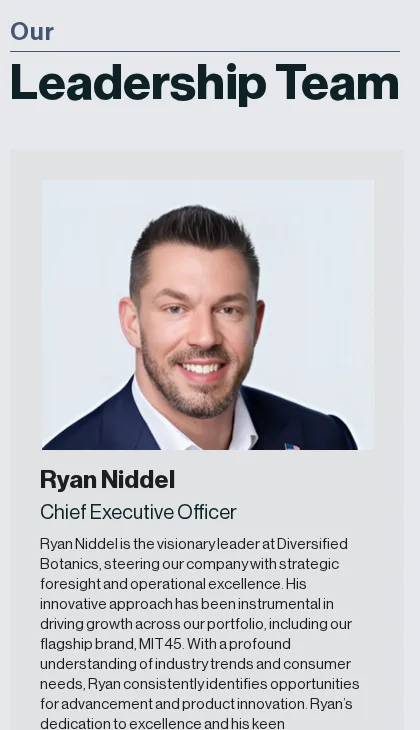
Figure 13. Ryan Niddel as his company presents him, chief executive of Draper-based Diversified Botanics, which owns MIT45. [32]
McKell's bill went the other way. In November 2025, introducing it, he said: "I think it needs to be clear that there are hundreds of thousands of dollars flowing to the people pedaling kratom in this state and other states".[35] Vickers' 7-OH bill was folded into his.[36] The House passed the result 63 to 10 on March 4, the Senate concurred, and the governor signed it on March 26.[36][37] It allows pure leaf only, to buyers 21 and older, in specialty shops.[36] McKell, after the vote: "This is a business that has addicted and killed people, and to me, it's gas station heroin, and I don't want to be part of it as a state."[36]
The final text kept a door open for Utah's manufacturers. Its House sponsor, Rep. Katy Hall, described her substitute this way: "It will allow them to prepare, possess, distribute and sell kratom products that are not pure leaf kratom products until March 6, 2027, so long as the sale happens outside of Utah and does not exceed 0.4% of 7-hydroxymitragynine".[36] A Utah maker may keep producing extracts for other states for a year, under a 7-OH cap.[36] Rep. Jon Hawkins told the House the state had 49 kratom manufacturers.[36] That figure is his and no registry was found that confirms it.
The leaf group that sued to stop a leaf law
The Global Kratom Coalition presents itself as an alliance for leaf kratom that separates leaf from extracts, concentrates and isolates.[38] In Utah its founder's company had a different problem. Botanic Tonics, the maker of the kava and kratom drink Feel Free, had been dropped from Utah's registered product list in 2024. The American Kratom Association said at the time that the drink "was recently de-listed by the Utah Department of Agriculture and Foods precisely because that product is formulated with kava and kratom".[39] A Florida Politics opinion column, hostile to the coalition, reported in February 2025 that "recently, the Utah Department of Agriculture delisted Feel Free and other products containing kava and kratom from their registered products list".[40]
The delisting started a feud between the two leaf groups that is on paper. In October 2024 the association said Botanic Tonics' founder, J.W. Ross, had sued it, its nonprofit and Haddow, and that one of his demands had been "a demand that AKA join Botanic Tonics in appealing a recent decision by the State of Utah to de-list Botanic Tonics".[41] Its chairman had already accused the coalition of claiming credit for other states' laws: "In the military they call that stolen valor."[42] Those are the association's own characterisations of a rival, in its own releases.
Utah's registry shows both Ross companies working the 2026 session. Botanic Tonics registered lobbyists from December 2024, and the Global Kratom Coalition from February 2025, at the same West Los Angeles suite.[13] The coalition's 2024 return gives that suite as its address too, lists Ross as president, and reports $3,431,756 in contributions.[43]
On October 3, 2025 Botanic Tonics and the coalition sued Utah officials in federal court; that case closed on December 10.[44] The 2026 law made the drink illegal outright, because it mixes kratom with kava, and on March 31, 2026 the two sued again.[45][46] Their complaint put Botanic Tonics' immediate losses at sums that "exceed $10,704,428".[46] Judge Howard Nielson denied an injunction on May 4,[47] writing that the company could comply "by simply declining to sell Feel Free in Utah".[48] The plaintiffs appealed, then dropped both the appeal and the suit. The attorney general's office told FOX 13 why: Botanic Tonics had submitted a pure leaf product for approval, and "After the product was approved, Botanic Tonics dismissed its lawsuit".[49]
The coalition's position on 7-OH did not change in any of this. What the Utah record shows is that its founder's own product was the leaf-plus-something drink a leaf-only law removed, and that the coalition was a named plaintiff against that law.[45][48]
Washington since the last deep dive
The federal story moved again on October 9, 2026. DEA filed two notices for public inspection, due to be published on October 14.[50][3]
The first, Docket DEA-1570, replaces the July proposal on 7-OH.[50] The July notice covered leaf that "contains more than 0.050 percentage of 7-hydroxymitragynine on a dry weight basis".[51] The new one follows a letter from the Assistant Secretary for Health dated October 8, 2026, and moves the line. Schedule I would apply above 1 milligram per gram of a solid or 1 milligram per millilitre of a liquid, or where mitragynine is less than 100 times the 7-OH, and it now counts mitragynine pseudoindoxyl together with 7-OH.[50] The notice says DEA will withdraw the July proposal, and it says that neither agency has found these substances safe below the new line.[50]
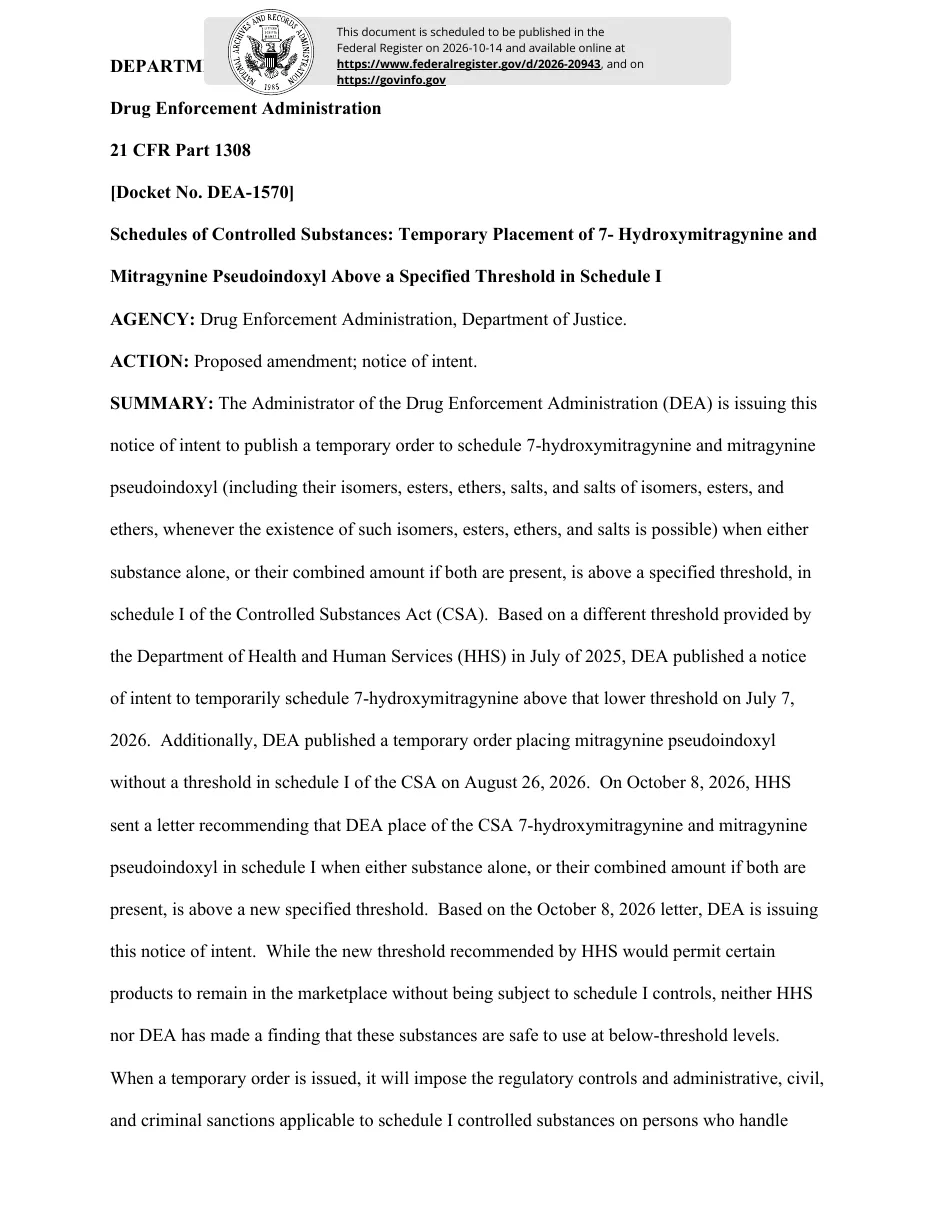
Figure 14. DEA's new notice as filed on October 9, 2026. The summary says HHS wrote on October 8 and that neither agency has found these substances safe below the line. [50]
The second, Docket DEA-1644, re-notices MGM-15 and MGM-16 on their own, so that mitragynine pseudoindoxyl can move into the threshold rule. It dates the HHS letter about that compound to October 6, two days earlier than the date the companion notice gives.[3][50] The companion notice's own summary dates the July proposal to July 7, while its footnote and the Federal Register give July 6.[50][51] These are filings, not the published text, and the published versions may settle both dates.
The change on mitragynine pseudoindoxyl is the one the American Kratom Association went to court for. Its suit against DEA, filed in Washington on August 26, asked that the August order not reach leaf carrying trace amounts of that compound.[52][53] The October notice does what the suit asked and does not mention the suit.[50]
The lobbying on the federal side continues as before. The client Stop Gas Station Heroin LLC paid Checkmate Government Relations $150,000 again in the second quarter of 2026.[54] A new registrant arrived in the third quarter: former Rep. Bob Good registered for a client called End Kratom Addiction, with the issue listed as "Fighting to get Kratom declared a schedule 1 drug".[55]
The comment fight
HHS's threshold docket closed, STAT reported, "after an extended public comment period ended on Sept. 10 with nearly 36,000 submissions".[56] The association had tried in advance to discount them. In a July 17 letter it told the Assistant Secretary that a 7-OH retailer had offered customers credit for commenting, quoting the offer "Get $20 in store credit for commenting".[57] It asked HHS to judge the threshold on science, "not on an orchestrated popularity contest funded and promoted by companies whose products are directly affected".[57] One of its exhibits was a Reddit post from July 10 urging people to file under different names, whose author wrote: "I've already left three. Please do this."[58] Haddow's response to the July DEA notice had been "This DEA action should end the debate".[59] The October concentration line, 1 milligram per gram, is twice July's 0.050 percent.[50][51]
Florida drew the line first
Florida's attorney general can schedule a drug by emergency rule, and James Uthmeier has done it for kratom alkaloids in August 2025, June 2026 and August 2026.[60][61][62] The first scheduled 7-OH "concentrated at a level above four hundred parts per million on a dry weight basis".[63] In June 2026 he widened the list at a Tampa hospital press conference, where the Florida Phoenix quoted him: "we will be looking to make some examples of bad actors".[62] The current rule, 2ER26-2, took effect on August 18, 2026.[60]
Its summary in the state register sets two tests for 7-OH. Above 1 milligram per gram of a solid or per millilitre of a liquid, it is Schedule I. So is "7-Hydroxymitragynine with less than 100 parts mitragynine for every one part of 7-Hydroxymitragynine by mass".[60] Those are the numbers in the HHS letter of October 8.[50] Florida published them seven weeks before Washington did. No federal document found for this page credits Florida for them.
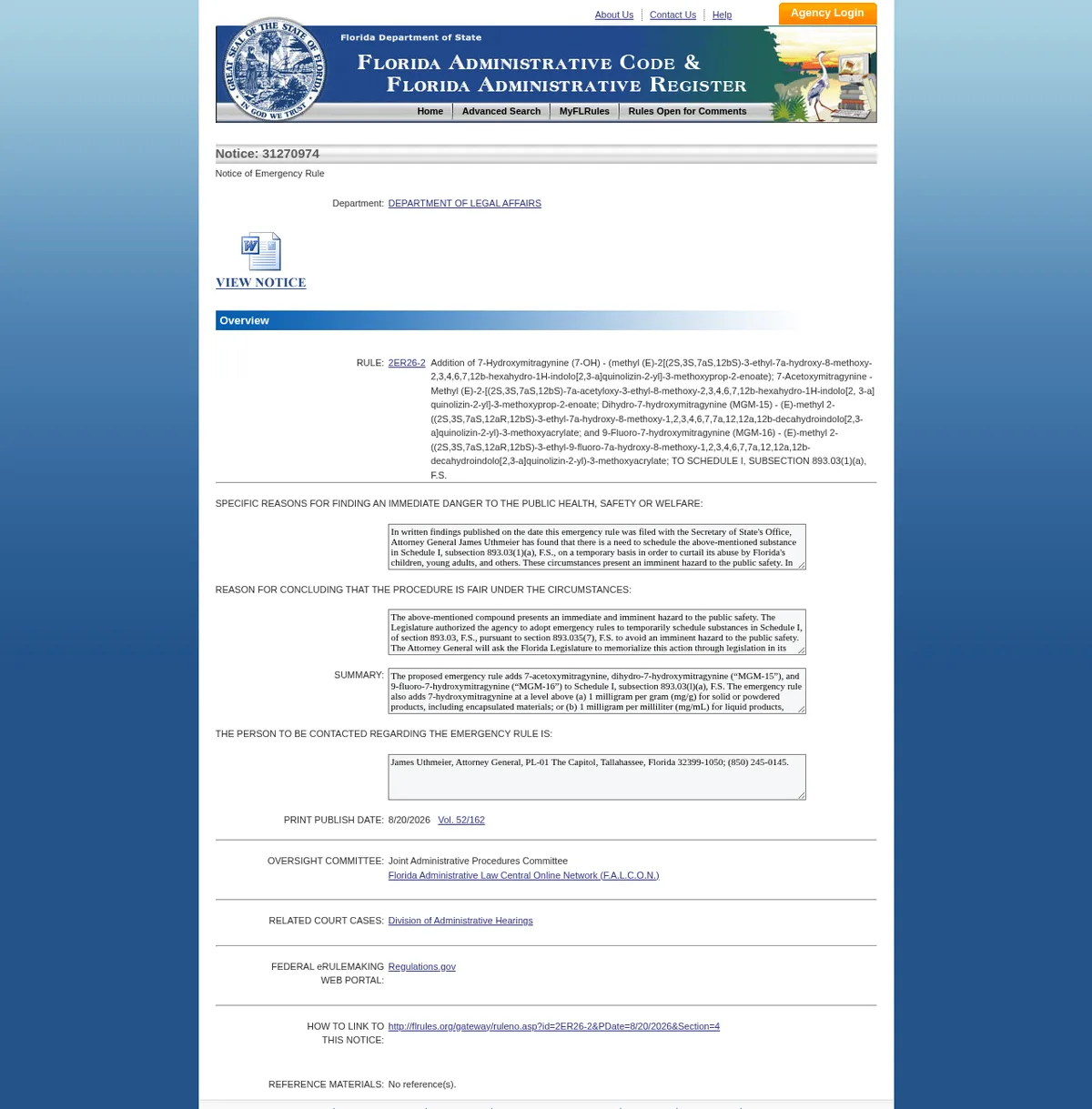
Figure 15. Florida's August 2026 rule in the state register. The summary box holds the 1 milligram and 100-to-1 tests HHS later recommended. [60]
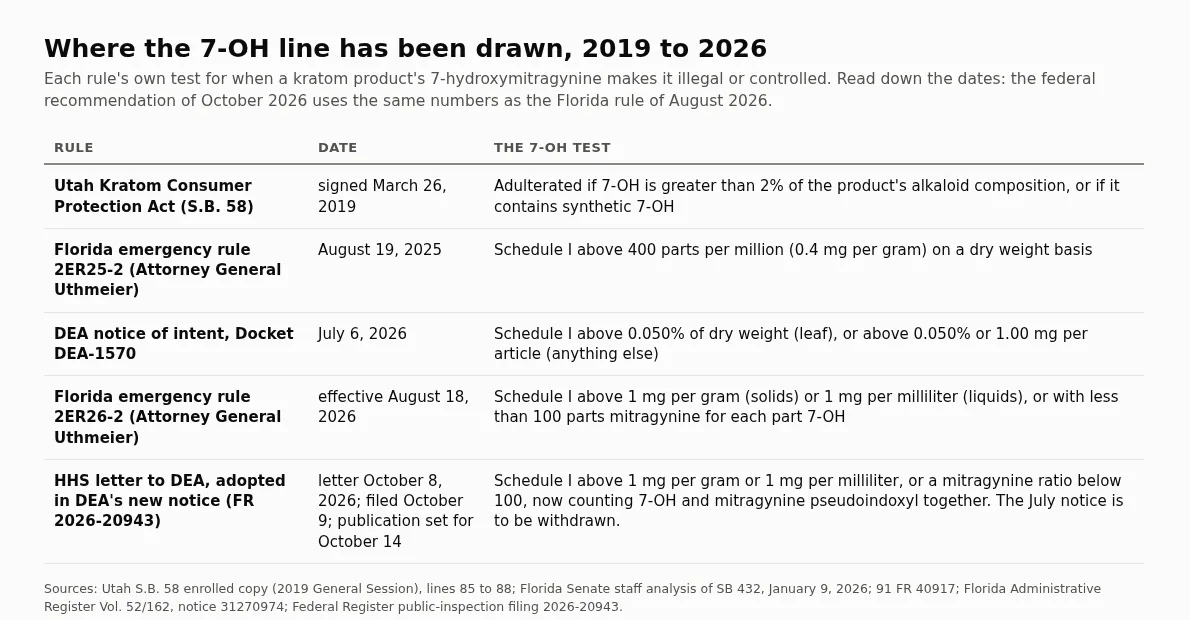
Figure 16. Four ways of drawing the 7-OH line since 2019. The federal recommendation of October 8, 2026 uses Florida's numbers. [60]
The rule is temporary, and the legislature has not made it permanent. The notice says so itself: "The Attorney General will ask the Florida Legislature to memorialize this action through legislation in its 2027 Legislative Session."[60] In 2026 the bills to do that failed. S.B. 432, filed to add 7-OH to Schedule I, passed as a nitrous oxide and xylazine law,[63] and S.B. 994, a consumer protection act of the association's kind, died in committee on March 13.[64][65] At a January hearing on the House scheduling bill, HART's policy director Jeff Smith argued against it: "It would single out one product that many Floridians rely on and use responsibly".[66]
Florida also supplied a face to the Utah campaign. Patti Wheeler, the KSL caption reads, is "Patti Wheeler from Florida, whose son died from a kratom overdose", and she stood with McKell on the Utah Senate floor in February 2026, as an executive producer of a documentary on kratom deaths.[67]
The rumour about the addiction-drug money
The owner of this site was told by a reader that the main lawyer lobbying for the bans in Florida takes more money from Suboxone executives than anyone else. That is a hearsay lead, and this section reports what the filings say about it.
The official who has done the most to ban 7-OH in Florida is the attorney general, who wrote all three rules.[60][62] His campaign account and his political committee, Friends of James Uthmeier, were searched in the state's campaign finance database on October 11, 2026.[68][69] Neither names Indivior, Braeburn or Alkermes, three makers of opioid-addiction medicines, as a contributor or as a contributor's occupation.[68][69] The state database holds no contribution at all from a contributor named Indivior or Braeburn, to anyone.[70][71] Alkermes, whose product site says "VIVITROL is a shot of naltrexone that is given by a healthcare provider once a month", has given 206 times since 2013, $990,000 in all, to legislators' committees and both parties, and never to Uthmeier.[72][73]
The lobbying registry tells a more tangled story, and it does not run in the rumour's direction.[74][75] The Global Kratom Coalition, which wants 7-OH scheduled, uses The Southern Group in Tallahassee, at $20,000 to $29,999 a quarter. The same firm lobbies for Braeburn, which the FDA approved to sell the buprenorphine injection Brixadi: "The FDA granted approval of Brixadi to Braeburn Inc."[74][75][76] Different named lobbyists carry the two clients.[74] The 7-OH makers' group, HART, which fights the bans, uses The Mayernick Group, and the same five Mayernick lobbyists are registered for Alkermes.[74] The American Kratom Association's firms, Holland & Knight and SBM Partners, list no addiction-drug client.[74] Indivior, whose Sublocade was "the first once-monthly injectable buprenorphine product", registers in-house and through Cynergy Consulting, which has no kratom client.[77][74]
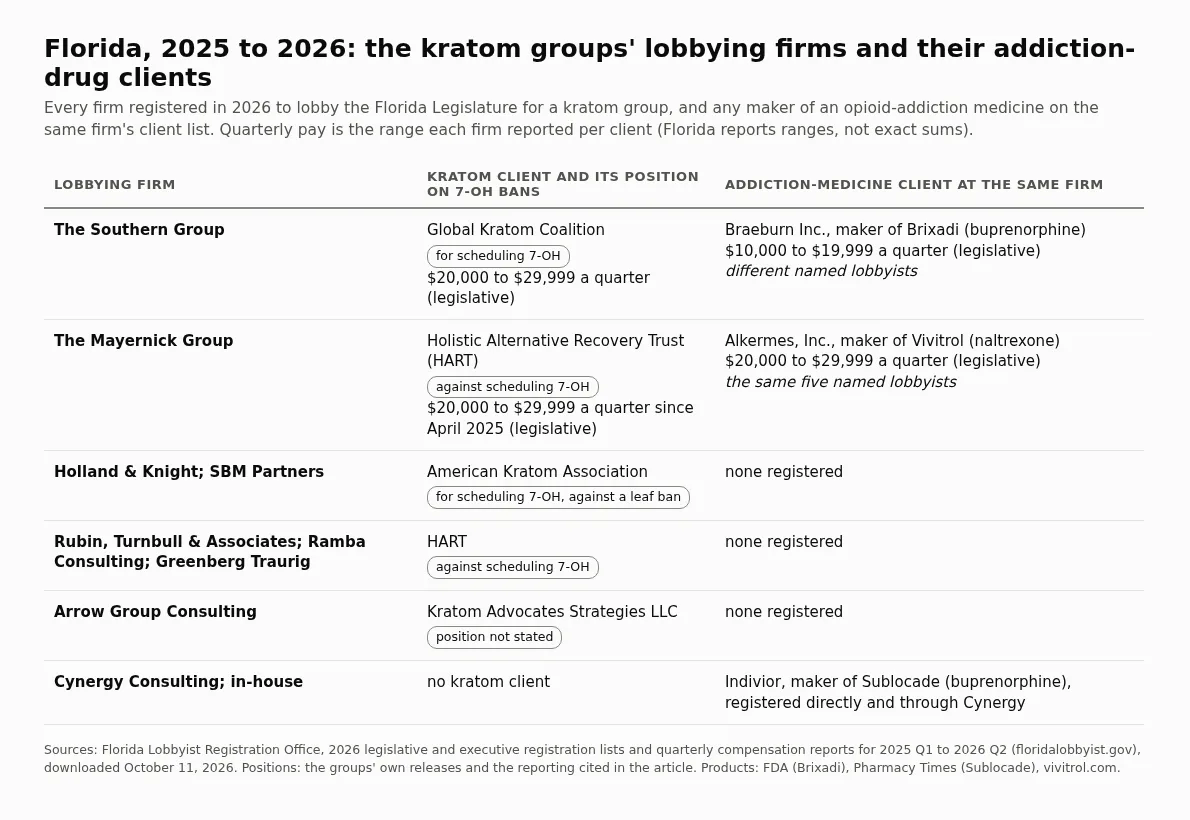
Figure 17. The Florida firms that lobby for kratom groups, and the two that also lobby for makers of opioid-addiction medicines. One sits on each side of the 7-OH question. [74]
So the record has an addiction-drug maker's firm on each side of the 7-OH question, and no filing in which any of those companies lobbies on kratom. Of the federal lobbying filings whose issues mention kratom, none is for Indivior, Braeburn or Alkermes.[78] Firms with Tallahassee practices give to the attorney general from both sides: The Southern Group of Florida's committee and firms that have lobbied for HART, Rubin, Turnbull & Associates, DownsAaron and Ramba Consulting, all appear among his contributors.[68][69][79] Those are firm accounts that represent many clients each, and nothing in the records ties any of those gifts to kratom.
Where the drug industry does sit in this story is the clinic. A case report published in August 2026 describes a man who "experienced significant opioid withdrawal symptoms that resolved with high-dose buprenorphine-naloxone" after stopping 7-OH.[80] Buprenorphine is the standard treatment for that withdrawal, so a market of dependent 7-OH users is a market for its makers whatever the law says. That is an interest. No filing found for this page shows any of them acting on it.
Florida's own role in Washington runs through a congressman. Rep. Gus Bilirakis of Florida introduced the END 7-OH Act on March 19, 2026, and the Global Kratom Coalition endorsed it, as the earlier deep dive recorded.[81][82]
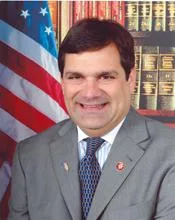
Figure 18. Rep. Gus Bilirakis of Florida, sponsor of the federal END 7-OH Act, in his official portrait. [83]
Who stands to gain
The fight is usually described as leaf sellers against 7-OH makers. The Utah record fits that better than the Florida one, and it fits neither cleanly.
MIT45 and its parent sell leaf and leaf extracts, lobbied in Utah for the 7-OH ban, and lost their extract sales in their home state to the broader law, with a year left to make extracts for export.[9][33][46][36][13] Botanic Tonics, the coalition's founding company, sells a leaf drink that Utah's leaf-only law removed, sued, and came back with a pure leaf product.[46][49] The American Kratom Association's vendors are leaf and extract sellers, and the association spent six years paying the Utah senator who carried its law.[33][23] HART, which Pain News Network calls "an advocacy group funded by 7-OH manufacturers", fights the bans, and in Florida it hires the same lobbyists as a naltrexone maker.[84][74]
The documented beneficiary of the 7-OH ban, so far, is whoever sells kratom that tests below the line. In October 2026 that line moved, in the direction Florida had already drawn it.[50][60]
Still open
- The Utah Office of the Medical Examiner's findings on the July 2026 Buzzers death and the three later deaths. None has been released.[4]
- The product the poison centre first named in its July 22 alert and then withdrew.[1]
- Whether the 49 Utah kratom manufacturers Rep. Hawkins counted include any 7-OH maker, and who makes Buzzers.[36]
- The donors behind the American Kratom Association's $4.7 million and the Global Kratom Coalition's $3.4 million. Neither return names them publicly.[27][43]
- Whether DEA's October 14 publication keeps the October 6 and October 8 dates for the two HHS letters.[3][50]
Changes
- 2026-10-11. First published.
References
- Adulterated Cat's Claw and Kava Products May Cause Opioid Overdose — Utah Poison Control Center, University of Utah Health, 2026-07-22, updated 2026-07-30 and 2026-10-05
- Illegal Kratom Product Sold in Utah County Linked to Death in Utah — Utah Department of Agriculture and Food with the Utah Poison Control Center, 2026-07-30
- Schedules of Controlled Substances: Temporary Placement of MGM-15 and MGM-16 in Schedule I (notice of intent, Docket DEA-1644, FR Doc. 2026-20942, public-inspection filing of 2026-10-09) — Drug Enforcement Administration, Federal Register public inspection; publication scheduled 2026-10-14
- Utah health officials warn of fatal overdoses involving illegal cat's claw and kratom product — Utah Department of Health and Human Services, 2026-10-05
- 7-Hydroxymitragynine (7-OH): An Assessment of the Scientific Data and Toxicological Concerns Around an Emerging Opioid Threat — US Food and Drug Administration, July 2025 (Wayback Machine copy of the PDF)
- '13 times stronger than morphine': The supplement soon banned from Utah convenience stores — KSL, 2026-03-14
- Utah mother demands kratom regulations following son's death, rise in poison control calls — KUTV, 2025-12-02
- Kratom-related overdose deaths in Utah increase 40% over last five years — KUTV, 2026-01-06
- Utah Senate pushes 3 approaches to regulating kratom and 7-OH ahead — KUER, 2026-01-27
- Kratom: 'Gas station heroin' ban passes Utah Legislature — The Salt Lake Tribune, Robert Gehrke and Addy Baird, 2026-03-05
- Utah's Cat's Claw Overdoses Expose a Failure to Enforce Existing Law, and the False Labeling of These Products as Kratom — American Kratom Association, 2026-07-31
- Utah lawmaker pushes total kratom ban after reported death linked to mislabeled product — FOX 13 Salt Lake City, Ben Winslow, 2026-08
- Lobbyists by Organization (principal), Utah lobbyist registry, read 2026-10-11 — Utah Office of the Lieutenant Governor
- S.B. 58 Kratom Consumer Protection Act, 2019 General Session, bill status page — Utah State Legislature (Wayback Machine copy, 2026-09-26)
- S.B. 58 Kratom Consumer Protection Act, enrolled copy — Utah State Legislature, 2019 (Wayback Machine copy of the PDF)
- Bill prepared to keep kratom legal in Utah — KUTV, 2019-01-04
- The law and the profits: Inside kratom's political underbelly — Courthouse News Service, 2022
- American Kratom Association, Form 990 for tax year 2019, Part VII Section B — ProPublica Nonprofit Explorer (IRS e-file data)
- Center for Plant Science and Health, Form 990 for tax year 2020, Part VII Section B — ProPublica Nonprofit Explorer (IRS e-file data)
- Center for Plant Science and Health, Form 990 for tax year 2021, Part VII Section B — ProPublica Nonprofit Explorer (IRS e-file data)
- Center for Plant Science and Health, Form 990 for tax year 2022, Part VII Section B — ProPublica Nonprofit Explorer (IRS e-file data)
- Center for Plant Science and Health, Form 990 for tax year 2023, Part VII Section B — ProPublica Nonprofit Explorer (IRS e-file data)
- Center for Plant Science and Health, Form 990 for tax year 2024, Part VII Section B — ProPublica Nonprofit Explorer (IRS e-file data)
- A loophole lets former Utah lawmakers become lobbyists after leaving the Legislature — The Salt Lake Tribune, Robert Gehrke, 2025-01-23
- There's a 'wild west' gap between kratom and 7-OH concentrates in Utah — KUER, 2025-08-15
- About the American Kratom Association — American Kratom Association, read 2026-10-11
- American Kratom Association, EIN 47-2208981, Form 990 summaries 2014 to 2024 — ProPublica Nonprofit Explorer
- American Kratom Association, Form 990 for tax year 2024 — ProPublica Nonprofit Explorer (IRS e-file data)
- Official portrait of Representative Matt Salmon — Congress.gov, Library of Congress
- Evan J. Vickers, Senator, District 28 — Utah State Senate
- Michael K. McKell, Senator, District 25 — Utah State Senate
- Leadership — Diversified Botanics, company site, read 2026-10-11
- AKA GMP Qualified Vendors — American Kratom Association, read 2026-10-11
- Lobbying report, Ragnar Group LLC for client MIT45, Inc., second quarter 2026 — US Senate Office of Public Records, Lobbying Disclosure Act filing
- Utah lawmaker argues for kratom ban to protect public health against 'gas station heroin' — KSL (Deseret News), 2025-11-22
- Legislature passes restrictions on the sale of kratom products in Utah — Deseret News, Caitlin Keith, 2026-03-04
- Gov. Cox takes action on remaining bills in the 2026 General Legislative Session — Office of the Governor of Utah, 2026-03-26
- About Us — Global Kratom Coalition, read 2026-10-11
- Response to False Allegations from the Global Kratom Coalition (GKC) — American Kratom Association, 2024-10-11
- Conflicts abound in new Florida push against kratom compound (opinion) — Florida Politics, Peter Schorsch, 2025-02-14
- American Kratom Association Responds to Baseless Lawsuit Filed by JW Ross of Botanic Tonics — American Kratom Association, 2024-10-15
- Official statement from the desk of Congressman Matt Salmon (Ret.), Chairman of the American Kratom Association — American Kratom Association, 2024-06-21
- Global Kratom Coalition Inc, EIN 93-3734910, Form 990 for tax year 2024 — ProPublica Nonprofit Explorer (IRS e-file data)
- Botanic Tonics v. Pherson, No. 2:25-cv-00886 (D. Utah), docket — CourtListener (RECAP)
- Botanic Tonics, LLC v. Pherson, No. 2:26-cv-00267 (D. Utah), docket — CourtListener (RECAP)
- Makers of 'feel free' tonics sue Utah officials over new kratom regulations — Utah News Dispatch, Alixel Cabrera, 2026-04-07
- Federal judge rejects challenge to Utah's new kratom regulation law — Deseret News, Caitlin Keith, 2026-05-11
- Utah's kratom ban takes effect: Adulterated products should be off shelves starting today — Utah News Dispatch, Alixel Cabrera, 2026-05-06
- Lawsuit challenging Utah's ban on kratom products is dropped — FOX 13 Salt Lake City, Ben Winslow, 2026
- Schedules of Controlled Substances: Temporary Placement of 7-Hydroxymitragynine and Mitragynine Pseudoindoxyl Above a Specified Threshold in Schedule I (notice of intent, Docket DEA-1570, FR Doc. 2026-20943, public-inspection filing of 2026-10-09) — Drug Enforcement Administration, Federal Register public inspection; publication scheduled 2026-10-14
- Schedules of Controlled Substance: Temporary Placement of 7-Hydroxymitragynine Above a Specified Threshold in Schedule I (notice of intent, 91 FR 40917, Docket DEA-1570) — Drug Enforcement Administration, Federal Register, 2026-07-06
- American Kratom Association v. United States Drug Enforcement Administration, No. 1:26-cv-02997 (D.D.C.), docket — CourtListener (RECAP)
- American Kratom Association Files Federal Lawsuit to Protect Natural Kratom Consumers from Misapplication of DEA Temporary Scheduling Order — American Kratom Association, 2026-08-27
- Lobbying report, Checkmate Government Relations for client Stop Gas Station Heroin LLC, second quarter 2026 — US Senate Office of Public Records, Lobbying Disclosure Act filing
- Lobbying registration, Bob Good LLC for client End Kratom Addiction, 2026 — US Senate Office of Public Records, Lobbying Disclosure Act filing
- Kratom and 7-OH should be regulated, experts agree. They're split on how — STAT, 2026-09-30 (Wayback Machine copy)
- Letter from the American Kratom Association to Assistant Secretary for Health Admiral Brian Christine on Docket HHS-OASH-2026-0232 — American Kratom Association, 2026-07-17
- You can leave more than one comment! — Reddit, r/7_hydroxymitragynine, u/DirectAnxiety9993, 2026-07-10 — anecdotal report, not evidence
- DEA Scheduling Action Confirms Chemically Manipulated 7-OH Opioids Are Not Kratom — American Kratom Association, 2026-07-01
- Notice of Emergency Rule 2ER26-2, Department of Legal Affairs (notice 31270974) — Florida Administrative Register, Vol. 52/162, 2026-08-20
- Florida AG issues emergency rule banning kratom compound — Florida Phoenix via WLRN, Christine Sexton, 2025-08-14
- More 7-OH related products made illegal in Florida by a new emergency rule — Florida Phoenix, Christine Sexton, 2026-06-22
- Bill Analysis and Fiscal Impact Statement, SB 432 (Controlled Substances), Committee on Criminal Justice — The Florida Senate, 2026-01-09
- CS/CS/SB 432 (2026), bill history — The Florida Senate
- SB 994 (2026), Florida Kratom Consumer Protection Act, bill history — The Florida Senate
- Florida considers permanent Schedule I status for kratom-derived compound 7-OH — WFSU / Health News Florida, Tristan Wood, 2026-01-20
- Mother of son who died of kratom overdose makes request of Utah lawmakers — KSL (Deseret News), Caitlin Keith, 2026-02-22
- Campaign finance database: contributions to candidate James Uthmeier (Attorney General) — Florida Department of State, Division of Elections, queried 2026-10-11
- Campaign finance database: contributions to Friends of James Uthmeier (political committee) — Florida Department of State, Division of Elections, queried 2026-10-11
- Campaign finance database: contributions from contributors named Indivior, all elections (no records returned) — Florida Department of State, Division of Elections, queried 2026-10-11
- Campaign finance database: contributions from contributors named Braeburn, all elections (no records returned) — Florida Department of State, Division of Elections, queried 2026-10-11
- VIVITROL (naltrexone for extended-release injectable suspension), product site — Alkermes, Inc.
- Campaign finance database: contributions from contributors named Alkermes, all elections — Florida Department of State, Division of Elections, queried 2026-10-11
- 2026 Legislative Registrations (lobbyist, principal and firm list) — Florida Lobbyist Registration Office, downloaded 2026-10-11
- Lobbying firm compensation reports, Legislative branch, April to June 2026 — Florida Lobbyist Registration Office
- FDA Approves New Buprenorphine Treatment Option for Opioid Use Disorder — US Food and Drug Administration, 2023-05-23
- Novel Opioid Use Disorder Drug Gains FDA Approval — Pharmacy Times, 2017
- Lobbying Disclosure Act filings whose specific issues mention kratom (API query), read 2026-10-11 — US Senate Office of Public Records, lda.gov
- Lobbying firm compensation reports, Legislative branch, July to September 2025 — Florida Lobbyist Registration Office
- 7-Hydroxymitragynine Withdrawal Treated With Buprenorphine-Naloxone (case report) — The Primary Care Companion for CNS Disorders, Held and Varicat, 2026-08-27
- H.R. 8000, END 7-OH Act, 119th Congress, as introduced — US Government Publishing Office, 2026-03-19
- Global Kratom Coalition Endorses Rep. Bilirakis' Bill to Schedule Concentrated Synthetic 7-OH — Global Kratom Coalition via EZ Newswire, 2026-03-26
- Official portrait of Representative Gus Bilirakis — Congress.gov, Library of Congress
- 'Enormous Confusion' as Deadline Nears for 7-OH Kratom Ban — Pain News Network, 2026-08-03
Comments
Sign in to join the conversation.
No comments yet.