
Not for human consumption: plant food, bath salts, room odorizer, car wash foam, and the labels that never fooled a court
On October 7, 2016, a man from St. Petersburg, Florida, less than a week out of federal prison, opened a thread on Reddit's r/IAmA and answered questions over the following days. He had been a vendor of research chemicals. Asked why he had been importing methylone and what legitimate use he was supplying, he wrote: “I was importing it not for human consumption, technically as a car wash foam, as that is what it was sent as from China, so I just made people agree it was not going to be used for human consumption.”[1] Asked again later the same night what he had told the authorities the chemicals were for, he gave the rest of the list: “I told them only that the chemicals were not for human consumption, they generally shipped as car was foam, carpet cleaner and paint additive for furniture.”[1]
That man runs this site. He posts as u/saintpetejackboy, and he asked for this article. His answers are quoted here as his own account, which is the only kind of evidence a first-person story can be, and they are checked against the documents wherever a document exists.
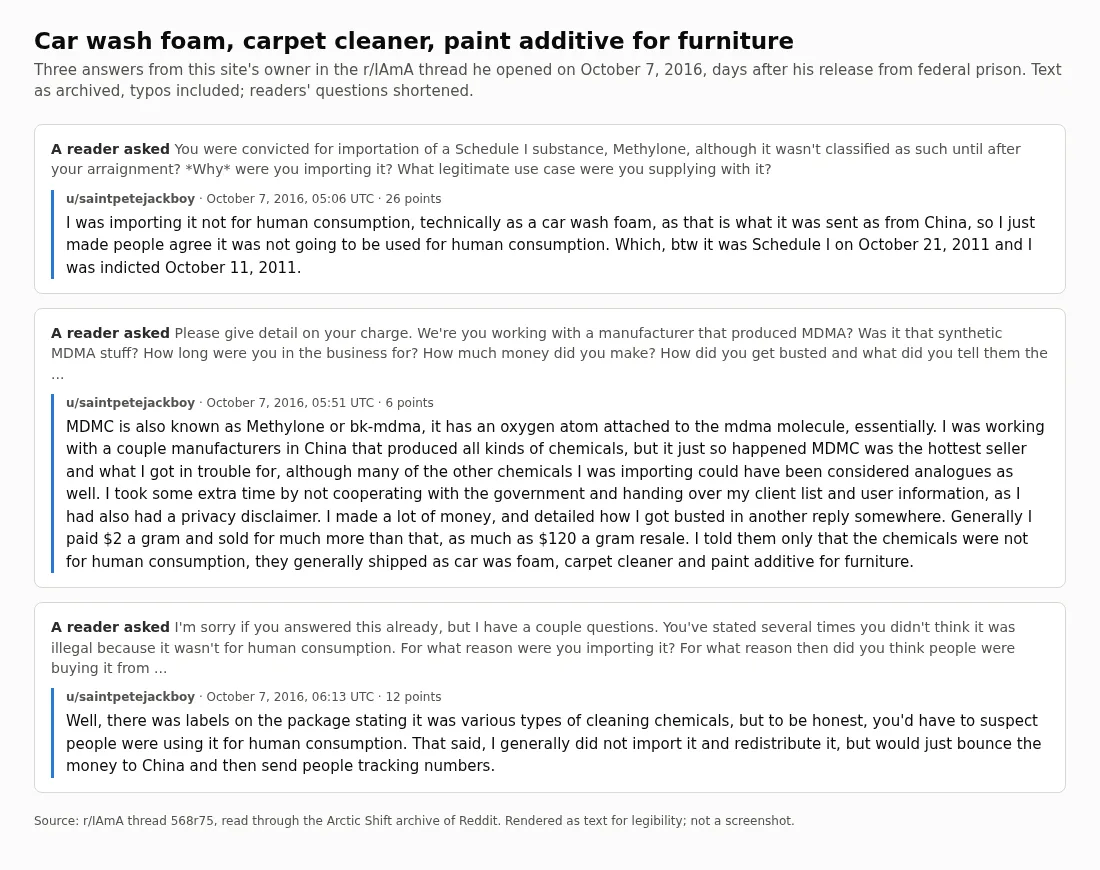
Figure 1. Three answers from the r/IAmA thread of October 7, 2016, rendered as text from the archived thread. Readers' questions are shortened; the answers are complete. [1]
He was frank about what the labels were for. A reader pointed out that he kept saying he thought the trade was legal because the product was not for human consumption, and asked who he thought his customers were. He answered: “Well, there was labels on the package stating it was various types of cleaning chemicals, but to be honest, you'd have to suspect people were using it for human consumption.”[1] He described his own disclaimer the same way: “I had a pretty hefty disclaimer customers had to agree to that included indemnification, but it didn't help me out in court at all.”[1]
The disclaimer survives. The Wayback Machine captured his storefront, n-lightenment.com, on June 12, 2011.[2] The menu across the top lists six products: 3-FMC, 4-MEC, 5-MeO-DALT, 5-MeO-MiPT, DOI and MDMC, the last being methylone.[2] The first paragraph says “All items sold are not for human consumption.”[2] The next promises: “If a particular substance has been deemed illegal by your local legal authority, we will not ship your product to you.”[2] Further down, under Liability: “Our products are sold for research or educational purposes only and are not intended for human consumption.”[2] The full disclaimer then runs on for more than a thousand words, repeating most of its clauses twice, once with the store's name and once with the words supplier and buyer in its place. In it the purchaser “agrees to indemnify and hold us harmless from all claims, expenses, losses and liability of any type”, and it closes: “All customers are assumed to be legal researchers or licensed researchers”.[2]
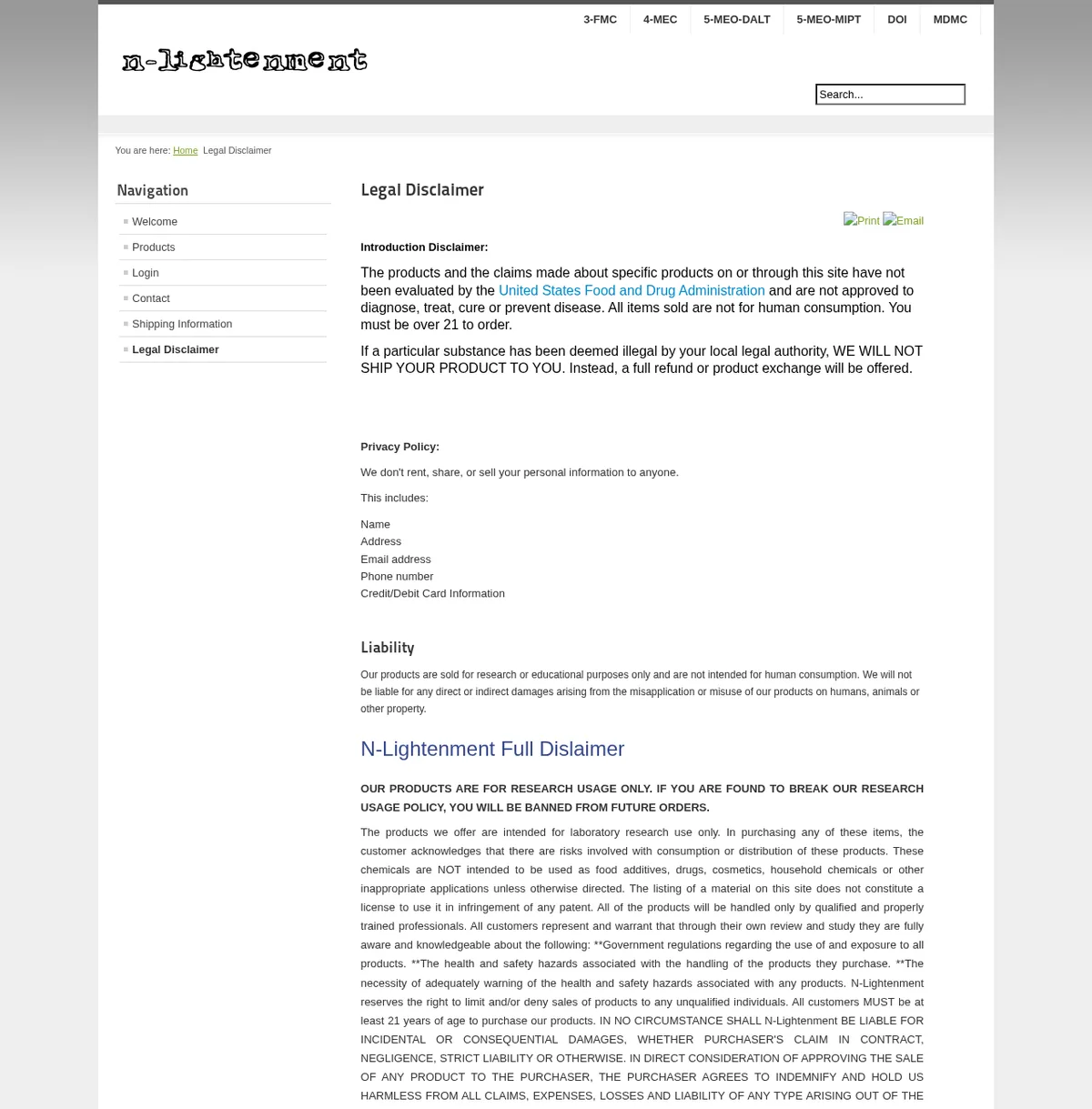
Figure 2. The legal disclaimer of n-lightenment.com as archived on June 12, 2011, four months before its operator, now this site's owner, was indicted. The menu across the top is the product list. The disclaimer runs to more than 1,500 words and ends with an indemnity clause. [2]
The product page for methylone, captured the same minute, did not name a research use. Its entire description was a sentence lifted from Wikipedia, which says methylone “is an entactogen and stimulant of the phenethylamine, amphetamine, and cathinone classes”.[3]
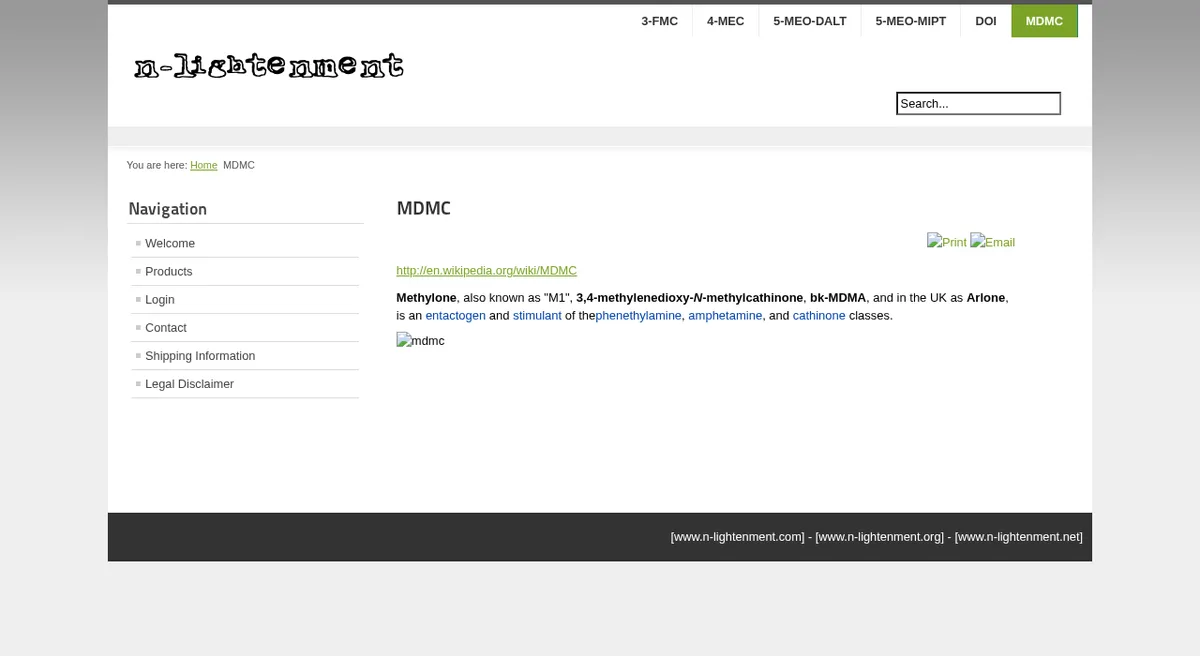
Figure 3. The MDMC page on the same day. The whole product description is a sentence copied from Wikipedia calling methylone an entactogen and stimulant. No research use is named anywhere on the site. [3]
He was indicted on October 11, 2011, he says, and methylone was placed in Schedule I ten days later: “Which, btw it was Schedule I on October 21, 2011 and I was indicted October 11, 2011.”[1] The second date checks out. The DEA's temporary order covering mephedrone, methylone and MDPV says: “This Final Order is effective on October 21, 2011.”[4] The indictment is his account. He was prosecuted under the Analogue Act, which treats a substance that is not on the schedules as if it were, when the law's conditions are met. One of those conditions is the very phrase his labels were built to deny.
This article is about that phrase and its relatives: plant food, bath salts, incense, potpourri, room odorizer, VCR head cleaner, nail polish remover, jewelry cleaner, and the parcels that cross the Pacific declared as something else. It ends with the question of what replaced the label, which is not yet answered.
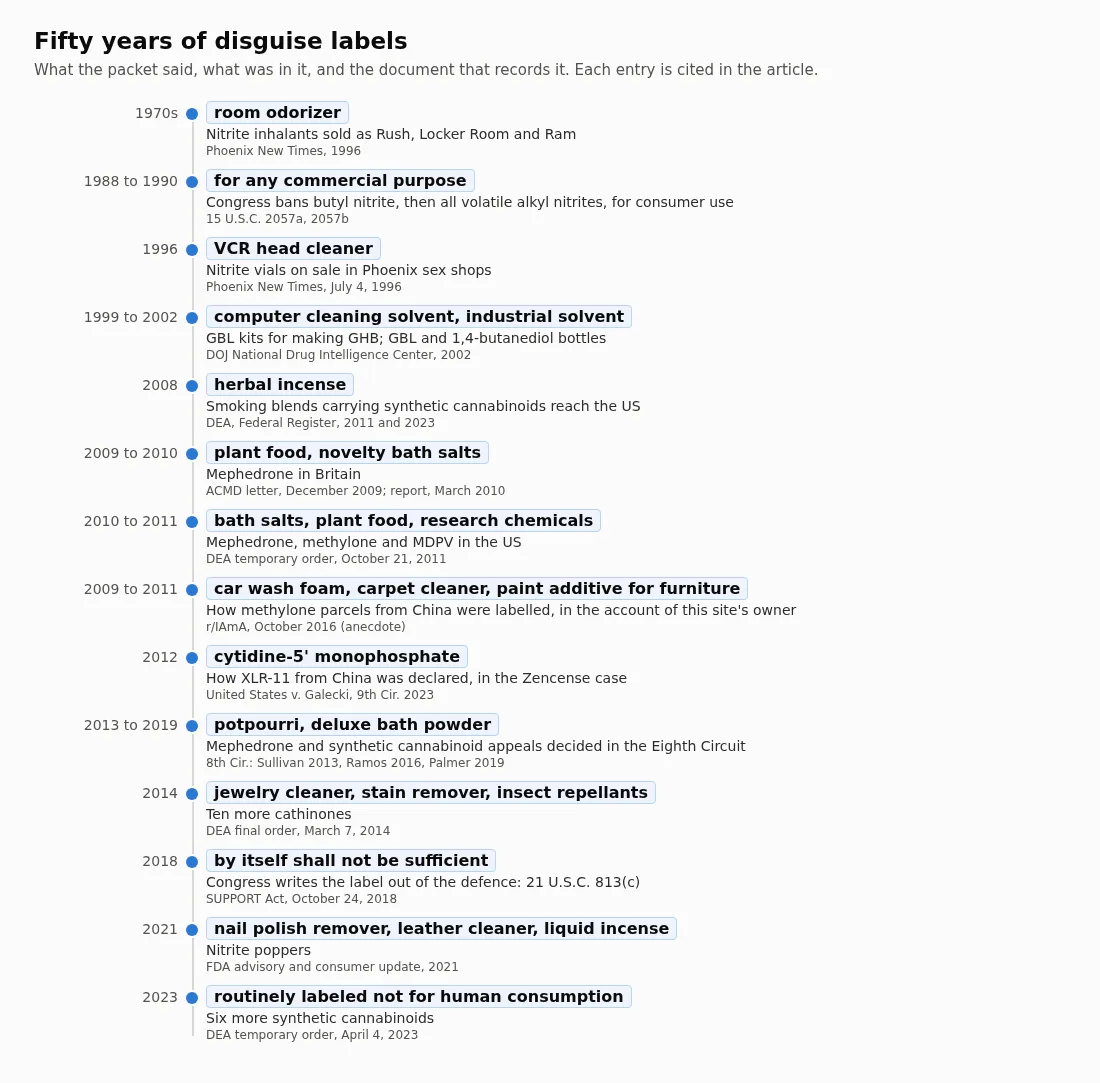
Figure 4. Fifty years of disguise labels, drawn for this article from the documents it cites. Each row names its source; the car wash foam row is an anecdotal account. [5]
The phrase is in the statute
The Controlled Substance Analogue Enforcement Act of 1986 added section 813 to Title 21. Its first sentence, unchanged since, is the reason the label exists: “A controlled substance analogue shall, to the extent intended for human consumption, be treated, for the purposes of any Federal law as a controlled substance in schedule I.”[6] Read quickly, the clause looks like an exit. If an analogue is only a crime when it is intended for human consumption, then a seller who prints a statement that it is not intended for human consumption appears to have stepped outside the law.
It never worked that way, and since October 24, 2018 the statute says so in terms. The SUPPORT Act added two subsections to section 813.[6] Subsection (b) lists six factors a court may weigh in deciding intent, and the first is “The marketing, advertising, and labeling of the substance.”[6] The third is the price: “The difference between the price at which the substance is sold and the price at which the substance it is purported to be or advertised as is normally sold.”[6] The fourth is the supply chain: “The diversion of the substance from legitimate channels and the clandestine importation, manufacture, or distribution of the substance.”[6] The sixth names the disclaimer's purpose as evidence against it: “Any controlled substance analogue that is manufactured, formulated, sold, distributed, or marketed with the intent to avoid the provisions of existing drug laws.”[6] Subsection (c) closes the door the label was meant to hold open. It says that “evidence that a substance was not marketed, advertised, or labeled for human consumption, by itself, shall not be sufficient to establish that the substance was not intended for human consumption”.[6]
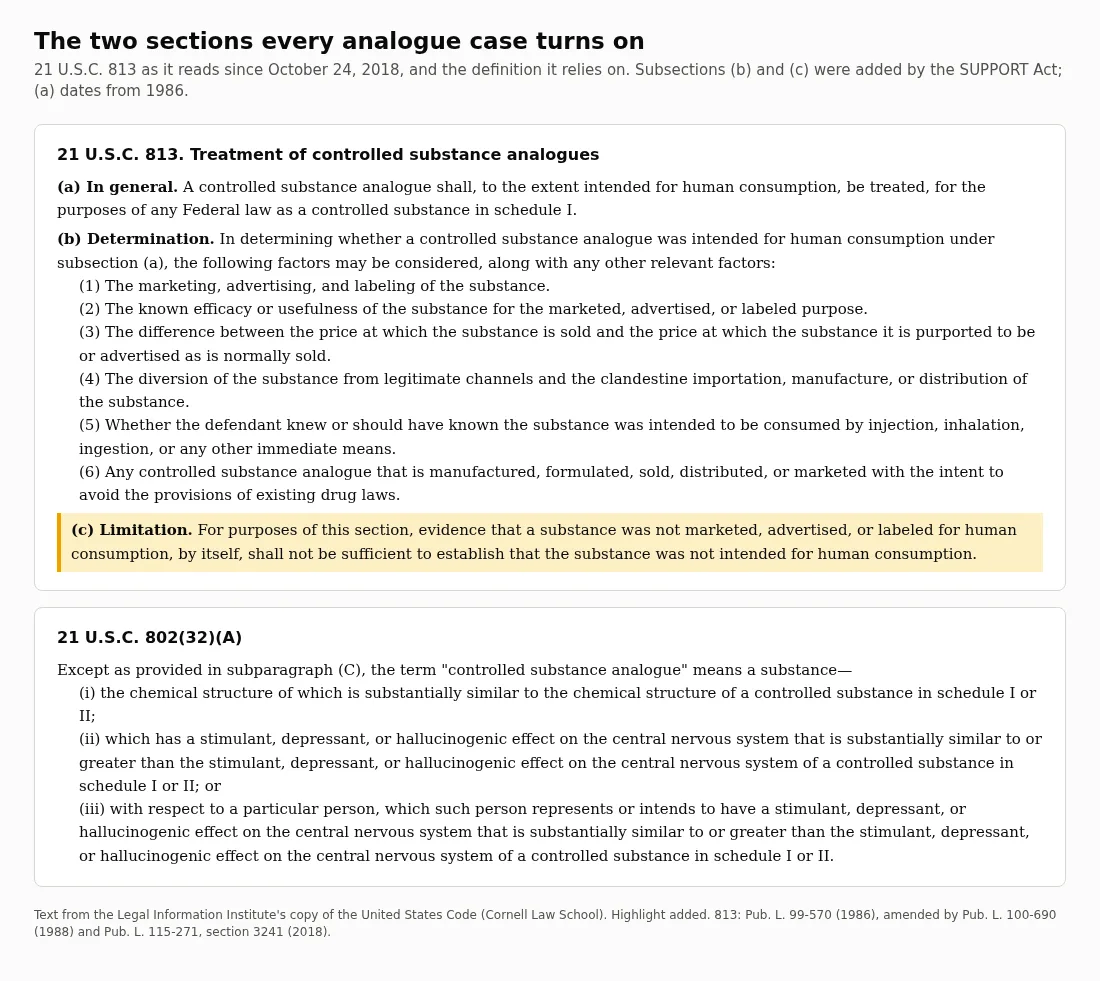
Figure 5. The two provisions, set as text for this article. The highlighted subsection (c), added in 2018, says a label alone cannot show a substance was not meant to be consumed. [6]
Congress was writing down what courts had been doing for two decades. The rest of this article is the record of how they did it, label by label.
The DEA used the phrase in its own documents long before the statute caught up. A full-text search of the Federal Register for the DEA's documents containing it returns thirty-five, from 2001 to 2023.[7] The first three are about hemp products and a doctor's registration. Every one from March 2011 onwards is a scheduling order or a notice of one, which is to say the phrase entered the agency's record through the documents it used to ban products.[7]
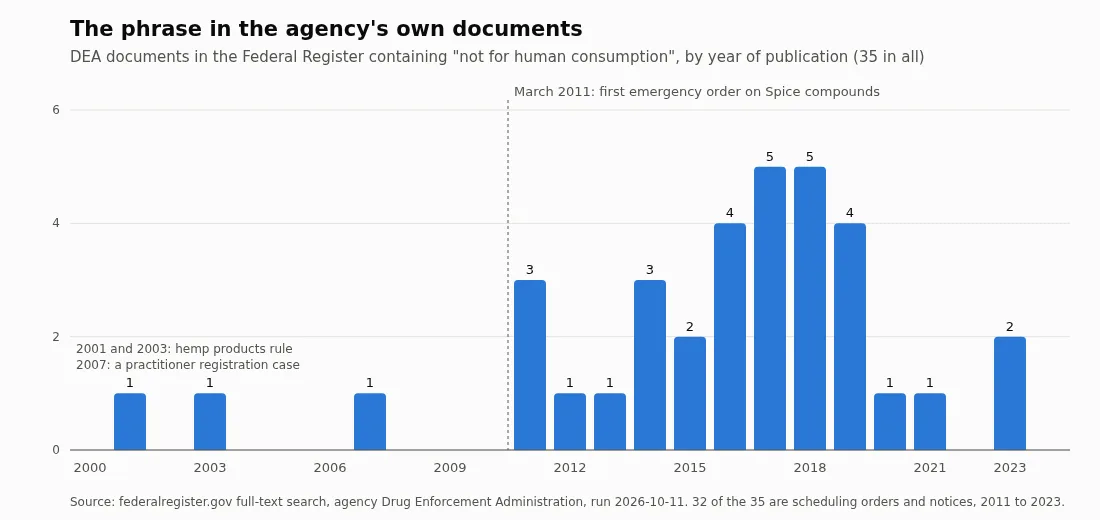
Figure 6. How often the DEA has written the phrase into the Federal Register. Thirty-five documents in all; the first three are about hemp products and a practitioner's registration, and every one from March 2011 on is a scheduling order or notice. [7]
Room odorizer and VCR head cleaner
The oldest disguise in this story belongs to the alkyl nitrites, the inhalants sold as poppers. A separate article on poppers will cover their chemistry and their brands; this section covers only the label. In July 1996 the Phoenix New Times reporter Dewey Webb found them in the city's adult shops as a $13 vial of VCR-head cleaner, and asked the obvious question: “And why bother making a special trip to a porn shop when name-brand cleaning kits are available at mainstream stores for nearly half the price?”[8] He traced the trade back two decades: “over-the-counter nitrite inhalants first found favor in gay discos of the early Seventies”, sold as room odorizers under brand names like Rush and Locker Room.[8] The new head cleaners, he wrote, “are simply the latest in a long string of legal dodges around laws designed to prohibit abuse of the hazardous inhalant”.[8]
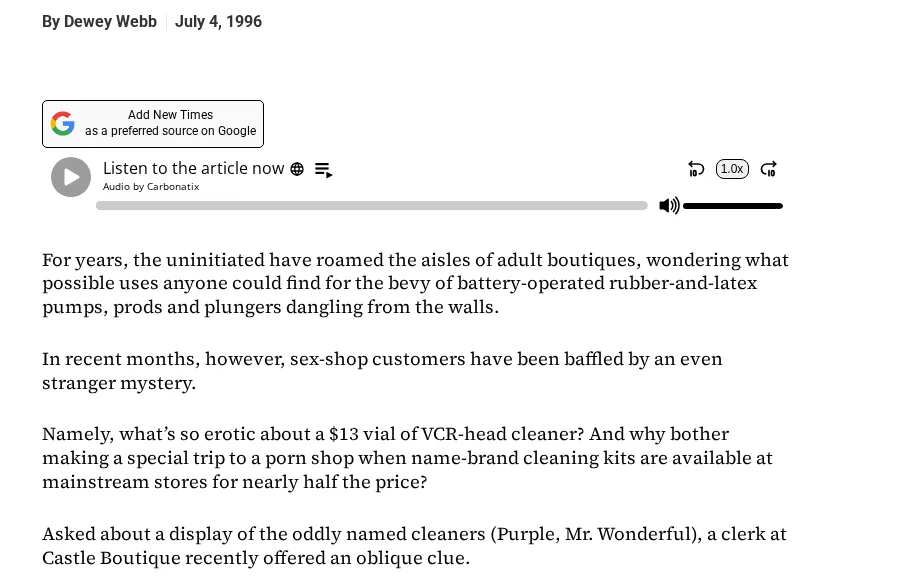
Figure 7. Phoenix New Times, July 4, 1996. A $13 vial of VCR-head cleaner in a sex shop, and a clerk who answers a question about it by miming a sniff. [8]
The laws he meant were federal. In 1988 Congress declared that “butyl nitrite shall be considered a banned hazardous product”, with an exception for commercial use.[9] In 1990 it extended the ban to every volatile alkyl nitrite, and defined the exception so that it could not cover the obvious case: commercial purpose means “any commercial purpose other than for the production of consumer products containing volatile alkyl nitrites that may be used for inhaling or otherwise introducing volatile alkyl nitrites into the human body for euphoric or physical effects”.[10] The label moved again. The Phoenix article summed up the result of the 1988 ban: “but by slightly reformulating the products, manufacturers easily sidestepped the ban”.[8]
Twenty-five years later the disguises were still on the shelf. In June 2021 the FDA warned that poppers “are often marketed as nail polish removers or cleaning products and are packaged in small bottles ranging from 10 to 40 mL, appearing similar to energy shots.”[11] Its consumer update the next month listed the covers: air fresheners, liquid incense, deodorizers, leather cleaners, cosmetics, solvents and nail polish removers, with brand names that included Rush, Jungle Juice and Locker Room.[12]
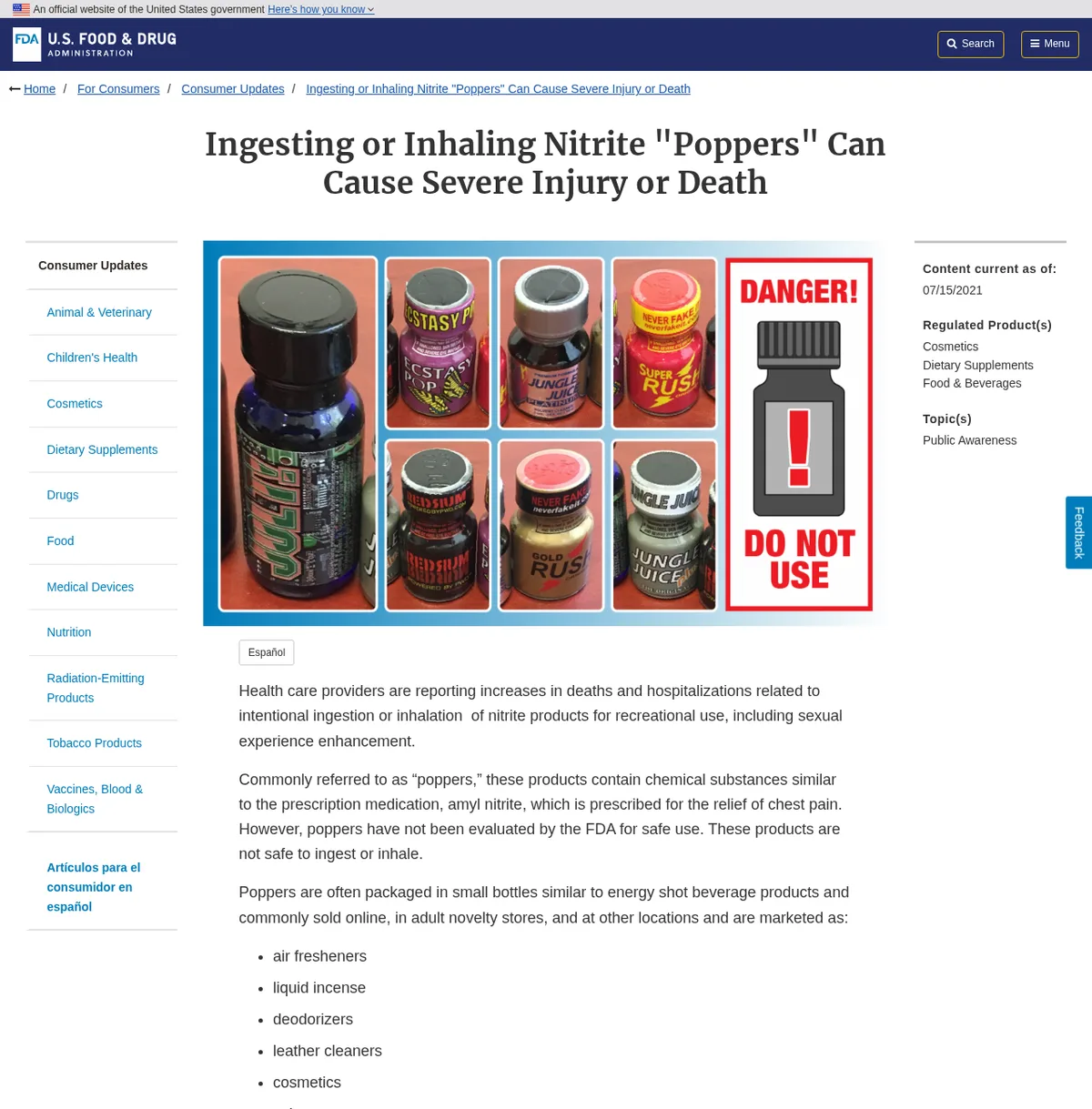
Figure 8. The FDA consumer update of July 2021. The bottles in its banner carry the brand names; the list beneath gives the disguises: air fresheners, liquid incense, deodorizers, leather cleaners. [12]
Cleaner, solvent, polish
When GHB was placed in Schedule I in February 2000, the trade moved to its precursors, gamma-butyrolactone (GBL) and 1,4-butanediol, both of which the body turns into GHB.[13] Both are also industrial solvents with real uses, found in paint removers, cleaners and adhesives.[14] This site's ban playbook covers how that law was made; this section covers how the bottles were labelled. The Justice Department's National Drug Intelligence Center described the method in an August 2002 bulletin: “GHB analogs often are sold with disclaimers that they are not for human consumption; however, many of the products have labels implying that the product may be ingested.”[13] It quoted two of the labels. One product sold as an industrial solvent warned: “Accidental ingestion of product will produce GHB in your body.”[13] Another: “Accidental ingestion may cause euphoria, increases tactile sensitivity”.[13] The bulletin also records a home-brew operation: between March 1999 and January 2000, “two brothers operating from Mississippi and South Carolina marketed GHB kits on the Internet disguised as computer cleaning solvents”, with GBL and lye enough for fifteen to twenty doses.[13]
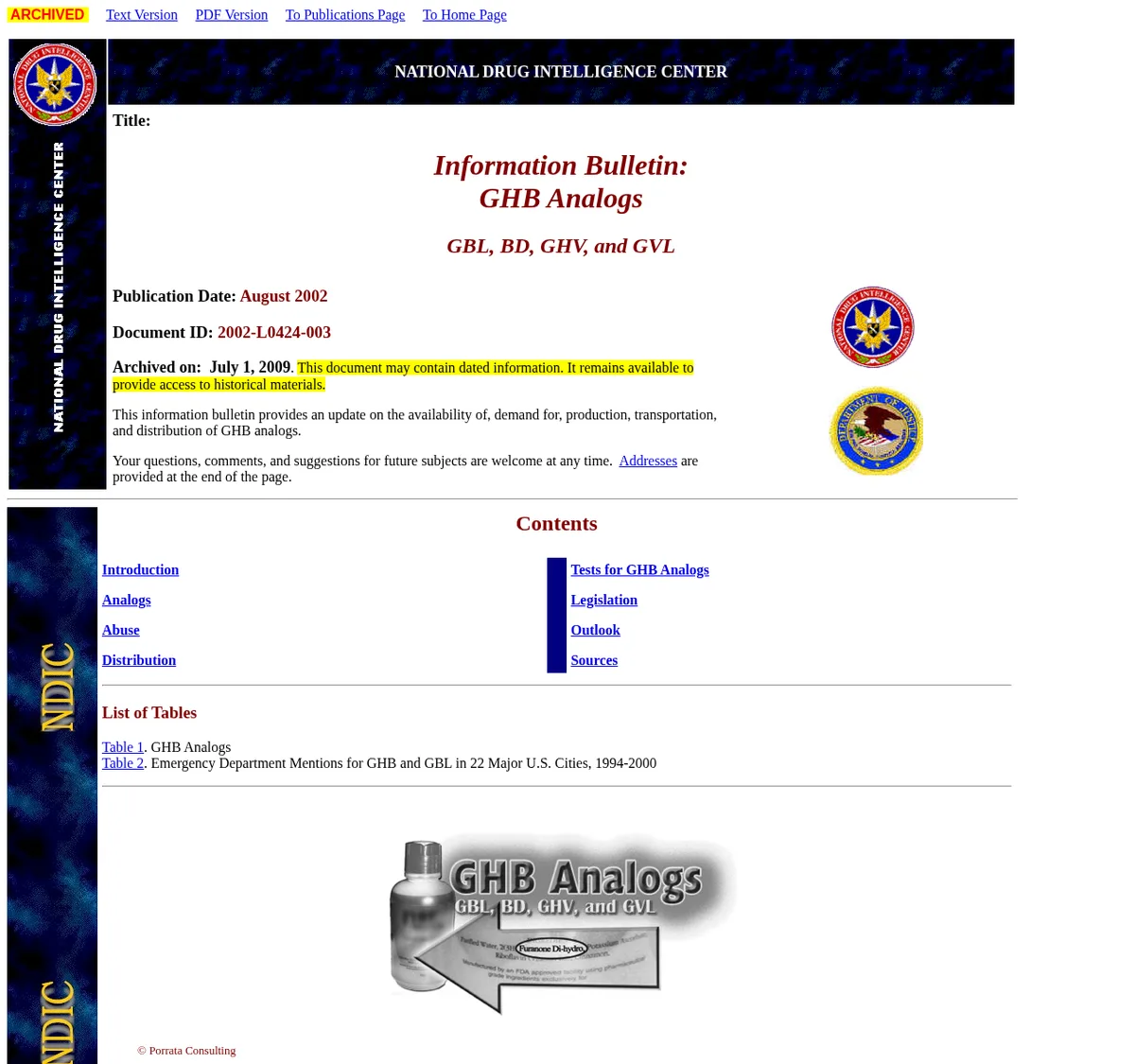
Figure 9. The Justice Department's intelligence bulletin on the GHB analogues, August 2002. It records the industrial-solvent labels, a warning printed on one bottle, and a home-brew kit sold as a computer cleaning solvent. [13]
The DEA's own chemical profiles give the later covers. Of 1,4-butanediol: “It is typically diverted by being sold as a cleaner or paint stripper.”[15] Of GBL: “GBL is typically marketed for sale as a cleaning solvent or polish.”[14] A 2014 review for the World Health Organization found European suppliers “marketing GBL as a cleaning solvent, multi-purpose remover or chrome polish and as a wheel cleaner”.[16]
This site's owner remembers one more. In a July 2026 Reddit comment about poppers he wrote that “GHB when first banned was sold as a weight bench cleaner, for instance”.[17] We found no document that uses the phrase weight bench cleaner, in the DEA, FDA, Justice Department or WHO sources above or in a web search for it, so it stands here as his recollection.
The label did not help the sellers of 1,4-butanediol in court either. In 2005 the Eleventh Circuit, which covers Florida, affirmed the convictions of two brothers who “owned and operated two Internet websites that advertised and sold products for human consumption containing varying amounts of 1,4-butanediol”.[18] The Eighth Circuit, affirming a different analogue conviction in 2002, did so “even though the label on the analogue said not to” ingest it, as a later panel of the same court summarised it.[19]
Plant food
The plant-food era was short, and it began in Britain. Mephedrone, a cathinone, sold openly there in 2009, most often as plant food.[20] On December 22, 2009 the government's Advisory Council on the Misuse of Drugs wrote to the Home Secretary that mephedrone “is being marketed as a variety of apparently” benign products, giving bath salts and plant food as its examples.[21] The council added that “it is apparent that the selling of such unregulated preparations in a form that they are clearly unintended for could have serious public health implications”.[21]
Its full report, dated March 31, 2010, described the market in two sentences. “Websites selling cathinone based compounds” generally carried a disclaimer that the compounds were not for human consumption, and sold them as research chemicals, novelty bath salts, or most often plant food.[20] Then the finding that made the label false on its face: “However, none of the cathinones has any recognized efficacy as a plant fertilizer nor would they suitably function as bath salts.”[20] The council suggested the sellers “could be the subject of a prosecution under the Trade Descriptions legislation”, Britain's false-labelling law, which is the plant-food label turned against itself.[20] It also recorded where the plant food came from: “Exercises at Heathrow targeting air courier traffic from China for delivery to UK domestic addresses gave rise to seizures of mephedrone.”[20]
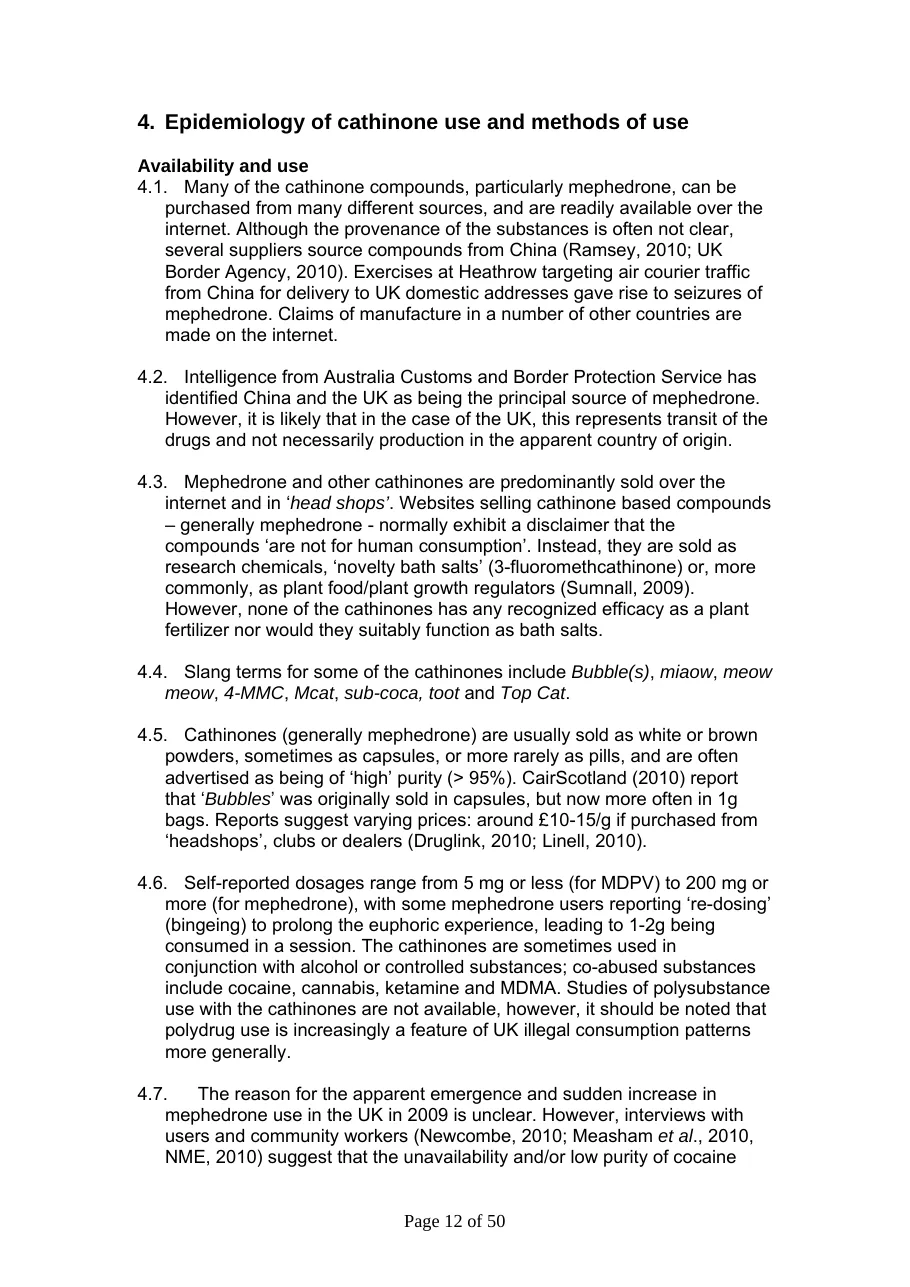
Figure 10. Page 12 of the British government's drug advisers' report of March 31, 2010. Paragraph 4.3 is the plant-food era in two sentences, followed by the finding that no cathinone feeds a plant or works as a bath salt. [20]
In the United States the plant-food label survived another four years, folded into the DEA's list of covers.[5]
Bath salts
The American name was bath salts, and the DEA's October 2011 emergency order on mephedrone, methylone and MDPV described the packaging in the same paragraph as the products. The packets “usually have the warning” not for human consumption, “most likely in an effort to circumvent statutory restrictions for these substances”.[4] The next sentence records what the shops said out loud: “Despite disclaimers that the products are not intended for human consumption, retailers promote that routine urinalysis drug tests will not typically detect the presence of these synthetic cathinones.”[4]
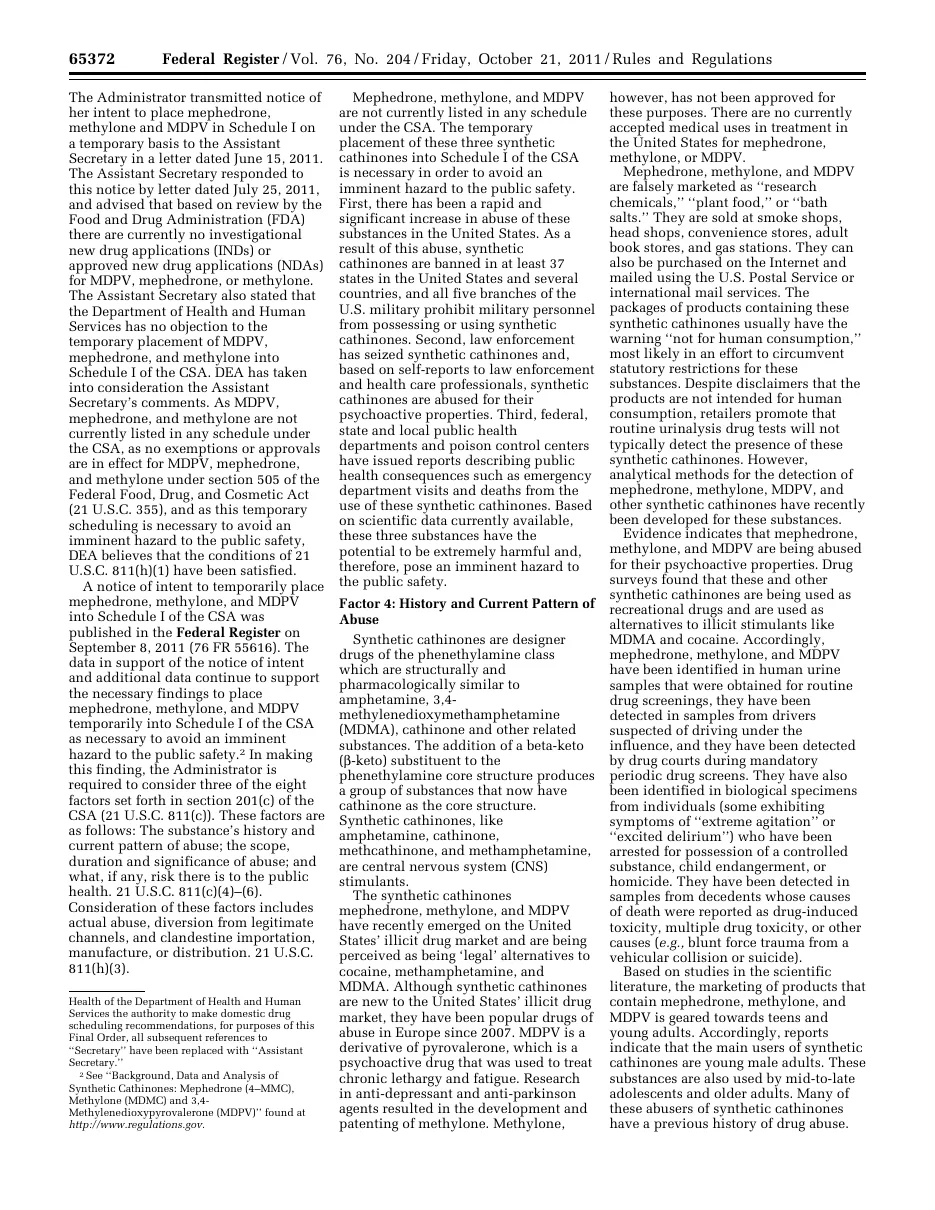
Figure 11. Page 65372 of the DEA order of October 21, 2011, effective that day. The right-hand column is the agency's account of the label and of what the retailers told customers about drug tests. [4]
By March 2014, ordering ten more cathinones into Schedule I, the DEA's list of covers had grown. The products were “falsely marketed” as research chemicals, jewelry cleaner, stain remover, plant food or fertilizer, insect repellants, or bath salts, and the packets “usually contain the warning” not for human consumption.[5]
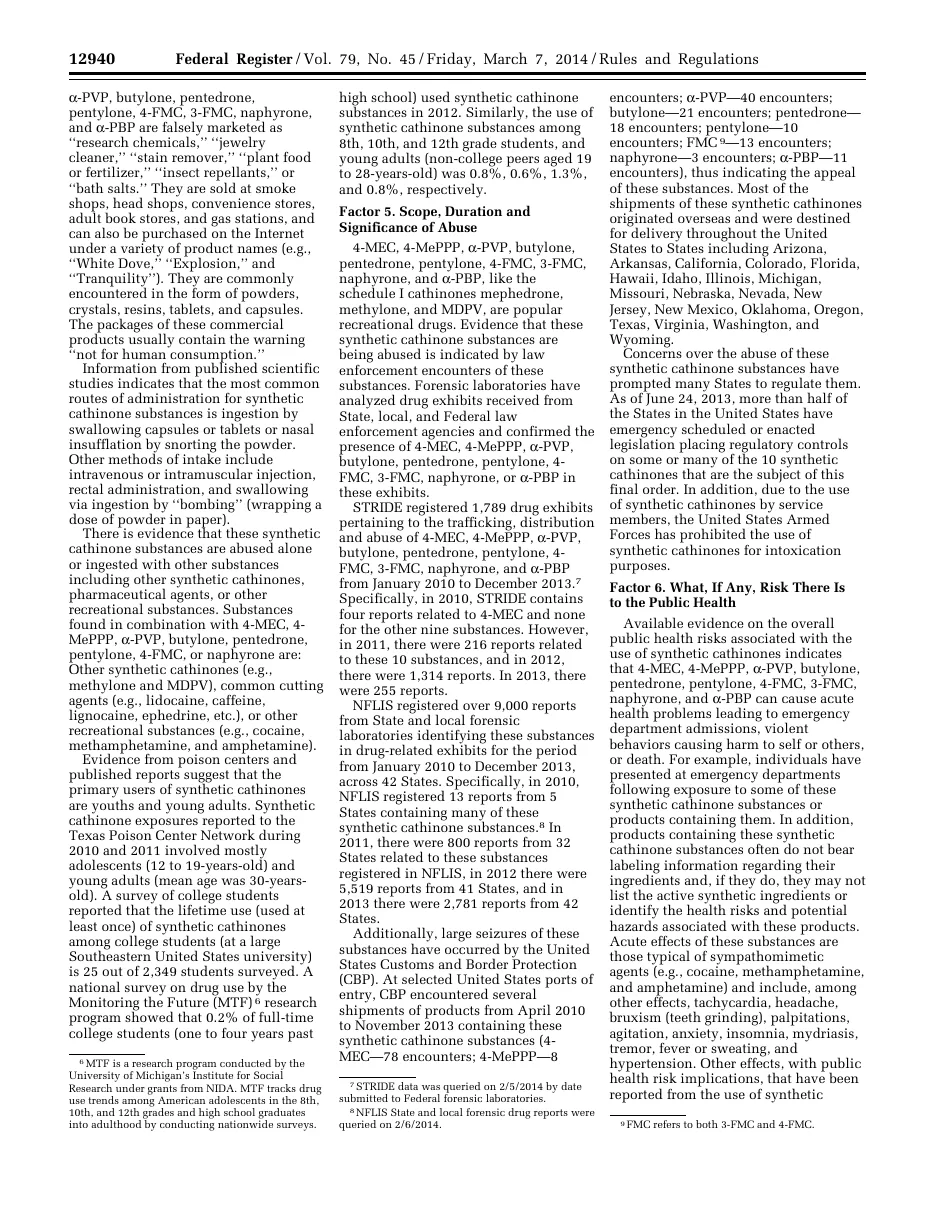
Figure 12. Page 12940 of the March 7, 2014 order on ten more cathinones. By then the list of cover products had grown to jewelry cleaner, stain remover and insect repellant. [5]
Two court records show what a bath-salts label looked like close up. In 2013 the Eighth Circuit described the labels found with 397 grams of mephedrone in a car in Nebraska. One read Experience the Bliss, Deluxe Bath Powder. The other gave directions: “Pour 100 - 200 mg into Hot Bath. Kick back and Enjoy.”[19] It ended: “Products not for human consumption. Keep out of reach of children. Distributors not responsible for misuse of product.”[19] The court affirmed the conviction and the 92-month sentence and dismissed the defence in one line: “A label indicating a substance is not for human consumption is not dispositive evidence of the distributor's intent.”[19] A label that doses a bath in milligrams is not a label about bathing.
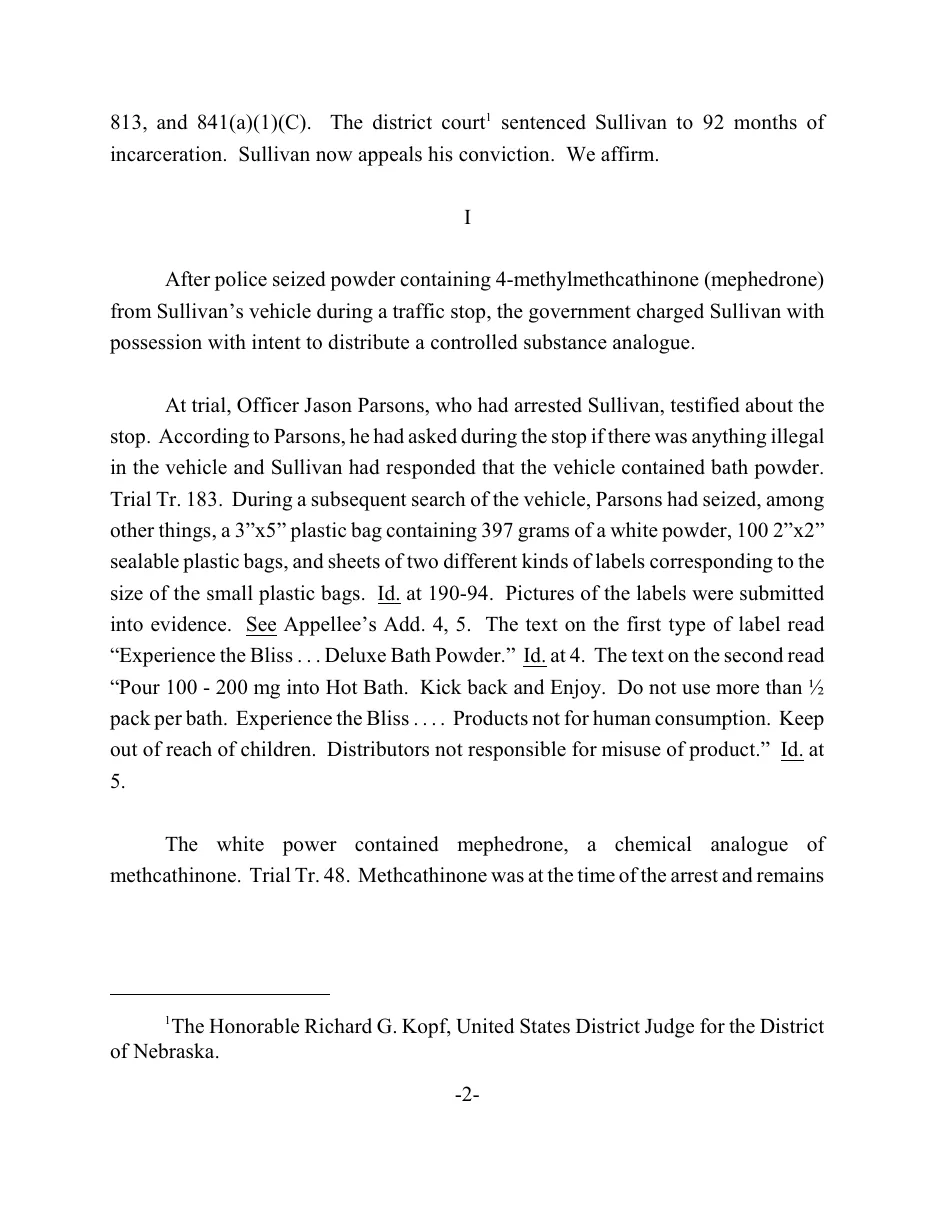
Figure 13. Page 2 of United States v. Sullivan, Eighth Circuit, May 2013. The second label gives a dose in milligrams for a bath and then says the product is not for human consumption. [19]
The second record is the case that reached the Supreme Court. Stephen McFadden supplied bath salts to a video store in Charlottesville, Virginia, in 2011. The Court's statement of facts records that “He had often sold those products with labels borrowing language from the Analogue Act”, some saying not for human consumption and others listing the controlled drugs the product did not contain.[22] It also records the margin: “McDaniel purchased the bath salts for $15 per gram and resold them for $30 to $70 per gram.”[22]
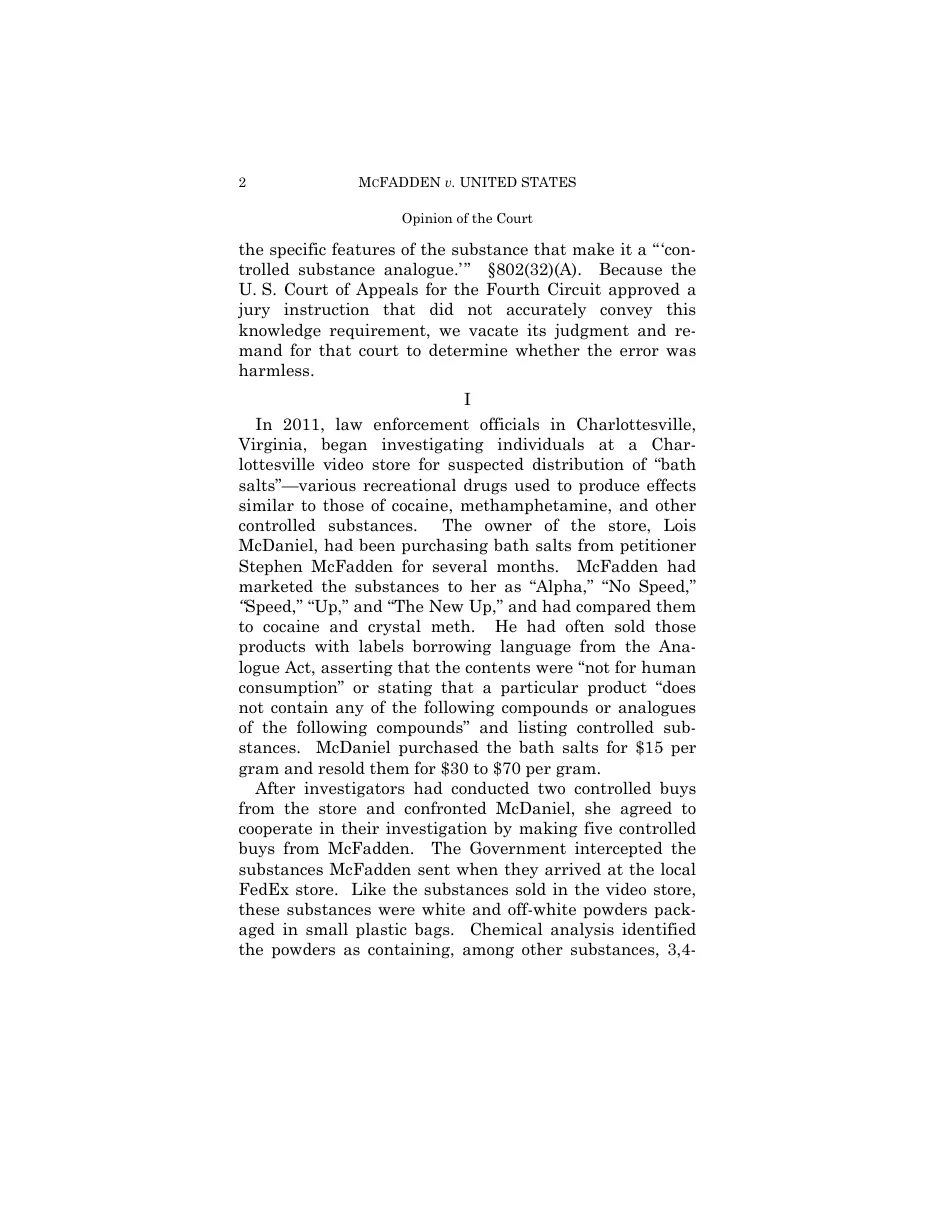
Figure 14. Page 2 of McFadden v. United States, June 18, 2015. The Court's own statement of facts records the label language and the price: $15 a gram wholesale, $30 to $70 retail. [22]
This site's history of the 2010 to 2015 bath-salts ban, with the poison-centre counts and the Miami case, is in the ban playbook deep dive. The point here is narrower. By the time the DEA acted, the label was in its findings as a reason to act.
Incense and potpourri
Smoking blends sprayed with synthetic cannabinoids were first encountered by US customs in November 2008, sold as herbal incense, and they kept the label longer than any other product.[23] The DEA's first emergency order on them, in March 2011, said the products are perceived as legal alternatives to marijuana “despite the fact that they are typically advertised as herbal incense or plant food”, and labeled not for human consumption.[24] It turned the phrase around in its own reasoning: “First, these substances are not intended for human consumption, but there has been a rapid and significant increase in abuse of these substances in the United States.”[24]
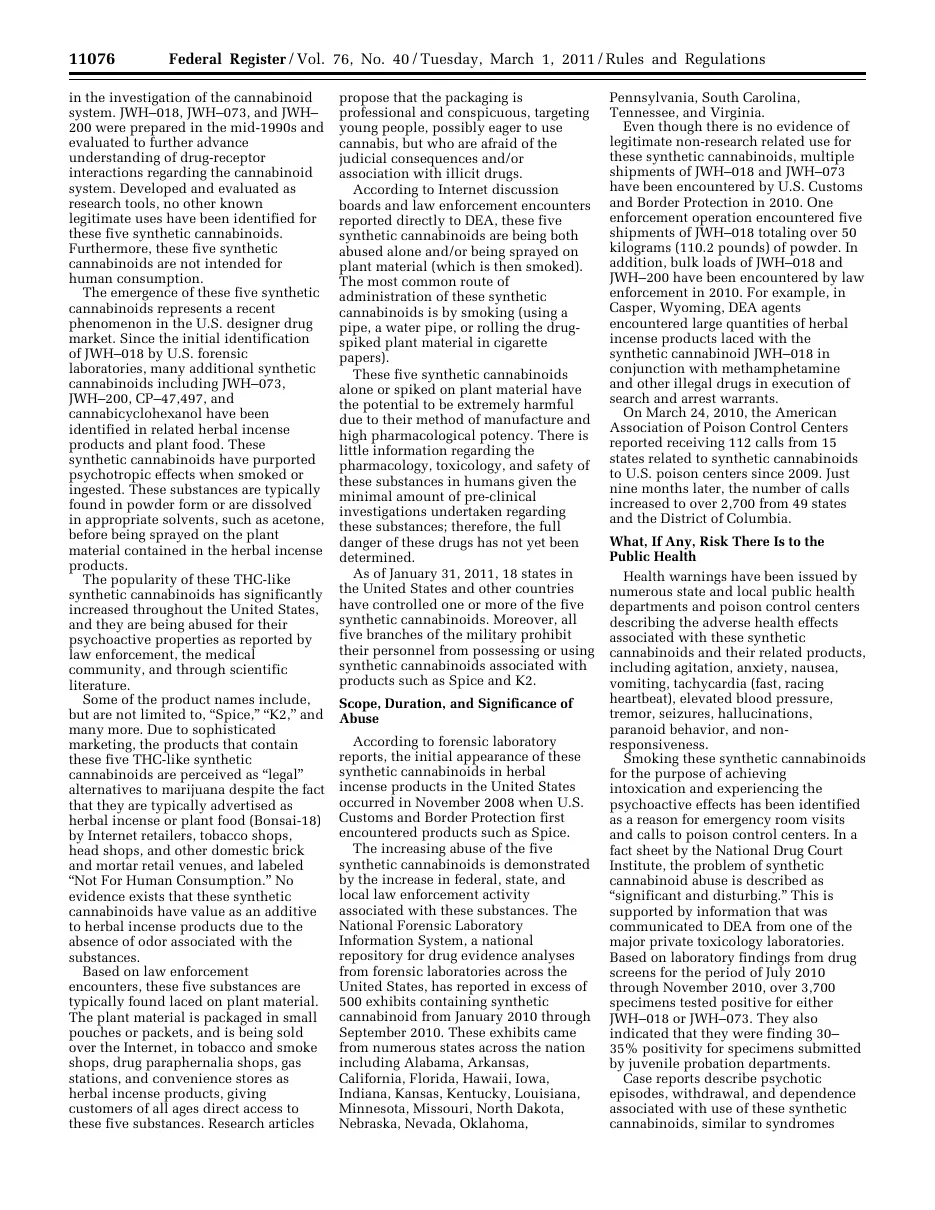
Figure 15. The DEA's first emergency order on synthetic cannabinoids, March 1, 2011. It names herbal incense and plant food as the cover products and the phrase on the packet. [24]
Two years later the DEA ran Project Synergy, which it called its largest synthetic drug takedown. Its June 26, 2013 release said that since the operation began in December 2012, “more than 75 arrests have been made and nearly $15 million in cash and assets have been seized”.[25] It described the products in the same terms as its orders: designer drugs “are often marketed as herbal incense, bath salts, jewelry cleaner, or plant food”, and brands such as Spice and K2 “are labeled as incense to mask their intended purpose”.[25] The agency published photographs of what it seized.[26]
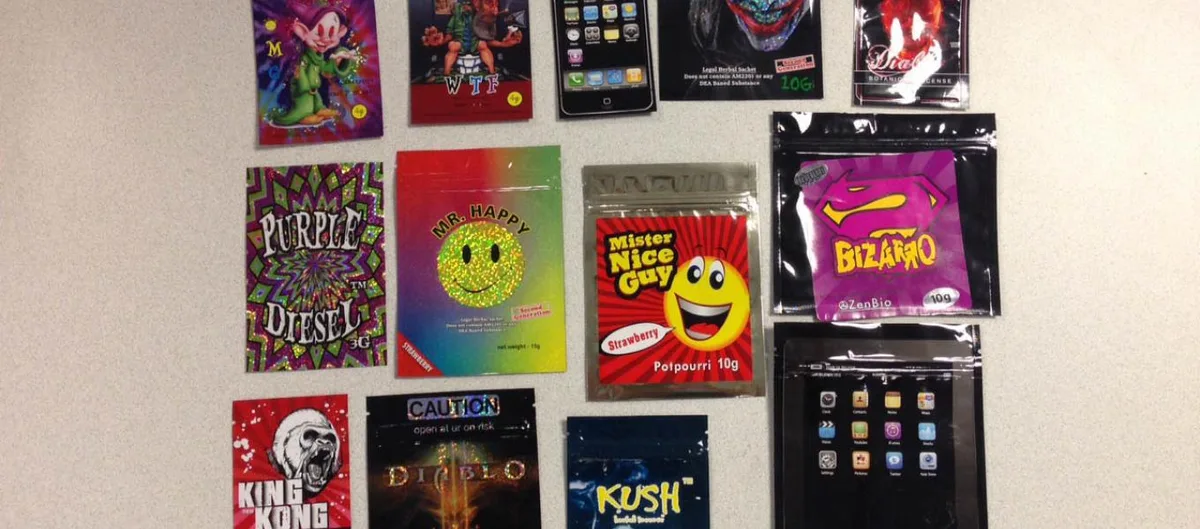
Figure 16. Packets seized in Project Synergy, photographed by the DEA for its release of June 26, 2013. Cartoon mascots, flavour names and a 10-gram weight on a product sold as room fragrance. [26]
The backs of the packets are where the disclaimer lives. A Mister Nice Guy packet lists seven flavours, from strawberry to cotton candy, above the words not for human consumption.[26] A Scooby Snax packet calls itself a potpourri product, not for human consumption, certified by laboratory analysis not to contain JWH-018 and four other named cannabinoids, and not meant to be burned or smoked.[26] A later Scooby Snax print run claims to be legal under a Florida law that took effect on March 23, 2012.[26] The packet stayed the same while the legal claim on its back changed.
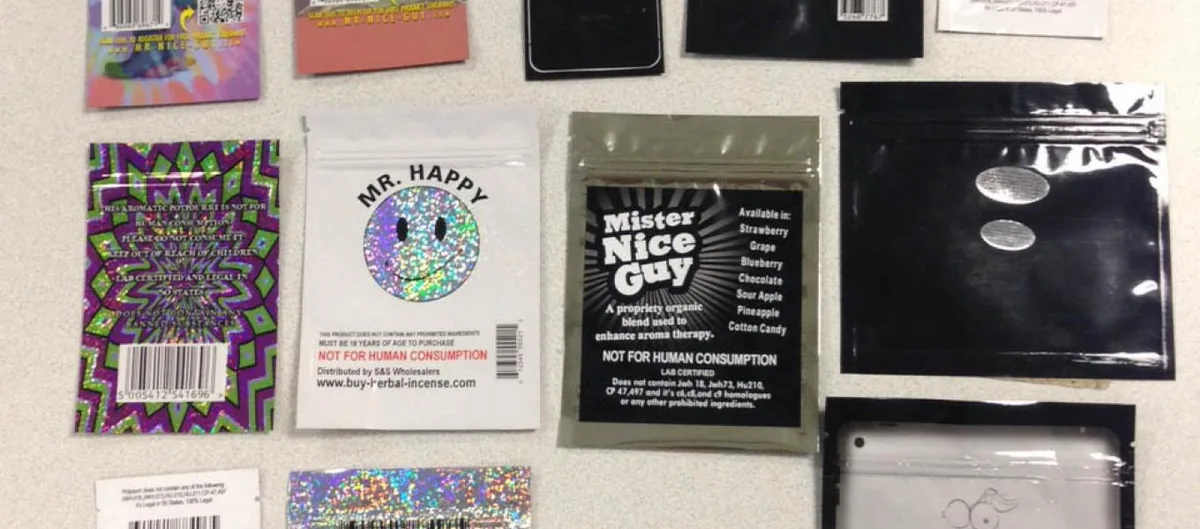
Figure 17. The backs of the same packets. Mister Nice Guy lists seven flavours, cotton candy among them, directly above Not for human consumption. [26]
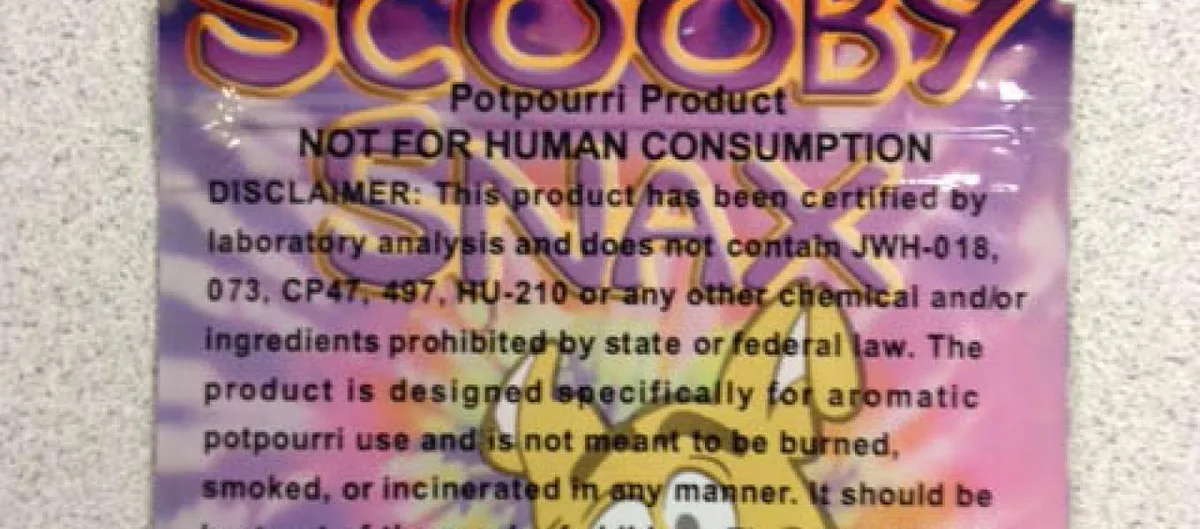
Figure 18. A Scooby Snax packet from the same seizure. The disclaimer names the compounds it does not contain, the same device the Supreme Court described on McFadden's bags. [26]
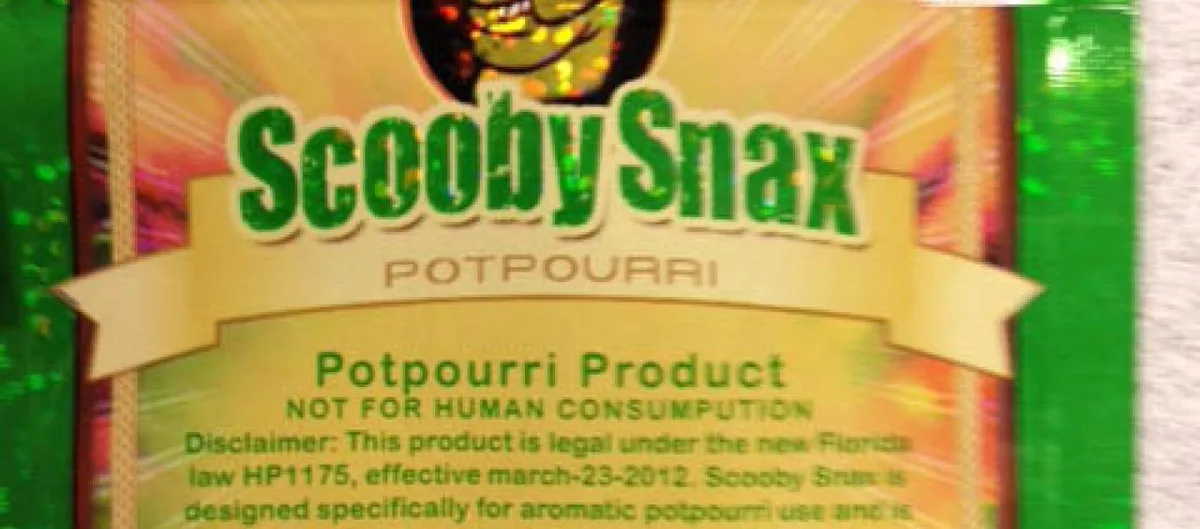
Figure 19. A later Scooby Snax print run claims legality under a named Florida law and its effective date, March 23, 2012. The label changed with each ban; the packet stayed the same. [26]
The courts read these packets as evidence. In Iowa in 2016 the Eighth Circuit described an undercover purchase of Mr. Happy and Mr. Nice Guy, labelled not for human consumption, during which the clerk, unprompted, “asked if the officers needed rolling papers”.[27] In Duluth, Minnesota, the owner of a head shop called the Last Place on Earth was convicted; the appeals court's account of the facts says that “although the drugs were labeled not for human consumption, store employees knew that customers purchased them to consume as drugs”.[28] In another Eighth Circuit case in 2018, the court listed the evidence a defence lawyer had expected to face, and one item was the seller's “labeling the incense as not for human consumption even though Sharp knew his customers were smoking it”.[29] In Missouri, the Eighth Circuit described a 2015 indictment over products named Black Arts and Devil's Dank: “Employees of the operation were told that the product was potpourri, but several workers at the bagging facility discovered otherwise when they observed coworkers smoking the product during breaks.”[30]
The Ninth Circuit's 2023 opinion in the Zencense case is the fullest account of a label strategy in any court record. Zencense Incenseworks, a Nevada company, made smokable blends sold as potpourri. Its written sales script told callers to ask smoke shops whether they sold pipes, and to drop any shop that did not.[31] Staff were told to keep to the company line. The court records that “Zencense staff were instructed not to refer to the various versions of the product as” flavours, because the word suggested eating.[31] The script also explained why the line was safe to keep: retailers “that are in this business understand that language is very important and will usually not press the issue too much”.[31]
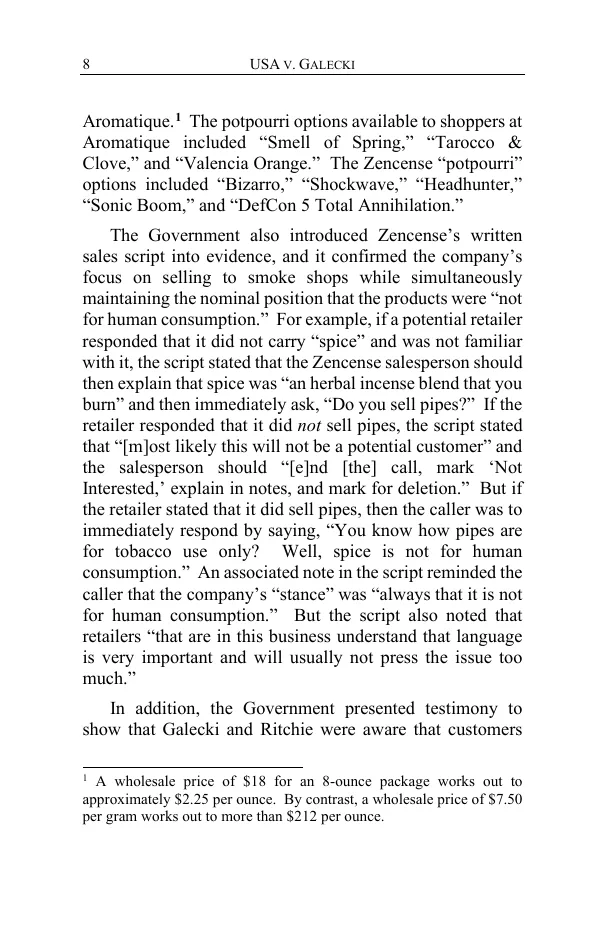
Figure 20. Page 8 of United States v. Galecki, Ninth Circuit, December 27, 2023. The sales script and, in footnote 1, the price arithmetic that Congress would later list as a factor. [31]
The court's footnote on price is the arithmetic that section 813(b)(3) now names. An actual potpourri company's chief executive testified about his wholesale price. “A wholesale price of $18 for an 8-ounce package works out to approximately $2.25 per ounce.”[31] Then: “By contrast, a wholesale price of $7.50 per gram works out to more than $212 per ounce.”[31] The court described the defendants as engaged in “a charade that sought to avoid formally admitting what they knew that they were selling”.[31]
The parcels from China
The chemicals in these packets were rarely made in the United States, and the parcels they arrived in carried their own disguise. The DEA's 2011 bath-salts order reported that at one port of entry customs “has encountered at least 127 shipments containing primarily mephedrone, methylone, and MDPV”, adding: “Most of these shipments originated in China or India”.[4] Its 2023 order on six synthetic cannabinoids described the same route a decade later: the compounds come from abroad, and “substances in bulk powder form are smuggled via common carrier into the United States and find their way to clandestine designer drug product manufacturing operations located in residential neighborhoods, garages, warehouses, and other similar destinations throughout the country”.[23]
Court records give the false declarations themselves. In Missouri, the Palmer operation began with this: “The scheme involved importing chemicals from China in falsely labeled containers to evade detection.”[30] In Nevada, the Ninth Circuit found that Zencense's raw XLR-11 arrived from China declared as cytidine-5' monophosphate, a nucleotide, and drew the inference: “A rational jury could conclude that the products were mislabeled in this way precisely to avoid their seizure by customs.”[31] The defence answer was the market's own: “Defendants argue that this practice was standard throughout the spice industry”.[31] It did not help them, because McFadden had already named one kind of evidence that proves knowledge, “knowledge that a particular substance is subject to seizure at customs”.[22]
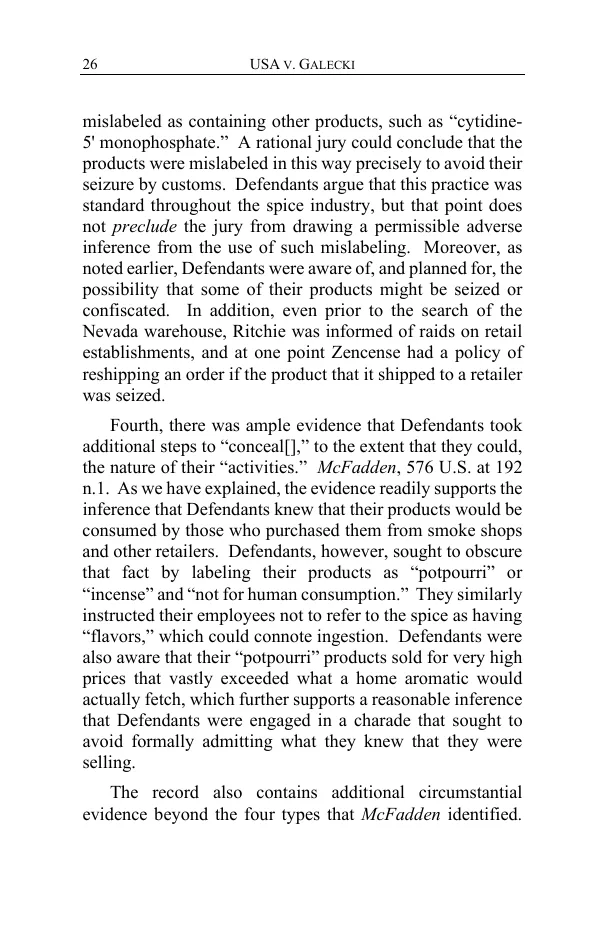
Figure 21. Page 26 of Galecki. The chemical arrived from China declared as a nucleotide; the court treats both that label and the one on the packet as concealment. [31]
The practice did not stop with research chemicals. When the Justice Department charged eight China-based chemical companies in October 2023, mostly over fentanyl precursors, its release described Chinese manufacturers shipping “by, among other methods, mislabeling the products being shipped and using containers and other packaging to mask their illicit contents”, and named the tools: “false return labels, false invoices, fraudulent postage, and packaging that conceals the true contents of the parcels”.[32]
The owner's account fills in what the parcels said. His methylone came declared as car wash foam, carpet cleaner and paint additive for furniture.[1] He described the money and the route: “Usually I'd have a purchaser send the money via Western Union to either Nanjing or Shanghai in China”, after which he sent the buyer a tracking number.[1] Asked what tricks he had used, he said “the main trick was I did a lot of East Coast shipments, which came in through customs at JFK in New York rather than LAX”.[1] He described how a Chinese supplier earned his business: “They built up trust with me by sending me free product.”[1] And the economics: “Generally I paid $2 a gram and sold for much more than that, as much as $120 a gram resale.”[1] We did not find the phrase car wash foam in any court record or agency release, so that part of the story rests on his word.
One prong or two
The owner has a firm view of the law that convicted him, and he has repeated it often. In August 2026, writing about the federal kratom-alkaloid bans, he said the Analogue Act's “three prongs are actually read in the disjunctive (OR, instead of AND), and they only have to prove one of them”.[33] In the 2016 thread he put it as a change over time: the act “used to be read in the conjunctive for the three prongs”, and “Then they changed it and started reading it in the disjunctive”.[1] He took that reading to mean that the government did not have to prove human consumption.
The statute and the case law say something different, in two respects.
First, human consumption is not one of the prongs. The three clauses are in the definition at 21 U.S.C. 802(32)(A), and none of them mentions consumption. A controlled substance analogue is a substance (i) “the chemical structure of which is substantially similar to the chemical structure of a controlled substance in schedule I or II”; (ii) “which has a stimulant, depressant, or hallucinogenic effect on the central nervous system that is substantially similar to or greater than the stimulant, depressant, or hallucinogenic effect on the central nervous system of a controlled substance in schedule I or II; or”; (iii) “with respect to a particular person, which such person represents or intends to have a stimulant, depressant, or hallucinogenic effect on the central nervous system” of the same kind.[34] Intent for human consumption is a separate requirement in section 813, and every case in this article treats it as one the government must prove. What the courts let the government do is prove it from circumstances, labels included, which is the subject of the rest of this piece.
Second, on whether one of the three clauses is enough, the record runs the other way from the owner's account. The question turns on the single word or, which appears only before clause (iii). In 2005 the Seventh Circuit set out the two readings. Under one, “a substance that satisfies any one of these three criteria qualifies as a controlled substance analogue”.[35] Under the other, clause (i), structure, is always required, together with either (ii) or (iii). The court surveyed the cases: “Yet the vast majority of federal courts to confront this issue have adopted the conjunctive reading.”[35] It listed the Third, Fourth, Eighth and Second Circuits and several district courts on that side, and named the only arguable exceptions: an Eleventh Circuit case that declined to decide, and a 1990 Fifth Circuit case “in which the Fifth Circuit recited the test in the disjunctive without discussion or elaboration”.[35] It gave the courts' reason, the absurd results of the other reading, “noting that alcohol and caffeine could be criminalized as controlled substance analogues based solely on the fact that in concentrated form they might have depressant or stimulant effects similar to illegal drugs”.[35] Then it ruled, “joining the vast majority of federal courts in adopting the conjunctive reading”.[35]
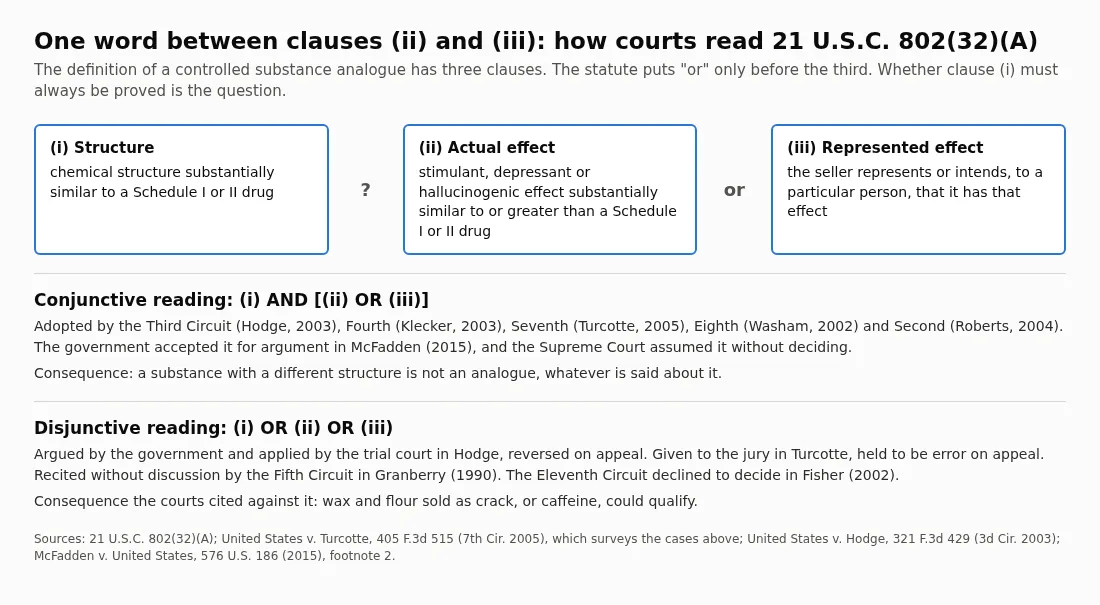
Figure 22. One word decides the reading. Every appeals court that has ruled on the question requires the structure clause; the disjunctive reading survives in government briefs and a 1990 Fifth Circuit recital. [35]
There is a real dispute behind the owner's belief, and it is between the Justice Department and the courts. Prosecutors have argued for the disjunctive reading, and trial judges have sometimes given it. In the Turcotte trial, a GBL case, “the district court instructed the jury that the three clauses of the CSA's analogue provision” should be read in the disjunctive; the Seventh Circuit held that to be error, though harmless on the facts.[35] In the Third Circuit in 2003 the government, in a case about counterfeit crack made of candle wax and flour, “proposes a disjunctive interpretation”, “namely, that a substance is a controlled substance analogue if it satisfies any one of clauses (i), (ii), or (iii)”.[36] On that reading, the court pointed out, “the mixture of candle wax and flour that Hodge and Greig sold appears to be a controlled substance analogue under” clause (iii).[36] The trial court had accepted it. The appeals court noted that the trial court “read the definition disjunctively, but every other federal court to consider the issue has read it conjunctively”, and reversed the drug convictions.[36]
In the owner's own circuit the question was formally open. The Eleventh Circuit wrote in 2005 that it had never decided which reading applies, and in that case, since both sides accepted the trial court's “conjunctive reading of the statute, we will assume for purposes of this appeal that it is the correct one”.[18] The Supreme Court has gone no further. In McFadden the government accepted the two-element reading, structure plus one of the two effect clauses, and the Court recorded it in a footnote: “Because we need not decide in this case whether that interpretation is correct, we assume for the sake of argument that it is.”[22]
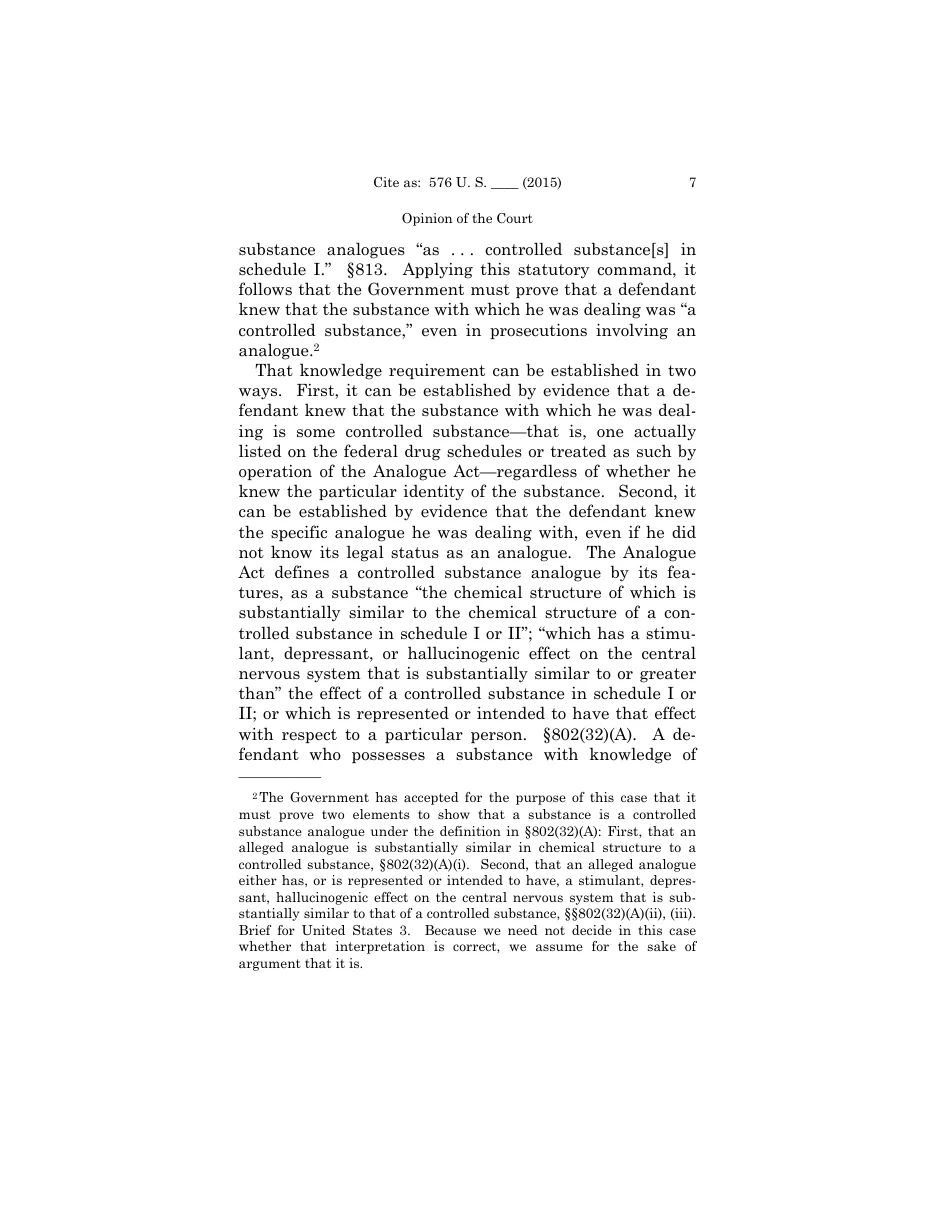
Figure 23. Page 7 of McFadden. The main text gives the two routes to knowledge; footnote 2 is the closest the Supreme Court has come to the prong question. [22]
So the record, as of October 2026, is this. Every federal appeals court that has decided the question requires the structure clause plus one effect clause. The disjunctive reading has been argued by the government and given to juries, and reversed or found harmless when appealed. None of this touches the human-consumption requirement, which is a separate element. Whether a prosecutor in a given district argued the disjunctive reading in a plea negotiation is a different matter, and not one the published record can answer.
What the seller has to know
The label had a second job besides denying consumption. It was meant to show the seller's state of mind. McFadden is the case that decided what state of mind the Analogue Act requires, and it is the one the owner mentioned in 2016.[1]
The Fourth Circuit had held that the only mental element was intent for human consumption, and the Supreme Court disagreed.[22] It held that the government must prove the defendant knew he was dealing with a controlled substance, and that “That knowledge requirement can be established in two ways.”[22] The first is knowing the substance is controlled, under any schedule or under the Analogue Act, without knowing exactly what it is. The second is knowing the facts that make it an analogue: “it can be established by evidence that the defendant knew the specific analogue he was dealing with, even if he did not know its legal status as an analogue”.[22] Ignorance of the statute is no help: “A defendant need not know of the existence of the Analogue Act to know that he was dealing with” a controlled substance.[22] Chief Justice Roberts, concurring, worried about the second route, and set a pop quiz to make the point: “two drugs, dextromethorphan and hydrocodone, are both used as cough suppressants”, and only one is controlled.[22]
Footnote 1 of the opinion is where the label becomes evidence. It lists circumstantial proof of knowledge that courts had accepted: a defendant's “concealment of his activities, evasive behavior with respect to law enforcement, knowledge that a particular substance produces a” high like a controlled drug's, “and knowledge that a particular substance is subject to seizure at customs”.[22] A packet that lists the controlled drugs it does not contain tells a jury the seller knew which drugs his product was being compared to.
On remand, the Fourth Circuit found the instruction error harmless for most of McFadden's counts, writing “however, we conclude that the error was not harmless with respect to McFadden's convictions under Counts Two, Three, and Four”, which it sent back.[37]
McFadden helped some defendants. In the Louisiana Mr. Miyagi case, the Fifth Circuit wrote in May 2016 that “we reverse the conviction of conspiracy to distribute a CSA because the district court” had not required proof that the defendant knew the compound was an analogue.[38] In Oklahoma, the Tenth Circuit reversed two convenience-store owners in November 2015. They had sold incense, and when questions arose they “offered to have the officers test the incense to determine its legality, and offered as well to stop selling the product until the results came in”.[39] The trial judge kept that evidence from the jury. The opinion, by then-Judge Neil Gorsuch, found that “the government introduced no evidence suggesting that the defendants knew anything about the chemical structure of the incense they sold”.[39] It also noted, among the defence complaints it did not need to decide, “one government witness who testified before the jury that the incense killed his friend even though the friend was alive and apparently well and scheduled to testify later the same day”.[39]
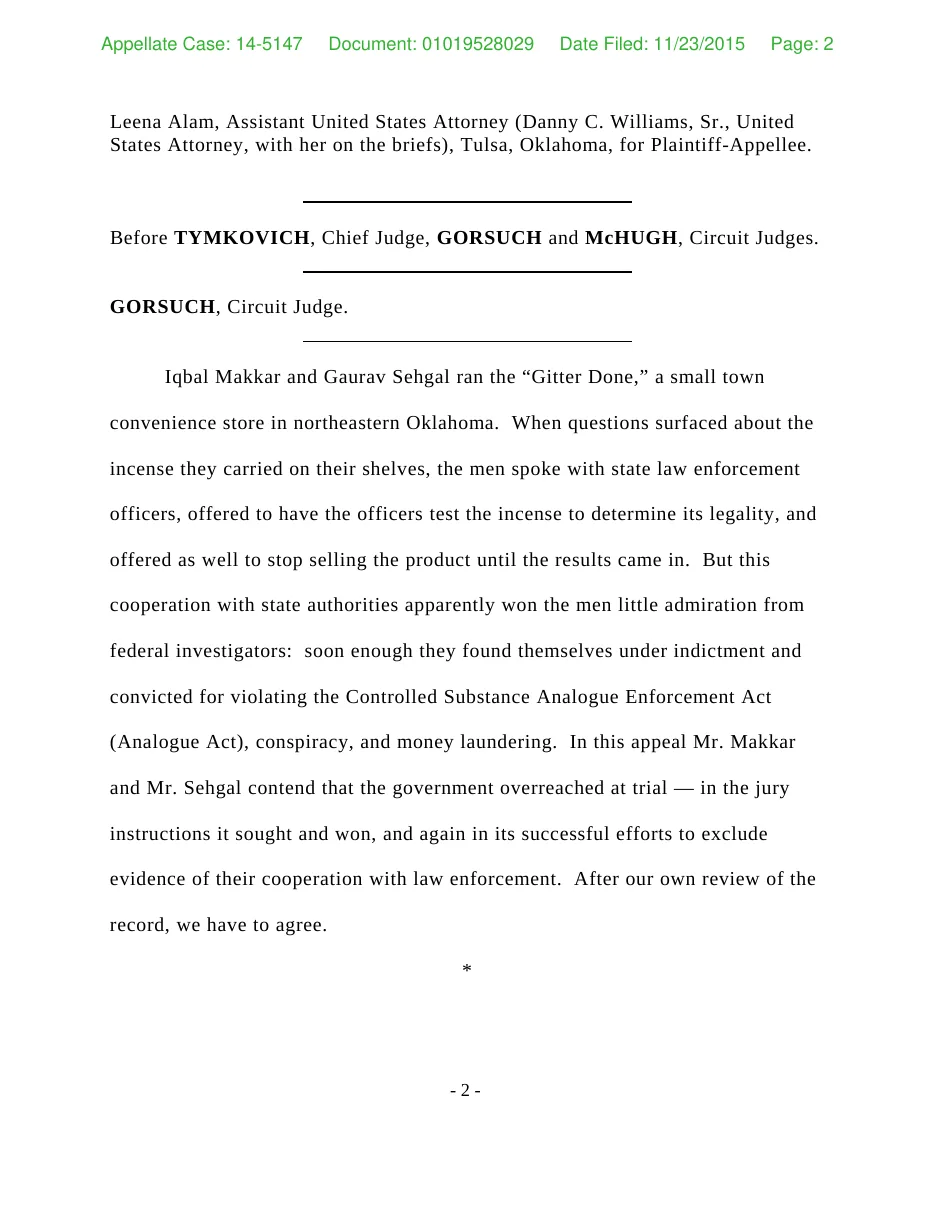
Figure 24. Page 2 of United States v. Makkar, Tenth Circuit, November 23, 2015, written by then-Judge Gorsuch. The one defence in this article that worked was the opposite of a disclaimer. [39]
Makkar is worth setting beside the n-lightenment disclaimer. The defence that won on appeal was an offer to have the product tested and to stop selling it. The disclaimer that lost said the opposite: that the buyer took every risk and the seller none.
When the label testified for the prosecution
The Zencense case is where a court said in plain words what the label meant. The government had also charged mail and wire fraud, on the theory that calling the product potpourri was a lie told to get money. The Ninth Circuit threw those counts out, and its reason is the strongest judicial statement in this article. The government's own evidence showed that the sellers and the buyers both understood potpourri and not for human consumption as a code for smokable synthetic cannabinoids, and “there can be no materially false statement when both the listener and the hearer know and intend that the words being used have the same distinctive meaning”.[31] The government's “effort to shoehorn this case into the mail fraud and wire fraud statutes failed as a matter of law.”[31] The drug convictions stood. The label was not a lie, because nobody believed it, and that is exactly why it could not protect anyone from the drug counts.
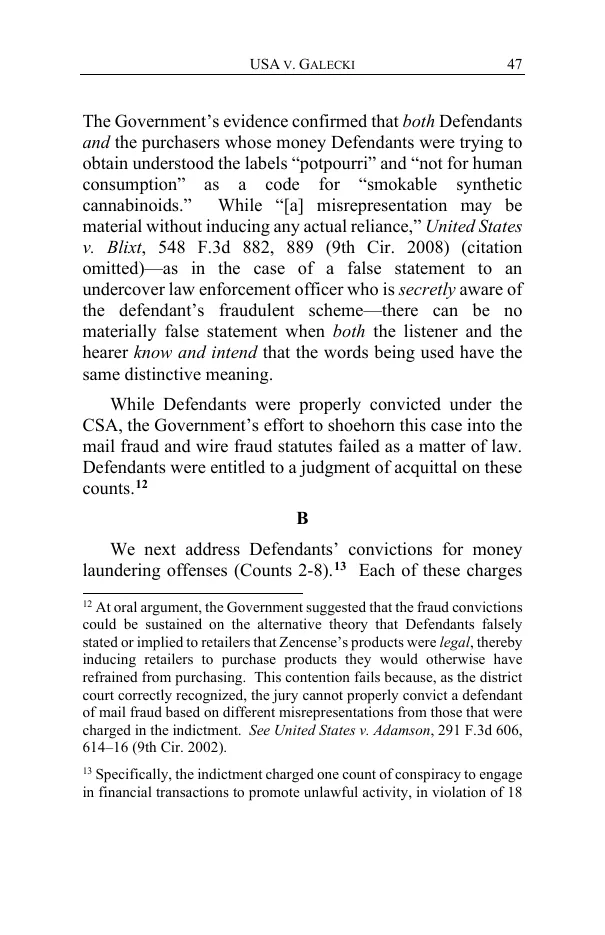
Figure 25. Page 47 of Galecki. The label fooled nobody, which is why the fraud counts fell and the drug counts stood. [31]
The same reasoning runs through the forfeiture cases. When a Texas head-shop chain's property was seized before trial in 2018, the products were labeled synthetic cannabinoid free and not for human consumption, and “the indictment alleged that they in fact contained synthetic cannabinoids that were a controlled substance or controlled substance analogues intended for human consumption”.[40] The Fifth Circuit upheld the seizure.[40]
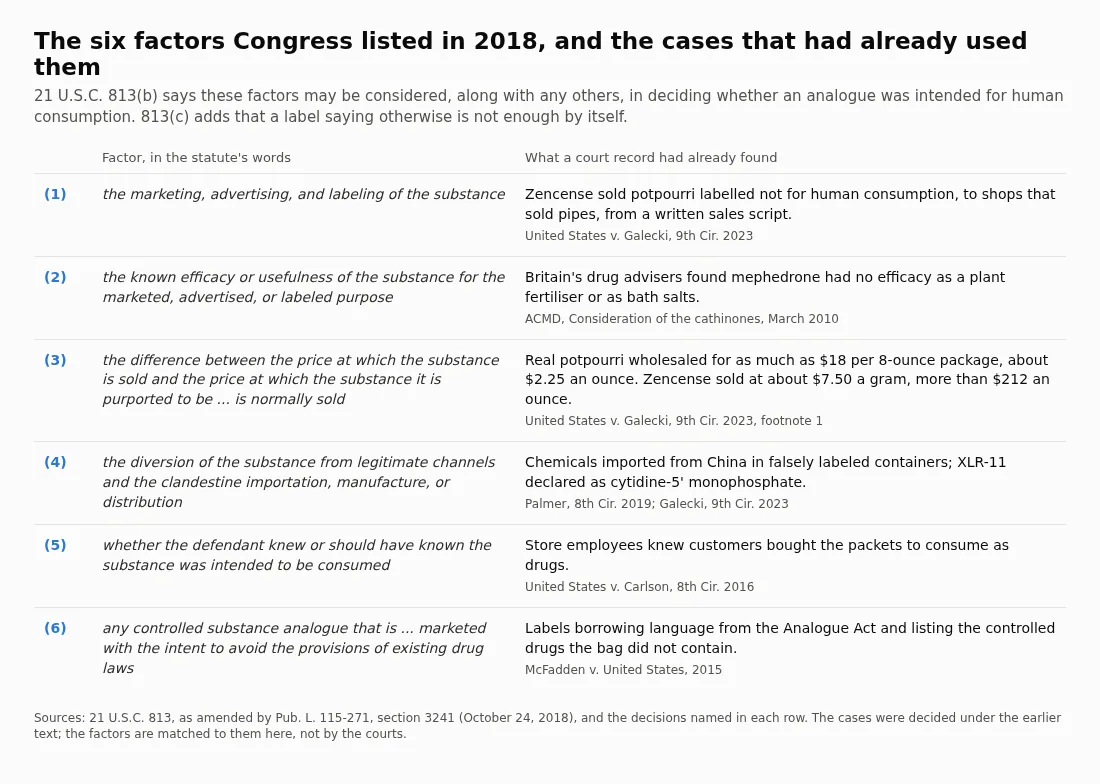
Figure 26. The six factors Congress wrote into section 813 in 2018, each beside a finding made before them. The pairing is ours; the courts applied the earlier text. [6]
The lawyer said it was legal
If the label could not establish innocence, a lawyer's opinion might. Reliance on counsel is an established defence where a crime requires wilfulness.[41] The Second Circuit restated the old formulation in 2017, in a misbranded-drug case: a person who honestly seeks and follows a lawyer's advice “could not be convicted of a crime which involves willful and unlawful intent, even if such advice were an inaccurate construction of the law”.[41] The same passage carries its limit: “no man can willfully and knowingly violate the law, and excuse himself from the consequences thereof, by pleading that he followed the advice of counsel”.[41] The defendant in that case had his conviction vacated because his lawyer's advice had been kept from the jury.[41] The Analogue Act charge requires knowledge rather than wilfulness, and we found no appellate decision deciding whether advice of counsel can negate McFadden's knowledge element. Two synthetic-drug cases show what happened when sellers tried.
In the Zencense case the defence wanted to call Timothy Dandar, “a lawyer who would have testified that he advised Defendants that XLR-11 was” “not an illegal product under the Controlled Substance Analogue Act”, along with a chemist who would have said XLR-11 was not structurally similar to JWH-018.[31] Neither testified. “The parties agreed below that, if called as witnesses, Dandar and Libby would assert their Fifth Amendment rights.”[31] The government declined to give them immunity, and the Ninth Circuit held that the trial court did not have to make it.[31] The lawyer whose advice was the defence would not repeat it under oath.
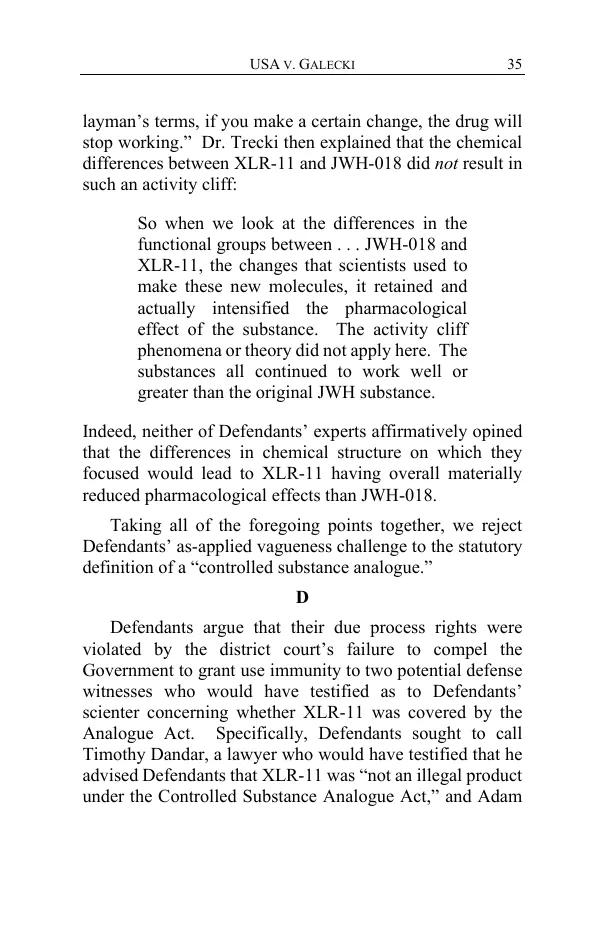
Figure 27. Page 35 of Galecki. The lawyer who would have testified to his advice, and on the next page the reason he never did. [31]
In the Louisiana case the lawyer was a defendant. Daniel Stanford had represented one of the Mr. Miyagi organisers in an earlier securities case, and was brought in, a co-conspirator testified, as the lawyer “who would lead our fight into challenging the feds and challenging states with the ultimate goal of regulation”.[38] Distributors were told he had a letter from the Louisiana attorney general allowing the product. When two of them travelled to Lafayette and asked to see it, “Stanford confessed that there was no letter but insisted he had” a gentleman's handshake agreement “with the attorney general allowing them to sell Mr. Miyagi in the state”.[38] The Fifth Circuit reversed his analogue conspiracy count under McFadden and affirmed the rest, finding that “Stanford was paid with illicit funds not merely to provide traditional legal services to the conspirators but also to assist the Mr. Miyagi scheme in crucial ways”.[38]
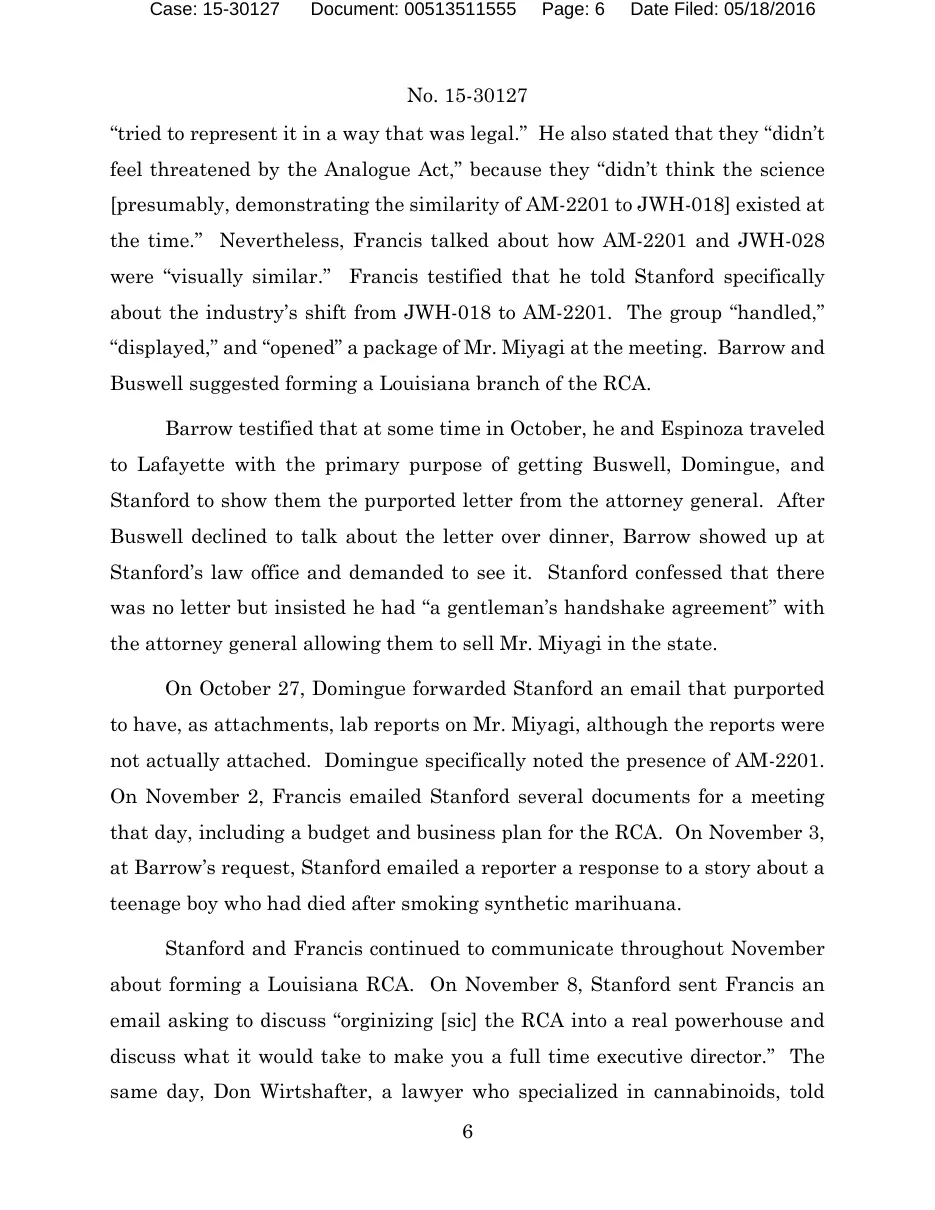
Figure 28. Page 6 of United States v. Stanford, Fifth Circuit, May 18, 2016. The legal cover for Mr. Miyagi potpourri was a letter that did not exist, then a handshake. [38]
A related defence, entrapment by estoppel, depends on reassurance from an official rather than a lawyer, and it failed in the Duluth case. The Eighth Circuit restated the rule: “The defense of entrapment by estoppel only applies when an official has affirmatively assured a defendant that certain conduct is legal”, and observed that “Carlson relies exclusively on one news article to support his entrapment by estoppel” claim.[28]
The question now
Some of the newest products have dropped the label altogether. XÜM, which sells the tryptamine 4-HO-MET under the name Metocin, has a FAQ that asks what it feels like and what the dosage is, and answers the question of legality this way: “Metocin is not federally scheduled nor banned”.[42] That is a claim about the schedules. It says nothing about the Analogue Act, which governs unscheduled substances that meet its definition and are intended for human consumption, and the FAQ around it is written for people who will take the product.
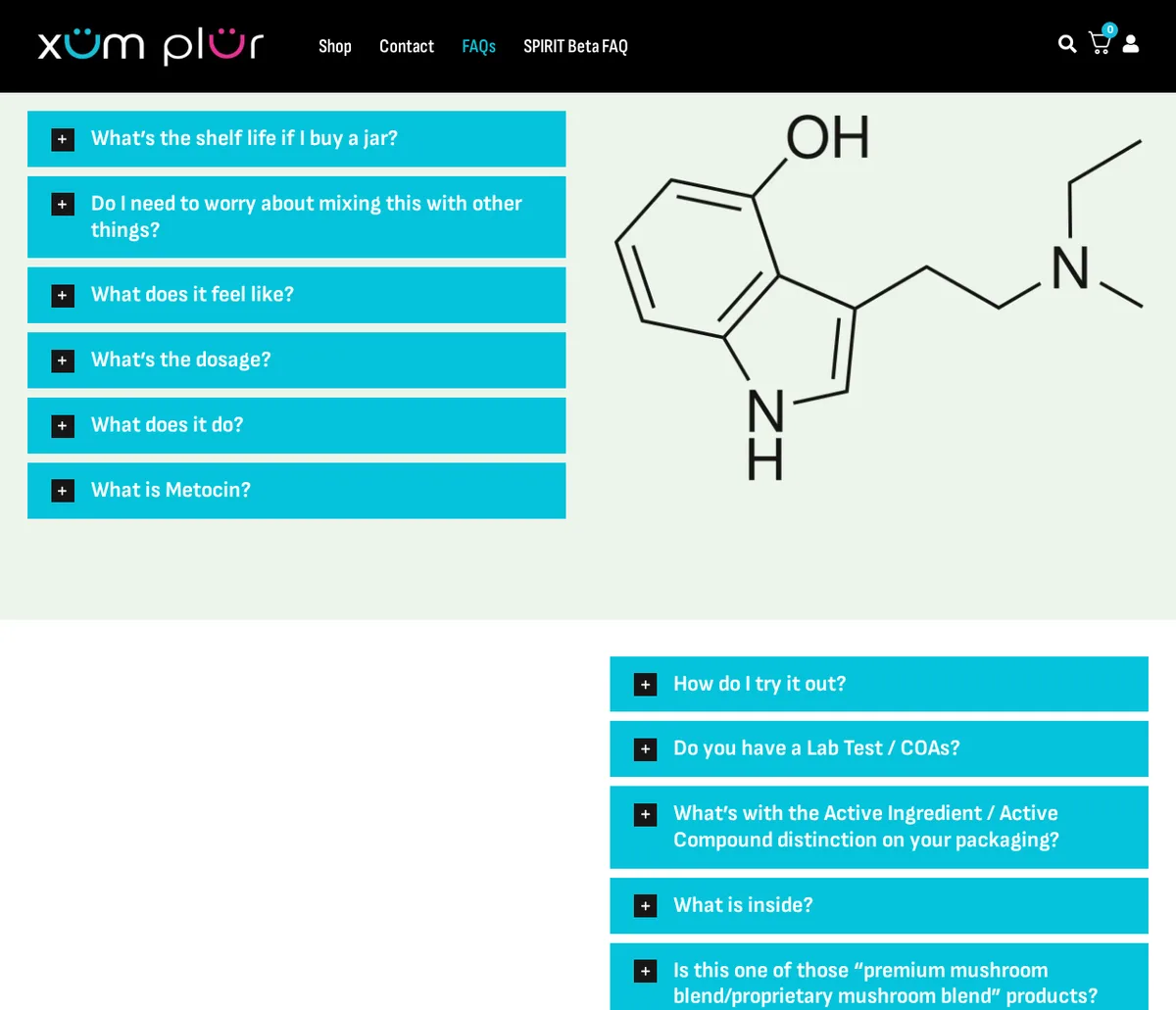
Figure 29. The XÜM FAQ page in October 2026. Where the packets of 2011 said not for human consumption, this one answers what it feels like and what the dose is, beside the molecule's structure. [42]
This site's owner thinks something else has taken the label's place. In August 2026 he wrote: “I went to federal prison for an analogues case many years ago when people still used” not for human consumption.[43] He went on: “there seems to be a new defense that some companies are banking on, and it involves a” retail-ready product loophole, and “I think it is mainly misinformation and would be interested how it actually plays out in court.”[43] He suspects that larger companies rely on “high profile lawyers who are telling them they are not breaking the law, or that it is ambiguous.”[43] In another thread the same week he called the lawyer's assurance “which is a mens rea type of argument for the defense”, and wrote that “vendors and manufacturers abandoned” the old label because it did not work.[33]
These are his hypotheses, and we found nothing to test them against. We found no court record, agency document or published statement by any seller, XÜM and PLÜR included, that relies on a retail-ready theory or cites a lawyer's opinion as its legal basis. What the record does show is how the two earlier versions of that defence ended. The packet that said potpourri was read by a federal appeals court as a code that fooled nobody. The lawyer who said XLR-11 was legal invoked the Fifth Amendment instead of repeating it, and the lawyer who promised a letter from the attorney general had none. Whether a product that names its own molecule and prints its own dose fares better is a question no court has yet been asked.
A correction to the owner's account
One detail of the owner's 2026 account does not match the record. DOC was the second compound in his case, and he wrote that “the DEA also chose NOT to Schedule DOC and DOI many years later”.[43] The DEA proposed placing both in Schedule I in April 2022 and withdrew that proposal in August 2022, saying “DEA is withdrawing the proposed rule, terminating all proceedings related thereto, and will be publishing a new proposed rule using an amended procedure.”[44] It published a new proposal on December 13, 2023 and set a hearing for June 10, 2024, then stayed it: “The hearing will not be taking place on June 10, 2024.”[45] A search of the Federal Register on October 11, 2026 found no later document. The proposal is pending, not abandoned.[45]
Still open
- The car wash foam parcels. We searched court opinions on CourtListener for not for human consumption alongside car wash, carpet cleaner, furniture and similar terms, and the Justice Department and DEA releases cited here. None names those declarations. The owner's account is the only source.
- The fake instructions and staged photographs the owner describes on Chinese parcels. No example survives in the archived thread, and none turned up in the court records above.
- Weight bench cleaner. No document found uses the phrase for GHB, GBL or 1,4-butanediol.
- Retail-ready and advice of counsel in 2026. No court record or seller statement found. If a prosecution of a named-molecule product reaches an appeals court, this section changes.
Changes
- 2026-10-11. Published.
References
- IamA just released from federal prison in the United States, ask me anything! (r/IAmA thread by u/saintpetejackboy, this site's owner) — Reddit, 2016-10-07, read through the Arctic Shift archive — anecdotal report, not evidence
- n-lightenment: Legal Disclaimer (Wayback Machine capture) — n-lightenment.com, captured 2011-06-12
- n-lightenment: MDMC (Wayback Machine capture) — n-lightenment.com, captured 2011-06-12
- Schedules of Controlled Substances: Temporary Placement of Three Synthetic Cathinones Into Schedule I (76 FR 65371) — Drug Enforcement Administration, Federal Register, 2011-10-21
- Schedules of Controlled Substances: Temporary Placement of 10 Synthetic Cathinones Into Schedule I (79 FR 12938) — Drug Enforcement Administration, Federal Register, 2014-03-07
- 21 U.S. Code § 813. Treatment of controlled substance analogues — Legal Information Institute, Cornell Law School
- Federal Register full-text search: "not for human consumption", agency Drug Enforcement Administration (35 documents, 2001 to 2023) — Office of the Federal Register, queried 2026-10-11
- What's the Buzz? — Phoenix New Times (Dewey Webb), 1996-07-04
- 15 U.S. Code § 2057a. Banned hazardous products (butyl nitrite) — Legal Information Institute, Cornell Law School
- 15 U.S. Code § 2057b. Banned hazardous products (volatile alkyl nitrites) — Legal Information Institute, Cornell Law School
- FDA Advises Consumers Not to Purchase or Use Nitrite "Poppers" — US Food and Drug Administration, 2021-06-24
- Ingesting or Inhaling Nitrite "Poppers" Can Cause Severe Injury or Death — US Food and Drug Administration consumer update, content current as of 2021-07-15
- Information Bulletin: GHB Analogs; GBL, BD, GHV, and GVL — National Drug Intelligence Center, US Department of Justice, August 2002 (archived)
- Gamma-Butyrolactone (drug and chemical evaluation) — DEA Diversion Control Division
- 1,4-Butanediol (drug and chemical evaluation) — DEA Diversion Control Division
- Gamma-butyrolactone (GBL) Critical Review Report, 36th ECDD, agenda item 4.3 — World Health Organization Expert Committee on Drug Dependence, 2014
- Comments by u/saintpetejackboy in a thread about leaked poppers, r/Drugs — Reddit, 2026-07-09, read through the Arctic Shift archive — anecdotal report, not evidence
- United States v. Brown, 415 F.3d 1257 (11th Cir. 2005) — US Court of Appeals for the Eleventh Circuit, 2005-07-08
- United States v. Sullivan, 714 F.3d 1104 (8th Cir. 2013) — US Court of Appeals for the Eighth Circuit, 2013-05-20
- Consideration of the cathinones — Advisory Council on the Misuse of Drugs, 2010-03-31
- Letter from the ACMD to the Home Secretary: ACMD consideration of mephedrone and related cathinones — Advisory Council on the Misuse of Drugs, 2009-12-22
- McFadden v. United States, 576 U.S. 186 (2015) — Supreme Court of the United States, 2015-06-18 (Legal Information Institute copy)
- Schedules of Controlled Substances: Temporary Placement of MDMB-4en-PINACA, 4F-MDMB-BUTICA, ADB-4en-PINACA, CUMYL-PEGACLONE, 5F-EDMB-PICA, and MMB-FUBICA in Schedule I (88 FR 19896) — Drug Enforcement Administration, Federal Register, 2023-04-04
- Schedules of Controlled Substances: Temporary Placement of Five Synthetic Cannabinoids Into Schedule I (76 FR 11075) — Drug Enforcement Administration, Federal Register, 2011-03-01
- DEA Announces Largest-Ever Synthetic Drug Takedown (Wayback Machine capture) — Drug Enforcement Administration, 2013-06-26; captured 2019-08-22
- These Packets Filled With Synthetic Designer Drugs Were Seized As Part Of Project Synergy (Wayback Machine capture) — Drug Enforcement Administration, 2013-06-26; captured 2019-08-18
- United States v. Ramos, 814 F.3d 910 (8th Cir. 2016) — US Court of Appeals for the Eighth Circuit, 2016-02-09
- United States v. Carlson, 810 F.3d 544 (8th Cir. 2016) — US Court of Appeals for the Eighth Circuit, 2016-01-14
- United States v. Sharp, 879 F.3d 327 (8th Cir. 2018) — US Court of Appeals for the Eighth Circuit, 2018-01-05
- United States v. Palmer, 917 F.3d 1035 (8th Cir. 2019) — US Court of Appeals for the Eighth Circuit, 2019-03-06
- United States v. Galecki, 89 F.4th 713 (9th Cir. 2023) — US Court of Appeals for the Ninth Circuit, 2023-12-27
- Justice Department Announces Eight Indictments Against China-Based Chemical Manufacturing Companies and Employees (Wayback Machine capture) — US Department of Justice, Office of Public Affairs, 2023-10-03; captured 2023-10-03
- Comment by u/saintpetejackboy in the thread Does the pseudo-ban mean that 7OH will be illegal to sell/ship on Wednesday?, r/7_hydroxymitragynine — Reddit, 2026-08-24, read through the Arctic Shift archive — anecdotal report, not evidence
- 21 U.S. Code § 802. Definitions — Legal Information Institute, Cornell Law School
- United States v. Turcotte, 405 F.3d 515 (7th Cir. 2005) — US Court of Appeals for the Seventh Circuit, 2005-06-14 (OpenJurist copy)
- United States v. Hodge, 321 F.3d 429 (3d Cir. 2003) — US Court of Appeals for the Third Circuit, 2003 (OpenJurist copy)
- United States v. McFadden, 823 F.3d 217 (4th Cir. 2016), on remand — US Court of Appeals for the Fourth Circuit, 2016-05-19
- United States v. Stanford, 823 F.3d 814 (5th Cir. 2016) — US Court of Appeals for the Fifth Circuit, 2016-05-18
- United States v. Makkar, 810 F.3d 1139 (10th Cir. 2015) — US Court of Appeals for the Tenth Circuit, 2015-11-23
- United States v. Gas Pipe, Inc., 901 F.3d 268 (5th Cir. 2018) — US Court of Appeals for the Fifth Circuit, 2018-08-16
- United States v. Scully, 877 F.3d 464 (2d Cir. 2017), slip opinion — US Court of Appeals for the Second Circuit, 2017-12-13 (copy hosted by the Partnership for Safe Medicines)
- FAQs, XÜM (Wayback Machine capture) — xumtrip.com, captured 2026-10-06
- Comments by u/saintpetejackboy in the thread What is the next best thing?, r/researchchemicals — Reddit, 2026-08-27 to 2026-08-28, read through the Arctic Shift archive — anecdotal report, not evidence
- Schedules of Controlled Substances: Placement of DOI and DOC in Schedule I; withdrawal of proposed rule — Drug Enforcement Administration, Federal Register, 2022-08-29
- Announcement of Stayed Hearing: Placement of DOI and DOC in Schedule I — Drug Enforcement Administration, Federal Register, 2024-06-07
Comments
Sign in to join the conversation.
No comments yet.