


























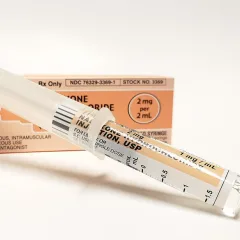

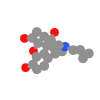

Touching fentanyl, or breathing near it, can make you overdose.
Fentanyl crosses skin slowly and barely evaporates. In 2017 toxicologists knew of no responder poisoned by incidental contact. The stories of officers collapsing came after DEA warnings said it could happen.
First documented: , DEA nationwide alert on fentanyl to US law enforcement
Origin, evidence and 7 references
Origin
On 18 March 2015 the DEA sent a nationwide alert about fentanyl to US law enforcement. Its press release said the agency had warned officers that "fentanyl can be absorbed through the skin and accidental inhalation of airborne powder can also occur".[1]
In June 2016 the DEA released a roll call video for police under the headline "Fentanyl Exposure Kills". Acting Deputy Administrator Jack Riley said on it that "a very small amount ingested or absorbed through your skin can kill you". Two New Jersey detectives exposed to a small amount appeared on the video. One said, "I thought I was dying".[2]
The best-known case came in May 2017 in East Liverpool, Ohio. Patrolman Chris Green collapsed after "brushing a small amount of white powder from his shirt" following a drug search, and was given naloxone at the station and in hospital.[3]
The evidence
In 2017 the American College of Medical Toxicology and the American Academy of Clinical Toxicology reviewed the risk. They concluded that "the risk of clinically significant exposure to emergency responders is extremely low" and that "incidental dermal absorption is unlikely to cause opioid toxicity". They wrote: "we have not seen reports of emergency responders developing signs or symptoms consistent with opioid toxicity from incidental contact".[4]
The airborne risk is also small. The same statement notes that "the vapor pressure of fentanyl is very low", so powder does not give off a gas. Even at the highest airborne level measured in workers at fentanyl factories, an unprotected person "would require nearly 200 min of exposure to reach a dose of 100 mcg of fentanyl".[4]
A 2022 case report describes a worker who spilled a large volume of pharmaceutical fentanyl solution onto broken skin. There were "no clinical effects of opioid exposure observed".[5]
The toxicologists also advised that naloxone be given for objective signs such as slowed breathing, and "not for vague concerns such as dizziness or anxiety".[4]
The propaganda
A 2020 study tracked news coverage of overdose from casual fentanyl contact between 2015 and 2019. It found that "relevant content appeared in 551 news articles spanning 48 states", with the misinformation "amplified by erroneous government statements". Corrections were shared far less.[6]
The belief stuck. In 2021 researchers interviewed 23 police leaders and officers from five agencies. Nearly all "wrongly believed that dermal exposure to fentanyl was deadly".[7] The STAT report on East Liverpool repeated the DEA video's message that "even incidental contact with the drug could result in a fatal overdose".[3]
References
- DEA Issues Nationwide Alert on Fentanyl as Threat to Health and Public Safety. Drug Enforcement Administration, 18 March 2015, Wayback capture
- DEA Warning to Police and Public: Fentanyl Exposure Kills. Drug Enforcement Administration, 10 June 2016, Wayback capture
- After an officer accidentally overdoses on fentanyl, a police chief calls for stronger laws. STAT, 16 May 2017, Wayback capture
- ACMT and AACT Position Statement: Preventing Occupational Fentanyl and Fentanyl Analog Exposure to Emergency Responders. Journal of Medical Toxicology 13:347 (2017), via PubMed Central
- Accidental Occupational Exposure to a Large Volume of Liquid Fentanyl on a Compromised Skin Barrier with No Resultant Effect. Prehospital and Disaster Medicine 37:550 (2022), via PubMed
- Fentanyl panic goes viral: The spread of misinformation about overdose risk from casual contact with fentanyl in mainstream and social media. International Journal of Drug Policy 86:102951 (2020), via PubMed
- Perceived occupational risk of fentanyl exposure among law enforcement. International Journal of Drug Policy 95:103303 (2021), via PubMed