1-Pentyl-3-(1-naphthoyl)indole; the pentyl member of the desmethyl naphthoylindole series and the first JWH compound found in a street product. Made in Huffman's lab in 1995 (C&EN dated the invention to that year) and published in the 1998 Wiley/Huffman/Martin SAR paper, which reported that 4- to 6-carbon N-alkyl chains gave optimal activity. Ki ~9 nM at CB1, ~2.9 nM at CB2, i.e. several times THC's CB1 affinity. Identified in Spice herbal blends by THC-Pharm of Frankfurt on 15 December 2008; banned in Germany 22 January 2009 and placed in US Schedule I (temporary) 1 March 2011.
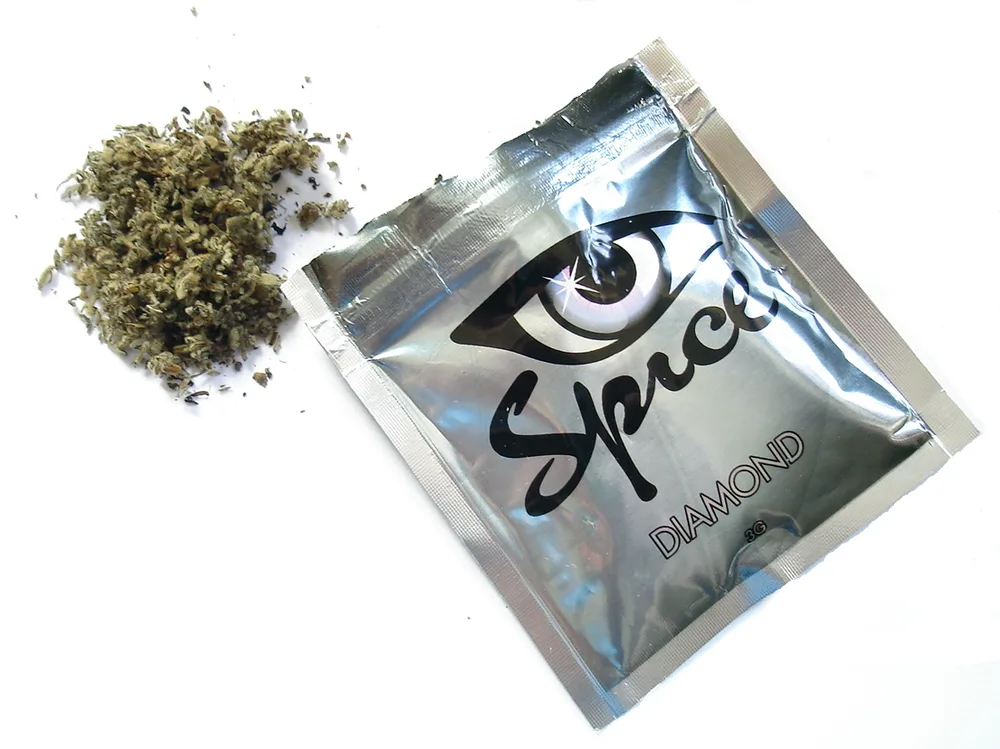
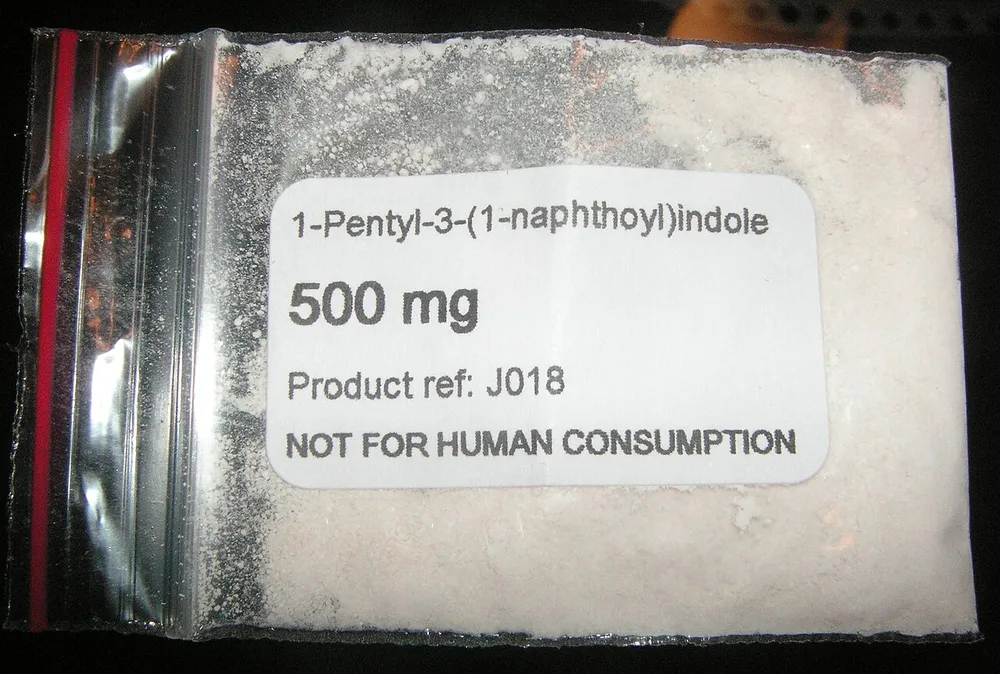
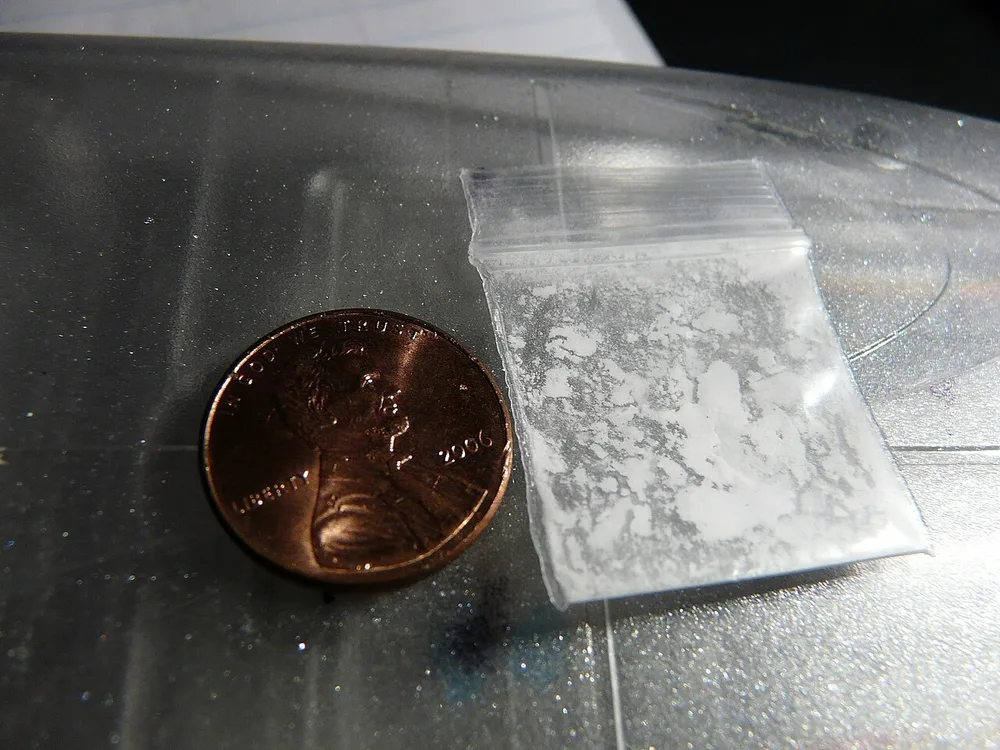
packagingA 'Spice Diamond' herbal-blend packet with its contents spilled beside it, photographed for a US Marine Corps story on the Corps' 2010 ban. Blends like this were sold as incense and typically carried synthetic cannabinoids such as JWH-018. Legal order synthetic smoke ·Public domainpackagingA 500 mg retail baggie labelled 1-pentyl-3-(1-naphthoyl)indole, JWH-018's chemical name, with the research-chemical era 'not for human consumption' disclaimer. The label is the vendor's claim, not an assay. Psychonaught ·Public domainsampleA 10 mg baggie of powder the uploader describes as 99%+ pure JWH-018, photographed beside a US cent for scale. Mikeaz ·CC BY-SA