Dextroamphetamine is roughly three to four times the CNS stimulant that levoamphetamine is; levoamphetamine has proportionally more peripheral cardiovascular action. Which one you meet depends entirely on the product: dexamfetamine preparations are the single d-enantiomer, while Adderall is a fixed mixture of both.
Published as phenylisopropylamine in 'Über einige Derivate der Phenylmethacrylsäure und der Phenylisobuttersäure', Ber. Dtsch. Chem. Ges. 20:616 (1887). Edeleanu reported no pharmacology; the stimulant effects were found only after Gordon Alles independently resynthesised it in 1929–30. He is not connected to methamphetamine (Nagai 1893, Ogata 1919).
Alles did not invent amphetamine: Lazar Edeleanu synthesised it in 1887 and it sat unexamined for forty years. Alles re-prepared it as an ephedrine substitute and had 50 mg injected into himself on 3 June 1929, recording the nasal decongestion, palpitations and 'feeling of well being'. He patented the sulfate and hydrochloride salts (US 1,879,003, filed 2 September 1930, granted 27 September 1932) and assigned the rights to Smith, Kline & French in December 1934; SKF sold them as Benzedrine. Sources put the discovery variously at 1927, 1928 and 1929; the dated self-experiment is the firmest anchor.
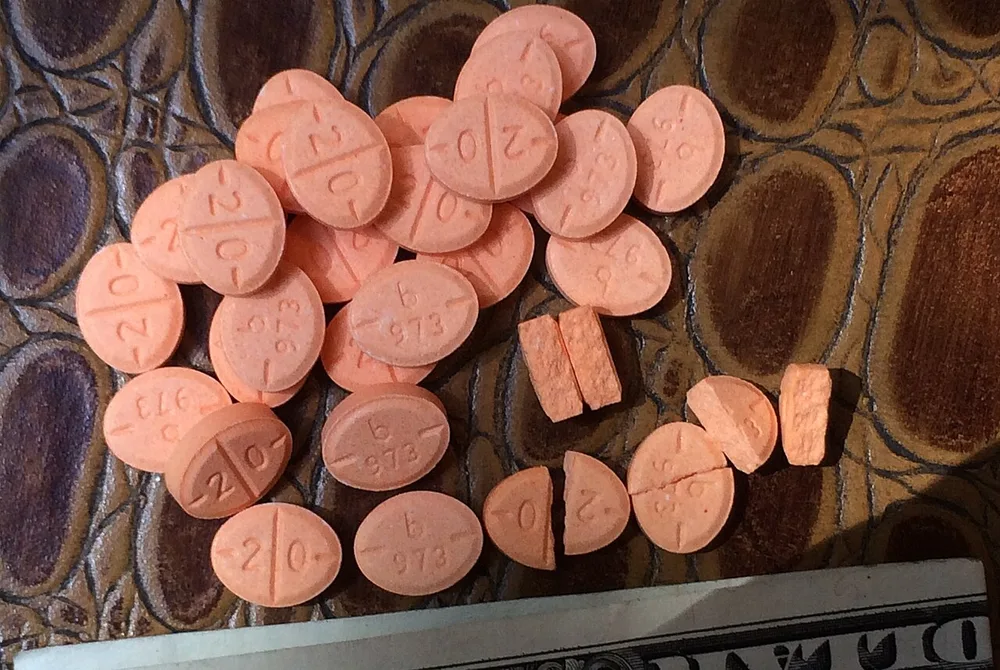
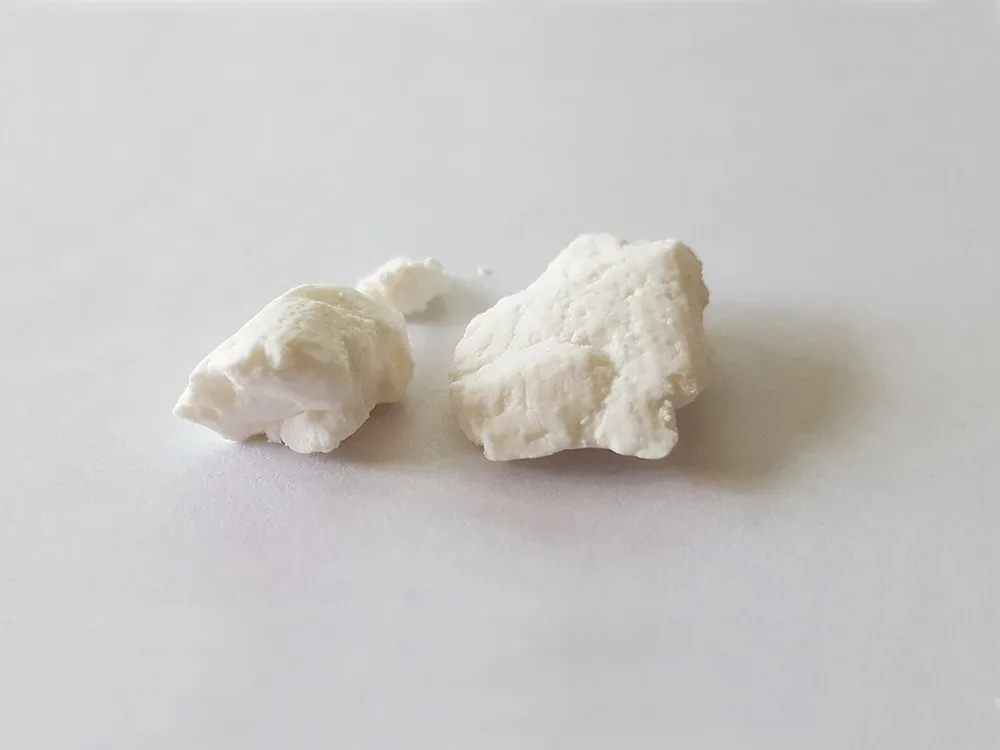
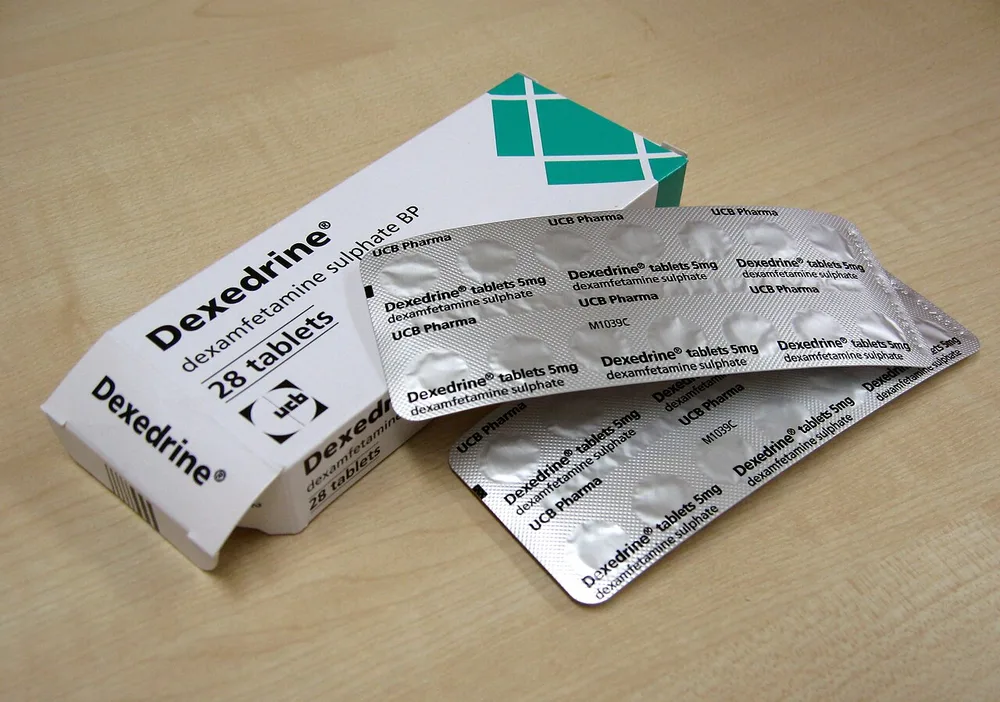
sampleGeneric mixed amphetamine salts (Adderall) 20 mg tablets, whole and split, with the edge of a US dollar bill for scale. Seppi333 ·CC BY-SAsampleIllicit amphetamine as chalky white lumps of pressed powder, one of the most common street forms. DMTrott ·CC BY-SApackagingDexedrine (dexamfetamine sulphate) 5 mg tablets in blister packs with the pharmacy carton, as dispensed in the UK. Adam from UK ·CC BY