Sold and taken as the racemate; essentially nobody encounters a single enantiomer. The two differ in character — (S)-MDMA carries more of the stimulant action, (R)-MDMA more of the psychedelic-leaning effect — but since the mixture is what exists in practice, that distinction is chemistry rather than something to plan around.
Made as a chemical intermediate on the way to methylhydrastinine, not as a drug candidate; described without a name in Merck patent DE 274350 C (filed 24 Dec 1912, published 16 May 1914). The long-repeated story that Merck was chasing an appetite suppressant is false — Freudenmann et al. traced it to uncritical repetition of secondary sources.
NOT his synthesis: first made by Anton Köllisch at Merck in 1912 (patented 1913). Shulgin re-synthesized it, developed a new synthesis route, and in 1976 introduced it to the Oakland psychologist Leo Zeff, through whom it spread to therapists; he co-published the first human pharmacology with David Nichols in 1978.
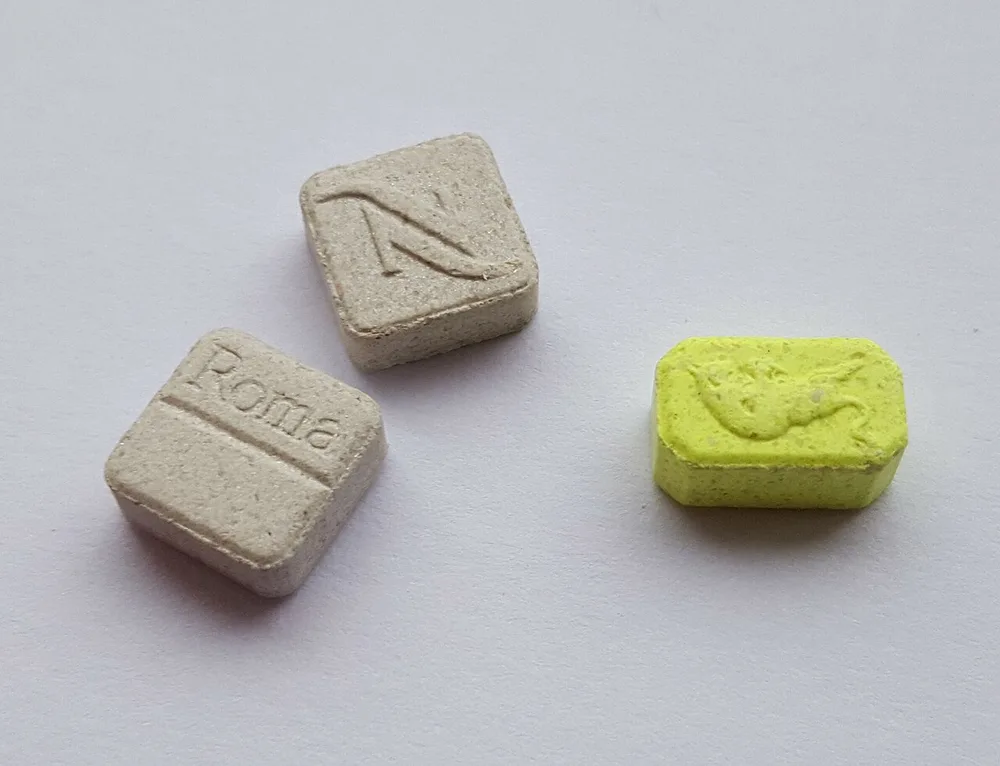
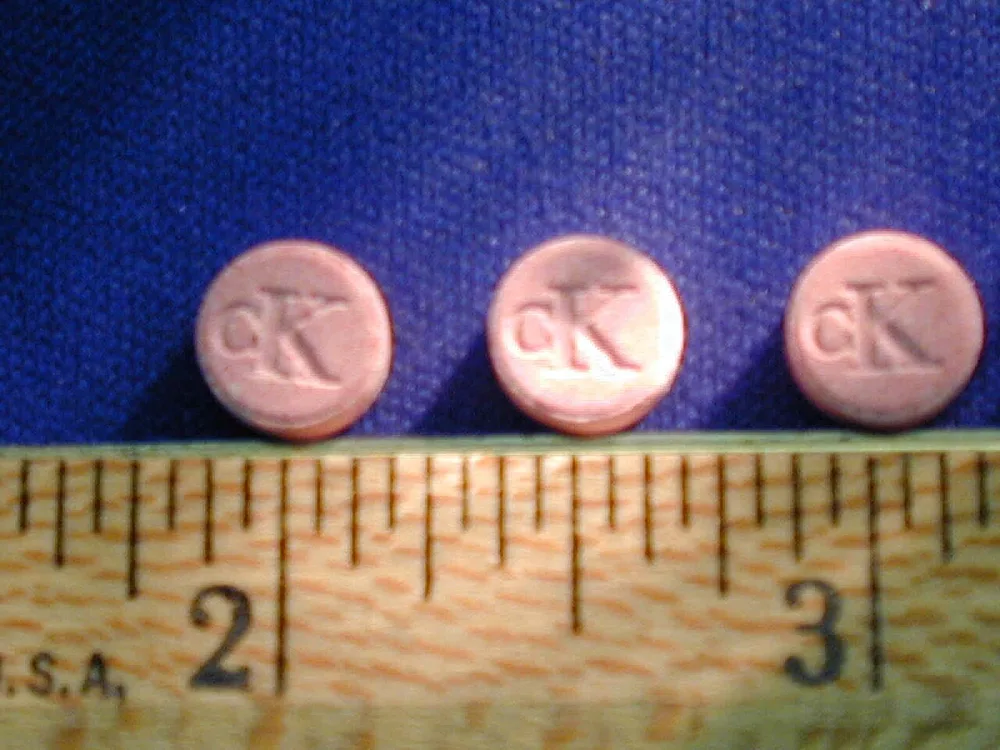
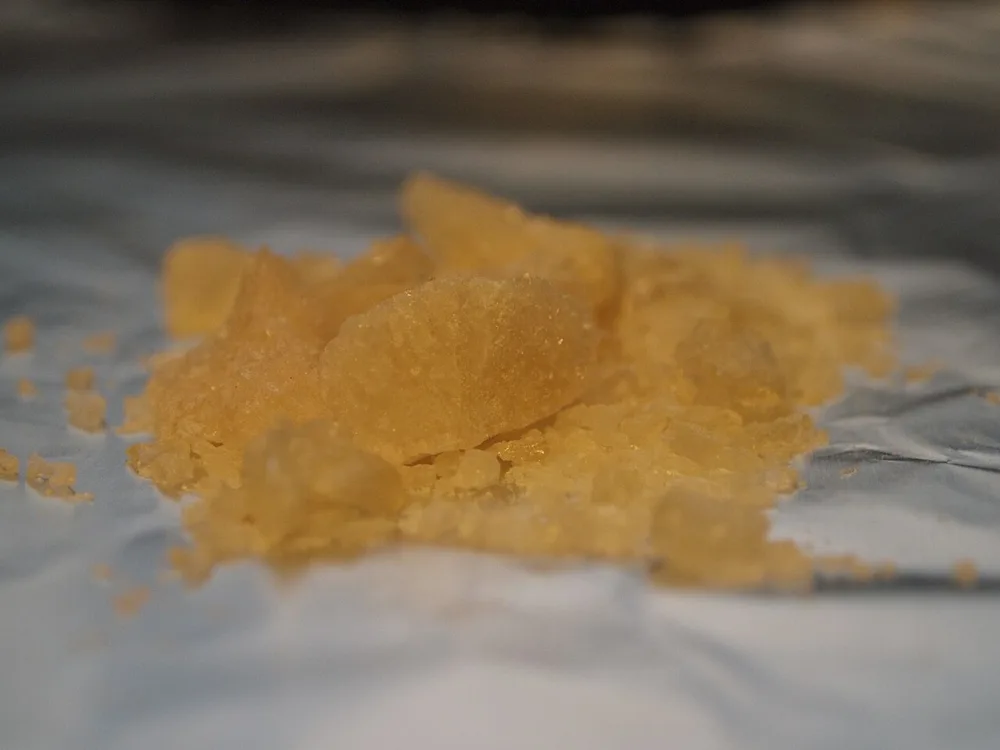
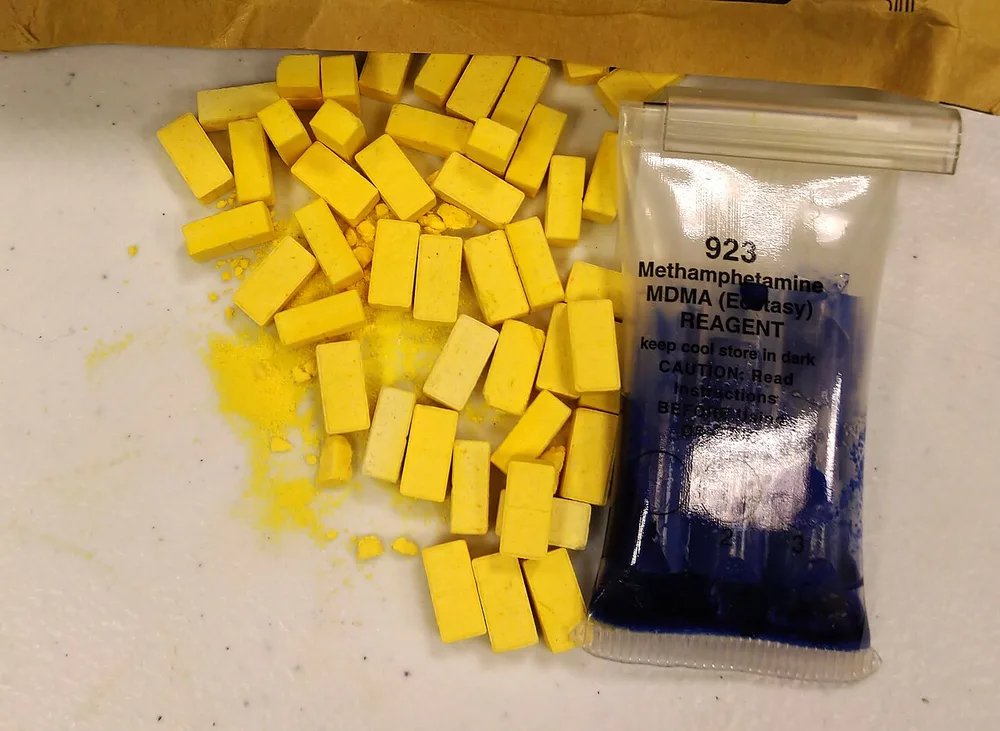
sampleThree tablets sold as ecstasy, pressed with logos in different shapes and colours. Appearance is no guide to content: tablets sold as MDMA vary widely in dose and may contain other drugs. Dominic Milton Trott ·CC BYseizurePink tablets stamped with a 'CK' logo, photographed by the US DEA against a ruler for scale. Logo-pressed tablets like these are a common form in which MDMA is sold. DEA ·Public domainsampleTan MDMA crystals on foil. Crystalline MDMA ('molly') ranges from white through tan to brown; colour does not indicate purity. Thawt Hawthje ·CC BYseizureUS Customs and Border Protection seizure of yellow tablets containing MDMA (Dulles airport, 2019), shown with the reagent test kit officers used to identify them. CBP Photography ·Public domain