Less potent as an anaesthetic; studied for psychiatric effects, not marketed.
Ketamine has two mirror-image forms, (S)-ketamine (esketamine) and (R)-ketamine (arketamine). What is sold and administered as "ketamine" is almost always the racemate — a 50/50 mixture — which has been the standard anaesthetic for decades and is what most infusion clinics use. Esketamine binds the NMDA receptor more strongly and is the basis of the patented nasal spray licensed for treatment-resistant depression. Arketamine is a research interest, not a marketed product.
Sole named inventor on US 3,254,124 (filed 29 June 1962), which claims and exemplifies 2-methylamino-2-(o-chlorophenyl)cyclohexanone; ketamine is Example 15. Parke-Davis coded it CI-581. Stevens made the compound; the human pharmacology was Edward Domino and Guenter Corssen's work in 1964–65, and the term 'dissociative anaesthesia' came from that trial, not from him.
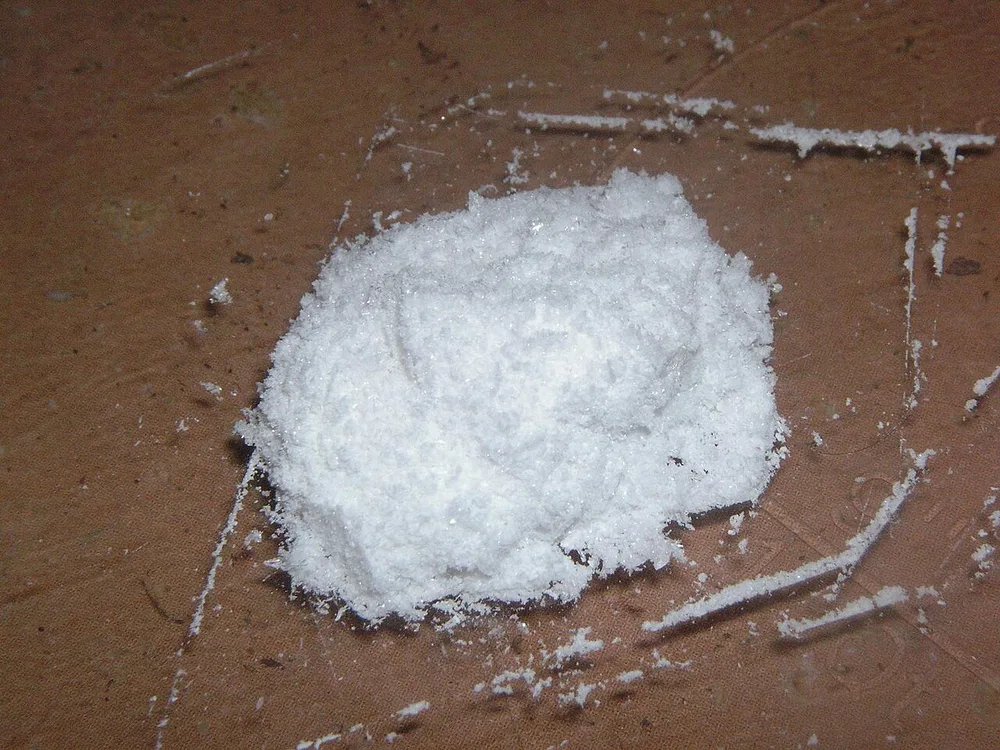
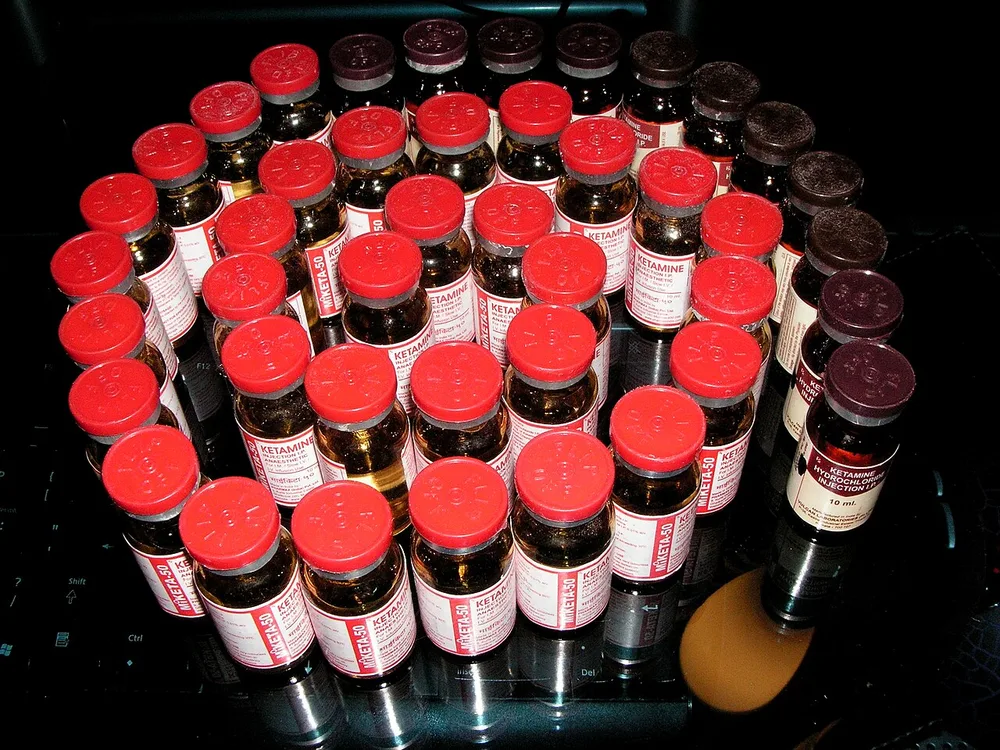
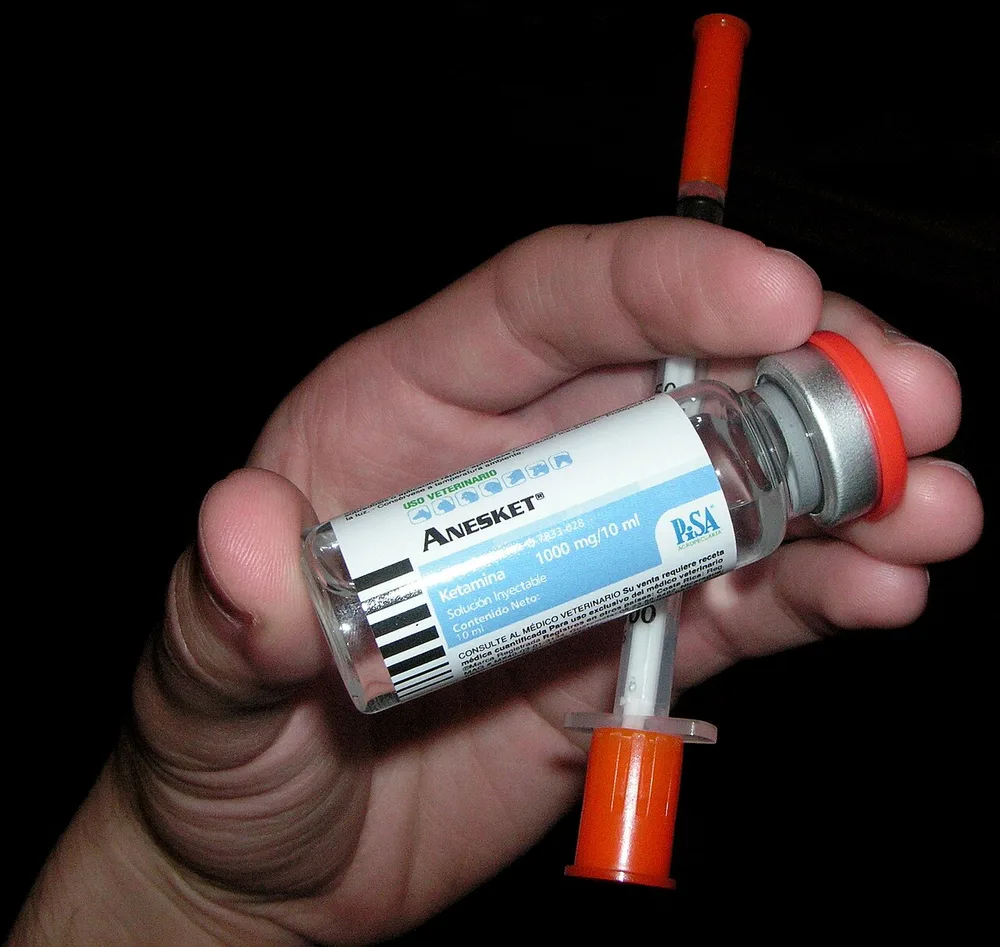
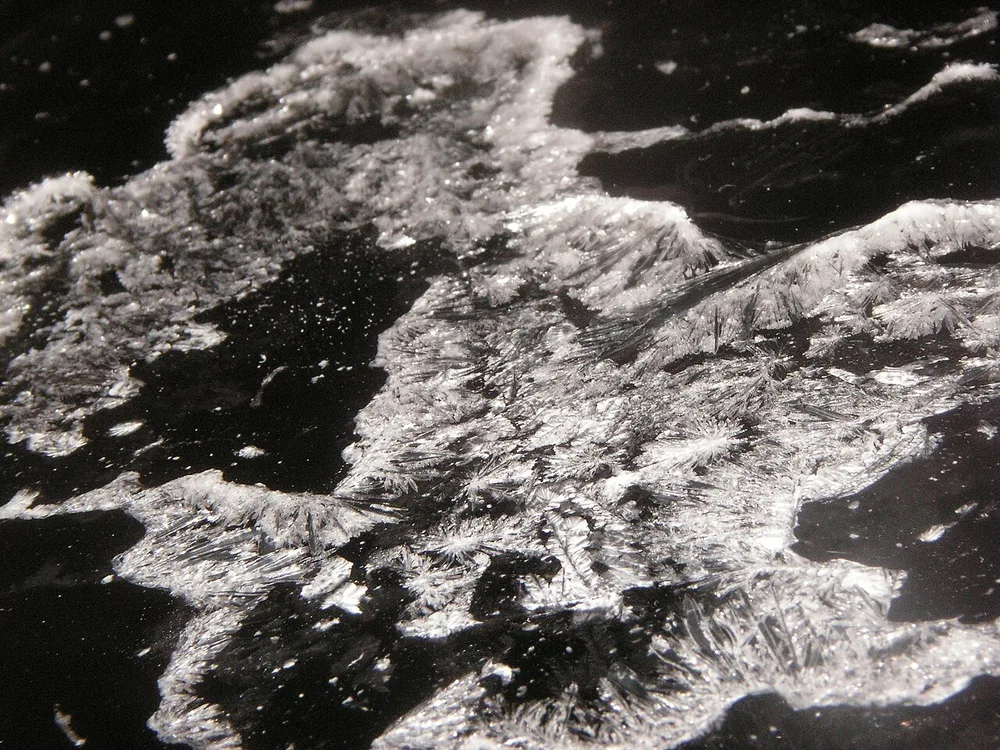
sampleKetamine hydrochloride crushed into a loose white crystalline powder, the most common form in illicit circulation. Coaster420 ·Public domainpackagingPharmaceutical ketamine vials with tamper-evident caps. Medical ketamine is a clear solution supplied in labeled multi-dose vials like these. Psychonaught ·CC0packagingA 1000 mg/10 ml veterinary ketamine vial (Anesket, Mexico). Diverted veterinary vials of this kind are a common source of illicit ketamine. Psychonaught ·CC0sampleKetamine dried on glass, forming the feathery white crystals typical of evaporated ketamine solution before it is crushed to powder. Coaster420 ·Public domain