GHB, GBL and 1,4-butanediol: one molecule, three bottles, and the labels on the solvent
In July 2026 a thread on Reddit's r/Drugs argued about whether poppers are dangerous because the chemicals in them are industrial. This site's owner, who posts as u/saintpetejackboy, answered with a comparison: “This is like saying GHB is a very dangerous chemical solvent”, a molecule that is sold in solvent bottles “but is also endogenous and produced in the human body naturally”.[1] He added that GHB, when it was first banned, was sold as a weight bench cleaner.[1]
Both halves of that are right, and both need a qualification. GHB is made in every human brain. The two industrial solvents sold in its place, gamma-butyrolactone (GBL) and 1,4-butanediol, are not, but the body turns both into GHB within minutes. The weight bench cleaner existed under a slightly different name. This article follows the molecule through its three bottles: the anaesthetic, the supplement, the solvent, the labels on the solvent, what it does in the body and how quickly it leaves, and the claim that made it famous, that it is the date rape drug.
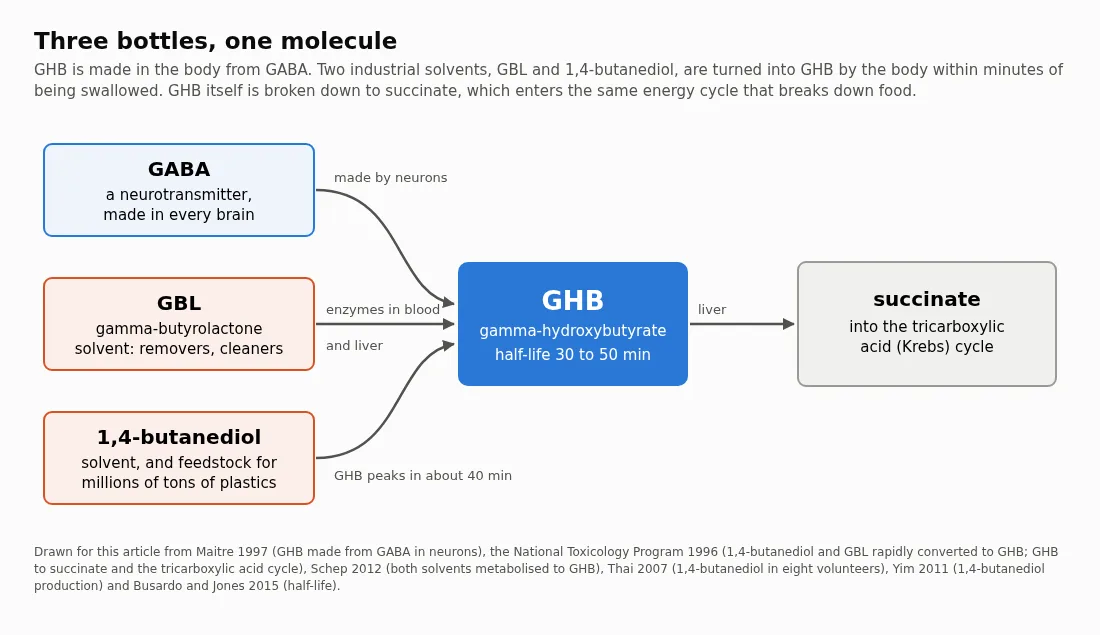
Figure 1. How the three bottles become one drug, drawn for this article. Neurons make GHB from GABA; enzymes in the blood and liver turn GBL and 1,4-butanediol into GHB within minutes, and the liver breaks GHB down into succinate. [2]
One molecule, three bottles
GHB is not foreign to the body. A 1997 review of its role in the brain: “gamma-Hydroxybutyrate is a metabolite of GABA which is synthesized and accumulated by neurons in brain”, adding that “This substance is present in micromolar quantities in all brain regions investigated as well as in several peripheral organs”.[3] A 2015 review put the endogenous level at “Trace amounts of GHB are produced endogenously (0.5-1.0 mg/L) in various tissues, including the brain”.[4] The CDC said the same in 1990: “GHB is produced by the body as a normal metabolite and is not a nutritional requirement.”[5]
It is also in some drinks. In 2005 two British analysts tested alcoholic and soft drinks and found that “naturally occurring GHB and GBL were detected in those beverages involving the fermentation of white and particularly red grapes”.[6] They gave figures: “GHB/GBL was detected in red wine vermouth (8.2 mg/L), sherry (9.7 mg/L), port (GBL), red wine (4.1-21.4 mg/L) and white wine (<3-9.6 mg/L)”.[6] Beer was not among them: “No GHB or GBL was detected in other drinks such as beer, juice, spirits or liqueurs”.[6]
The other two bottles hold real industrial chemicals. The National Toxicology Program studied 1,4-butanediol in 1996 because it was “selected for evaluation by the NTP because of high production volume, the potential for worker exposure”.[2] A 2011 paper in Nature Chemical Biology called it “1,4-Butanediol (BDO) is an important commodity chemical used to manufacture over 2.5 million tons annually of valuable polymers”.[7] A 2016 review of a sugar-based process listed where it ends up: “BDO is a chemical intermediate that goes into a variety of products including automotive parts, electronics, and apparel”.[8] GBL is a solvent. In February 1999 the CDC described it as “GBL is an industrial and household solvent of acrylate polymers, and unintentional poisonings have been reported”.[9]
The body does not keep the solvents. The same NTP report says 1,4-butanediol “is also rapidly converted to gamma-hydroxybutyric acid by enzymes in the blood and liver of animals and humans”.[2] A 2012 clinical review put it in one line: “The related chemicals, 1,4-butanediol and gamma butyrolactone, are metabolized endogenously to GHB”.[10] In eight volunteers given 1,4-butanediol by mouth, GHB in the blood peaked at an average of 39.4 minutes.[11] GHB itself then goes the way of the body's own: the NTP describes it as “a naturally occurring chemical found in the brain and peripheral tissues which is converted to succinate and processed through the tricarboxylic acid cycle”.[2]
So Congress had the chemistry right when, in February 2000, it wrote into law that “If taken for human consumption, common industrial chemicals such as gamma butyrolactone and 1.4-butanediol are swiftly converted by the body into GHB.”[12] The New England Journal of Medicine had used the same frame a few weeks earlier: “1,4-Butanediol is an industrial solvent that, when ingested, is converted to gamma-hydroxybutyrate, a drug of abuse with depressant effects”.[13]
The solvent argument, both ways
The owner's point was that “industrial solvent” is a description of a use, not of a danger. Other molecules sit in both columns. The CDC's toxic substances agency says acetone, the nail polish remover, “occurs naturally in plants, trees, volcanic gases, forest fires, and as a product of the breakdown of body fat”.[14] It says of formaldehyde that “Formaldehyde is produced in the body and would be present as a normal constituent in body tissues”.[15] The body makes small amounts of ethanol too, and a 2000 review of the auto-brewery defence in drunk-driving cases concluded of the measured levels: “These concentrations are far too low to have any forensic or medical significance”.[16]
The comparison cuts the other way as well. That the body makes a trace of something says nothing about a swallowed amount many times larger, and formaldehyde and ethanol are toxic at doses no one disputes. For GHB the gap between trace and dose is the whole story of the sections below on how it kills. The fair reading is narrower: GHB is a body chemical with a dangerous dose curve, and GBL and 1,4-butanediol are industrial chemicals the body turns into it. Calling GHB itself an industrial solvent is wrong. Calling GBL one is right.
Anaesthetic, supplement, Schedule I
GHB entered medicine in France. The European drug monitoring centre wrote in 2008 that “GHB was first synthesised in 1960 (Laborit, 1964), but was later discovered to be an endogenous compound”.[17] Henri Laborit was, in the words of the 2015 review, “of chlorpromazine fame”.[4] It was used for anaesthesia: “It was originally evaluated and is used as an anaesthetic, particularly in France and Germany as Gamma OH™ and Somsanit™, respectively.”[17] Austria and Italy later licensed it for “opiate and alcohol withdrawal as Alcover™ in Austria and Italy”.[17]
In the United States it arrived through gyms. The 2015 review says that “During the 1970-1980s GHB became popular as a dietary supplement and could be purchased over the counter at health-food stores.”[4] The CDC's first report on it, in November 1990, dates the trade later: “GHB has been marketed illicitly to body builders since at least May 1990; it also has been promoted illicitly for weight control and as a sleep aid.”[5] The two sources disagree on the start by a decade or more, and the CDC's is the contemporary document. The reason the bodybuilders bought it was the review's: “The product became popular with dieters and body-builders who believed that it helped them burn fat and build muscle and also stimulated the production of growth hormone.”[4] The CDC named three brands, “4-Hydroxy Butyrate, Gamma Hydrate, and Somatomax PM. It is distributed as the sodium salt in powder or tablet form”.[5]
The CDC's 1990 cluster was 57 people in several states, and “Although no deaths have been reported, most patients have required emergency room care; at least 11 were hospitalized, and nine required ventilator support or other intensive care.”[5] The federal response came first: “On November 8, 1990, the FDA issued an advisory declaring GHB unsafe and illicit, except under FDA-approved physician-supervised protocols.”[18] The states followed within a day: “Sale of GHB was banned by California on November 8 and by Florida on November 9.”[5]
The second bottle and the third
The trade moved to the precursors, and the precursors moved into supplement bottles. In January 1999 the FDA asked companies to recall GBL products sold as “Renewtrient, Revivarant or Revivarant G, Blue Nitro or Blue Nitro Vitality, GH Revitalizer, Gamma G, and Remforce”.[19] Its talk paper said: “They are promoted with claims to build muscles, improve physical performance, enhance sex, reduce stress and induce sleep.”[19] And: “They are sold via the Internet, in some health food stores, and in some gymnasiums and fitness centers.”[19] The agency's legal position was one sentence: “Although labeled as dietary supplements, these products are illegally marketed unapproved new drugs.”[19] By then, “GBL related products have been associated with reports of at least 55 adverse health effects, including one death.”[19] The CDC's report the next month listed the claims on the labels: the products “are marketed for many claimed purposes, including to induce sleep, release growth hormone, enhance sexual activity and athletic performance, relieve depression, and prolong life.”[9]
Four months later the third bottle appeared. On May 11, 1999 the FDA warned of “a new group of products being marketed as sleep aids that have been associated with at least 3 deaths”, made with 1,4-butanediol.[20] They were “advertised in muscle-building magazines, and sold in health food stores as dietary supplements to aid in sleep”.[20] The agency's explanation was the pattern this site has documented for half a dozen molecules: “Health authorities believe manufacturers are renaming their products and substituting 1,4 butanediol for GBL.”[20]
That talk paper is where the owner's memory comes from. Its list of brands reads: “Products that contain BD include Revitalize Plus, Serenity, Enliven, GHRE, SomatoPro, NRG3, Thunder Nectar and Weight Belt Cleaner.”[20] The European monitoring centre's 2008 paper lists “weight belt cleaner” among the street names.[17] He remembered a weight bench. The bottle said weight belt. Our earlier article on the not-for-human-consumption label said no document named the product. That was wrong, and it is corrected there.
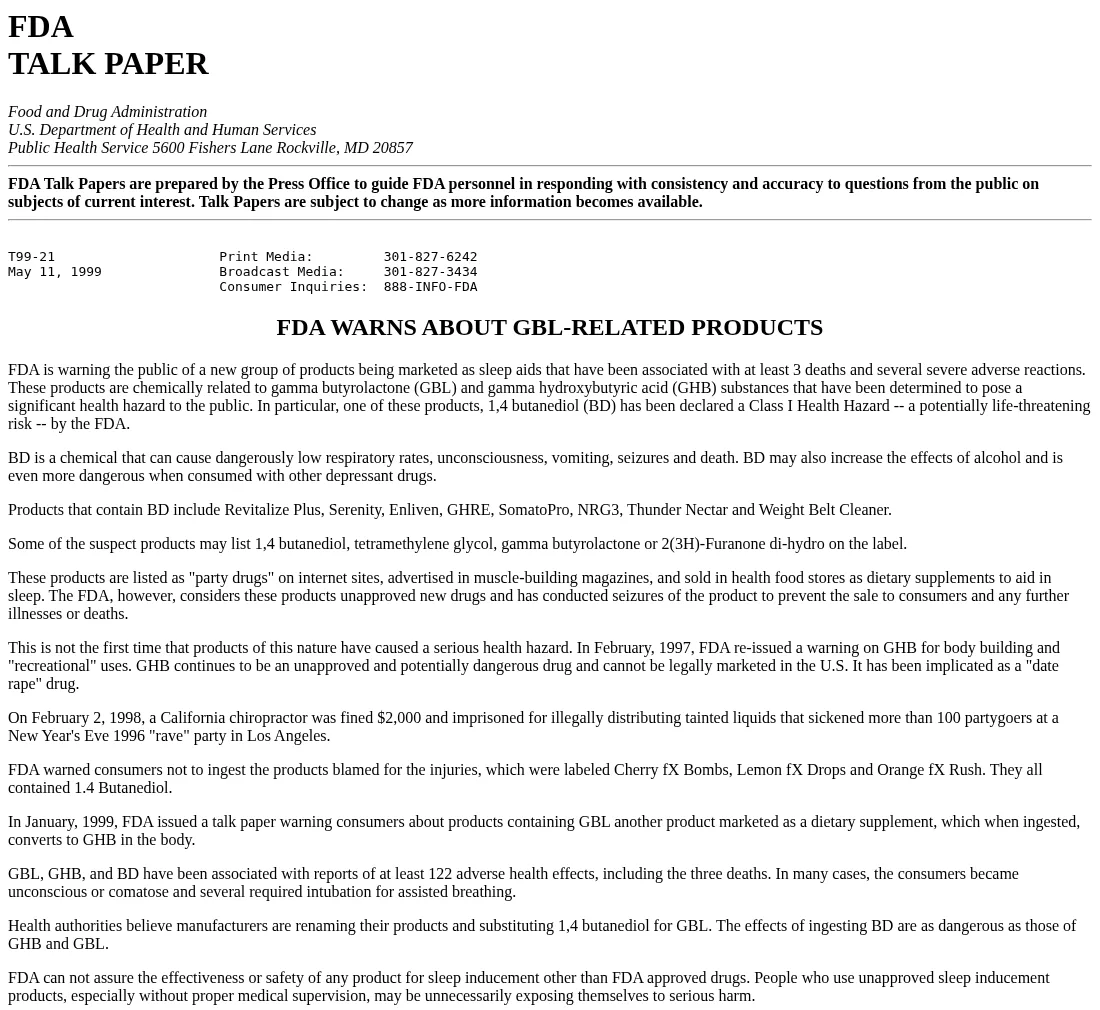
Figure 2. FDA Talk Paper T99-21, May 11, 1999, as archived. The last name in its list of 1,4-butanediol products is Weight Belt Cleaner. [20]
The same paper recalls an earlier case. A California chiropractor was fined and jailed in February 1998 for liquids that had “sickened more than 100 partygoers at a New Year” party, a rave in Los Angeles on New Year's Eve 1996.[20] The products “which were labeled Cherry fX Bombs, Lemon fX Drops and Orange fX Rush. They all contained 1.4 Butanediol.”[20]
The law, and the medicine
Congress acted in February 2000. Public Law 106-172 found that “Abuse of illicit GHB is an imminent hazard to public safety that requires immediate regulatory action under the Controlled Substances Act (21 U.S.C. 801 et seq.).”[12] It also found that “A human pharmaceutical formulation of gamma hydroxybutyric acid is being developed as a treatment for cataplexy, a serious and debilitating disease.”[12] The result was a split schedule. The DEA's final rule says the medicine “shall be a Schedule III controlled substance except that it will be subject to the criminal sanctions applicable to a Schedule I controlled substance”, and adds that “Public Law 106-172 directs DEA to publish this final rule and DEA has no discretion in this matter.”[18] GBL became a List I chemical in April 2000, the DEA noting that “GBL and 1,4-butanediol are structurally and pharmacologically similar to GHB and are often substituted for GHB.”[21] The story of how that law was written, and of the two teenagers it is named after, is in our article on the ban playbook.
The medicine was approved in July 2002: “This new drug application provides for the use of Xyrem® Oral Solution for the treatment of cataplexy associated with narcolepsy.”[22] Internationally, “In March 2001, GHB (shown as gamma-hydroxybutyric acid) was added to Schedule IV of the 1971 UN Convention on Psychotropic Substances.”[17]
The United Kingdom took three steps. GHB became a Class C drug on July 1, 2003.[23] GBL and 1,4-butanediol followed on December 23, 2009.[24] The government's memorandum explained why they had waited: “unlike GHB, GBL and 1,4-BD have a wide range of legitimate industrial uses”.[25] All three moved to Class B on April 13, 2022: “This Order reclassifies 1,4-Butanediol (1,4-BD), Gamma-butyrolactone (GBL) and 4-Hydroxy-n-butyric acid (GHB) from Class C to Class B drugs”.[26] The industrial exemption is still open. In August 2026 the Home Office opened a consultation whose proposal “is to abolish the current broad exemption from drugs licensing for industrial users of these substances, and replace it with an exemption for mixtures containing them.”[27] Its reason: “Evidence from criminal cases shows that the current exemptions are exploited to enable illicit supply”.[27]
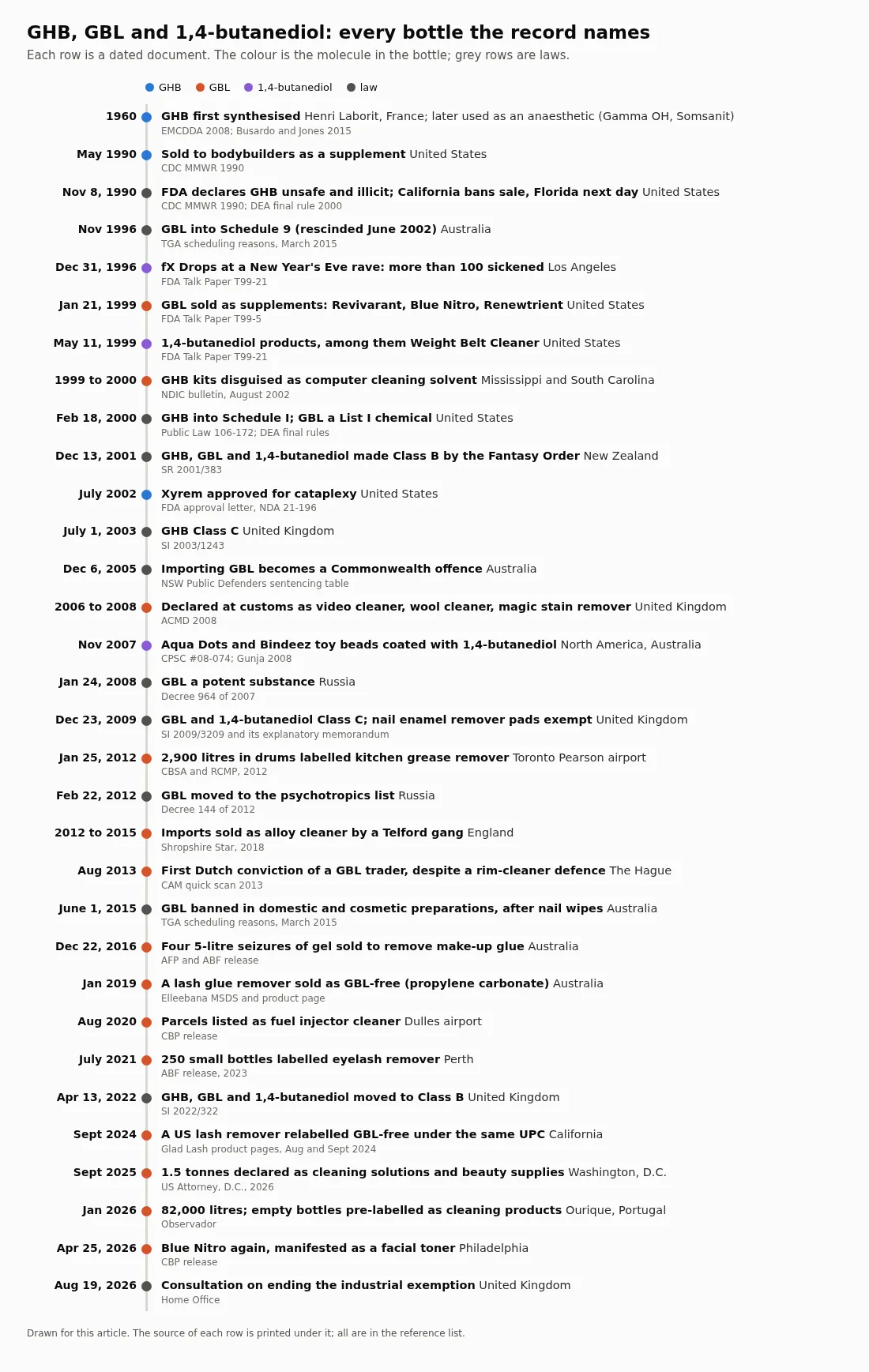
Figure 3. Every bottle the record names, drawn for this article from the documents it cites. Each row names its source; the colour is the molecule in the bottle, and grey rows are laws. [12]
What the bottle said
A solvent can be sold as a solvent, which is the whole difficulty. A 2015 review noted that “Both GBL and BD have cosmetic and industrial applications and are therefore not easy to classify as controlled substances”.[4] What follows sorts the labels into two kinds: those a seizure, a court, a regulator or a retail label documents, and those that only forum posters or a defendant claim.
The documented labels
The first were the supplements above, and then cleaning products. The Justice Department's intelligence centre recorded that between 1999 and 2000 “two brothers operating from Mississippi and South Carolina marketed GHB kits on the Internet disguised as computer cleaning solvents”.[28] One industrial-solvent bottle it quoted carried the warning “Accidental ingestion of product will produce GHB in your body.”[28] The DEA's chemical profiles say “GBL is typically marketed for sale as a cleaning solvent or polish.”[29] and, of 1,4-butanediol, “It is typically diverted by being sold as a cleaner or paint stripper.”[30] The World Health Organization's 2014 review found European suppliers “marketing GBL as a cleaning solvent, multi-purpose remover or chrome polish and as a wheel cleaner”.[31] It counted them too: “A total of 15 chemical suppliers that sell 99.9 % pure GBL were identified located in the UK, Germany, the Netherlands and Poland”.[31]
Wheel cleaner is the label that lasted. The UK's drug advisers wrote in 2020 that GBL “is difficult to identify as its status as a wheel cleaning product means that those in possession of GBL are less likely to come to the attention of the police”.[32] A Dutch government monitor wrote in 2013 that “GBL is in Nederland erg gemakkelijk verkrijgbaar via internetsites waarop de stof wordt aangeboden als schoonmaakmiddel, velgenreiniger, graffitiverwijderaar, etc.”, that is, sold online as a cleaner, a rim cleaner and a graffiti remover.[33] The same report recorded the first conviction: “In augustus 2013 heeft de rechtbank Den Haag voor het eerst een GBL handelaar veroordeeld.”[33] The court in The Hague convicted him “ondanks het verweer dat het ging om verkoop als schoonmaakmiddel van o.a. autovelgen”, despite the defence that he sold it to clean car wheels.[33] It also records one accidental poisoning: “In één geval was sprake van accidentele inname van GBL in een velgenreiniger die in een frisdrankfles was overgegoten.” Someone drank rim cleaner that had been decanted into a soft-drink bottle.[33]
English courts heard the same label. A Reading wholesaler was jailed for twelve years in 2010 for a liquid that, the Yorkshire Post reported, “The clear liquid is used to clean alloy wheels and remove graffiti”.[34] In 2018 a Telford gang was sentenced at Shrewsbury Crown Court for imports between 2012 and 2015 sold as alloy cleaner or rust remover, “which was the cover used by Pegg and Hull-Merrick”, who were “purporting to be in business as Ultra Cleaners or Nails R Us”.[35] Nails R Us was a trading name, not a label on a bottle. In 2024 a London man who imported more than 500 litres “stated that he imported the drugs as part of a legitimate cleaning company”, a defence that failed.[36] In 2019 the Dutch prosecution service described another seller as “een bedrijf, op papier een schoonmaakbedrijf, dat vooral handelde in de grondstof GBL”: on paper a cleaning company, in practice a GBL trader.[37]
Customs declarations add the rest. The UK's advisers wrote in 2008 that “The chemicals are declared as various substances including video cleaner, wool cleaner, and magic stain remover.”[38] In January 2012 Canadian officers at Toronto Pearson found 2,900 litres “each containing a 25 litre plastic drum labeled as kitchen grease remover”.[39] New Zealand's government said of a 2011 seizure that “The package contents were declared as a cleaning chemical”.[40] In 2018 Australian police found 2,000 litres “which was hidden inside car wash shampoo containers”.[41] In 2020 US customs at Dulles found that “three other parcels were listed as containing fuel injector cleaner”.[42] In 2021 Australian police found GBL in bottles labelled as “cleaning supplies”, “skincare products” and “fishing gear”.[43] In 2022 an ACT court sentenced a woman who had paid “to pay a UK-based dark web seller for the drug, which was posted as” a “phone cleanser”.[44] In January 2026 Portuguese police seized 82,000 litres at Ourique, with “centenas de frascos vazios preparados e etiquetados”, hundreds of empty bottles already labelled, “para rotular os frascos como sendo produtos de limpeza”, as cleaning products.[45]
Two older ones stand apart. New Zealand police reported in 2004 a shipment that “was brought into New Zealand disguised as wine from Europe”.[46] And in 2000 the California Attorney General described 1,100 gallons “falsely labeled as a dietary supplement”, the 1999 label surviving the 2000 law.[47] It is still alive. In April 2026 US customs in Philadelphia seized two parcels that “arrived from Barcelona, Spain manifested as” “skincare essential oils and resino”, one of them labelled “Tonico Facial Calmiante”, a soothing face toner.[48] The agency's headline called the contents Blue Nitro, the name of one of the GBL supplements the FDA recalled in 1999.[48][19]
Eyelash glue remover
The strongest documented label of the last decade is cosmetic. On December 22, 2016, the Australian Federal Police and Border Force warned of GBL “which has been found concealed within commercial beauty products imported from China”.[49] The release said: “In the last month alone four seizures, each containing five litres of the drug was found in containers purporting to be gel used to remove make-up glue.”[49] The risk, it said, “is particularly high in products used for the removal of imitation eye lashes”.[49] In July 2021 Border Force officers in Perth found that a consignment held 250 small bottles “labelled as” “eyelash remover”, a case that reached a charge in 2023 “after allegedly organising the importation of 3.4 kg of GBL in July 2021”.[50]
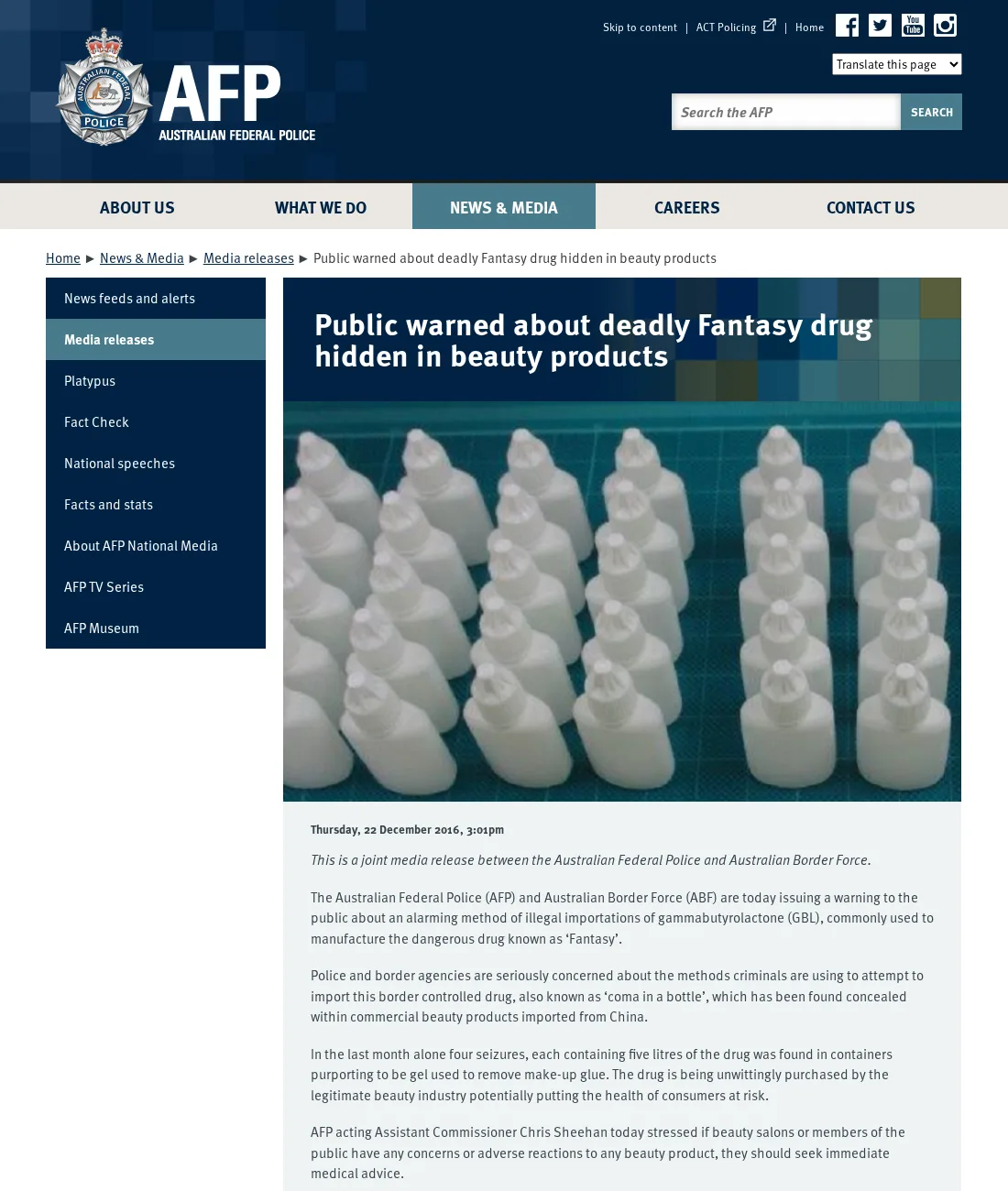
Figure 4. The joint release of the Australian Federal Police and the Australian Border Force, December 22, 2016. The bottles were sold as a gel to remove make-up glue, and the release says the beauty industry was buying them unwittingly. [49]
These were not disguises in the usual sense. GBL is what many lash removers are made of. A Californian lash supplier's safety data sheet, archived in 2017, lists for its gel glue remover “component gamma butyrolactone dimethylketone ethyl alcohol” at “materials by weight approximate 80” per cent for the first.[51] Mass-market removers sold in US stores in 2025 and 2026 list “ingredients butyrolactone hydroxypropylcellulose glycerin”, with GBL first.[52][53] We are not naming these products as places to buy anything. They are cited for one fact: in the United States in 2026 the solvent is still on the label of an ordinary beauty product.
Australia's lash trade reacted the day of the police warning. An Australian lash school and wholesaler posted, on December 22, 2016, a notice that gel adhesive removers containing gamma butyrolactone were banned in Australia, and told its readers: “if you currently have gel adhesive removers from any supplier you should immediately cease” using them.[54] It claimed that “every gel based adhesive remover generally contains gamma butyrolactone although it is often listed by another name”, which is the author's claim and not a survey.[54]
The replacement came about two years later. A safety data sheet for one Australian brand of remover, “this revision issued january 7th 2019”, lists as its solvent “cas number propylene carbonate 108 32 7”.[55] Its product page in March 2019 sold it as a “gbl free gel based adhesive remover that effectively removes eyelash and eyebrow extensions without harmful gamma butyrolactone”.[56] By December 2020 another Australian seller advertised a cream remover that “does not contain harmful gamma butyrolactone made in south korea”.[57] In the United States the same switch can be dated to a month. The Californian supplier's gel remover was listed in August 2024 with “ingredients gamma butyrolactone dimethylketone ethyl alcohol cellulose” under “upc 689211320369”.[58] By September 8, 2024 the same product was renamed GBL-free, with “ingredients propylene glycol poly ethylene glycol glycerine 1 3 butanediol”.[59] That last solvent, 1,3-butanediol, is a different molecule from 1,4-butanediol, and nothing in this record makes it a GHB precursor.
What the Australian ban was about
It is often said, including in lash marketing, that Australia banned GBL because of lash removers. The record says otherwise. Australia first put GBL in Schedule 9 in 1996 and took it out again: “In November 1996, the NDPSC decided to include gamma-butyrolactone in Schedule 9. This decision was rescinded in June 2002.”[60] Importing it became a Commonwealth offence on December 6, 2005, when the relevant sentencing table records the provision “Commenced 6.12.2005”.[61] The cosmetic ban came in 2015, and its trigger was nail care. The scheduling delegates wrote that the regulator had “received a number of inquiries regarding the importation of acetone free nail wipes which contain gamma-butyrolactone”.[60] They concluded that GBL “is also metabolised to GHB in vivo and therefore has no place in domestic or cosmetic products”, and set GBL “in non-polymerised form in preparations for domestic and cosmetic use Implementation date: 1 June 2015”.[60] The 2022 Poisons Standard still carries that entry: “GAMMA-BUTYROLACTONE excluding its derivatives, in non-polymerised form in preparations for domestic and cosmetic use”.[62] 1,4-butanediol became a border-controlled drug in 2024; the explanatory statement says the regulation “lists 1,4-butanediol (1,4-BD) as a border controlled drug with commercial and marketable quantities”.[63]
So the Australian cosmetic ban was in force eighteen months before the police found lash gel in the mail. The lash school's notice dates itself to the police release, not to a new law.[54][49]
New Zealand and Russia restricted GBL too, earlier and for reasons that had nothing to do with lashes. New Zealand's Fantasy Order of December 2001 covered “all substances from which GHB can be derived”, and its note says “The effect of this is to classify fantasy a Class B controlled drug”; the order records the “Date of notification in Gazette: 13 December 2001”.[64] Russia listed GBL as a potent substance from January 2008 and moved it to the list of psychotropic substances by a decree of February 22, 2012.[65][66] We found no official text in any of the three countries that mentions lash-glue removers. The owner's account is half right: all three restricted GBL, but none of them because of lash glue.
Nail polish remover, and nail glue
Nail products are where the record is most often stretched. Nail polish remover is a real GBL product. Two Danish men lost consciousness in 1992, in a case report titled “Unconsciousness after ingestion of nail varnish” remover.[67] French doctors reported in 1997 “2 cases of gamma butyrolactone poisoning with a nail polish remover labelled” as acetone-free.[68] In 2005 a British report described a child: “A 15-month-old presented with coma and cardiorespiratory collapse after sucking on Boots Conditioning Nail Polish Remover Pads”, whose features matched “poisoning due to gamma butyrolactone, the principal component of this nail polish remover”.[69] The UK's 2020 advisers' report records adult use of the same pads: “Another example of mucosal administration is absorption of GBL contained in nail polish remover pads when held against the gum.”[32] When the UK controlled GBL in 2009, its memorandum described GBL as “a vital ingredient in nail enamel remover pads, wipes and sponges”, and that use is exempt.[25] The Australian ban, above, began with nail wipes.[60]
What no document shows is nail polish remover used as a cover label on a bottle of GBL sold for drinking. The WHO lists nail polish removers among products containing the solvent, which is a statement about a real product: “It is a common solvent found in paint strippers, nail polish removers, stain removers and circuit board cleaners.”[31] The remover pad and the disguised bottle are different things, and we found only the first.
Nail glue remover is not documented at all. We found no safety data sheet, label, poisoning report, regulator text or seizure that names GBL in a remover for nail glue or false nails. The National Capital Poison Center says that “nail glue remover is usually an oil that has low toxicity”.[70] The closest lead is a 1996 case of a toddler in a coma after exposure to GBL sold as “a solvent used to remove methacrylate glues”, with a warning that “The use of butyrolactone is likely to increase, paralleling the popularity of acrylate adhesives”.[71] The abstract does not say what kind of glue the product was for, and the full text is paywalled.
The toy beads belong here as the opposite case: an industrial chemical in a children's product, with no intent to deceive anyone. In November 2007 the US Consumer Product Safety Commission recalled “About 4.2 million” Aqua Dots kits, a bead toy whose coating “contains a chemical that can turn toxic when many are ingested”.[72] “Children who swallow the beads can become comatose, develop respiratory depression, or have seizures.”[72] The commission's release does not name the chemical. Australian toxicologists did: “Samples from toy beads ingested by both children contained 1,4-butanediol, which is metabolised to GHB in humans.”[73] Reports said the beads “contained 1,4-butanediol (1,4-BD), a precursor to gamma-hydroxybutyrate (GHB), rather than the intended, but more expensive 1,5-pentanediol (1,5-PD).”[74] A US lab found “Aqua Dots beads contained a surprisingly high amount (nearly 14%) of extractable 1,4-BD.”[74]
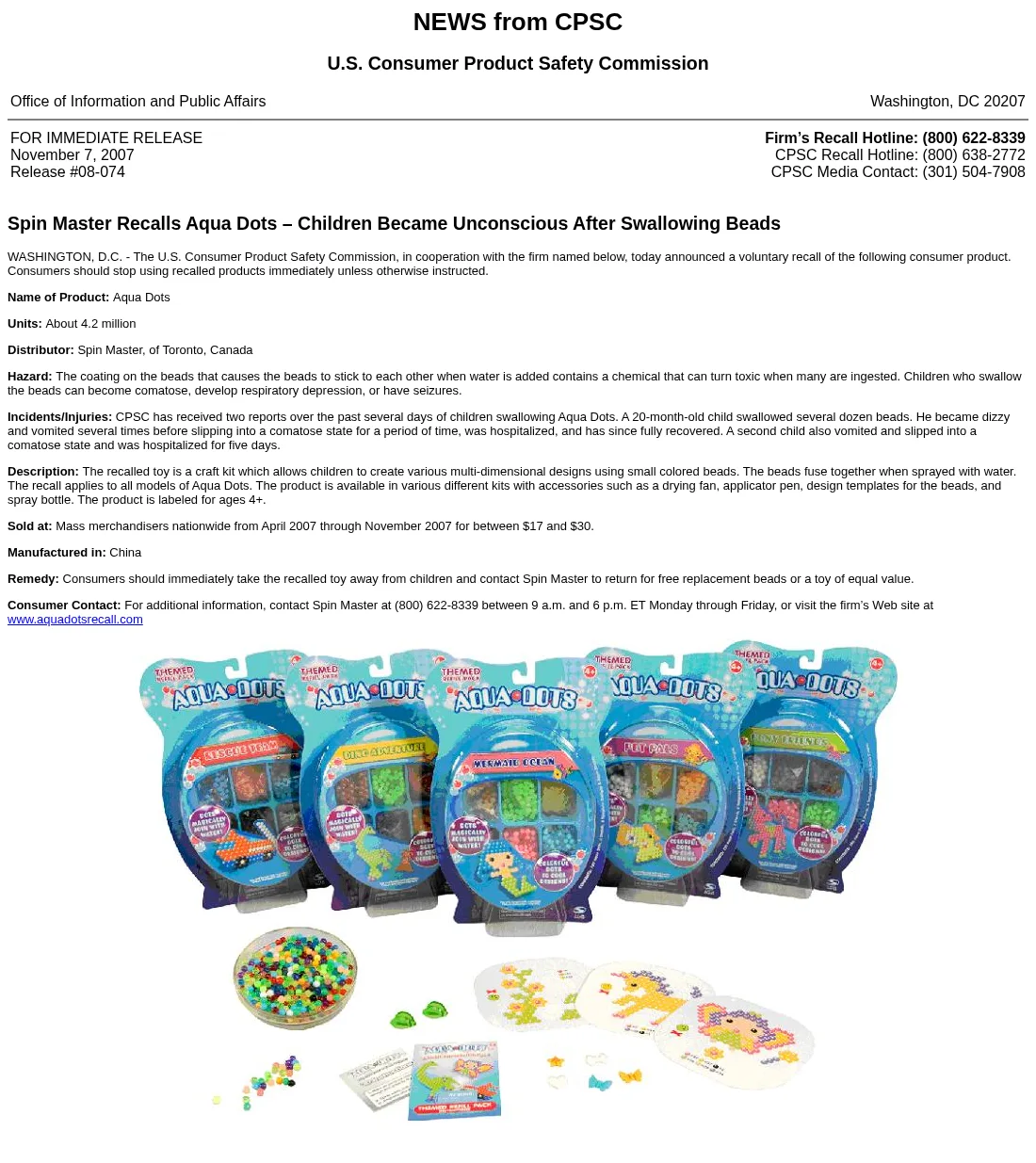
Figure 5. The US recall of November 7, 2007. The coating that made the beads stick together when wet turned toxic when many were swallowed; the release does not name the chemical, which was 1,4-butanediol. [72]
Descriptions without a seizure
Some labels appear only as descriptions. The European monitoring centre explained one street name as “a reference to the use of GBL as a solvent found in industrial cleaners and superglue removers”.[17] Graffiti remover appears in the Dutch report and the Reading case above.[33][34] A 2014 Liverpool story called GBL “legal for use in industry as a paint stripper, rust remover or alloy cleaner”.[75] None of these appears on a seized bottle in any document we found.
What the forums say
Reddit's drug forums are a record of what buyers believed, not of what the bottles said. Each claim below is a single anonymous post. In 2012 a poster in r/Drugs wrote that “GHB is easily synthesized from GBL, which is apparently sold in Canada as a chrome alloy wheel cleaner”.[76] A reply put it more bluntly: the wheel cleaner “is more of a cover, like plant food as far as I know”.[77] In 2017: “I see it being sold as a car rim cleaner on countless sites”.[78] In 2018 a poster “Spied a bottle of super glue remover from sometime in the 80s - the label says its butyrolactone”, which is the only first-hand superglue remover we found and is a claim about a photograph we have not seen.[79]
The gel arrives in July 2019, with a poster asking about a multi-purpose gel remover said to be 99% GBL and guessing at its purpose: “I suppose this is a new formula invented so it can be sold to consumers in all EU”.[80] By 2024 the lash product is the one buyers name. A German poster wrote “So i bought this Eye Lash Remover beacuse i found no other way to get GBL in Germany”.[81] Another asked the same year: “Have most eye lash removers had gbl taken out now days”.[82] In October 2025 a poster wrote “I recently purchased a GBL-based eyelash extension gel remover product” and sent a sample to a drug-checking lab, reporting “GBL 28.3%, GHB 58.5%, and 1,4-BD (minor)”.[83] If that is right, the bottle held more GHB than GBL. We have not seen the lab sheet, which was posted as an image. In July 2026, a different cover: “I got some graffiti cleaner with 60% gbl and 40% acetone”.[84]
The order in the threads matches the order in the seizures: wheel cleaner from 2012, a gel remover from 2019, the lash remover dominant from about 2023, and wheel and graffiti cleaner still mentioned in 2026.
How fast it leaves
GHB is short-lived. A 2015 review found that “most published studies verify that the terminal plasma elimination half-life for GHB in humans ranges from 30-50 min”.[4] In eight healthy volunteers in Switzerland, “The terminal plasma elimination half-life was 30.4 +/- 2.45 min”.[85] After 1,4-butanediol, the GHB it produced had about the same half-life: “GHB T(1/2) averaged 32.3+/-6.6 min”.[11] A 2012 review: “GHB is metabolized primarily in the liver and is eliminated rapidly with a reported 20-60 minute half-life. The majority of a dose is eliminated completely within 4-8 hours”.[10]
Very little leaves unchanged. In the Swiss study “Only 1.2 +/- 0.2% of the dose was excreted, resulting in a detection window of 720 min”, and the authors' advice to investigators was that “GHB is extensively metabolized and rapidly eliminated in urine and oral fluid. Consequently, samples should be collected as soon as possible after ingestion”.[85] The 2015 review gives the working window: “With an analytical detection limit of 1 mg/L, the detection window of GHB in serum was 4-5 h compared with 8-10 h for the analysis of urine”.[4] A German review in 2009 gave up to 8 hours in blood and 12 in urine.[86]
Hair is the exception. A French team showed in 2003 that “a single exposure to GHB in a case of sexual assault can be documented by hair analysis when collected about one month after the crime”.[87]
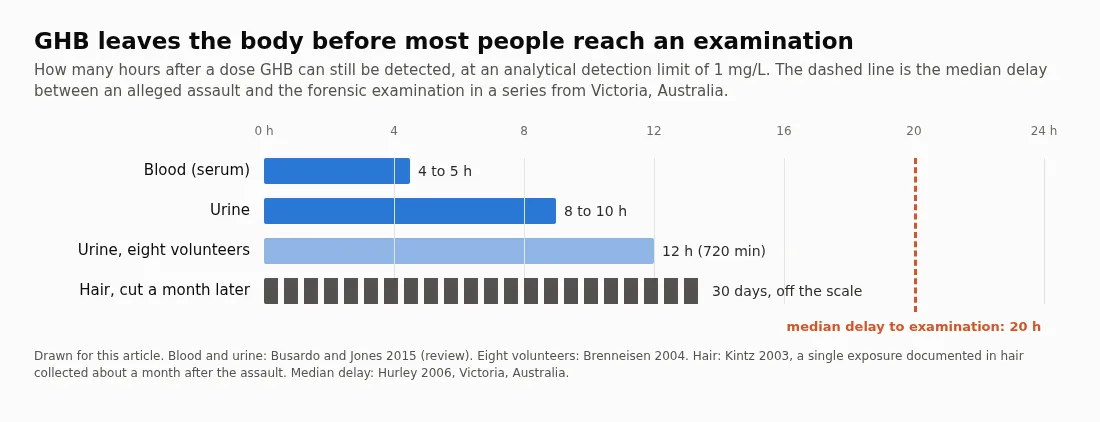
Figure 6. How long GHB can be found, against how long people take to reach an examination, drawn for this article. Blood and urine from a 2015 review, the volunteers from Brenneisen 2004, hair from Kintz 2003, and the 20-hour median delay from a Victorian series (Hurley 2006). [4]
What the body already holds
A test for GHB has to tell a dose from the body's own. That is harder than it sounds, because the body's own level varies. In 207 urine samples from people who had taken no GHB, “GHB concentrations ranged from 0.00 to 2.70 microg/mL in all specimens, with a median concentration of 0.24 microg/mL”.[88] A British toxicologist proposed in 2003 “the proposed urinary and plasma interpretative cut-offs of 10 and 4mg/l, respectively, where below this it is not possible to determine whether any GHB detected is endogenous or exogenous”.[89] The 2015 review: “The general consensus is that a practical and robust urinary cut-off concentration for GHB is 5-10 mg/L for clinical and forensic purposes when samples are from living individuals”.[4]
Samples also make GHB after they are taken. A Danish study in 2024 opened with the problem: “Two challenges in detecting γ-hydroxybutyric acid (GHB) intake are its endogenous presence and in vitro production after sampling”.[90] It measured it: “The average GHB concentration increased by 1.2 µg/mL in fluoride/citrate- preserved blood after 28 days of storage at 4°C”.[90]
After death the numbers rise further. In 40 people who died of other causes, “Mean concentrations of GHB determined in postmortem blood were found to be 12.3 mg/L (range = 2-29 mg/L, n = 38)”.[91] In 71 heart-blood samples from French autopsies, GHB was positive in all of them “with concentrations in the range 0.4-409 mg/l, with a major distribution in the range 10-40 mg/l”, and the authors warned that “a positive (>50 mg/l) postmortem blood GHB concentration cannot support alone drug exposure”.[92] A Japanese study found that “A large portion of endogenous GHB detected in blood of corpses may be produced during the interval between death and autopsy, rather than during storage of blood”.[93] The working cut-offs for a death investigation are, in the 2015 review, “30 mg/L for femoral blood and 50 mg/L for heart blood”.[4] This is why a GHB finding at autopsy, without a history or a second specimen, can mean less than it looks.
How it kills
The molecule the body makes in micrograms can stop breathing in grams. The 2015 review says “The dose-effect curve for GHB is rather steep, which means that small increases in dose cause disproportionate increases in behavioral effects and toxicity.”[4] It gives the margin as a ratio: “Mortality rates after abuse of GHB are high, because there is only a narrow safety margin between a recreational dose and a fatal dose, which is only 5:1 to 8:1”.[4] And there is no reversal agent: “Effective antidotes to reverse the sedative and intoxicating effects of GHB do not exist.”[4] We print no dose figures in this article.
Alcohol makes it worse. In sixteen volunteers given both, “Oxygen saturation was decreased by GHB and ethanol individually, and maximally decreased by the drugs combined”, “but only minimal pharmacokinetic interactions were observed”: the drinks did not raise the GHB level, they added to its effect.[94] In 609 European emergency patients, “Co-ingestion of ethanol increases the adverse effects of patients intoxicated by GHB/GBL, leading to greater depression of consciousness, need for treatment, admission to the ICU and longer hospital stay.”[95] The prescription label for the medicine says it flatly: “Xyrem is contraindicated in combination with alcohol and sedative hypnotics.”[96]
Where the literature disagrees
The owner's brief for this article said GHB has low lethality on its own. The emergency-room studies support him. The death studies do not. Both are true of their own populations, and the difference is the point.
The emergency-room side: in 505 consecutive patients in Barcelona, “Treatment was required in 26% of cases and an antidote was administered in 35 cases with no response. There were no deaths.”[97] An Australian review of 30 months of cases found “There were no serious adverse outcomes or fatalities.”[98] A 1998 San Francisco series: “Patients typically regain consciousness spontaneously within 5 hours of the ingestion.”[99] At Dutch raves over nine years, “22 604 First Aid Attendees visited the First Aid Stations, of which 771 reported GHB-related health problems”, and “In total, 43 (5.6%) First Aid Attendees needed hospital care.”[100]
The death side: a 2011 US series of 226 deaths found that “Of 226 deaths included, 213 had cardiorespiratory arrest and 13 had fatal accidents. Seventy-eight deaths (35%) had no cointoxicants.”[101] Its authors concluded that GHB “is lethal even without cointoxicants, directly and through fatal accidents”.[101] In the UK, “From 1995 to September 2013, 159 GHB/GBL-associated fatalities were reported.”, and “GHB/GBL alone was implicated in 37%; alcohol 14%; other drugs 28%; other drugs and alcohol 15%.”[102] In Australia and New Zealand in 2004, “Ten confirmed GHB-associated deaths were identified, with eight considered to be directly attributable to GHB. Only two of these eight cases were positive for ethanol toxicology.”[103]
The 2011 series explains the gap itself. “Cardiorespiratory arrest occurred prehospital in 100% of 184 cases with available history”.[101] Of these, “acute GHB ingestion was known in 51, including 40 left to” sleep it off.[101] The people in the emergency-room series reached a hospital. The people in the death series mostly did not, and many were put to bed by friends who knew what they had taken.
A Swedish series of 23 deaths adds a third view. “Two patients (9%) were only intoxicated with GHB.”[104] Its authors rejected the easy explanation: “Combining GHB with ethanol does not explain the many deaths in our region, nor do extremely high plasma concentrations of GHB.”[104] They named another: “The intake of opioids increases the toxicity of GHB.”[104] An Australian study published in 2025 found the picture changing: “GHB-related death rates increased from 2016, accompanied by changes in case characteristics.”[105] “In recent years GHB use appears to have extended to a population more likely to have substance use problems and use other respiratory depressants.”[105]
So: in a hospital, with an airway managed, GHB alone rarely kills. Alone, asleep, unattended, it kills often enough that a third of one large death series had nothing else on board.
Withdrawal
Heavy daily use produces a withdrawal that can itself be fatal. A 2001 series of eight patients found that “severe GHB dependence followed frequent ingestion every 1 to 3 hours around-the-clock”.[106] “The onset of withdrawal symptoms in these patients was rapid (1 to 6 hours after the last dose) and symptoms were prolonged (5 to 15 days).”[106] “One death occurred on hospital day 13 as withdrawal symptoms were resolving.”[106] A 2004 review found that “A rapidly deteriorating course into delirium (53% of cases) was typical for heavily dependent users.”[107] It concluded that “GHB withdrawal is potentially life threatening and requires vigorous clinical management, preferably as an inpatient for severe cases.”[107] A 2008 review of the published cases: “Seizures and rhabdomyolysis each occurred in 7% of cases, but only 1 death occurred.”[108] The prescription label records the same pattern for the medicine: “Cases of severe dependence and craving for GHB have been reported when the drug is taken around the clock.”[96]
Treatment works, and relapse is common. In 229 Dutch patients tapered off with prescribed GHB, “Successful detoxification was achieved in 85% of cases. Detoxification was carried out in 12.5days in most patients.”[109] But “Most patients (69%) relapsed within three months after detoxification.”[109]
The date rape drug
The phrase made GHB famous before most people had heard its name. Congress heard in March 1999 that “GHB is known to be responsible for as many as 19 deaths and innumerable rapes throughout this country.”[110] The DEA's witness was more careful: “In regard to sexual assault cases, DEA is aware of at least 13 sexual assault cases involving 22 victims under the influence of GHB.”[110]
What the samples contained
The first large study of samples came out the same year. Over 26 months to 1999, ElSohly and Salamone tested urine from alleged drug-facilitated sexual assaults: “Over a 26-month period, 1179 samples were collected and analyzed from 49 states, Puerto Rico, and the District of Columbia.”[111] The result: “451 were positive for ethanol, 218 for cannabinoids, 97 for benzoylecgonine, 97 for benzodiazepines, 51 for amphetamines, 48 for GHB”.[111] Alcohol was almost ten times as common as GHB.
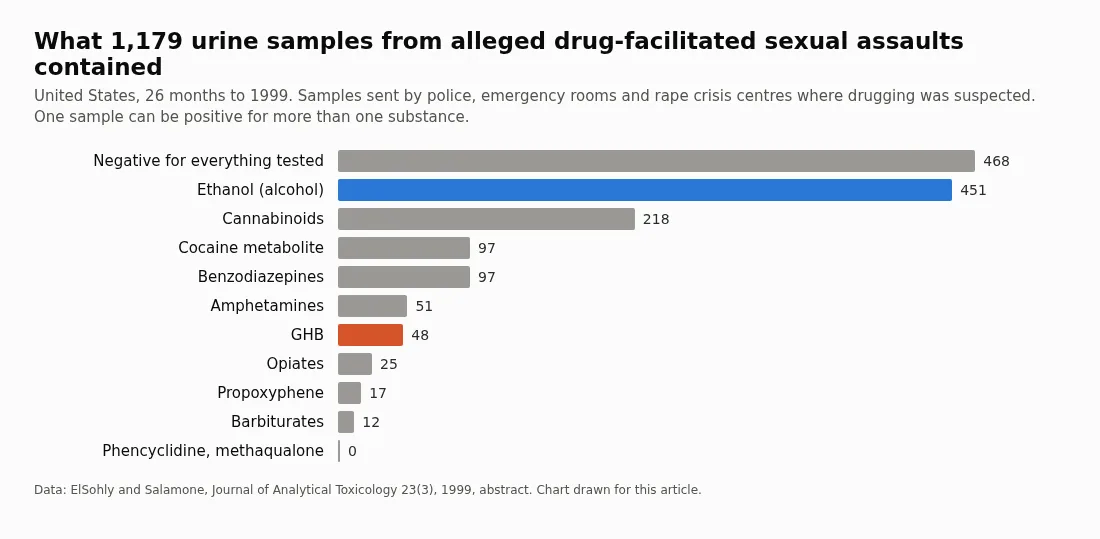
Figure 7. The 1,179 samples ElSohly and Salamone tested in the United States over 26 months to 1999, drawn for this article from their abstract. Alcohol was found nine times as often as GHB. [111]
Every later study found the same order. A British study of 1,014 cases found “Alcohol (either alone or with an illicit and/or medicinal drug) was detected in 470 of all cases (46%).”[112] In Ontario, of the cases with a positive drug finding, the drugs “included cannabinoids (40.2%), cocaine (32.2%), amphetamines (13.8%), MDMA (9.2%), ketamine (2.3%), and GHB (1.1%)”.[113] A 2010 systematic review: “GHB was detected in 0.2-4.4% of reported sexual assaults.”[114] Its authors wrote: “Our results do not support the widespread labelling of GHB as a date rape drug as the prevalence of GHB is much lower than of other substances used in sexual assaults.”[114] In France over 19 years, “Gamma-hydroxybutyric acid (GHB) was found in 4 % cases. In CV cases, alcohol (90 %) and cannabis (32 %) intake were mainly involved.”[115] A 2017 global review: “Nonetheless, alcohol is the most commonly detected substance and co-occurrence with other drugs is common. Aside from alcohol there was no other specific drug category associated with DFSA.”[116] An earlier British study had said it in 2001: the data “does not support the contention that any single drug, apart from alcohol, can be particularly identified as a ‘date rape’ drug.”[117]
Studies of suspected spiking found it rarer still. In Perth in 2009, among 101 emergency patients who believed their drinks had been spiked, “We did not identify a single case where a sedative drug was likely to have been illegally placed in a drink in a pub or nightclub.”[118] The Australian Institute of Criminology's 2004 national study: “Despite considerable media and public perceptions concerning the prevalence of drugs such as flunitrazepam, GHB and ketamine being used in drink spiking, the forensic evidence to date does not support these claims.”[119] The 2017 review's conclusion was that “alcohol intoxication combined with voluntary drug consumption presents the greatest risk factor for DFSA, despite populist perceptions that covert drink-spiking is a common occurrence.”[116]
Why the samples undercount it
Those numbers are a floor. The section above on elimination is the reason. A study from Victoria, Australia, found that “The median delay from alleged incident to time of examination was 20 h.”[120] With a urine window of eight to ten hours, a median case arrives after the evidence has gone.[4] The 2015 review: “If more than 10-12 hours have elapsed after the alleged attack there is little hope of detecting and measurable amounts of GHB”.[4] The German review wrote that GHB “is only rarely detected with sufficient medicolegal certainty. This may be due to its rapid elimination (it is detectable in blood for up to 8 hours, in urine for up to 12 hours) as well as its physiological occurrence in the body.”[86] A Danish trial in 2025 concluded that “due to its rapid elimination and the challenge of distinguishing exogenous from endogenous levels, GHB is likely to be significantly underestimated in DFSA cases”.[121] Reporting is low too: the Australian Institute of Criminology estimated that “less than 15 per cent of suspected drink spiking sexual assaults are reported to police”.[119]
The undercount and the low count are both real. The samples say alcohol is the most common substance by far, and no amount of missed GHB changes that order. They also cannot say how often GHB is used, because the drug is gone before most samples are taken. The French hair test exists because of that problem. A 2004 paper on it says: “Hair was suggested as a valuable specimen in situations where, as a result of a delay in reporting the crime, natural processes have eliminated the drug from typical biologic specimens”.[122]
It happens
Rare is not never, and the cases that did happen changed the law twice. The American law of 2000 is named for two teenagers, one of them Samantha Reid of Michigan. Of the two girls given GHB in that case, “the other slipped into a coma but eventually recovered”, and “Defendants Brayman, Holtschlag, and Cole were convicted of involuntary manslaughter and two counts” more.[123] Our ban playbook article covers that case and the law it produced.
In Britain two cases in five years led to the 2022 reclassification. In November 2016 a London court sentenced Stephen Port: “Stephen Port falls to be sentenced following his conviction for four separate offences of murder.”[124] The judge said: “His drug of choice was GHB or the closely related GBL, about which the evidence was given by a distinguished forensic toxicologist.”[124] The sentencing also covered “the facts of the other serious sexual assaults committed upon seven other victims”.[124] The coroner's report after the 2021 inquests: “All four young men were drugged with gamma-hydroxybutyrate (GHB) and murdered by a man called” Stephen Port.[125] “At the inquests, the jury determined that each of the four deceased had been unlawfully killed”.[125]
In January 2020 the Crown Prosecution Service announced that “Reynhard Sinaga, 36, has now been found guilty of 159 offences across four separate trials, including 136 unprotected anal rapes he filmed on two mobile phones.”[126] It said that he lured men to his flat, where “Sinaga spiked defenceless victims with sedatives, probably a GHB-laced shot, to render them unconscious”.[126] The word probably is the prosecution's. No drug was identified in a victim, which is what the elimination figures above would predict for men who woke up hours later and, in most cases, did not know what had happened.
In March 2021 the Home Office announced, under the headline that it was tightening restrictions on GHB following horrific crimes, that “GHB and related substances will be moved from Class C to Class B, meaning they will be harder to access and result in tougher penalties for possession.”[127] The order took effect on April 13, 2022.[26] Its effect on the trade, in the government's own 2026 consultation, is that the industrial exemption still lets GBL be sold as an industrial product, and “The recommendation was intended to tackle the sale of these drugs as purported industrial products”.[27]
Still open
- The 1996 glue remover. Higgins and Borron's full text should say what kind of methacrylate glue the product was sold to remove. If it is nail glue, that is the first document for the nail glue label.
- The lash gel lab result. The 2025 report of a remover holding more GHB than GBL rests on an image we have not read.
- New Zealand's commencement date. The Fantasy Order was gazetted in December 2001 and passed by Parliament in April 2002; the date it came into force is not in any document we read.
- Russia's 2012 in-force date. The decree is dated February 22, 2012; its commencement is unverified.
- US retail. Mass-market lash removers in the United States still list GBL in 2026. Whether any US regulator has looked at that, as Australia did in 2015, we did not find.
Changes
- 2026-10-17. Published.
References
- Comments by u/saintpetejackboy in a thread about leaked poppers, r/Drugs — Reddit, 2026-07-09, read through the Arctic Shift archive — anecdotal report, not evidence
- NTP summary report on the metabolism, disposition, and toxicity of 1,4-butanediol (CAS No. 110-63-4) — Irwin, National Toxicology Program Toxicity Report Series, 1996, via PubMed
- The gamma-hydroxybutyrate signalling system in brain: organization and functional implications — Maitre, Progress in Neurobiology 51:337, 1997, via PubMed
- GHB pharmacology and toxicology: acute intoxication, concentrations in blood and urine in forensic cases and treatment of the withdrawal syndrome — Busardò and Jones, Current Neuropharmacology 13:47, 2015, via PubMed Central
- Epidemiologic Notes and Reports: Multistate Outbreak of Poisonings Associated with Illicit Use of Gamma Hydroxy Butyrate — CDC, Morbidity and Mortality Weekly Report, 1990-11-30 (archived)
- The presence of gamma-hydroxybutyric acid (GHB) and gamma-butyrolactone (GBL) in alcoholic and non-alcoholic beverages — Elliott and Burgess, Forensic Science International 151:289, 2005, via PubMed
- Metabolic engineering of Escherichia coli for direct production of 1,4-butanediol — Yim and others, Nature Chemical Biology 7:445, 2011, via PubMed
- Development of a commercial scale process for production of 1,4-butanediol from sugar — Burgard and others, Current Opinion in Biotechnology 42:118, 2016, via PubMed
- Adverse Events Associated with Ingestion of Gamma-Butyrolactone: Minnesota, New Mexico, and Texas, 1998-1999 — CDC, Morbidity and Mortality Weekly Report, February 1999 (archived)
- The clinical toxicology of γ-hydroxybutyrate, γ-butyrolactone and 1,4-butanediol — Schep and others, Clinical Toxicology 50:458, 2012, via PubMed
- Clinical pharmacology of 1,4-butanediol and gamma-hydroxybutyrate after oral 1,4-butanediol administration to healthy volunteers — Thai and others, Clinical Pharmacology and Therapeutics 81:178, 2007, via PubMed
- Public Law 106-172, Hillory J. Farias and Samantha Reid Date-Rape Drug Prohibition Act of 2000 — US Congress, 2000-02-18
- Adverse events, including death, associated with the use of 1,4-butanediol — Zvosec and others, New England Journal of Medicine 344:87, 2001, via PubMed
- ToxFAQs for Acetone — Agency for Toxic Substances and Disease Registry, CDC (archived)
- Public Health Statement for Formaldehyde — Agency for Toxic Substances and Disease Registry, CDC (archived)
- Endogenous ethanol ‘auto-brewery syndrome’ as a drunk-driving defence challenge — Logan and Jones, Medicine, Science and the Law 40:206, 2000, via PubMed
- GHB and its precursor GBL: an emerging trend case study — European Monitoring Centre for Drugs and Drug Addiction, thematic paper, March 2008 (archived)
- Schedules of Controlled Substances: Addition of Gamma-Hydroxybutyric Acid to Schedule I (final rule, 65 FR 13235) — Drug Enforcement Administration, Federal Register, 2000-03-13
- FDA Warns About Products Containing Gamma Butyrolactone or GBL and Asks Companies to Issue a Recall (Talk Paper T99-5) — US Food and Drug Administration, 1999-01-21 (archived)
- FDA Warns About GBL-Related Products (Talk Paper T99-21) — US Food and Drug Administration, 1999-05-11 (archived)
- Placement of Gamma-Butyrolactone in List I of the Controlled Substances Act (final rule, 65 FR 21645) — Drug Enforcement Administration, Federal Register, 2000-04-24
- Approval letter, NDA 21-196, Xyrem (sodium oxybate) oral solution — US Food and Drug Administration, July 2002 (archived)
- The Misuse of Drugs Act 1971 (Modification) Order 2003 (SI 2003/1243) — legislation.gov.uk
- The Misuse of Drugs Act 1971 (Amendment) Order 2009 (SI 2009/3209) — legislation.gov.uk
- Explanatory Memorandum to the Misuse of Drugs Act 1971 (Amendment) Order 2009 — Home Office, via legislation.gov.uk
- The Misuse of Drugs Act 1971 (Amendment) Order 2022 (SI 2022/322) — legislation.gov.uk
- Control of gamma-butyrolactone and 1,4-butanediol: consultation document — Home Office, 2026-08-19 (archived)
- Information Bulletin: GHB Analogs; GBL, BD, GHV, and GVL — National Drug Intelligence Center, US Department of Justice, August 2002 (archived)
- Gamma-Butyrolactone (drug and chemical evaluation) — DEA Diversion Control Division
- 1,4-Butanediol (drug and chemical evaluation) — DEA Diversion Control Division
- Gamma-butyrolactone (GBL) Critical Review Report, 36th ECDD, agenda item 4.3 — World Health Organization Expert Committee on Drug Dependence, 2014
- An assessment of the harms of gamma-hydroxybutyric acid (GHB), gamma-butyrolactone (GBL), and closely related compounds — Advisory Council on the Misuse of Drugs, 2020-11-20 (archived)
- CAM quick scan GBL (Coordinatiepunt Assessment en Monitoring nieuwe drugs), in Dutch — RIVM, November 2013 (archived)
- Clubber drug wholesaler gets 12 years — Yorkshire Post, 2010-12-10 (archived)
- Shropshire gang sentenced over drug chemicals — Shropshire Star, 2018 (archived)
- First of its kind case: pioneering Met investigation leads to man being sentenced to 11 years for GBL drug offences — Metropolitan Police, 2024-02-21 (archived)
- Eis celstraf en hoge boete voor verkopers grondstof GHB (in Dutch) — Openbaar Ministerie (Dutch Public Prosecution Service), 2019-03-05
- GBL & 1,4-BD: Assessment of Risk to the Individual and Communities in the UK — Advisory Council on the Misuse of Drugs, August 2008 (archived)
- RCMP and CBSA continue to combat international organized crime — Government of Canada, February 2012 (archived)
- Police, Customs seize large quantity of GBL — New Zealand Government, 2011-11-06 (archived)
- AFP nab 2000 litres of coma in a bottle — AAP, via The Leader, 2018-02-09 (archived)
- CBP intercepts transnational shipment of ecstasy, GBL — US Customs and Border Protection, 2020-08-24 (archived)
- Gold Coast man charged over liquid fantasy hidden in cleaning supplies — Australian Federal Police, 2021-02-04 (archived)
- Sentence for single mother who ordered illegal drugs on the dark web — Region Canberra (RiotACT), July 2022 (archived)
- Operação Gama apreende 82 mil litros de GBL, ou droga da violação, em Ourique (in Portuguese) — Observador, 2026-01-29 (archived)
- News release 1647 — New Zealand Police, December 2004 (archived)
- Californian’s overdose leads to arrest in Phoenix and seizure of 1,100 gallons of illegal drug — California Attorney General, 2000-03-16 (archived)
- Philadelphia CBP seizes Blue Nitro GBL destined to Everett, Massachusetts — US Customs and Border Protection, 2026 (archived)
- Public warned about deadly Fantasy drug hidden in beauty products — Australian Federal Police and Australian Border Force, 2016-12-22 (archived)
- Alleged coordinator of 2021 drug importation charged — Australian Border Force and Australian Federal Police, 2023-08-23 (archived)
- Material safety data sheet, Gel Glue Remover — Glad Lash Inc., archived 2017-03-03
- Seamless underlash remover, retail product page — Ulta Beauty, archived 2025-02-18
- Gentle lash glue all-purpose remover, retail product page — Ulta Beauty, archived 2026-10-17
- Gel adhesive removers containing gamma butyrolactone banned in Australia — Enchanted Spa (an Australian lash school and wholesaler), 2016-12-22 (archived)
- Elleebana adhesive remover, material safety data sheet — Enchanted Beauty Institute, revision of 2019-01-07 (archived)
- Elleebana lash adhesive remover, product page — Enchanted Spa, archived 2019-03-14
- Cream glue remover for eyelash extension, GBL free, product page — Lash Jungle, archived 2020-12-04
- Eyelash extension gel glue remover, product page — Glad Lash, archived 2024-08-12
- Eyelash extension GBL-free gel glue remover, product page — Glad Lash, archived 2024-09-08
- Scheduling delegates’ final decisions and reasons, March 2015 (chemicals), item 2.5: gamma-butyrolactone — Therapeutic Goods Administration, Australia (archived)
- Sentencing table: import gammabutyrolactone (GBL) — NSW Public Defenders
- Poisons Standard October 2022 (F2022L01257) — Federal Register of Legislation, Australia
- Explanatory Statement, Criminal Code Amendment (Border Controlled Drugs) Regulations, F2024L00249 — Federal Register of Legislation, Australia, 2024-02-29
- Misuse of Drugs (Changes to Schedules) Order 2001 (SR 2001/383) — New Zealand Legislation (archived)
- Postanovlenie No. 964 of 2007-12-29 (lists of potent and poisonous substances), in Russian — Rossiyskaya Gazeta, 2008-01-16
- Postanovlenie No. 144 of 2012-02-22 (amendments to the lists of narcotic and psychotropic substances), in Russian — rulaws.ru (archived)
- Unconsciousness after ingestion of nail varnish (in Danish) — Andersen and others, Ugeskrift for Laeger 154:3567, 1992, via PubMed
- Gamma butyrolactone poisoning and its similarities to gamma hydroxybutyric acid: two case reports — Rambourg-Schepens and others, Veterinary and Human Toxicology 39:234, 1997, via PubMed
- Acetone-free nail polish removers: are they safe? — Brown and others, Clinical Toxicology 43:297, 2005, via PubMed
- Nail polish and glue remover — National Capital Poison Center (poison.org)
- Coma and respiratory arrest after exposure to butyrolactone — Higgins and Borron, Journal of Emergency Medicine 14:435, 1996, via PubMed
- Spin Master Recalls Aqua Dots: Children Became Unconscious After Swallowing Beads (Release #08-074) — US Consumer Product Safety Commission, 2007-11-07 (archived)
- γ-Hydroxybutyrate poisoning from toy beads — Gunja and others, Medical Journal of Australia 188:54, 2008 (archived)
- 1,4-Butanediol content of Aqua Dots children’s craft toy beads — Suchard and others, Journal of Medical Toxicology, September 2009, via PubMed Central
- Drug scare after three take wheel cleaner — Yorkshire Post, 2014-02-17 (archived)
- A thread on GHB and GBL, r/Drugs, with a reply — Reddit, 2012-08-28, read through the Arctic Shift archive — anecdotal report, not evidence
- A reply in the same r/Drugs thread — Reddit, 2012-08-28, read through the Arctic Shift archive — anecdotal report, not evidence
- A question about buying GBL online, r/Drugs — Reddit, 2017-10-17, read through the Arctic Shift archive — anecdotal report, not evidence
- A post about an old bottle of superglue remover, r/Drugs — Reddit, 2018-03-13, read through the Arctic Shift archive — anecdotal report, not evidence
- A question about a gel remover sold as 99% GBL, r/GHB — Reddit, 2019-07-23, read through the Arctic Shift archive — anecdotal report, not evidence
- A question about an eyelash remover bought in Germany, r/Drugs — Reddit, 2024-11-19, read through the Arctic Shift archive — anecdotal report, not evidence
- A question about lash removers, r/GBL — Reddit, 2024-08-18, read through the Arctic Shift archive — anecdotal report, not evidence
- A lab result posted for a lash gel remover, r/GHB — Reddit, 2025-10-21, read through the Arctic Shift archive — anecdotal report, not evidence
- A question about graffiti cleaner, r/researchchemicals — Reddit, 2026-07-08, read through the Arctic Shift archive — anecdotal report, not evidence
- Pharmacokinetics and excretion of gamma-hydroxybutyrate (GHB) in healthy subjects — Brenneisen and others, Journal of Analytical Toxicology 28:625, 2004, via PubMed
- Knock-out drugs: their prevalence, modes of action, and means of detection — Madea and Musshoff, Deutsches Ärzteblatt International 106:341, 2009, via PubMed
- Testing for GHB in hair by GC/MS/MS after a single exposure. Application to document sexual assault — Kintz and others, Journal of Forensic Sciences 48:195, 2003, via PubMed
- A comprehensive study on the variations in urinary concentrations of endogenous gamma-hydroxybutyrate (GHB) — LeBeau and others, Journal of Analytical Toxicology 30:98, 2006, via PubMed
- Gamma hydroxybutyric acid (GHB) concentrations in humans and factors affecting endogenous production — Elliott, Forensic Science International 133:9, 2003, via PubMed
- Determination of endogenous GHB in ante-mortem whole blood, urine, and oral fluid by LC-MS/MS — Sørensen and others, Forensic Science International, 2024, via PubMed
- Further evidence for the presence of GHB in postmortem biological fluid: implications for the interpretation of findings — Elliott, Journal of Analytical Toxicology 28:20, 2004, via PubMed
- GHB in postmortem toxicology. Discrimination between endogenous production from exposure using multiple specimens — Kintz and others, Forensic Science International 143:177, 2004, via PubMed
- Endogenous gamma-hydroxybutyric acid levels in postmortem blood — Moriya and Hashimoto, Legal Medicine 6:47, 2004, via PubMed
- Gamma-hydroxybutyrate and ethanol effects and interactions in humans — Thai and others, Journal of Clinical Psychopharmacology 26:524, 2006, via PubMed
- Clinical relevance of ethanol coingestion in patients with GHB/GBL intoxication — Galicia and others, Toxicology Letters 314:37, 2019, via PubMed
- Xyrem (sodium oxybate) oral solution, prescribing information — DailyMed, US National Library of Medicine (archived 2026-09-28)
- Liquid ecstasy intoxication: clinical features of 505 consecutive emergency department patients — Galicia and others, Emergency Medicine Journal 28:462, 2011, via PubMed
- Gamma-hydroxybutyrate: a 30 month emergency department review — Munir and others, Emergency Medicine Australasia 20:521, 2008, via PubMed
- Clinical course of gamma-hydroxybutyrate overdose — Chin and others, Annals of Emergency Medicine 31:716, 1998, via PubMed
- γ-Hydroxybutyrate: experience of 9 years of γ-hydroxybutyrate (GHB)-related incidents during rave parties in The Netherlands — Krul and Girbes, Clinical Toxicology 49:311, 2011, via PubMed
- Case series of 226 γ-hydroxybutyrate-associated deaths: lethal toxicity and trauma — Zvosec and others, American Journal of Emergency Medicine 29:319, 2011, via PubMed
- Gamma hydroxybutyrate (GHB), gamma butyrolactone (GBL) and 1,4-butanediol (1,4-BD; BDO): a literature review with a focus on UK fatalities related to non-medical use — Corkery and others, Neuroscience and Biobehavioral Reviews 53:52, 2015, via PubMed
- Fatalities associated with the use of gamma-hydroxybutyrate and its analogues in Australasia — Caldicott and others, Medical Journal of Australia 181:310, 2004, via PubMed
- Twenty-three deaths with gamma-hydroxybutyrate overdose in western Sweden between 2000 and 2007 — Knudsen and others, Acta Anaesthesiologica Scandinavica 54:987, 2010, via PubMed
- Changes in the rates and characteristics of gamma hydroxybutyrate (GHB)-related death in Australia, 2001-2023 — Darke and others, Drug and Alcohol Review, 2025, via PubMed
- Gamma-hydroxybutyrate withdrawal syndrome — Dyer and others, Annals of Emergency Medicine 37:147, 2001, via PubMed
- Clinical features and management of gamma-hydroxybutyrate (GHB) withdrawal: a review — McDonough and others, Drug and Alcohol Dependence 75:3, 2004, via PubMed
- Withdrawal from gamma-hydroxybutyrate, 1,4-butanediol and gamma-butyrolactone: a case report and systematic review — Wojtowicz and others, Canadian Journal of Emergency Medicine 10:69, 2008, via PubMed
- Detoxification with titration and tapering in gamma-hydroxybutyrate (GHB) dependent patients: the Dutch GHB monitor project — Dijkstra and others, Drug and Alcohol Dependence 170:164, 2017, via PubMed
- Date Rape Drugs, hearing before the House Commerce Subcommittee on Oversight and Investigations — US House of Representatives, 1999-03-11
- Prevalence of drugs used in cases of alleged sexual assault — ElSohly and Salamone, Journal of Analytical Toxicology 23:141, 1999, via PubMed
- Toxicological findings in cases of alleged drug-facilitated sexual assault in the United Kingdom over a 3-year period — Scott-Ham and Burton, Journal of Clinical Forensic Medicine 12:175, 2005, via PubMed
- Drug-facilitated sexual assault in Ontario, Canada: toxicological and DNA findings — Du Mont and others, Journal of Forensic and Legal Medicine 17:333, 2010, via PubMed
- The involvement of gamma-hydroxybutyrate in reported sexual assaults: a systematic review — Németh and others, Journal of Psychopharmacology 24:1281, 2010, via PubMed
- Assessment of 19 years of a prospective national survey on drug-facilitated crimes in France — Djezzar and others, Legal Medicine 65, 2023, via PubMed
- A global epidemiological perspective on the toxicology of drug-facilitated sexual assault: a systematic review — Anderson and others, Journal of Forensic and Legal Medicine 47:46, 2017, via PubMed
- Forensic urinalysis of drug use in cases of alleged sexual assault — Hindmarch and others, Journal of Clinical Forensic Medicine 8:197, 2001, via PubMed
- Prospective study of 101 patients with suspected drink spiking — Quigley and others, Emergency Medicine Australasia 21:222, 2009, via PubMed
- National project on drink spiking: investigating the nature and extent of drink spiking in Australia — Australian Institute of Criminology, 2004 (archived)
- The epidemiology of drug facilitated sexual assault — Hurley and others, Journal of Clinical Forensic Medicine 13:181, 2006, via PubMed
- Prolonged Detection of GHB Intake in Urine: Are We Finally There? — Faldborg and others, Drug Testing and Analysis, 2025, via PubMed
- Testing for the undetectable in drug-facilitated sexual assault using hair analyzed by tandem mass spectrometry as evidence — Kintz and others, Therapeutic Drug Monitoring 26:211, 2004, via PubMed
- People v Holtschlag, Cole, Brayman and Limmer — Michigan Supreme Court, 2004-07-23
- R v Stephen Port, sentencing remarks — Central Criminal Court, November 2016, via judiciary.uk (archived)
- Anthony Walgate, Gabriel Kovari, Daniel Whitworth and Jack Taylor: Prevention of Future Deaths report — HM Coroner, January 2022, via judiciary.uk (archived)
- Britain’s most prolific rapist jailed for life following historic prosecution — Crown Prosecution Service, North West, January 2020 (archived)
- Home Secretary tightens restrictions on GHB following horrific crimes — Home Office, 2021-03-30 (archived)
Comments
Sign in to join the conversation.
No comments yet.