
The Florida shuffle: how paying for patients turned addiction treatment into a relapse business, and the law Congress wrote about it
On December 12, 2017, the state attorney for Palm Beach County, Dave Aronberg, was sworn in before a subcommittee of the House Energy and Commerce Committee and described a business his office had been prosecuting for seventeen months.[1] He began with what the system was supposed to do. "Insurance will cover 3 to 7 days of detox and then about 10 days of inpatient treatment," he said, and after that the patient moves to outpatient care and lives in a sober home while attending it.[1]
Then he described what it did. "This is the Florida shuffle." A patient arrives "sent by a marketer with a free plane ticket", goes into a detox that pays the marketer, moves to an outpatient program that pays the sober home, and the laboratory that reads the urine pays as well.[1] In his words, "everyone's making money except there's one area that's not profitable and that's sobriety. We are incentivizing failure. This is a relapse model, not a recovery model."[1]
This page is the long version of a paragraph in our long read on the scams around 7-OH, MGM-15 and SR-17018, which also covers the Federal Trade Commission's cases against treatment advertisers and Arizona's sober-living Medicaid fraud. Those are not repeated here. This page is about Florida, where the pattern got its name, and the federal law it produced.
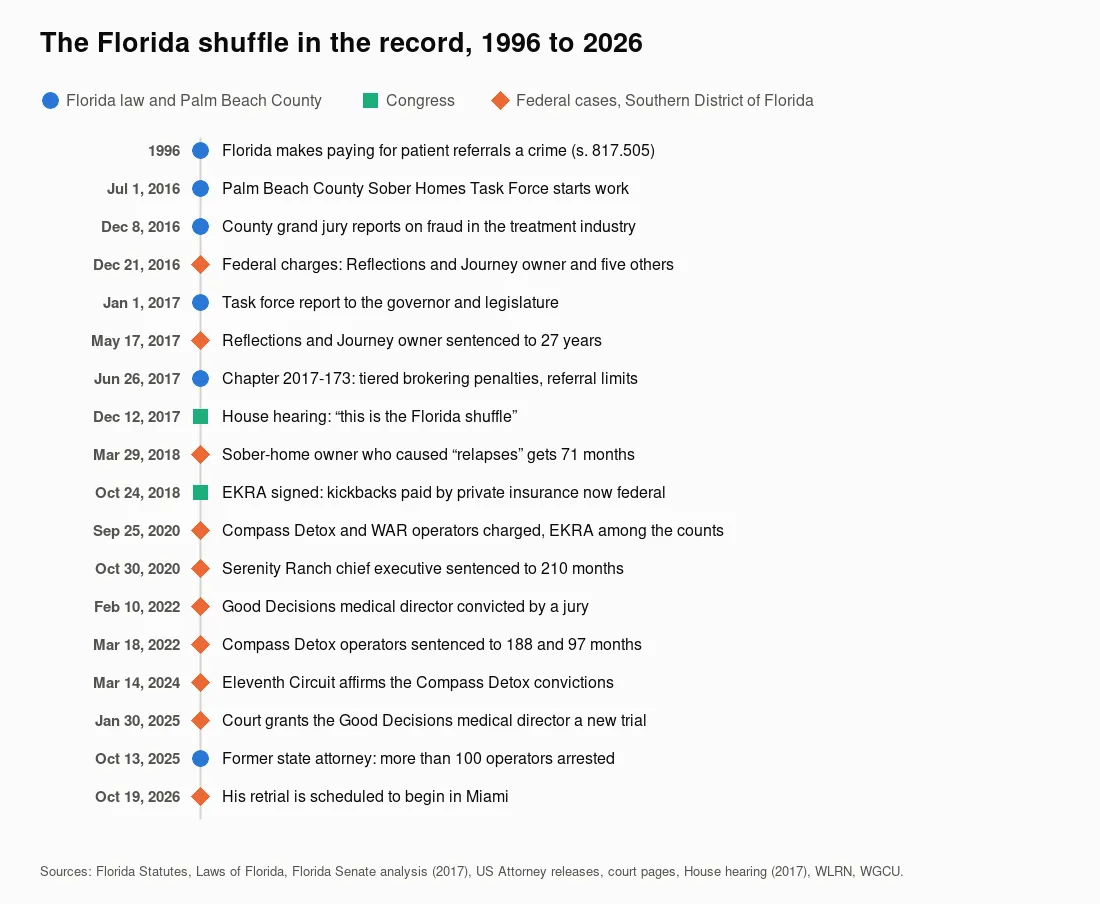
Figure 1. The record in order, drawn by us from the documents cited below. Florida had a brokering law for twenty years before the county task force began. Congress acted two years after it. [1]
The model, and the shuffle
The Florida Senate's criminal justice staff put the premise plainly in March 2017: "Florida is a destination for many young substance use addicts from all over the country who are seeking addiction treatment and recovery services."[2] Aronberg gave the share at the House hearing. "75 percent of all private pay patients in Florida rehab come from out of state and they rarely leave. Too often they leave in body bags and ambulances."[1]
The last stage of the model is the one nobody licensed. Of the sober home, Aronberg told the committee, "there's no treatment there. It's just a group living place".[1] In Delray Beach, NPR's Greg Allen found in August 2017 "a sober living house, or sober home, on nearly every block, sometimes two or three on a block".[3]
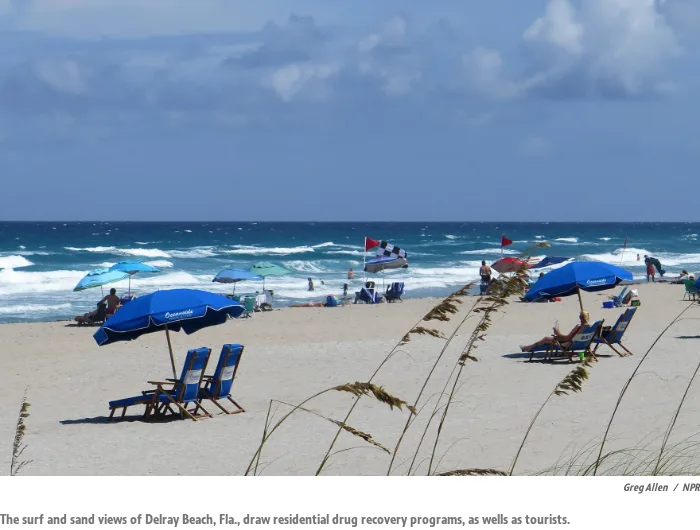
Figure 2. Delray Beach in August 2017. NPR’s reporter counted sober homes on nearly every block of some streets behind this beach. [3]
The money behind it was private. Asked by a member whether Medicare and Medicaid paid for most of what he was describing, Aronberg answered that "the Florida shuffle really is being fueled by the overpayments and the payments from private insurance companies".[1] In one of the federal cases below, prosecutors noted that "many of the patients were permitted to remain on their parents' private insurance plans up to age 26."[4]
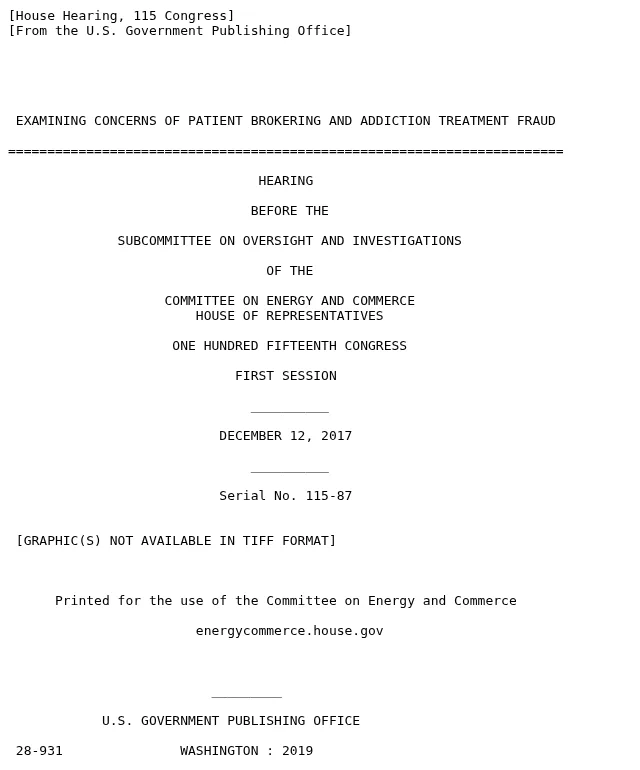
Figure 3. The hearing where Palm Beach County’s prosecutors described the Florida shuffle under oath and asked Congress to reach private insurance. [1]
Who paid whom
The Palm Beach County Sober Homes Task Force started work on July 1, 2016.[5] In December of that year its lead investigator, Delray Beach police detective Nicole Lucas, described the first case to WLRN. An outpatient program in Boynton Beach paid sober-home owners for every resident they sent, between $400 and $525 a week a person, and called the payment case management.[5] She said detox referral fees ran to $1,000 a person, and that some operators were "giving people drugs and killing people trying to get them into detox" to collect one.[5]
The task force's report to the governor and legislature, dated January 1, 2017, is quoted at length in the Senate's bill analysis. "A common practice within the industry in Florida is for the treatment provider to pay a weekly fee or kickback to the recovery residence".[2] The resident lives free or cheaply while attending the provider's program, and "Brokering, by providing kickbacks to the recovery residence in exchange for the delivery of a patient, is commonplace."[2] Residents were also offered "gym memberships, scooters, weekly massages, chiropractic services, cigarettes, clothes, gift cards and more".[2]
The report described the front of the chain as well. Marketers sold callers as leads, and "when a treatment center pays $1,000 for a lead, they are compelled to convince that caller to go to their treatment center regardless of what the caller says".[2]
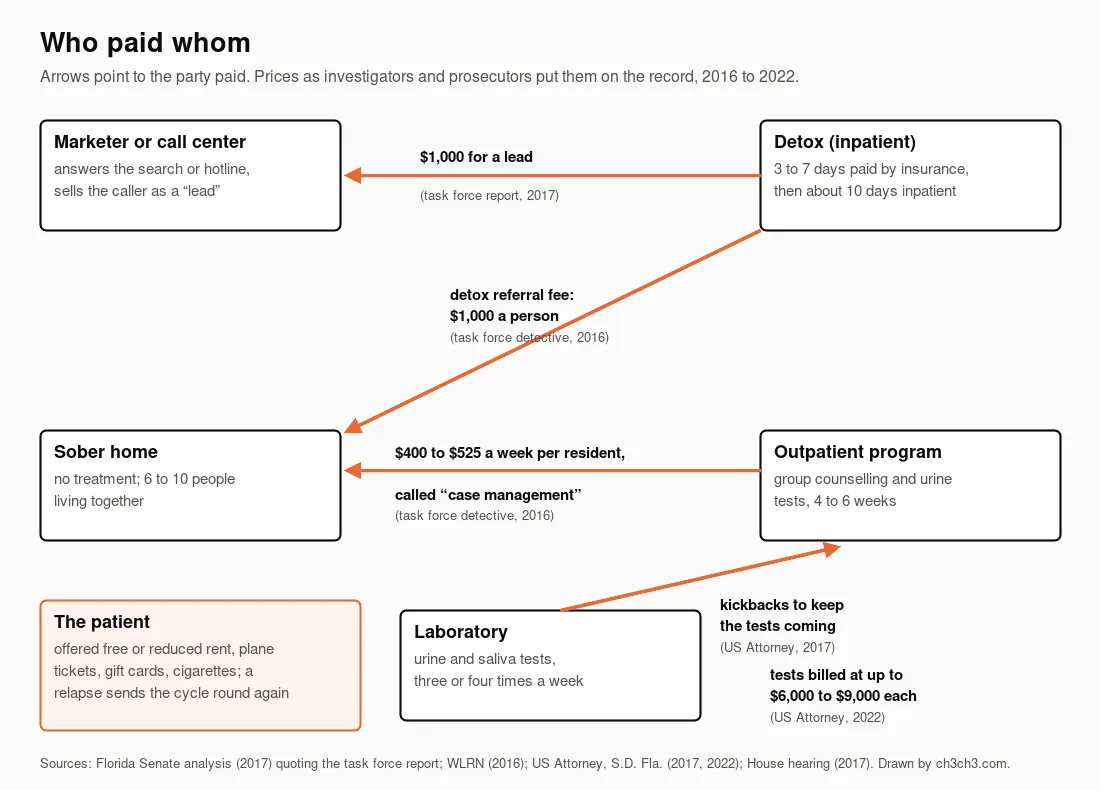
Figure 4. Who paid whom, with each figure as investigators and prosecutors gave it. Every arrow is paid for, in the end, by the patient’s insurer. [5]
The meter that ran fastest was the urine test. At one West Palm Beach sober home, residents were tested "approximately three or four times per week" as a condition of living there, and prosecutors said in 2022 that "these UA drug tests cost as much as $6,000 to $9,000 per test."[6]
Asked by WLRN what a family should watch for, the detective named the giveaways: plane tickets, cigarettes, food, clothes, gift cards. "If the person with the addiction is being given anything to go to that place is a red flag that it's a bad place."[5]
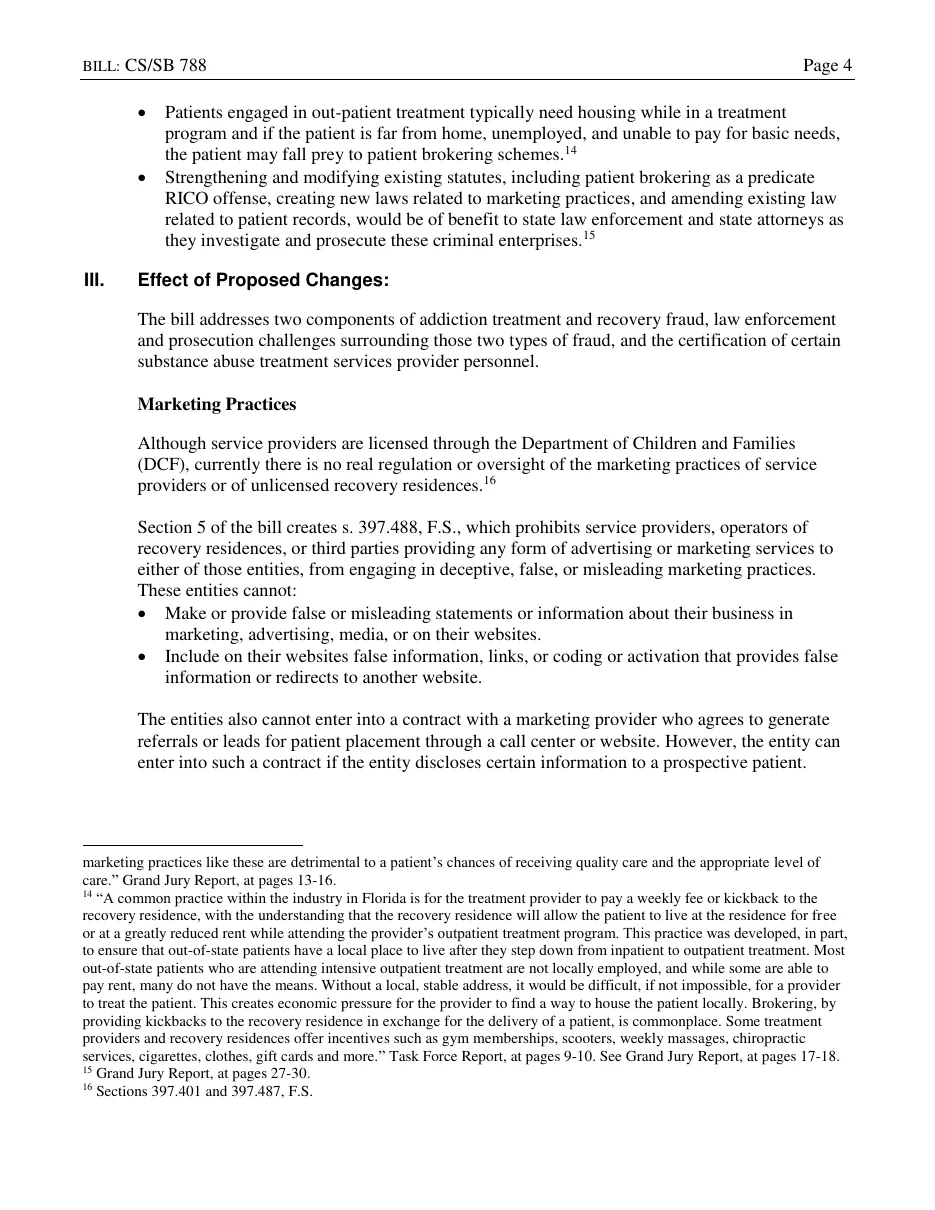
Figure 5. The Senate’s analysis, March 2017. Footnote 14 quotes the task force report on how a provider paid a sober home for each resident. [2]
Reflections and Journey
The case that defined the period was filed on December 21, 2016. Federal prosecutors in the Southern District of Florida charged six people, among them a Boynton Beach man who owned two treatment centers titled in his wife's name: Journey to Recovery in Lake Worth and Reflections Treatment Center in Margate.[7] He and two co-defendants ran sober homes called Stay'n Alive, Redemption Sober House and Total Recovery Sober Living.[7]
According to the complaint, residents with insurance were offered kickbacks "in the form of free or reduced rent and other benefits" to live in the homes, attend treatment and give samples.[7] Some defendants "permitted the residents to continue using drugs as long as they attended treatment and submitted to drug testing".[7] Some of the samples were not the patients' at all: the owner and a co-defendant "submitted urine and saliva samples from employees instead of urine and saliva from patients".[7] Patients who wanted to leave faced "threatening violence and confiscating their belongings", and the owner "recruited and coerced female patients and residents into prostitution".[7]
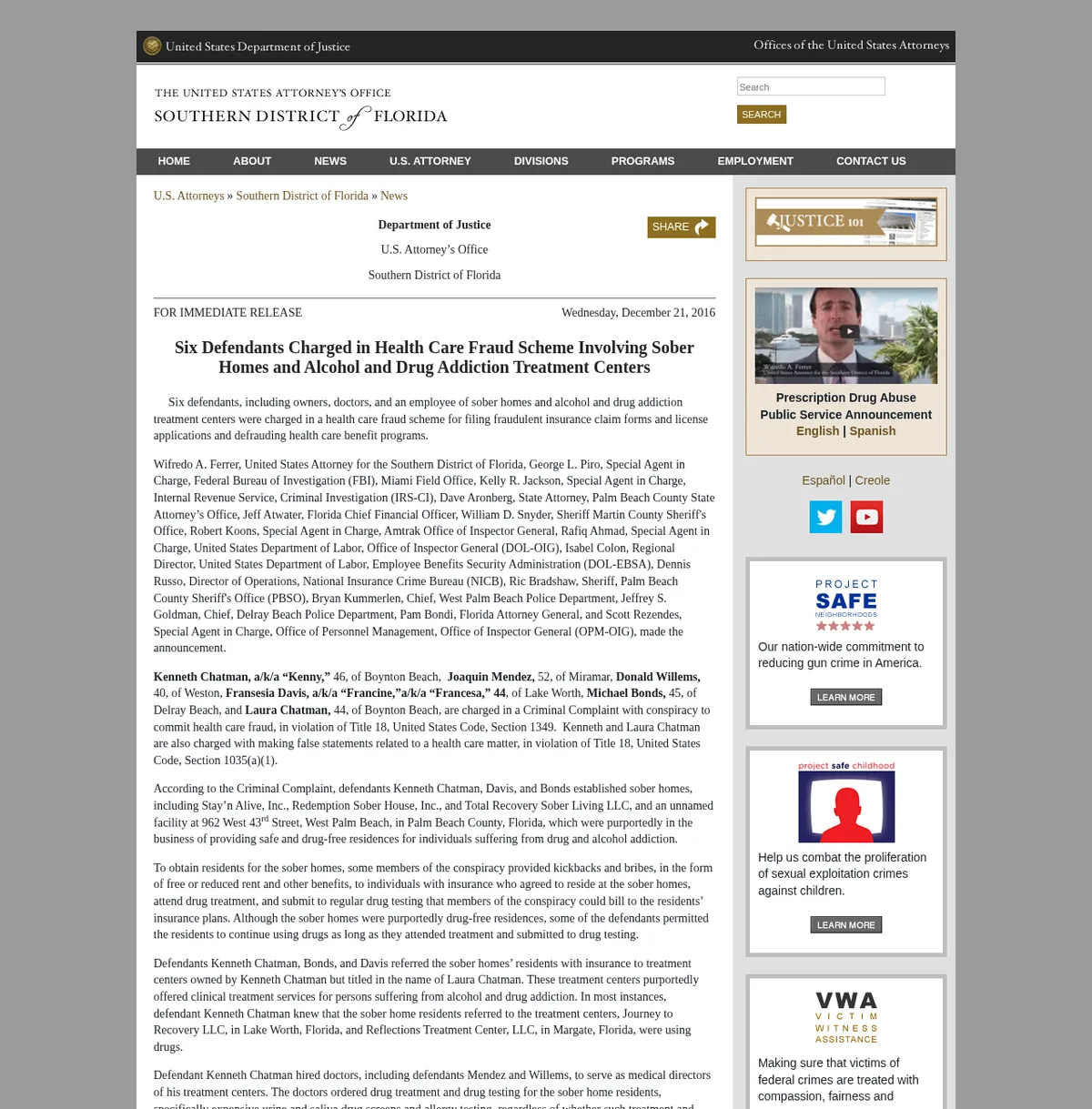
Figure 6. The first federal complaint, December 2016, as archived. It charges the owner of Reflections and Journey and five others; the names are the release’s, and this page uses roles. [7]
By April 2017 four defendants had been sentenced and the rest of the scheme was on the record. The payments to sober-home owners had been booked as case management, consulting and marketing fees and as commissions.[8] The centers' clinical director, a licensed mental health counsellor, admitted the drug testing was useless for treatment and that "as many as 90% of patients were testing positive for the continued use of controlled substances while purportedly obtaining treatment".[8] When he recommended sending relapsed patients to detox, the owner, who had no clinical training, overruled him, because a discharge ended the billing.[8] Two sober-home owners got 84 and 48 months, the clinical director 57, and a laboratory sales representative who paid the owner to keep the samples coming got 18.[8]
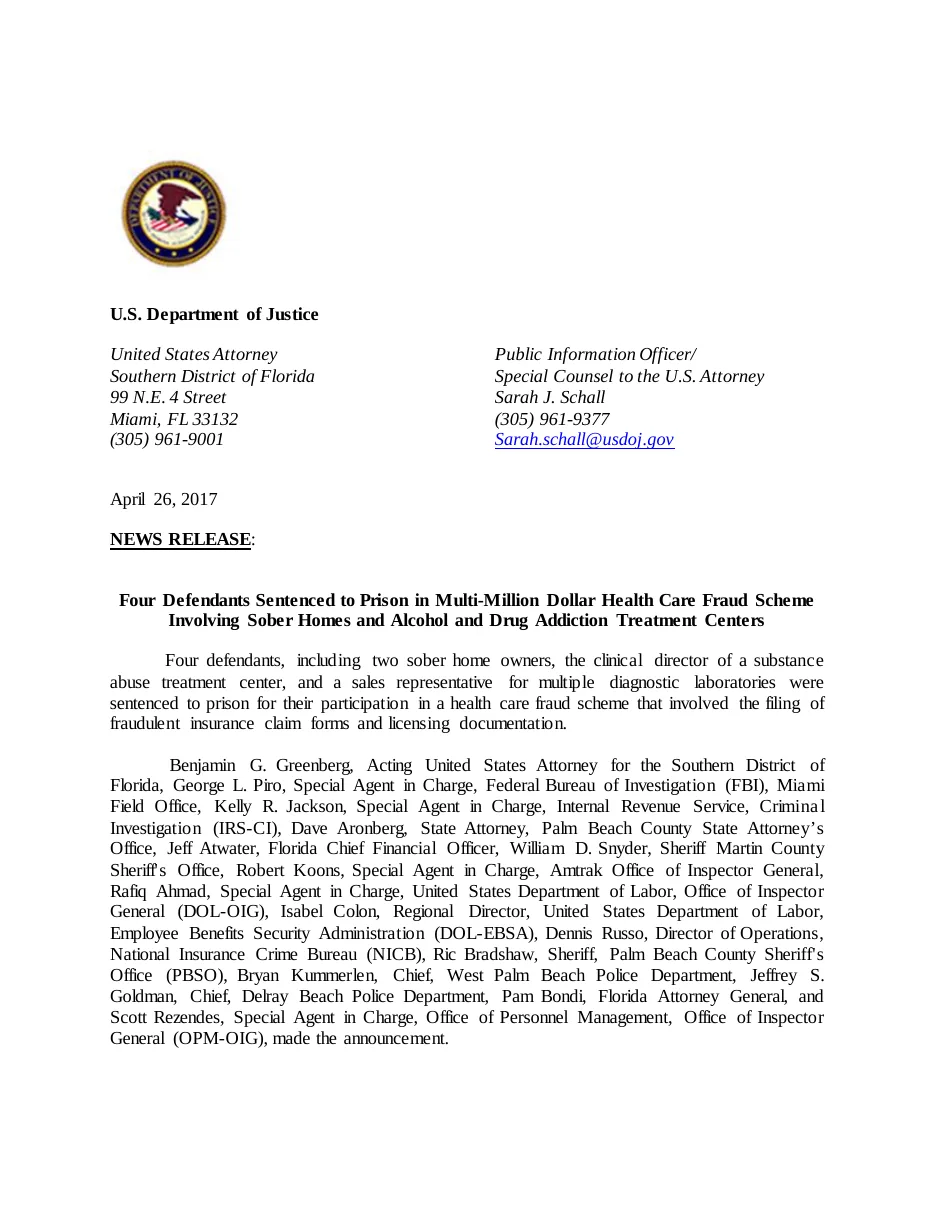
Figure 7. The April 2017 sentencing release, in the copy the Labor Department’s inspector general kept. It records the 90% positive rate the clinical director admitted. [8]
On May 17, 2017, Judge Donald Middlebrooks sentenced the owner. NBC 6 in Miami reported the term as 27 and a half years; the US Attorney's office, in a later release, wrote 27.[9][10] The counts were "conspiracies to commit health care fraud, money laundering and sex trafficking", and his wife, "who let the treatment center run under her name, got three years".[11] Five mothers spoke at the hearing. One of them, whose 23-year-old daughter had died of an overdose in February 2016, had never been on a plane before she flew from Ohio to West Palm Beach to address the judge.[11]
In March 2018 another sober-home owner from the same scheme was sentenced to 71 months. He had referred more than 100 residents to Reflections for urine and saliva tests, and the release says he encouraged drug use among his insured residents, "even providing and using drugs with them, to cause" relapses that extended their stays and generated more tests.[10] During the scheme "36 insurance companies paid out more than $2 million in fraudulent medical claims to Reflections".[10]
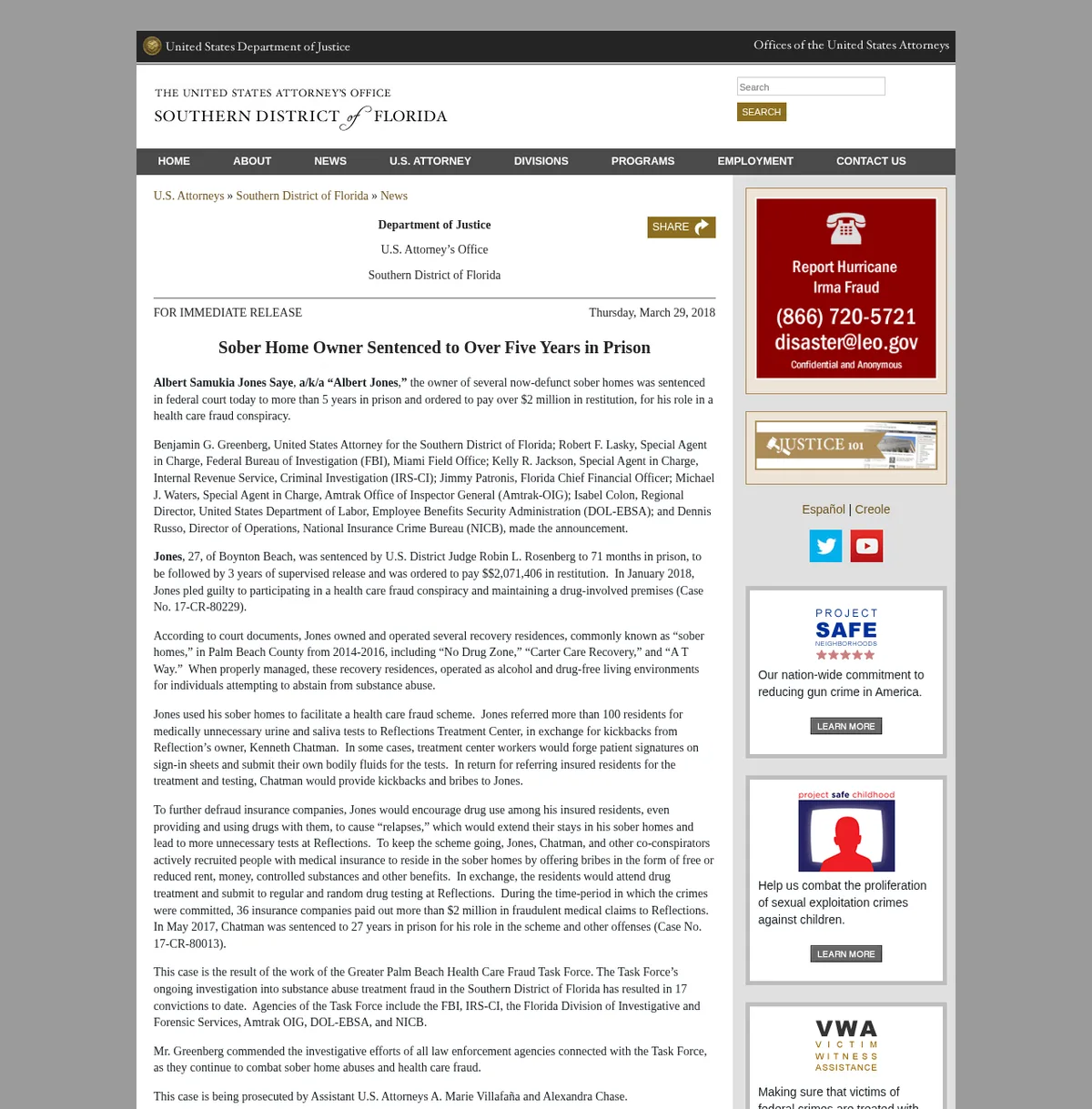
Figure 8. March 2018: the sober-home owner who, the release says, used drugs with his residents so that they would relapse and stay. [10]
The same task force produced a case with a different payment. The two owners of Angel's Recovery, a treatment business with several Palm Beach County locations that also offered medication for opioid addiction, paid their patients' insurance premiums. "To disguise kickbacks and bribes to patients, the defendants used a separate entity to pay insurance premiums for patients of Angel's Recovery" so the business could keep billing the insurers.[12] They kept employing their medical director after his licence was suspended. In May 2018 they were sentenced to 78 and 30 months.[12]
What Florida changed
Paying for patients was already a crime in Florida. The patient brokering statute dates from 1996.[13] Its first two paragraphs cover the payer and the referrer. The third reaches anyone who receives a benefit "in return for the acceptance or acknowledgment of treatment from a health care provider or health care facility".[13] It also exempts "any discount, payment, waiver of payment, or payment practice not prohibited by 42 U.S.C. s. 1320a-7b(b)", which imports the federal anti-kickback statute's exceptions wholesale.[13]
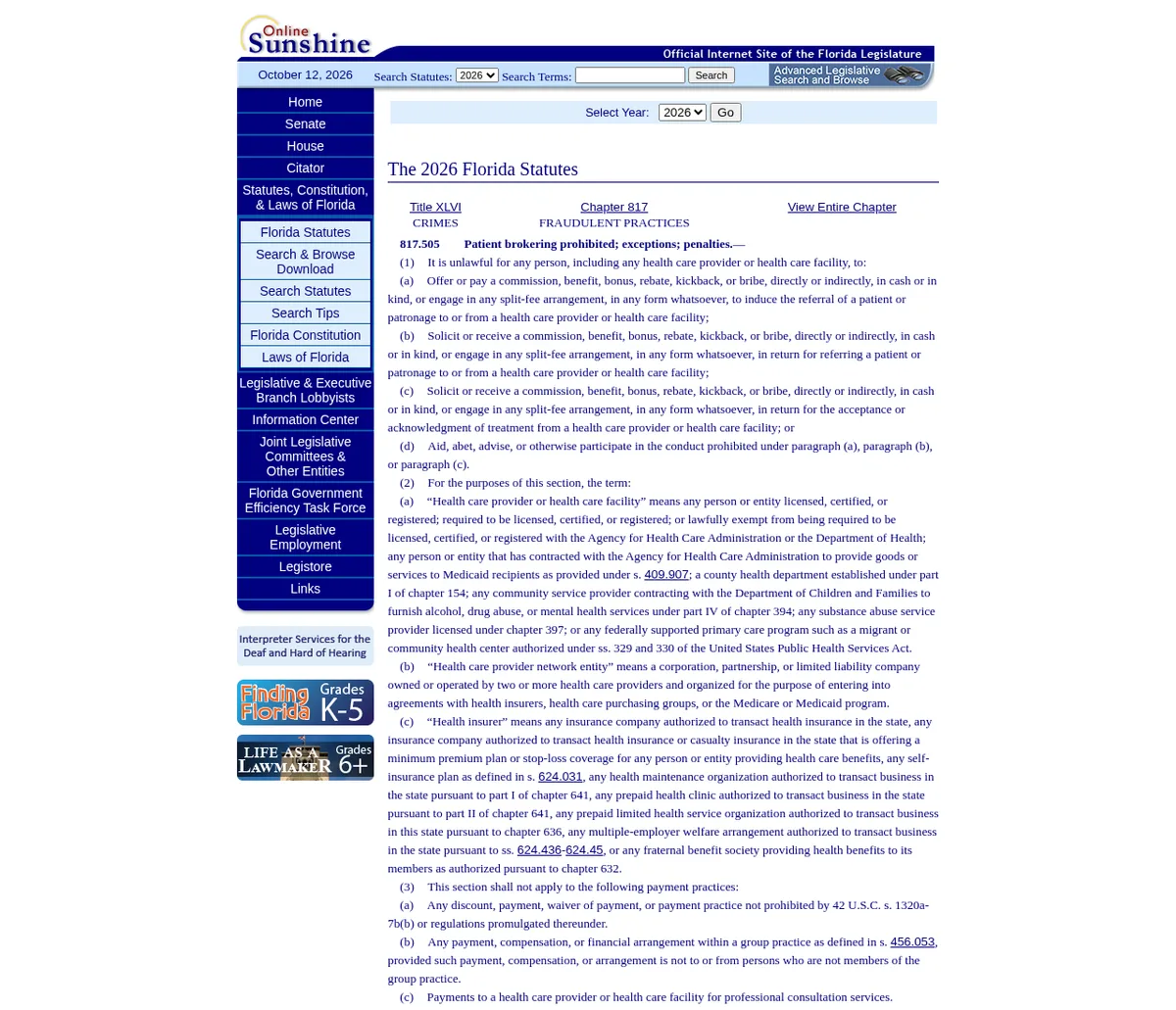
Figure 9. Florida’s brokering statute as it stands in 2026. Paragraph (1)(c) covers whoever accepts a benefit for accepting treatment. [13]
The 2016 budget had given the Palm Beach state attorney an assignment: to "conduct a study aimed to strengthen investigation and prosecution of criminal and regulatory violations within the substance abuse treatment industry".[2] The study produced the task force and a county grand jury, whose presentment is dated December 8, 2016. The Senate's analysts found that the two "issued reports making many of the same findings and suggesting similar solutions".[2]
The legislature acted on them in its 2017 session. Chapter 2017-173, filed with the Secretary of State on June 26, 2017, rewrote the penalties by head count.[14] Brokering involving 10 to 19 patients became a second-degree felony with a $100,000 fine, and conduct that "involves 20 or more patients commits a felony of the first degree" with a $500,000 fine.[13] The Senate's analysis describes the rest: the statewide prosecutor could now bring brokering cases, and the bill was "adding patient brokering to the list of predicate offenses that may be prosecuted as RICO offenses".[2]
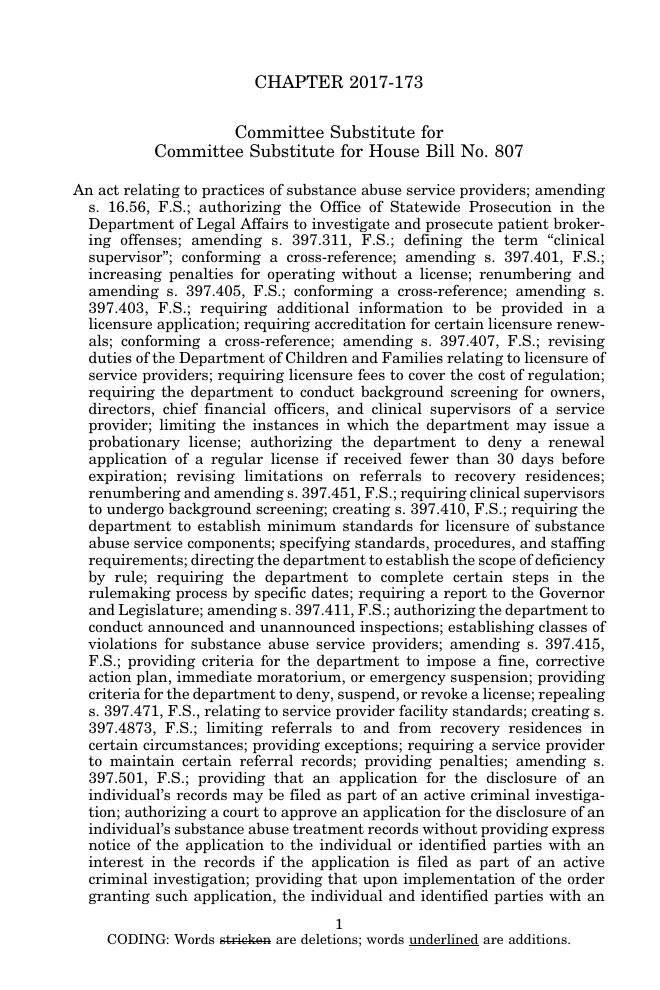
Figure 10. Chapter 2017-173, the 2017 act that followed the grand jury and the task force. Its title runs to more than a page. [14]
The same act wrote rules for the parts of the chain the brokering statute did not name. A new marketing section begins with a finding that "consumers of substance abuse treatment have disabling conditions and that such consumers and their families are vulnerable and at risk of being easily victimized by fraudulent marketing practices".[15] It bars false statements in advertising and any website code "that surreptitiously directs the reader to another website", and it allows a provider to buy leads from a call center only if the caller is told which providers pay the marketer.[15]
The other new section aimed at the sober home through the licensed provider. A provider "may not make a referral of a prospective, current, or discharged patient to, or accept a referral of such a patient from, a recovery residence unless the recovery residence holds a valid certificate of compliance".[16] Certification of the residence stayed voluntary. The obligation falls on the licensee, and the statute as amended since carries an administrative fine of $1,000 per occurrence.[16] In March 2017 the state's credentialing body counted 257 certified recovery residences in all of Florida.[2] By July 2018 it had certified 67 programs in Palm Beach County alone, with 146 more applying.[17]
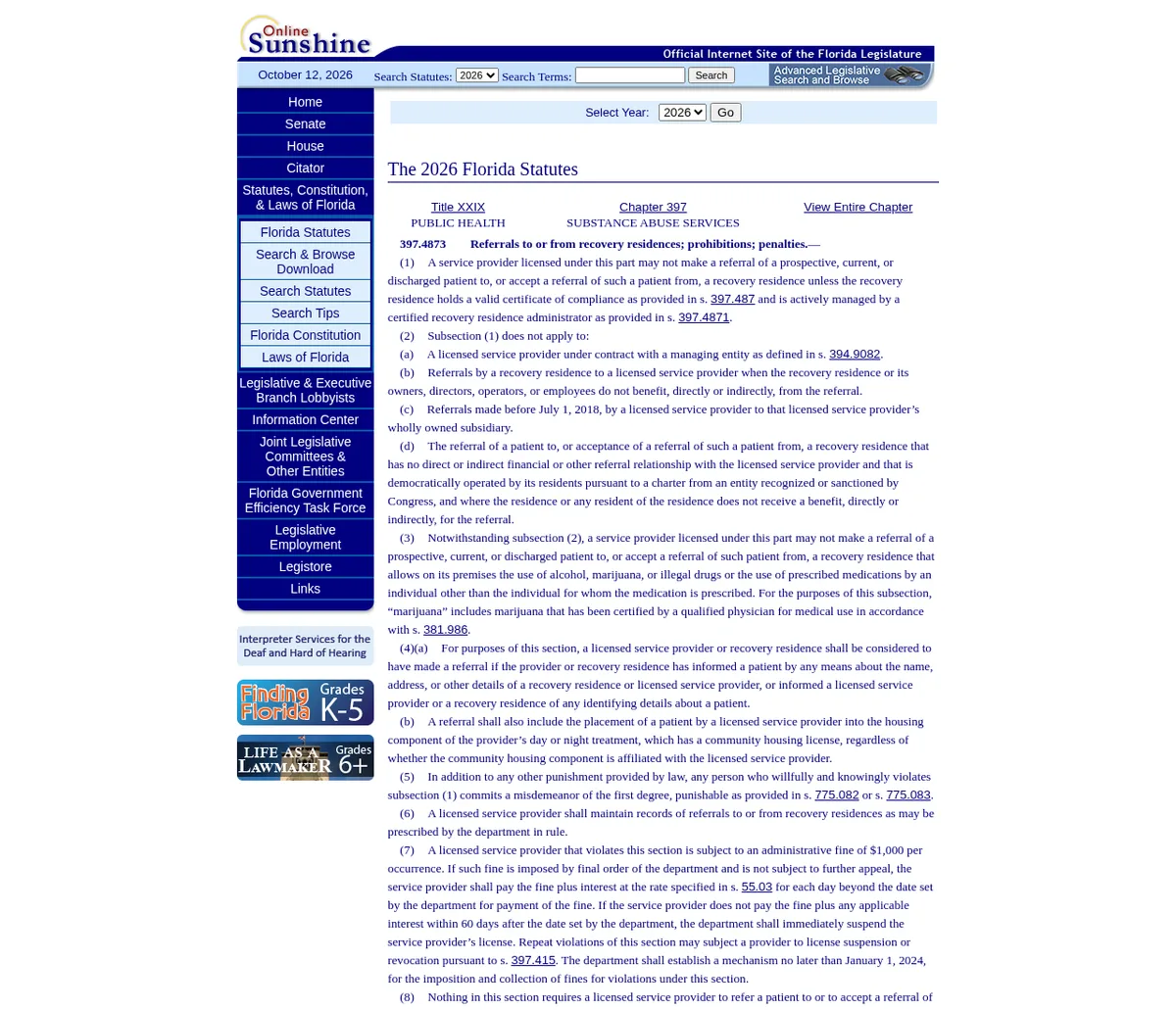
Figure 11. The referral rule. A licensed provider may send patients only to a certified residence. [16]
The task force's own count was 41 arrests at the time of the House hearing.[1] By July 2018 the Coastal Star totted up "two years, $575,000, 54 arrests, 20 convictions and several laws".[17] The paper reported 80 fatal opioid overdoses confirmed by the county medical examiner in the first four months of 2018, against 233 in the same months of 2017, and quoted Aronberg: "Our Sober Homes Task Force has helped cause a dramatic drop in opioid overdose deaths locally".[17] The article gives no way to separate the task force's share of that drop from anything else that changed in those months. His later count of arrests, more than 100, is in the long read.[18]
The task force's chief, Alan Johnson, had warned the House what success in one county would do: "we've seen the criminal element leave Palm Beach County for other communities and states that may not be aware of the Florida shuffle."[1]
The federal gap
Johnson's recommendations were narrower than Aronberg's and more consequential. Under the federal anti-kickback statute, he testified, "federal agents and prosecutors only have jurisdiction to pursue kickbacks related to federally assisted insurance programs such as Medicare and Medicaid".[1] The shuffle ran on private policies, so the one federal kickback law did not reach it.
His second complaint was about salaried brokers. "Rogue actors in the treatment industry are hiring marketers as employees to circumvent the federal anti-kickback and state patient brokering statutes", he said, and "many of these marketers who are employees have no credentials in traditional marketing, are recovering addicts themselves, and in many cases own sober homes where they steer the residents to the employer's facilities."[1] Florida's statute copied the federal exceptions, so the employee exception travelled with them.[13]
Aronberg's own request was about housing. He told the committee that "the Americans with Disabilities Act and the Fair Housing Act together prevent the regulation or inspection of these residences".[1] That is his reading of the two laws.
Ten months later Congress passed a law that answers both of Johnson's points. The SUPPORT for Patients and Communities Act, signed on October 24, 2018, carried a subtitle called the Eliminating Kickbacks in Recovery Act, which added section 220 to the federal criminal code.[19][20] The section's operative words are quoted in the long read. What matters here is its reach. It applies to services covered by a "health care benefit program", and the criminal code defines that term as "any public or private plan or contract, affecting commerce, under which any medical benefit, item, or service is provided to any individual".[20][21] It names the sober home directly: a recovery home is "a shared living environment that is, or purports to be, free from alcohol and illicit drug use and centered on peer support".[20]
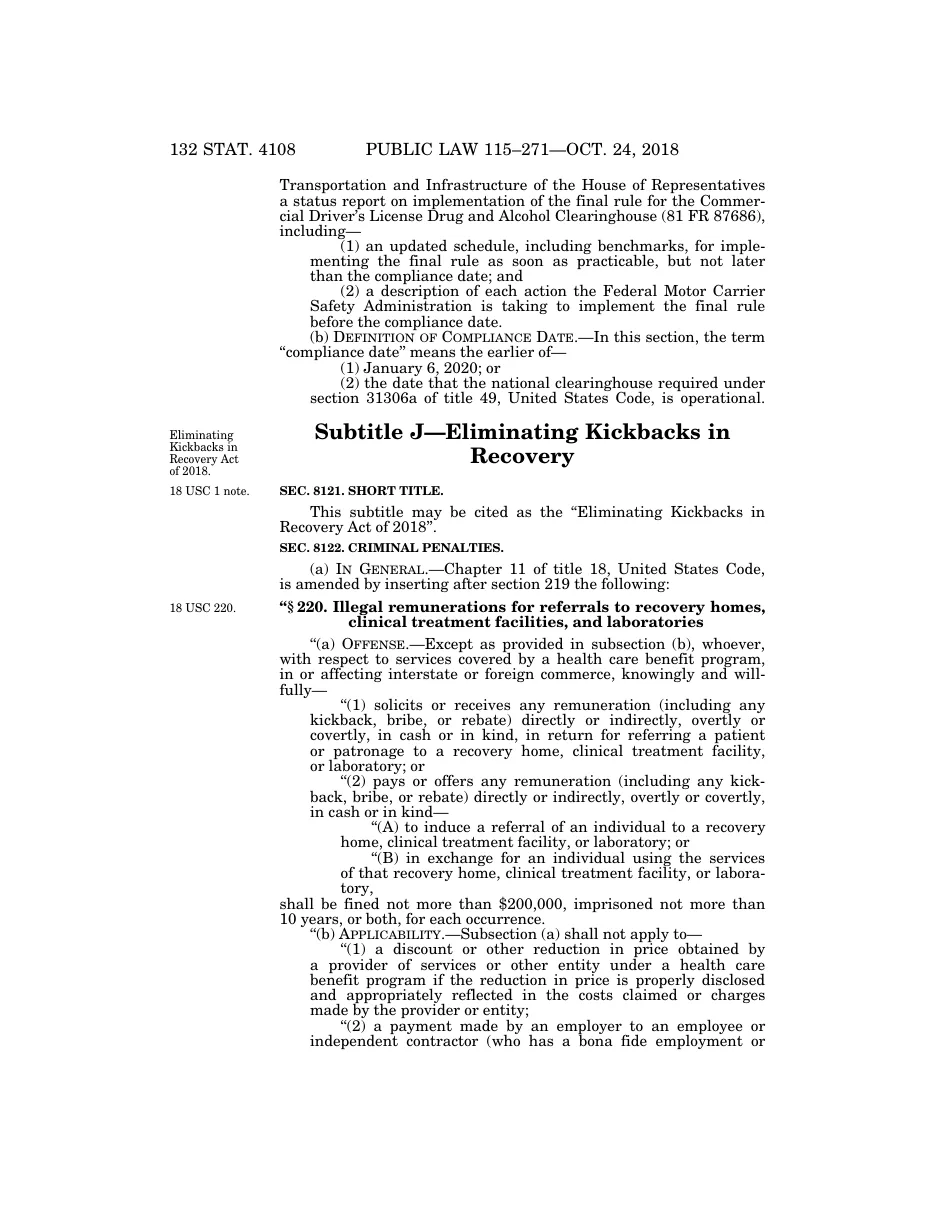
Figure 12. The 2018 federal act as printed in the Statutes at Large. Section 220 covers any health care benefit program, public or private. [19]
Its employee exception is the one Johnson asked for. A payment to an employee is exempt only if "the employee's payment is not determined by or does not vary by" the number of people referred, the number of tests, or the amount billed.[20] It does not displace Florida's statute: "nothing in this section shall be construed to occupy the field" of state laws on the same subject.[20]
After 2018: three cases
Compass Detox and WAR
On September 25, 2020, ten people were charged in a complaint over two Broward County treatment centers, Second Chance Detox, which did business as Compass Detox, and an outpatient program called WAR Network.[22] The charges included violating the 2018 act.[22]
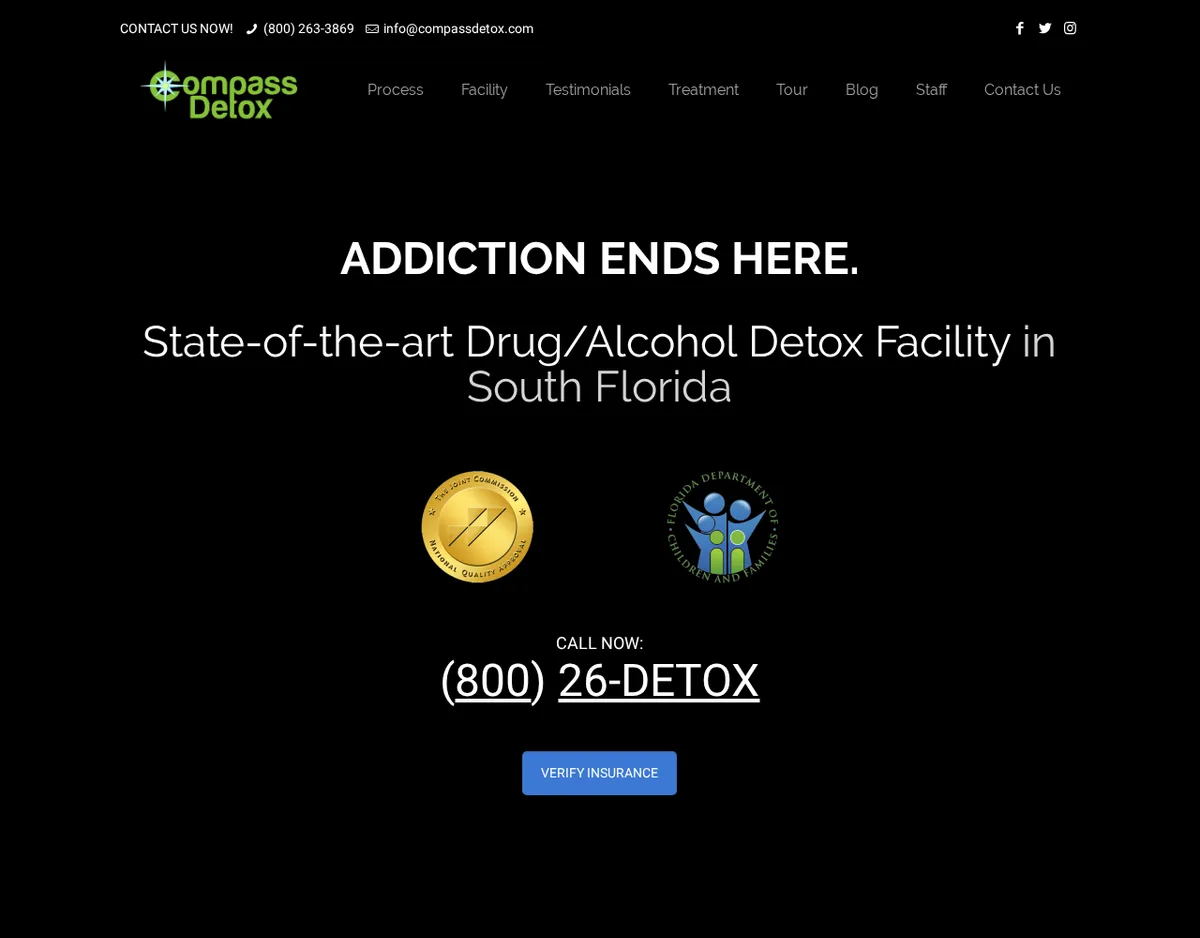
Figure 13. Compass Detox’s home page four months before the charges, with an accreditation seal, the state licensing agency’s seal and a button to verify insurance. [23]
The Eleventh Circuit's 2024 opinion summarises what the indictment alleged. "The recruiters were instructed to bribe addicts with promises of money, gifts, and drugs if they would admit themselves to the clinics for care."[24] Once admitted, patients were kept: "the clinics prescribed dangerous combinations of medications with the sole purpose of getting patients high".[24] One of the prosecution's lead witnesses was a former patient the clinics had hired to recruit, who testified that the operators permitted him "to use drugs and money to lure drug addicts with high-paying insurance policies to the clinics".[24] The court put the take at "about $30 million from the fraudulent claims".[24]
A jury convicted the two brothers who ran the centers in November 2021, both on counts that included conspiring to pay and receive kickbacks. On March 18, 2022 they were sentenced to 188 and 97 months.[22] The appeal challenged rulings on patient records held by other clinics, on the expert and summary testimony and on a motion for a new trial. On March 14, 2024 the Eleventh Circuit affirmed.[24]
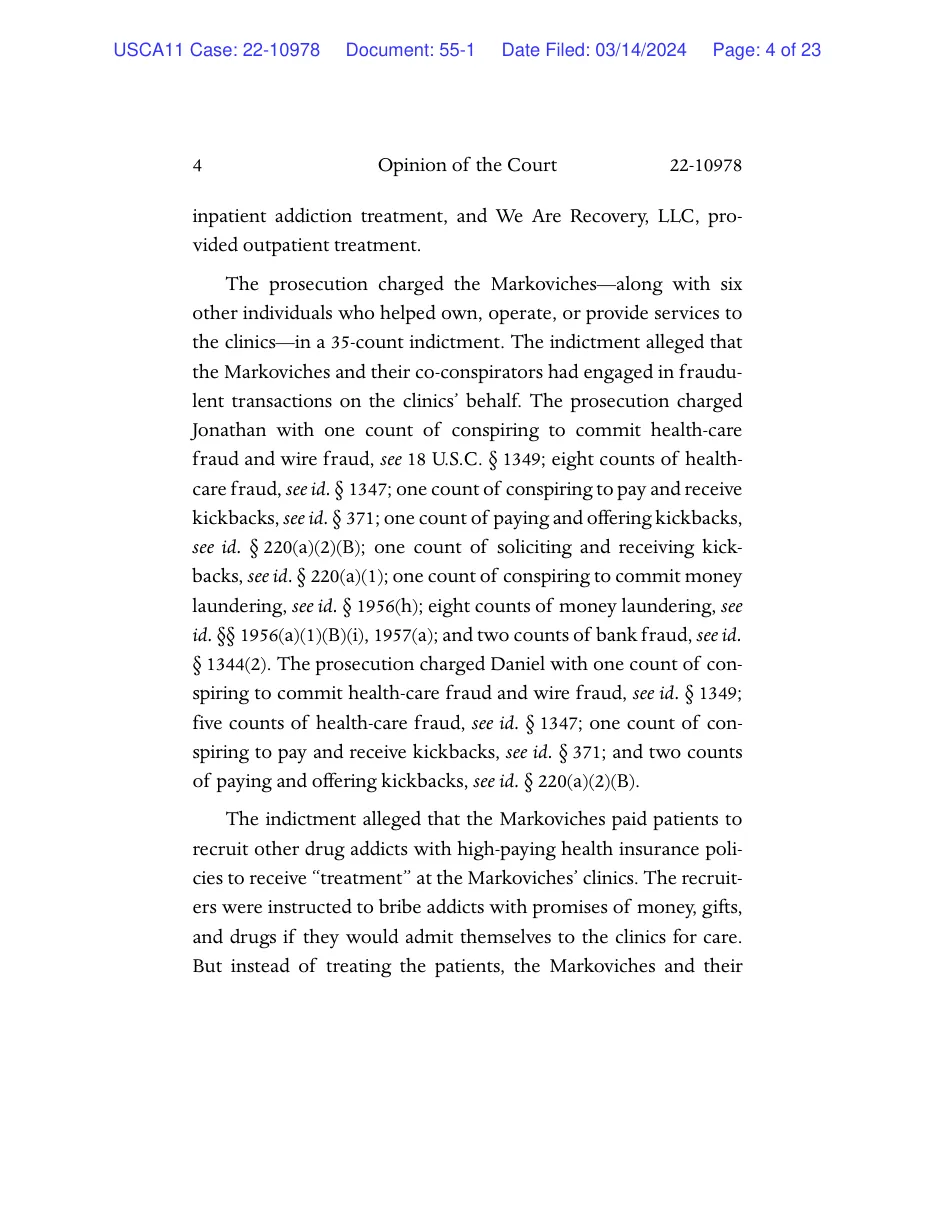
Figure 14. The appeals court’s summary of the Compass Detox indictment, March 2024. Two of the counts cite the 2018 act, section 220. [24]
Serenity Ranch
The Serenity Ranch network in Davie ran two treatment centers and a medical clinic from June 2016 to May 2019.[4] Prosecutors told the jury that roughly 500 patients were given "free airline travel, housing, vapes, manicures, cash, and failure to collect patient responsibilities for co-pays and deductibles".[4] The sober homes they lived in were not certified by the state.[4] The urine screens that were billed "revealed repeat positives for, among other drugs, methamphetamine, heroin, cocaine, and prescription narcotics", and the record showed the chief executive "failed to report a single overdose incident to DCF as required by law".[4]
On October 30, 2020 he was sentenced to 210 months. His brother, the chief operating officer, had received 120, and two clinical directors 32 each.[4][25]
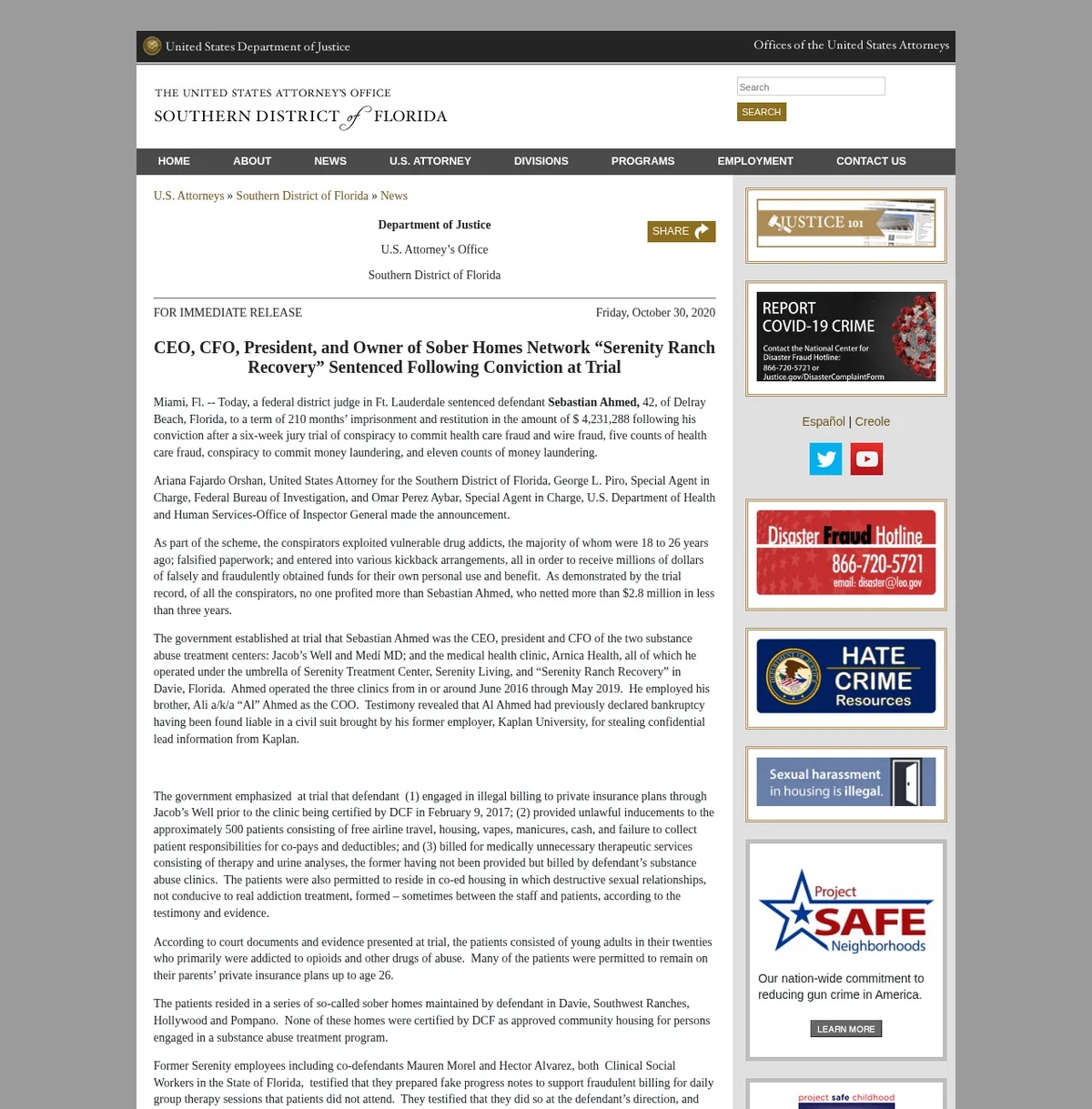
Figure 15. Serenity Ranch, 2020: free airline travel and cash for about 500 patients, young adults, many of them on their parents’ insurance. [4]
Good Decisions Sober Living
In February 2022 a federal jury convicted the medical director of Good Decisions Sober Living, a West Palm Beach residence, in what the government called a $110 million urine-testing fraud. The release says he agreed "to provide standing orders for UA drug tests for GDSL patients in exchange for a monthly fee", and that the residence "was paid kickbacks for providing patients to addiction treatment facilities in the West Palm Beach area, in violation of Florida state law."[6] The owner and two employees had pleaded guilty. The owner was sentenced to 72 months, the medical director to 100.[26]
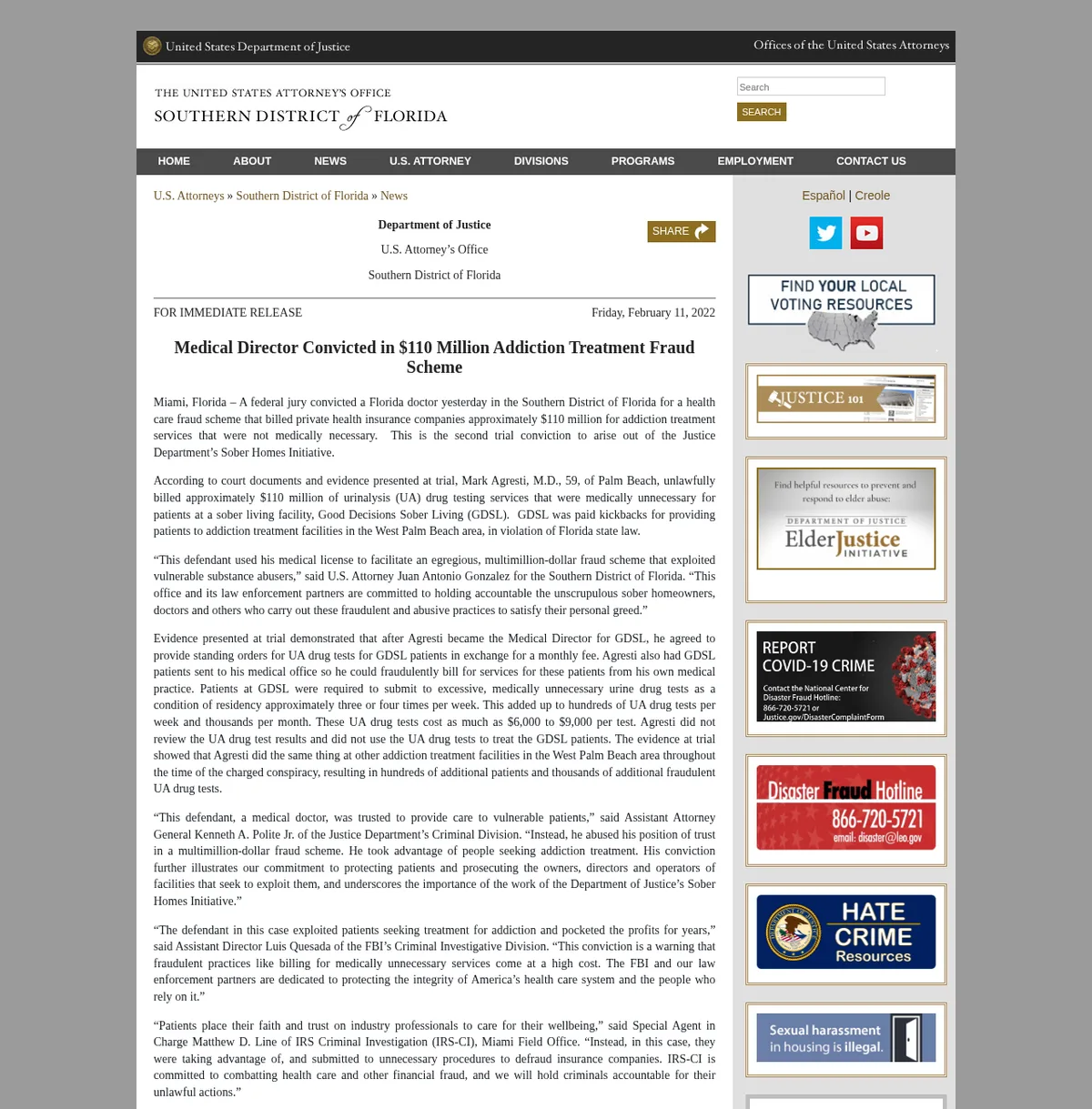
Figure 16. The 2022 release on the Good Decisions medical director. The verdict it announces was set aside in January 2025. [6]
That conviction no longer stands. On January 30, 2025, the court granted the medical director's motion for a new trial based on newly discovered evidence, and the retrial is set for October 19, 2026, a week after this page was written.[26] The 2022 release still reads "convicted". Until a second jury decides, he is presumed innocent.
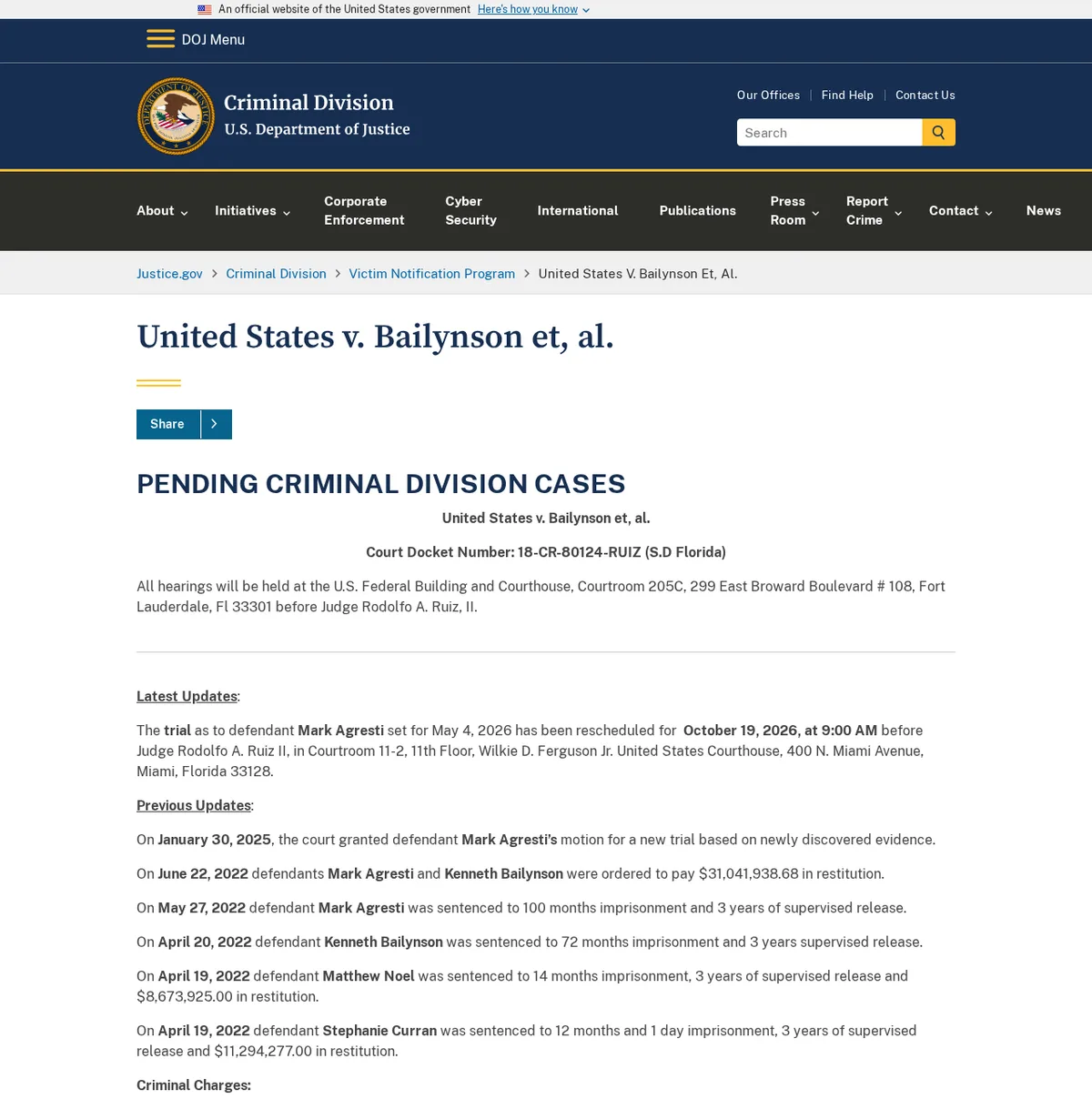
Figure 17. The government’s own case page, read October 12, 2026. The latest entry is the retrial date. [26]
The cases did not stop when the treatment did. In April 2024 the owner of Reawakenings Wellness Center, a Miramar facility evicted in January 2018, was sentenced to four years for billing the federal employees' health plan for 29 former patients after it closed. He "called the FEHBP hotline, impersonated former patients, and changed their mailing addresses" to collect the checks.[27]
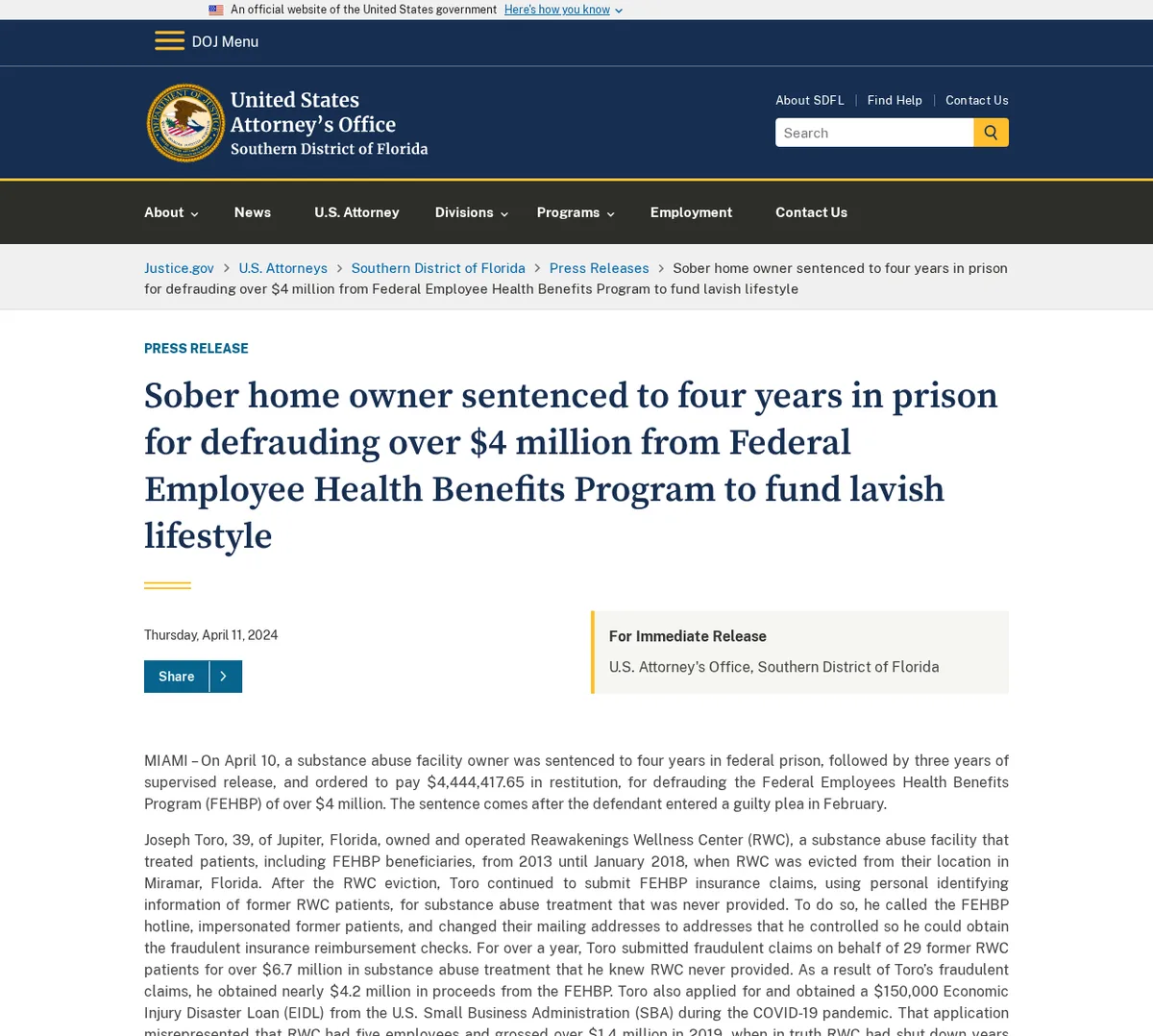
Figure 18. April 2024: billing for 29 former patients of a facility that had closed six years earlier. [27]
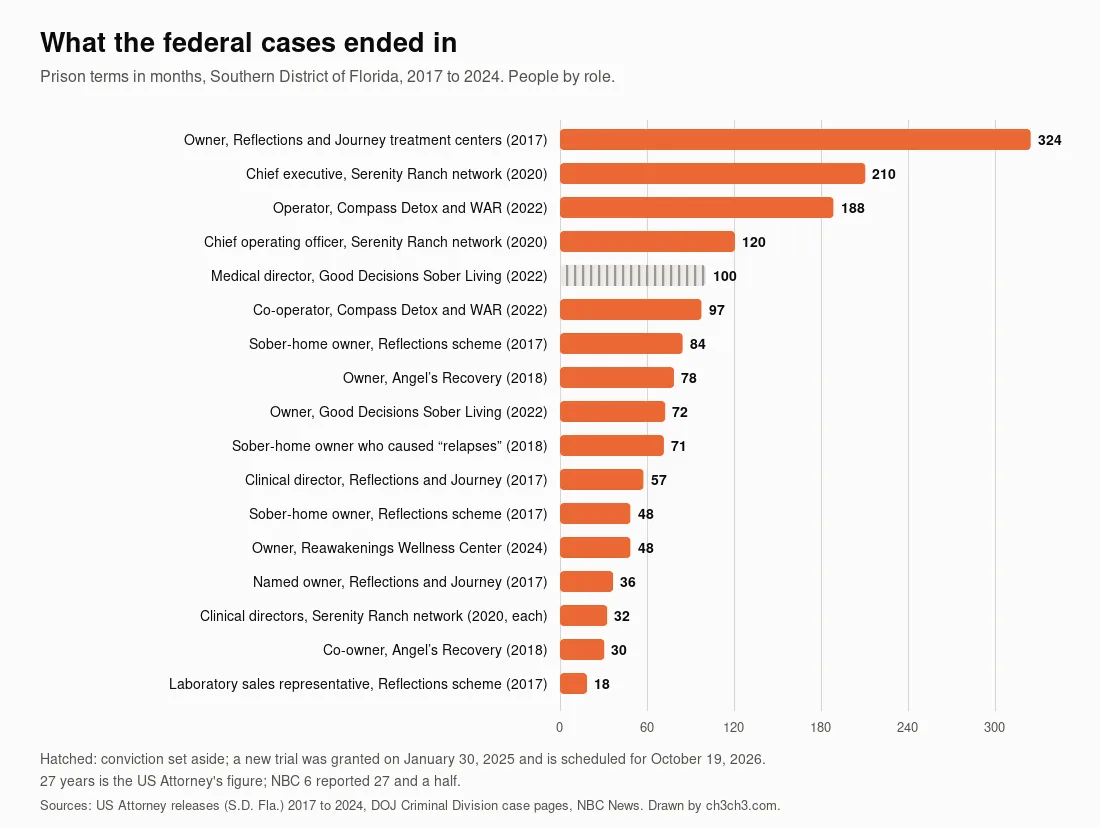
Figure 19. What the cases ended in, by role. Drawn by us from the releases and case pages cited here. [8]
The patients this site writes for
The Florida cases were built around opioid users. Aronberg's model patient was someone for whom "oftentimes it's heroin", and Serenity's patients were "young adults in their twenties who primarily were addicted to opioids and other drugs of abuse".[1][4] Stimulant users were in the same houses: Serenity's billed screens came back positive for methamphetamine and cocaine as well as heroin.[4] In these schemes a positive test was revenue, because it justified the next test and the next stay.
No court record read for this page describes patients recruited as kratom or 7-OH users. What there is comes from the users themselves, and it is anecdote. In July 2026 a poster on r/QuittingKratom wrote: "I just got out of a rehab in Florida after 8 years of kratom, 1 year of 7oh last year".[28] The stay lasted 24 days, and the poster recommended it.[28]
In May 2025 another poster, describing a habit that had moved from kratom extract to 7-OH and then to shots sold as Mitra Pseudo, wrote that "every place I call says my insurance won't cover treatment for kratom because it's" new.[29] The poster then found a program 1,500 miles away: "They are willing to help me with plane tickets and everything."[29] The post does not say whether the poster went, and a travel offer is not by itself evidence of anything. It is the first item on the detective's 2016 list of warning signs, and free airline travel was the first inducement the Serenity prosecutors named.[5][4]
Johnson told Congress in 2017 that the trade was already leaving Palm Beach County. The people describing it on Reddit now mostly place it in California. In December 2025 a poster on r/Drugs, back in treatment and saying "I lost count at 20 regarding which number stay this is", wrote "im getting paid for my stay" and called it body brokering.[30] In February 2026 another described being recruited in 2016 or 2017 through a friend who had gone to a California program first, who "eventually revealed to me i could get paid for going".[31] The poster went four times in a year.[31]
Florida's emergency scheduling of 7-OH and the politics around it are in the kratom lobby deep dive.
Still open
The Good Decisions retrial is scheduled for October 19, 2026.[26] This page will be updated with the result.
The 2016 grand jury presentment and the 2017 task force report are quoted here through the Florida Senate's analysis, which reproduces their key passages with page numbers.[2] The full documents were not read for this page.
None of the releases and court records read for this page names kratom or 7-OH among the patients' drugs, and a search of the archived press-release addresses of the US Attorney for the Southern District of Florida for kratom, 7-OH and tianeptine returned nothing. Whether the people who now look for treatment for those substances are being recruited the way heroin users were in 2016 is not answered by any record found.
Whether Florida's Department of Children and Families has ever collected a fine under the referral rule, which the statute required it to set up a mechanism for by January 1, 2024, was not checked.[16]
References
- Examining Concerns of Patient Brokering and Addiction Treatment Fraud, hearing before the Subcommittee on Oversight and Investigations, House Committee on Energy and Commerce, December 12, 2017 (Serial No. 115-87) — US Government Publishing Office, govinfo
- Bill Analysis and Fiscal Impact Statement, CS/SB 788, Marketing Practices for Substance Abuse Services (March 8, 2017) — The Florida Senate, Committee on Criminal Justice
- Beach Town Tries To Reverse Runaway Growth Of 'Sober Homes' (Greg Allen, NPR, August 10, 2017) — NPR, via WGCU
- CEO, CFO, President, and Owner of Sober Homes Network "Serenity Ranch Recovery" Sentenced Following Conviction at Trial (October 30, 2020), archived — US Attorney's Office, Southern District of Florida (Wayback Machine)
- Sober Home Detective: 'The Problem Is Humongous' (December 13, 2016) — WLRN Public Media
- Medical Director Convicted in $110 Million Addiction Treatment Fraud Scheme (February 11, 2022), archived — US Attorney's Office, Southern District of Florida (Wayback Machine)
- Six Defendants Charged in Health Care Fraud Scheme Involving Sober Homes and Alcohol and Drug Addiction Treatment Centers (December 21, 2016), archived — US Attorney's Office, Southern District of Florida (Wayback Machine)
- Four Defendants Sentenced to Prison in Multi-Million Dollar Health Care Fraud Scheme Involving Sober Homes and Alcohol and Drug Addiction Treatment Centers (US Attorney, S.D. Fla., April 26, 2017) — US Department of Labor, Office of Inspector General (copy of the release)
- South Florida Sober Home Operator Sentenced to 27 1/2 Years (May 17, 2017) — NBC 6 South Florida
- Sober Home Owner Sentenced to Over Five Years in Prison (March 29, 2018), archived — US Attorney's Office, Southern District of Florida (Wayback Machine)
- Moms Unleash Anger on Corrupt Rehab Owner Sentenced to 27 Years (Lisa Riordan Seville, May 17, 2017) — NBC News
- Treatment Center Owners Sentenced to Prison for Multi-Million Dollar Health Care Fraud and Money Laundering Scheme Involving Sober Homes and Alcohol and Drug Addiction Treatment Centers (May 15, 2018), archived — US Attorney's Office, Southern District of Florida (Wayback Machine)
- Florida Statutes s. 817.505, Patient brokering prohibited; exceptions; penalties (2026) — The Florida Legislature, Online Sunshine
- Chapter 2017-173, Laws of Florida (CS/CS/HB 807), An act relating to practices of substance abuse service providers — Florida Department of State
- Florida Statutes s. 397.55, Prohibition of deceptive marketing practices (2026) — The Florida Legislature, Online Sunshine
- Florida Statutes s. 397.4873, Referrals to or from recovery residences; prohibitions; penalties (2026) — The Florida Legislature, Online Sunshine
- Along the Coast: State attorney assumes funding of sober homes task force (Jane Smith, July 4, 2018) — The Coastal Star
- Fighting the Florida Shuffle (Gulf Coast Life, October 13, 2025) — WGCU
- Public Law 115-271, SUPPORT for Patients and Communities Act, October 24, 2018, Title VIII Subtitle J, Eliminating Kickbacks in Recovery Act of 2018 (132 Stat. 4108) — US Government Publishing Office, govinfo
- 18 U.S.C. s. 220, Illegal remunerations for referrals to recovery homes, clinical treatment facilities, and laboratories — Legal Information Institute, Cornell Law School
- 18 U.S.C. s. 24, Definitions relating to Federal health care offense — Legal Information Institute, Cornell Law School
- United States v. Jonathan Markovich et al., No. 21-CR-60020 (S.D. Fla.), Sober Homes Takedown case page — US Department of Justice, Criminal Division
- Compass Detox home page, captured May 14, 2020 — compassdetox.com (Wayback Machine)
- United States v. Markovich, Nos. 22-10978 and 23-11835 (11th Cir. March 14, 2024), published opinion — US Court of Appeals for the Eleventh Circuit
- Three South Florida Residents Sentenced to Prison for Their Roles in $21 Million Sober Homes Fraud Scheme (January 21, 2020), archived — US Attorney's Office, Southern District of Florida (Wayback Machine)
- United States v. Bailynson et al., No. 18-CR-80124 (S.D. Fla.), victim notification case page — US Department of Justice, Criminal Division
- Sober home owner sentenced to four years in prison for defrauding over $4 million from Federal Employee Health Benefits Program to fund lavish lifestyle (April 11, 2024), archived — US Attorney's Office, Southern District of Florida (Wayback Machine)
- Rehab (2026-07-04) — r/QuittingKratom — anecdotal report, not evidence
- Heavy Mitra Pseudo extract user needing advice (2025-05-08) — r/QuittingKratom — anecdotal report, not evidence
- rehab but with a catch (2025-12-13) — r/Drugs — anecdotal report, not evidence
- anyone else ever done the florida shuffle? (2026-02-26) — r/Drugs — anecdotal report, not evidence
Comments
Sign in to join the conversation.
No comments yet.