Alkylamine Stimulants
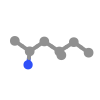
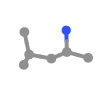
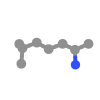
Short-chain aliphatic amines with no aromatic ring, which is what keeps them out of the amphetamine family above even though they are sold for the same reason. DMAA (1,3-dimethylamylamine, methylhexanamine) was a 1940s nasal decongestant that reappeared in pre-workout powders around 2006 under a borrowed botanical name, geranium; DMBA (1,3-dimethylbutylamine, "AMP citrate") and DMHA (octodrine, 2-aminoisoheptane) are the one-carbon-shorter and one-carbon-longer homologues that filled the shelf after each removal. They are sympathomimetic: raised blood pressure and heart rate are the documented effects, and the cases that reached regulators involved stroke, haemorrhage and cardiac events in otherwise healthy people under exertion.
None of the three is an approved ingredient anywhere, none has human dosing data beyond the decongestant era, and the label figure on a product is a claim about the product rather than a reference for the compound. Lab testing has repeatedly found them unlisted in products, and listed in products that contained something else. The site's pre-workout deep dive walks the removal-and-replacement cycle; the entity dossiers name the products.
No posts here yet.