
Retatrutide from a research vial: what the trials found, what the vials held, and what to watch for
Retatrutide is an injected weight-loss drug that Eli Lilly is still testing. No regulator anywhere has approved it. People buy it anyway, in vials sold "for research", and inject it with no prescription and nobody watching.[1] This article is for them, and for the people around them. It sets out what the trials found, what laboratories and regulators have found in the vials, what the adverse-event reports can and cannot tell anyone, and the warning signs worth knowing.
Nothing here is a dose. This site carries no dose guidance for retatrutide, and where a trial is described, the description is of what the trial did.
What retatrutide is
Retatrutide, Lilly's code LY3437943, acts on three hormone receptors at once. The phase 2 paper describes it as an agonist "of the glucose-dependent insulinotropic polypeptide, glucagon-like peptide 1, and glucagon receptors".[2] Tirzepatide, which Lilly sells as Mounjaro and Zepbound, acts on the first two, and retatrutide adds glucagon.[3]
The phase 2 obesity trial, published in the New England Journal of Medicine in 2023, gave the drug or a placebo once a week for 48 weeks. "We enrolled 338 adults".[2] At 48 weeks the highest-dose group had lost 24.2 per cent of body weight on average, against 2.1 per cent on placebo.[2] "The most common adverse events in the retatrutide groups were gastrointestinal", and the authors reported that "dose-dependent increases in heart rate peaked at 24 weeks and declined thereafter".[2]
Lilly has since reported phase 3 results. On 23 July 2026 it announced that two more phase 3 trials, TRIUMPH-2 and TRIUMPH-3, had met their primary endpoints at 80 weeks.[4] In TRIUMPH-3, 13.5 per cent of people on the highest dose stopped treatment because of adverse events, against 4.8 per cent on placebo.[4] These are company announcements of topline results. Lilly said the full results would go to medical meetings and peer-reviewed journals.[4]
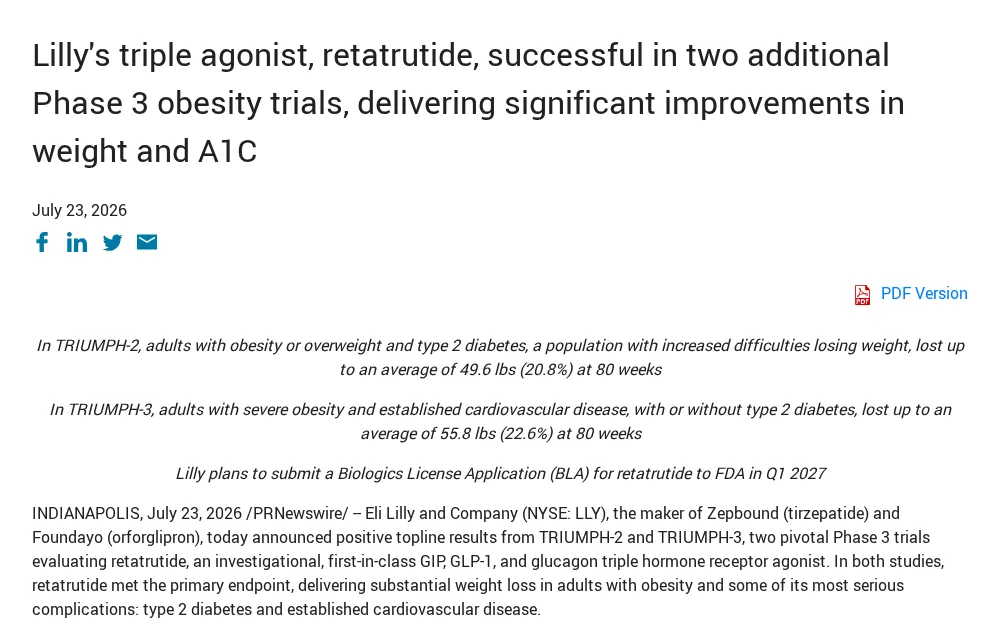
Figure 1. Lilly's release of 23 July 2026, as archived in October. The third summary line is the company's own statement of its filing plan. [4]
When it might be approved. Lilly's own words, in the July release: "Lilly plans to submit a Biologics License Application (BLA) for retatrutide to FDA in Q1 2027".[4] The same release says "Lilly is completing the comprehensive Chemistry, Manufacturing, and Controls (CMC) data package required for a Biologics License Application (BLA)".[4] That is a plan to file, which is not an approval date. The application type is also in dispute. BioSpace reported in August 2026 that "the FDA determined that retatrutide is neither a protein nor a biological product", and that Lilly has been suing the agency over that finding since September 2024.[5]
What that means for a vial bought today. Lilly's October complaints state that "no retatrutide medicine has yet been approved by FDA or any other regulatory agency in the world".[3] The FDA says retatrutide and cagrilintide "have not been found safe and effective for any condition", and that "Retatrutide and cagrilintide cannot be used in compounding under federal law".[1] No pharmacy can lawfully compound it, so a vial sold outside a Lilly trial is an unapproved drug.[1]
What is sold as retatrutide
The FDA has warned companies selling unapproved GLP-1 drugs, retatrutide among them, that are "falsely labeled" for research or "not for human consumption".[1] Its finding on those products: "These products have been sold directly to consumers for human use with dosing instructions".[1] Of illegally sold GLP-1 drugs in general, the agency says they "could contain too little, too much or no active ingredient at all".[1]
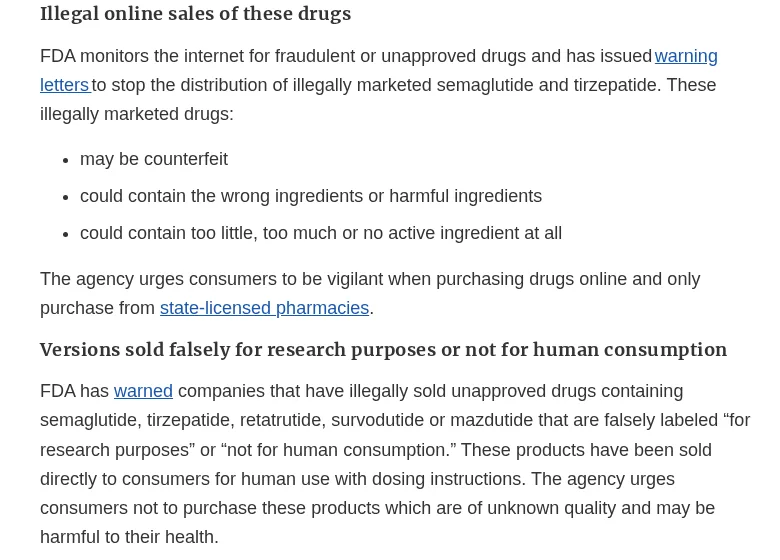
Figure 2. The FDA page on unapproved GLP-1 drugs, content current as of 1 October 2026. Retatrutide is named in the section on products labelled for research. [1]
Lilly's lawsuits. Lilly sued six US sellers in August 2026 and filed more suits on 8 October, among them the complaint quoted below.[6][3] The August defendants ranged from online peptide shops to a compounding pharmacy.[6] The cases are covered in the lawsuit tracker in this section, so this article uses the complaints only for what they say about product quality. Lilly is a party to these cases and sells competing approved drugs, so its statements below are labelled as Lilly's.
What the vials have held
Wrong amounts. Leeder Analytical, an Australian laboratory, told ABC News in August 2026 that "it has tested 18 samples of counterfeit retatrutide this year with only one matching its label claim".[7] Of the 18, "about 30 percent had higher concentrations and about 30 percent had lower concentrations, while one vial contained none of the peptide".[7] Separately, three vials bought from users and tested for University of Queensland researchers held one under-strength vial and two well over the label.[7] The researchers' journal report concluded that "inaccurate dosing alone may represent an important source of risk".[7]
Something else in the vial. The same laboratory's analyst said that in her testing "the peptide usually only made up about 10 percent of what was in the vials".[7] Nobody has published what the rest is.
Liver injury in Victoria. On 19 June 2026 the health department of the Australian state of Victoria issued an alert. It said that since January "there have been six cases of acute liver injury in Victoria in people who have used an unapproved peptide product, labelled as Retatrutide".[8] The department did not blame retatrutide itself. Its view was that "additional contaminants may be contributing to the observed liver toxicity".[8]
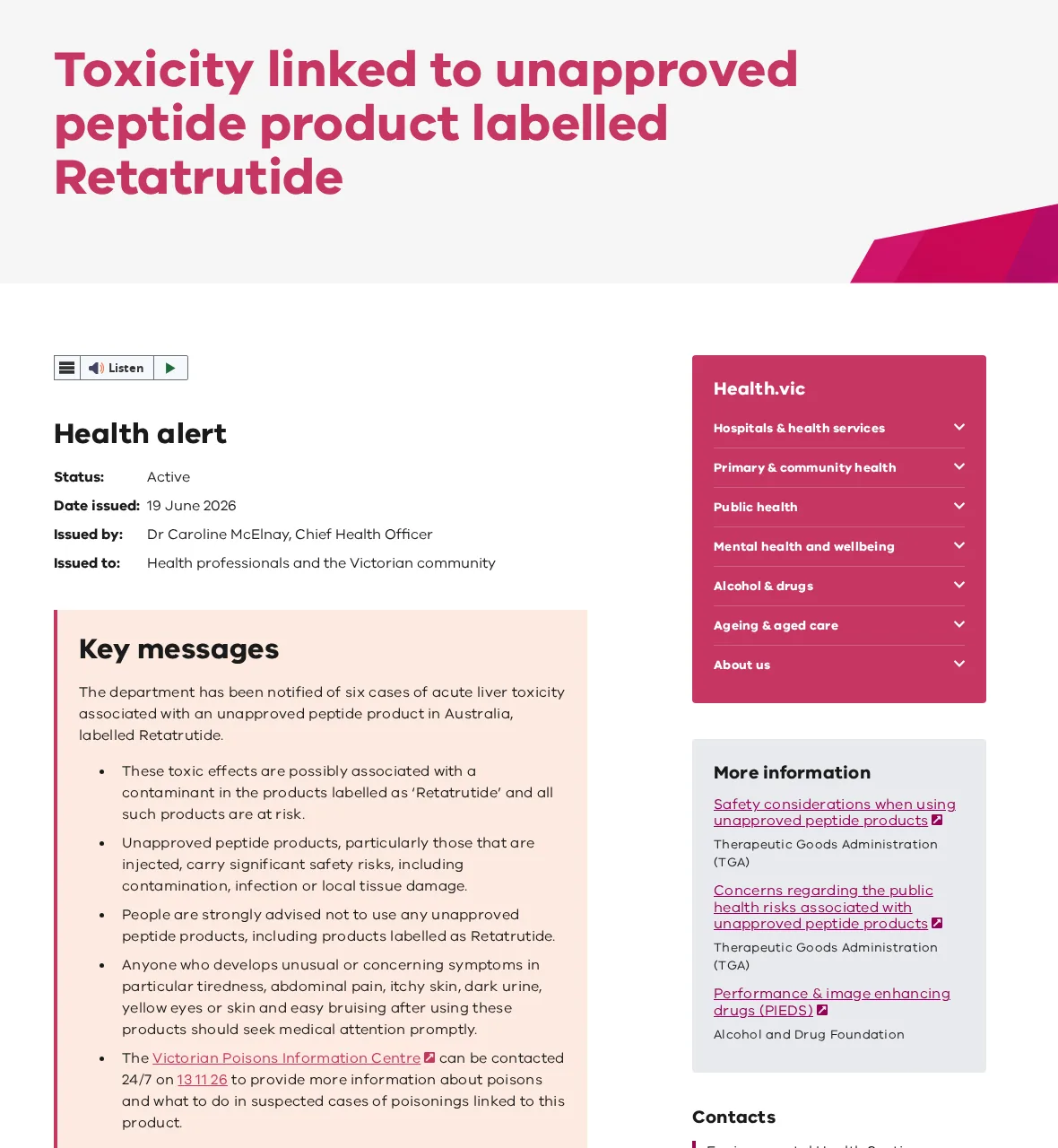
Figure 3. The Victorian health alert of 19 June 2026. The key messages give the case count and the symptoms that should send someone to a doctor. [8]
Insulin. Insulin in a vial sold as a weight-loss drug can put someone into hypoglycaemic shock, as the UK case below shows.[9] Here the evidence for retatrutide is thinner than the claims made about it. The trade site pharmaphorum, covering Lilly's August suits, wrote that analysis of seized counterfeits found "incorrect dosages ranging from zero to overdoses" and "completely different active ingredients such as insulin, which could be life-threatening".[6] Its article does not say who ran that analysis or on which products. The confirmed insulin finding belongs to a different product: in 2023 the UK regulator, the MHRA, wrote that "five cases reported that the Saxenda and Ozempic pens were confirmed to be falsified with insulin".[10] The MHRA said symptoms in people hospitalised, "hypoglycaemic shock and coma, indicate that the pens may contain insulin rather than semaglutide".[9] We found no published laboratory report of insulin in a vial sold as retatrutide.
Sterility. pharmaphorum also reported that "many are made in non-sterile conditions and may be contaminated with microorganisms".[6] The adviser to Australia's medicines regulator quoted by ABC News named "multiple other serious risks including endotoxins such as bacteria and contaminants such as heavy metals".[7]
Heavy metals, and a citation that does not say it. Lilly's October complaint against one seller says "an independent testing lab recently reported widespread purity concerns with black-market retatrutide, including contamination with heavy metals like lead, cadmium, and mercury".[3] Its footnote for that sentence is the ABC report republished by RNZ on 28 August 2026.[3] That report, as RNZ published it, gives no test result for any metal. Heavy metals appear in it once, as a risk the Australian regulator's adviser listed.[7] The complaint may rest on testing reported elsewhere. On the record it cites, the heavy-metal finding is not there.
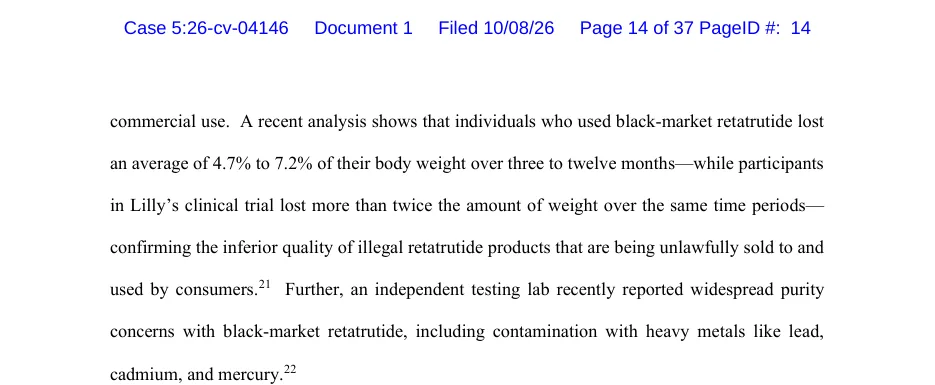
Figure 4. Page 14 of one of Lilly's October complaints. Footnote 22 cites the RNZ report discussed in this section, which names heavy metals only as a risk. [3]
Where the vials come from. On 14 October 2026 the MHRA and West Midlands Police raided an industrial unit in Birmingham, where "over 12,000 fake retatrutide and tirzepatide pens were seized along with packaging for around 30,000 more products".[11] The MHRA's warning was that "there is no guarantee of what they contain or whether they have been contaminated with harmful substances".[11] The same release recalls an October 2025 raid, "seizing 5,000 unauthorised retatrutide and tirzepatide pens".[11] The MHRA's own release from October 2025 gave a different number for that raid: "more than 2,000 unlicensed retatrutide and tirzepatide pens awaiting dispatch to customers".[12]
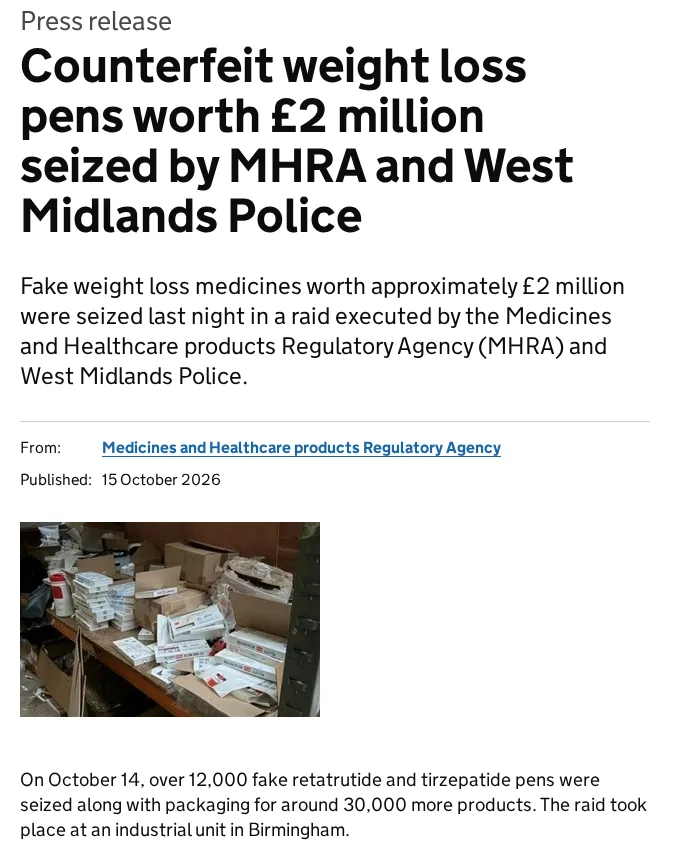
Figure 5. The MHRA's release of 15 October 2026 and its photograph of the Birmingham unit. The pens were sold as retatrutide and tirzepatide. [11]
Poison centre calls
A post on Reddit in October 2026 circulated quarterly counts of US poison centre cases involving retatrutide.[13] Those numbers trace to CBS News. A summary of the CBS reporting says America's Poison Centers "logged 862 exposures involving products identified as retatrutide in July" to September, "up from 460 in April" to June "and 249 in January" to March 2026.[14] Drug Topics, citing an earlier CBS report, said "human exposures to retatrutide reported to US poison centers surged by 265% in the first 4 months of 2026 compared with the end of 2025".[15]
We did not find these counts in any publication of America's Poison Centers itself. Its public GLP-1 page gives class-wide figures and does not break out retatrutide.[16] Read the quarterly numbers as CBS's report of the association's data until the association publishes them. The association's own caution applies either way: "exposures do not necessarily represent poisonings or overdoses".[16]
The death reports, and what FAERS is
What was reported. CBS News reported in October 2026 that the FDA had received two reports of deaths involving products sold as retatrutide. Gizmodo, following CBS, wrote that "CBS News obtained the reports via a Freedom of Information Act request".[17] "The first death was documented by a healthcare professional in July", and involved a 41-year-old woman with obesity who went into cardiac arrest.[17] The second, reported in September, involved "a 49-year-old patient who died after experiencing severe dehydration, malnutrition, and a cardiac arrest".[17] Newsweek reported that "the deaths were not connected to Eli Lilly" trials.[18]
What the public data holds. The FDA Adverse Event Reporting System, FAERS, is published through openFDA. On 19 October 2026 the openFDA data had last been updated on 30 July 2026, and it held 44 reports naming retatrutide as an active substance.[19] The newest had been received on 27 June 2026, and none recorded a death.[19] So the two death reports CBS obtained are not in the public data yet. Of the 44, 17 record a hospitalisation.[19] Public Citizen counted "14 reported hospitalizations connected to retatrutide" as of June.[20] The reactions listed include vomiting, dehydration, acute kidney injury, pancreatitis and one report of hypoglycaemia, and several are coded as a suspected counterfeit product.[19]
What a FAERS report proves. Very little on its own. openFDA tells users that "you should assume all results are unvalidated".[19] As Gizmodo put it, "these reports alone cannot prove whether a drug is responsible for a person" falling ill or dying.[17] openFDA's own disclaimer reads "Do not rely on openFDA to make decisions regarding medical care".[19] A report also cannot say what was in the vial, and in this market that is the first question. What a run of reports can do is show a pattern worth investigating. The second death report describes the pattern the next section is about.
When appetite suppression goes too far
The second death report describes dehydration and malnutrition.[17] Retatrutide has no approved label, so the closest official warnings are on its nearest approved relative, tirzepatide, which Lilly sells as Zepbound.[21] That label warns of acute kidney injury, and says "The majority of the reported events occurred in patients who experienced gastrointestinal adverse reactions leading to dehydration".[21] It warns of gallbladder disease, noting that "Acute gallbladder events were associated with weight reduction".[21] It warns of pancreatitis, with "persistent or severe abdominal pain (sometimes radiating to the back)" as the sign to watch for.[21] America's Poison Centers says that with this class of drug, "In severe cases, dehydration or hypoglycemia" can occur.[16]
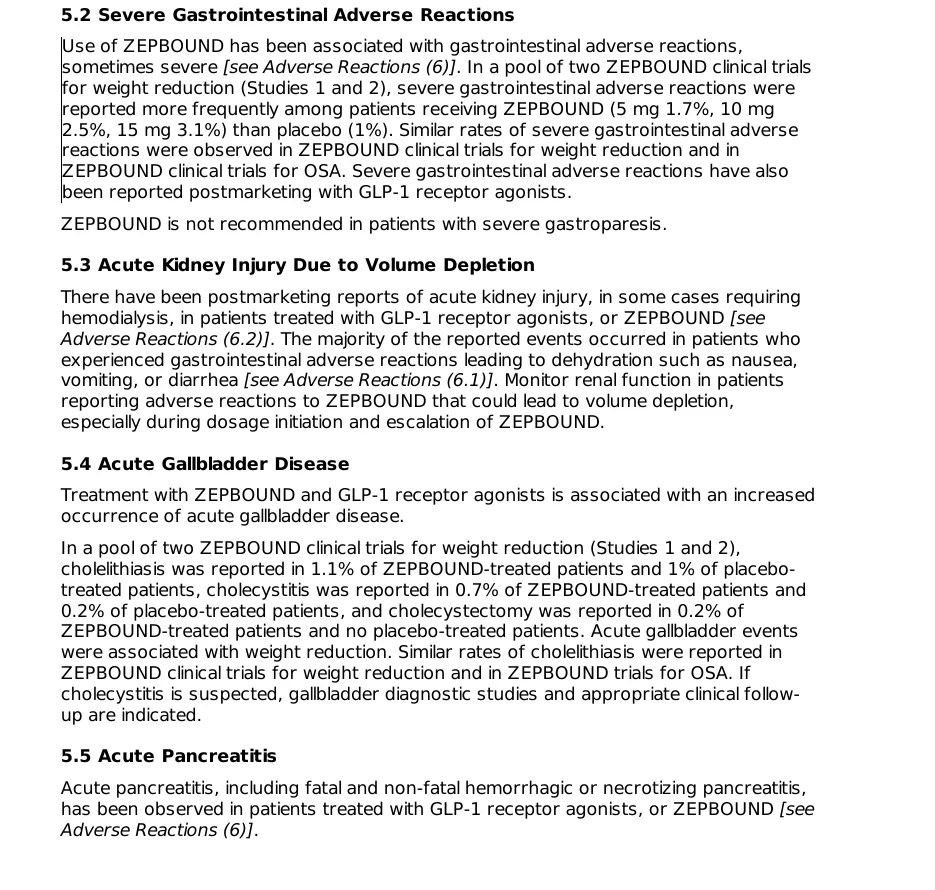
Figure 6. The approved label of Lilly's tirzepatide, revised August 2026. Retatrutide has no label; these are the warnings FDA requires on its nearest approved relative. [21]
Signs that should mean stopping and getting seen, drawn from those documents:
- Vomiting or diarrhoea that goes on for more than a day, or being unable to keep fluids down. That is the route to the kidney injury the label describes.[21]
- Severe stomach pain, especially pain that goes through to the back.[21]
- Yellow skin or eyes, dark urine, itching or easy bruising. Victoria's alert lists "tiredness, abdominal pain, itchy skin, dark urine, yellow eyes or skin and easy bruising" as the liver signs.[8]
- Eating almost nothing for days. The second death report CBS described involved malnutrition.[17]
Low blood sugar, and what to do
Low blood sugar matters here for two reasons. A vial could hold insulin, as fake semaglutide pens did.[10] And the tirzepatide label warns that taking this class of drug with insulin or a sulfonylurea raises the risk of low blood sugar.[21] A 2026 case report from Edinburgh describes a man with type 1 diabetes who was admitted with vomiting and ketones after injecting an online product sold as retatrutide.[22] During his recovery, "recurrent hypoglycaemia required intravenous dextrose and insulin dose adjustment".[22] The author wrote "While causation cannot be established", because the man also had a gut infection.[22]
The CDC's definition: "Blood sugar below 70 mg/dL is considered low".[23] Its list of common symptoms begins with "fast heartbeat" and includes shaking, sweating, anxiety, confusion, dizziness and hunger.[23] For someone awake and able to swallow, the CDC's rule is "Have 15 grams of carbs, then wait 15 minutes", then check again and repeat if still low.[24] For someone who cannot swallow safely or is passing out, "Injectable glucagon is the best way to treat severely low blood sugar", and they need emergency care.[24] In the United States, Poison Help is 1-800-222-1222 at any hour.[16] Someone who will not wake up needs emergency help at once.[24]
Why a clinician should know
Victoria's health department told people still using these products to "arrange review with their GP for consideration of liver function tests".[8] The tirzepatide label tells prescribers to watch kidney function in anyone with vomiting or diarrhoea.[21] Those are blood tests a doctor can order and a user cannot. The Edinburgh case report ends by asking clinicians to ask about non-prescribed drugs, because the doctors treating these patients often do not know what they took.[22] Victoria asked doctors to "collect specific information about the product including the name", so bring the vial or a photo of it.[8]
The FDA's advice for multi-dose vials of GLP-1 drugs applies to anything drawn from a vial more than once: "FDA recommends consumers discard the vial within 28 days after the first use".[1] And: "Always use a new, sterile needle and syringe for each dose".[1]
Reading a certificate of analysis
Sellers answer quality questions with a certificate. One seller sued by Lilly advertised HPLC and mass-spectrometry testing, "endotoxin testing, sterility verification, and COA certification", according to Lilly's complaint.[3] A certificate can be real and still answer a narrower question than the buyer is asking. This site's article on 7-OH labels against laboratory results goes through brand certificates and independent tests side by side, and /lab-results collects third-party tests. What follows is specific to injected peptides.
- Does the lot number match the vial in your hand? A certificate describes the sample that was tested. The 7-OH article quotes a laboratory saying exactly that on its own certificates, and a certificate for a different lot says nothing about your vial.
- Who ran it, and are they accredited for that test? Accreditation is an outside check of a laboratory's ability "to carry out specific activities to ensure their impartiality and competence".[25] It is granted for specific activities, so the method on the certificate is the one to look up in the laboratory's scope.[25]
- Purity is not quantity, and neither is safety. At Leeder, "the most common request was purity testing", yet its results on amount ran both above and below the label.[7] A liver specialist who had vials from her patients tested said of purity results: "all that they know from this testing is that there is some retatrutide in their vials".[7]
- Endotoxin and sterility are separate tests. The Australian regulator's adviser listed endotoxins as a risk apart from whether the peptide is present.[7] A certificate with no endotoxin result and no sterility result has not tested for either.
- Whose certificate is it? A certificate the seller commissioned is a statement about a sample the seller chose, as the 7-OH article shows for another market. The three vials in the ABC tests came from users, and researchers paid for the testing.[7]
None of these checks makes an unapproved drug safe. The FDA's position is that retatrutide has "not been found safe and effective for any condition", whatever a certificate says.[1]
References
- FDA's Concerns with Unapproved GLP-1 Drugs Used for Weight Loss (content current as of 10/01/2026), Wayback capture of 19 October 2026 — US Food and Drug Administration
- Triple-Hormone-Receptor Agonist Retatrutide for Obesity: A Phase 2 Trial (Jastreboff et al., N Engl J Med 2023;389:514-526) — PubMed (New England Journal of Medicine)
- Eli Lilly and Company v. American Peptides LLC, No. 5:26-cv-04146 (W.D. La.), Complaint, filed 10/08/26 — US District Court, via CourtListener RECAP
- Lilly's triple agonist, retatrutide, successful in two additional Phase 3 obesity trials (news release, July 23, 2026), Wayback capture of 12 October 2026 — Eli Lilly and Company
- Lilly, FDA retatrutide biologic dispute comes to a head as submission nears (August 5, 2026) — BioSpace
- Lilly sues over 'illegal sales' of obesity drug retatrutide (August 2026) — pharmaphorum
- New testing of black-market peptides reveals dangerous dosing levels (Rachel Carbonell, Caitlyn Gribbin and Andi Yu for ABC News, 28 August 2026) — RNZ
- Toxicity linked to unapproved peptide product labelled Retatrutide (health alert, 19 June 2026) — Department of Health, Victoria, Australia
- MHRA warns of unsafe fake weight loss pens (26 October 2023) — Medicines and Healthcare products Regulatory Agency (GOV.UK)
- Ozempic (semaglutide) and Saxenda (liraglutide): vigilance required due to potentially harmful falsified products (Drug Safety Update, November 2023) — Medicines and Healthcare products Regulatory Agency (GOV.UK)
- Counterfeit weight loss pens worth £2 million seized by MHRA and West Midlands Police (15 October 2026), Wayback capture of 19 October 2026 — Medicines and Healthcare products Regulatory Agency (GOV.UK)
- MHRA smashes major illicit weight loss medicine production facility in record seizure (24 October 2025) — Medicines and Healthcare products Regulatory Agency (GOV.UK)
- MORE PEPTIDE VENDOR TAKEDOWNS! Lilly has now sued 11 retatrutide sellers, and poison centers logged 862 reta exposures last quarter (r/AppliedBioscience, 18 October 2026) — Reddit — anecdotal report, not evidence
- Retatrutide news today (last verified October 14, 2026) — The Rx Index
- Some providers prescribe unapproved retatrutide for weight loss at alarming rate (June 10, 2026) — Drug Topics
- GLP-1 (Track Emerging Hazards) — America's Poison Centers
- The most powerful weight loss drug yet isn't approved, but its black market may already be turning deadly (Ed Cara, October 14, 2026) — Gizmodo
- What is retatrutide? (October 2026) — Newsweek
- openFDA drug adverse event endpoint (FAERS), query for reports naming the active substance retatrutide, data last updated 2026-07-30 — US Food and Drug Administration
- Hospitalizations, Enforcement Gaps, Influencers Tied to Unapproved Retatrutide Products (June 16, 2026) — Public Citizen
- ZEPBOUND (tirzepatide) injection, full prescribing information, revised 8/2026 — Eli Lilly and Company, via DailyMed (US National Library of Medicine)
- Online-Sourced Retatrutide Complicating Impending Diabetic Ketoacidosis in a Patient With Type 1 Diabetes and Concurrent Shigella Gastroenteritis (Branine, Cureus 2026;18(8):e115260) — PubMed (Cureus)
- Low Blood Sugar (Hypoglycemia) — US Centers for Disease Control and Prevention
- Treatment of Low Blood Sugar (Hypoglycemia) — US Centers for Disease Control and Prevention
- About ILAC — International Laboratory Accreditation Cooperation
Comments
Sign in to join the conversation.
No comments yet.